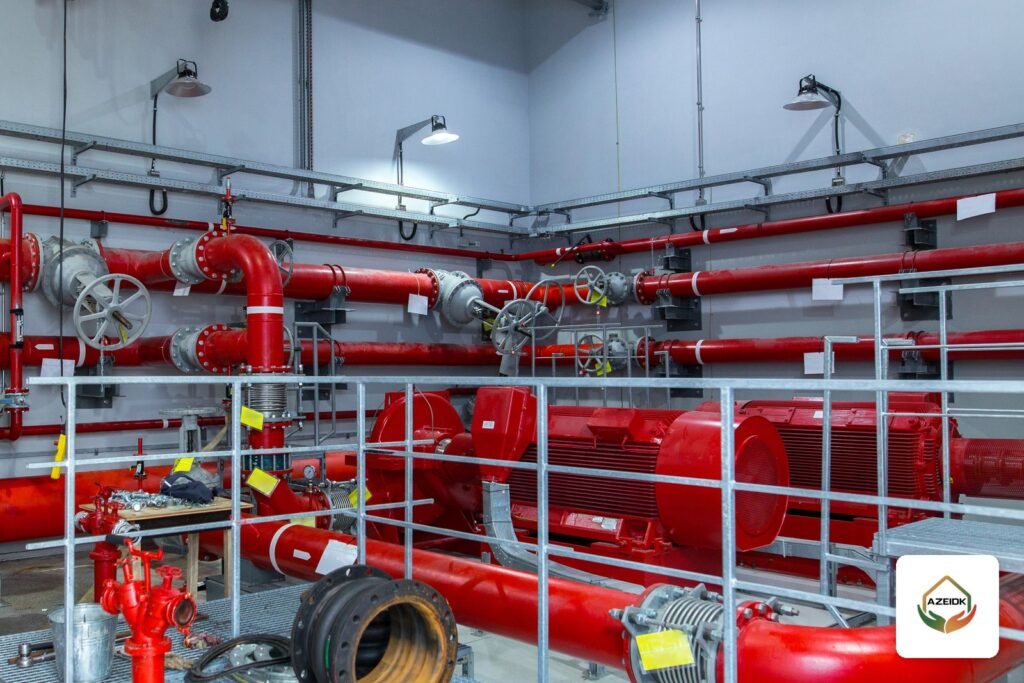
The Municipal Requirements for Factories are a document issued by the Ministry of Municipalities and Housing (1447H / 2025) that governs the licensing of factories built on sites under the Ministry’s supervision, from site and setbacks to technical and operating requirements. Several of its clauses deal directly with fire protection, Civil Defense and security cameras. This guide brings those clauses together and explains what a factory owner should prepare for each one before applying.
AZEIDK designs, supplies and installs firefighting systems, fire alarm systems and CCTV systems for factories and warehouses, and supports the Civil Defense approval file.
Key takeaways
- The document requires approval from the General Directorate of Civil Defense and an engineering report confirming the building suits the industrial activity.
- All fire protection requirements are referred to the Saudi Fire Code (SBC 801); the document does not set its own figures.
- Security cameras must be installed in line with the Security Surveillance Cameras Law and its Executive Regulations.
- It also sets a cap on in-factory storage, space for fire engines to manoeuvre, a first aid box, and notices with Civil Defense instructions and emergency numbers.
Which factories do the municipal requirements cover?
The document applies to factories on sites supervised by the Ministry of Municipalities and Housing, inside the urban boundary or in service zones and approved industrial plans. Industrial cities are defined as zones governed by another authority’s rules, and the building standards of the industrial cities authority (MODON) are listed among its references. If your factory is inside an industrial city, check that authority’s requirements first.
If your facility falls under the High Commission for Industrial Security, the licensing path is different; see our guide to Civil Defense licensing for factories and the HCIS route.
Fire protection and Civil Defense clauses
Civil Defense approval and engineering report (clause 2.1.5)
Licensing requires approval from the General Directorate of Civil Defense and an engineering report showing the building is suitable for industrial use under fire protection requirements. In practice, the fire alarm and firefighting systems should be designed, installed and tested before you apply, with drawings and test reports ready. The steps for industrial facilities are covered in our Salamah certificate guide for factories.
Compliance with the Saudi Fire Code (clause 4.4)
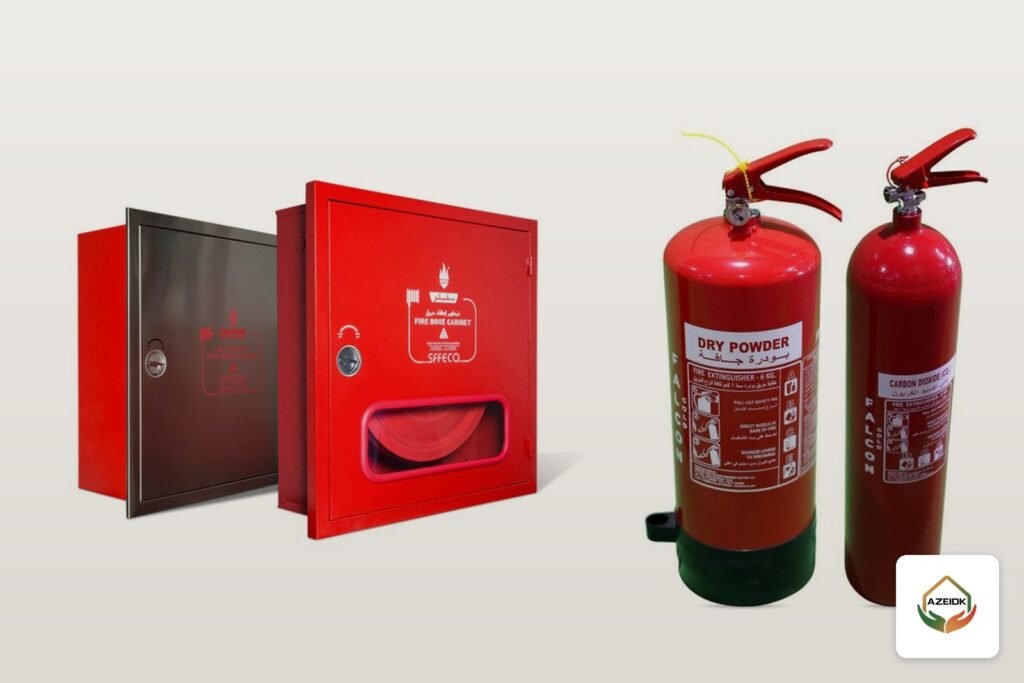
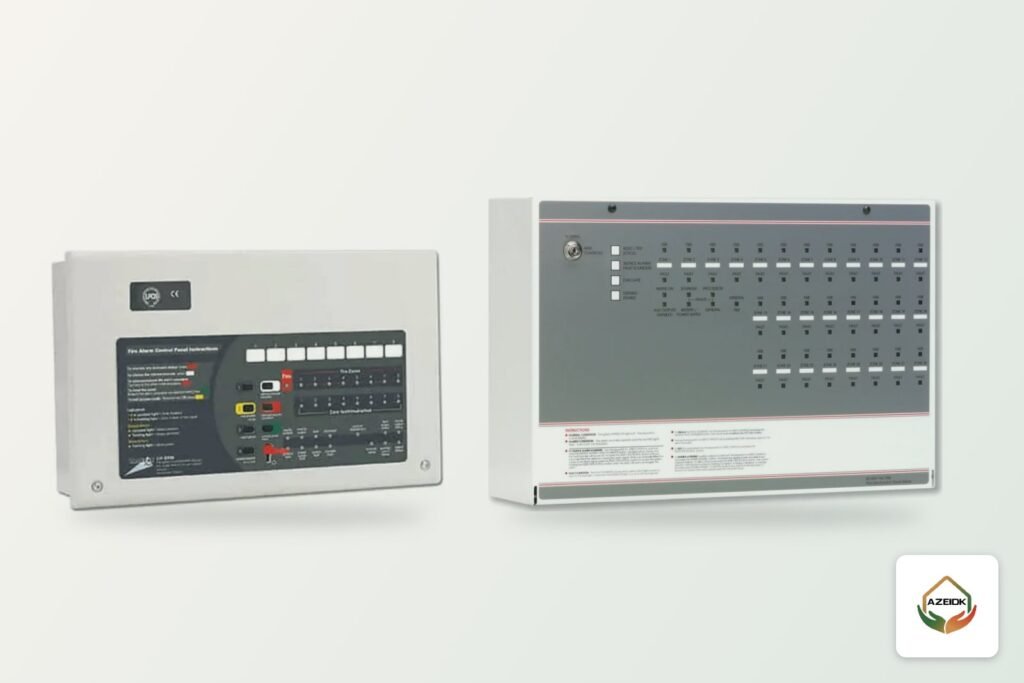
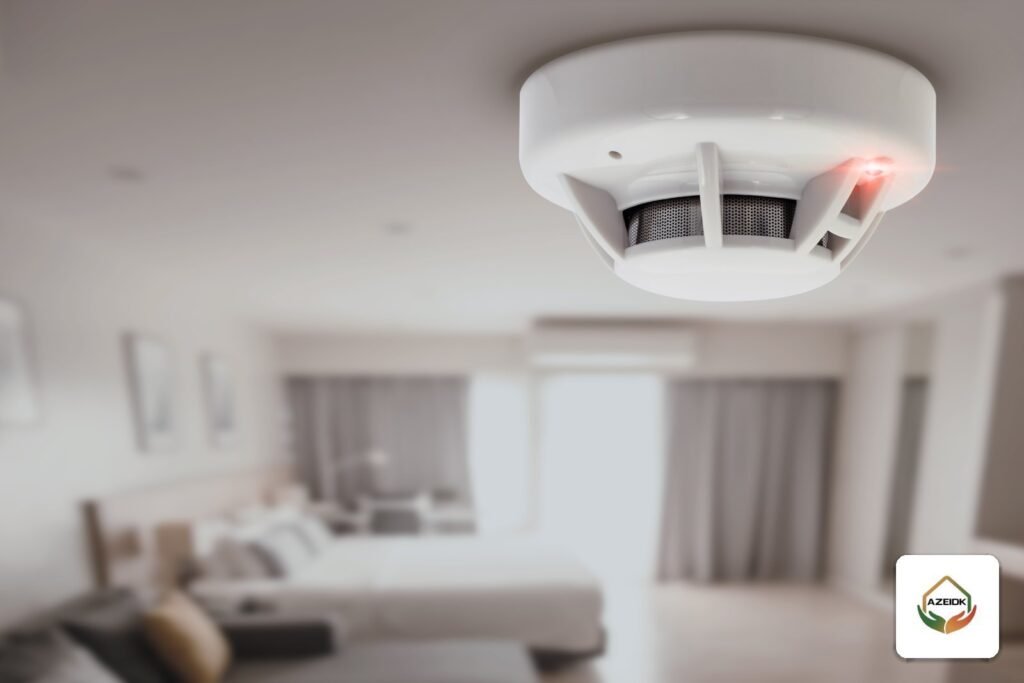
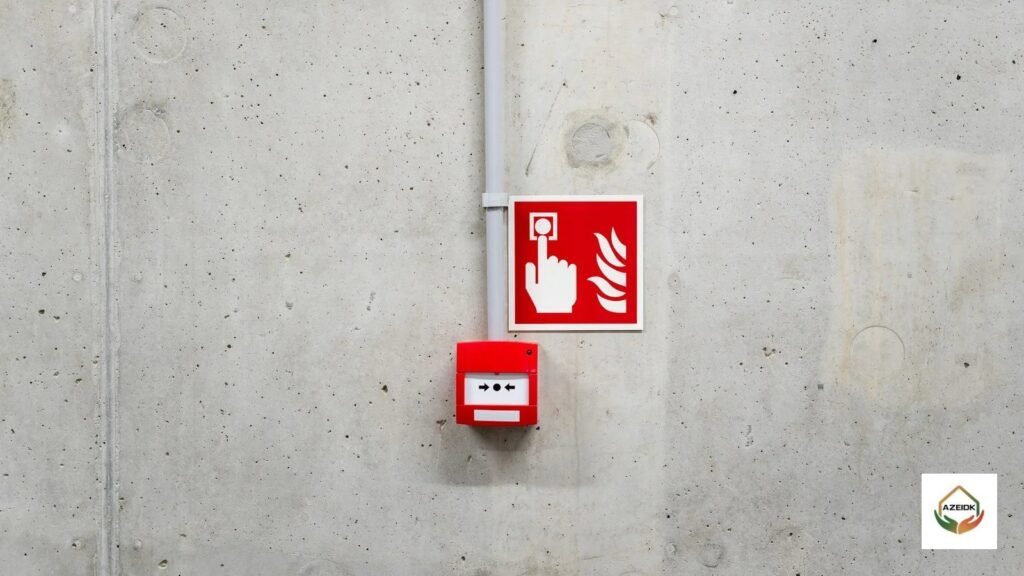
The document does not list system types or quantities. It refers to all requirements of the Saudi Fire Code SBC 801. The code decides when automatic sprinklers and a fire alarm system are required and how fire extinguishers and fire hose cabinets are distributed, based on occupancy classification, building area and the materials stored.
Separating occupancies and fire-resistant finishes
Walls, ceilings and finishes must use fire-resistant materials in line with SBC 801, and different occupancies must be separated by complete fire separation walls in line with SBC 201. Openings in these walls are usually closed with fire-rated doors, part of our fire-rated doors and emergency exit solutions.
Space for fire engines (clause 4.2.2.4)
Sufficient space must be provided inside the site for fire engines to manoeuvre, based on the approved site plan. This ties in with the location of fire department connections and external fire hydrants, so it is best to fix them on the site plan early.
Mezzanines and automatic suppression
The document defines a mezzanine as an intermediate floor no larger than one third of the floor it sits on, and links a larger mezzanine (up to one half) to an approved automatic suppression system and audible alarm. If you plan a larger mezzanine, include sprinkler and alarm coverage in the design from the start.
Security cameras and site security
Clause 5.4 requires security cameras installed in line with the Security Surveillance Cameras Law and its Executive Regulations. Camera locations, recording retention and system specifications therefore come from that law, which we summarise in our guide to the Saudi CCTV law.
The document also asks for an area for administration and guards, a pedestrian entry and exit gate, and control and security monitoring equipment placed away from tampering by unauthorised people. A locked room or cabinet for the recorder and camera network meets that intent.
Storage inside the factory
Clause 4.5 allows storage of materials linked to the activity, provided the warehouse does not exceed 25% of the total licensed area or 150 m², whichever is less. The 150 m² cap can be exceeded up to 50% of the total area under conditions the document sets, including adding the warehouse as an activity on the licence and meeting the warehouse requirements. See our warehouse requirements guide.
Operating requirements related to safety
- Apply occupational safety practices in all works and provide a first aid box.
- Display internal notices such as emergency numbers, Civil Defense instructions and no-smoking signs on a board, screen or frame.
- Keep stairs, walkways and ramps free of anything that obstructs entry, exit or rapid evacuation.
- Maintain lighting fixtures and electrical installations periodically, in line with the Saudi Electrical Code SBC 401.
Clause summary and what to prepare
| Clause | What the document requires | What to prepare |
|---|---|---|
| 2.1.5 | Civil Defense approval and engineering report | Approved drawings and installed, tested systems |
| 4.4 | Compliance with SBC 801 | Occupancy study and selection of alarm, firefighting and extinguishers |
| 4.2.2.4 | Space for fire engines to manoeuvre | Site plan showing access routes and fire department connections |
| 4.5 | Cap on warehouse area | Defined storage area and material types |
| 5.4 | Security cameras per the law | CCTV system with the recorder in a protected location |
| 4.6 | Occupational safety and first aid | First aid box and safe work procedures |
Frequently asked questions
Do the municipal requirements for factories specify the suppression system?
No. Fire protection requirements are referred to the Saudi Fire Code SBC 801, which sets systems by occupancy, area and materials. The document mentions automatic suppression explicitly only for mezzanine area.
Must a factory install security cameras?
Yes. The document requires security cameras installed in line with the Security Surveillance Cameras Law and its Executive Regulations.
Do these requirements apply inside industrial cities?
The document targets sites supervised by the Ministry of Municipalities and Housing and treats industrial cities as zones governed by another authority. Check with the authority that manages the industrial city.
How does Civil Defense approval relate to the municipal licence?
Civil Defense approval and the engineering report are licensing requirements in the document, so the fire systems must be ready before the licence is issued, not after.
Preparing a factory for licensing? Send AZEIDK your site plan, activity and stored materials, and our team will define the fire alarm, firefighting and CCTV systems required under SBC 801 and prepare the drawings for approval. For more, read our factory fire protection guide. Request a quote from AZEIDK
Related guides
- School and University Gates: Turnstiles, Face or Card Attendance and Dismissal Planning
- CCTV Camera Tester: Checking Video, PoE and IP on Site, and When a Technician Needs One
- FM-200 Fire Suppression System: Design, Safety, Maintenance and Kigali Status
- Fire Alarm Systems in Makkah: Choosing a System for Hotels, Pilgrim Housing and Shops