Factory and industrial fire protection starts with a hazard analysis of each area, not one system for the whole building. One plant may combine production lines, flammable liquids, high-piled storage, electrical rooms and welding, each needing different protection. The regulator then sets the approval route: Civil Defense and the Saudi Fire Protection Code (SBC 801), with High Commission for Industrial Security reviews and directives added for facilities under its supervision.
Key takeaways
- Start with a fire hazard analysis of every process, material and storage area; it drives system selection and water demand.
- In the International Building Code (IBC) model, moderate-hazard factory buildings need sprinklers throughout once a fire area exceeds 12,000 sq ft, and high-hazard occupancies always do; confirm thresholds in the adopted SBC edition.
- Sprinklers are often not enough on their own: flammable liquids often need foam, electrical rooms may need special suppression, and fast-developing fires call for flame detection.
- Facilities supervised by the High Commission for Industrial Security (HCIS) follow its Safety and Fire Protection (SAF) directives: an approved consultant first, then an approved contractor after HCIS reviews the front-end engineering package.
- Any change in product, storage height or process calls for a protection review before it is implemented.
Why factory protection starts with hazard analysis
Factory hazards vary widely: an oil filling line is not a woodworking shop. Design therefore starts by listing processes and materials from safety data sheets (SDS), flammable material quantities and storage, and ignition sources such as ovens, dryers, electrical equipment and hot work.
That inventory sets the building code occupancy: moderate- or low-hazard factory, or high hazard where hazardous materials exceed the maximum allowable quantities. It also sets the hazard classification, commodity class and storage height for each area under NFPA 13, the sprinkler standard of the National Fire Protection Association (NFPA). Those classifications set the sprinkler density, water quantity and duration.
Who regulates your facility?
The general route: Saudi codes and Civil Defense
Most factories fall under the Saudi General Building Code (SBC 201) and SBC 801, whose 2024 edition has been mandatory since 30 June 2025, and Civil Defense issues safety licenses through the Salamah platform. According to the International Code Council (ICC), the 2018 Saudi Building Code was based on the 2015 International Codes, so IBC model requirements help explain the principles; confirm values in the adopted edition.
In that model, a moderate-hazard factory building needs sprinklers throughout where a fire area exceeds 12,000 sq ft (1,115 m2), is more than three stories above grade plane, combined fire areas exceed 24,000 sq ft (2,230 m2), or upholstered furniture or mattress manufacturing exceeds 2,500 sq ft (232 m2). Sprinklers are also required for woodworking areas over 2,500 sq ft that generate finely divided waste, and in all high-hazard occupancies.
Facilities under the High Commission for Industrial Security
HCIS regulates security, safety and fire protection at supervised facilities and licenses consultants and contractors in these fields. Saudipedia lists 13 supervised sectors, including petroleum, gas, petrochemicals, electricity, mining and chemical industries. SAF-01 (version 2.0, 2 April 2017, the version reviewed; confirm the current version with HCIS) sets the general requirements and refers to specialist directives:
| Directive | Subject |
|---|---|
| SAF-03 | Buildings for industrial facilities |
| SAF-04 | Fire protection systems and equipment |
| SAF-06 | Plant layout, spacing and access |
| SAF-08 | Storage tanks and vessels |
| SAF-09 | Fireproofing in plants |
| SAF-11 | Emergency shutdown, isolation and depressuring |
| SAF-20 | Pre-incident planning and management of emergencies |
SAF-01 has the operator appoint an HCIS-approved fire protection consultant, who prepares the front-end engineering package for HCIS review, and then an HCIS-approved contractor, whose installation package HCIS also reviews before supply, installation, testing and commissioning. The latest editions of referenced standards apply at design stage. Because SAF-01 does not mention Civil Defense, confirm whether separate permits apply, as our HCIS requirements news notes.
Choosing protection by hazard
The table summarizes typical protection for common factory hazards; the hazard analysis and approved design make the final choice.
| Hazard or area | Typical protection | Common reference |
|---|---|---|
| General production areas | Sprinklers for the process hazard, detection, extinguishers | NFPA 13, NFPA 72, NFPA 10 |
| High-piled storage | Early suppression fast response (ESFR) or in-rack sprinklers by commodity and height | NFPA 13 |
| Flammable liquids | Foam or foam-water sprinklers, spill containment and ventilation | NFPA 30, NFPA 11, NFPA 16 |
| Transformers and exposed equipment | Fixed water spray for cooling and protection | NFPA 15 |
| Electrical and control rooms | Early detection, clean agent or condensed aerosol suppression | NFPA 2001, NFPA 2010 |
| Combustible dust | Dust hazard analysis, dust collection, explosion protection | NFPA 660 (replaced NFPA 652 and 654 in 2025) |
| Welding and cutting | Hot work permits and a fire watch during and after work | NFPA 51B |
| Outdoor storage tanks | Water cooling and foam by tank type, plus spacing | NFPA 30, NFPA 11; SAF-08 for HCIS sites |
For detail, see our guides to high-rack storage and ESFR sprinklers, foam fire suppression systems and electrical room fire protection.
Detection and alarm
Spot smoke detectors do not suit every area: dust and steam cause false alarms, and liquid or gas fires need faster response. Flame detectors suit flammable liquid areas, linear heat detection suits cable trays and conveyors, and heat detectors suit dusty areas; see our fire detector selection guide. Flammable gas detection is a separate system linked to alarm and shutdown.
Water supplies and fire pumps
Water supplies are sized for the largest combined demand, such as sprinklers, tank cooling and hydrants, for the required duration. Fire pumps follow NFPA 20 and private fire mains and hydrants NFPA 24, with the driver chosen by power reliability; see our electric vs diesel fire pump comparison.
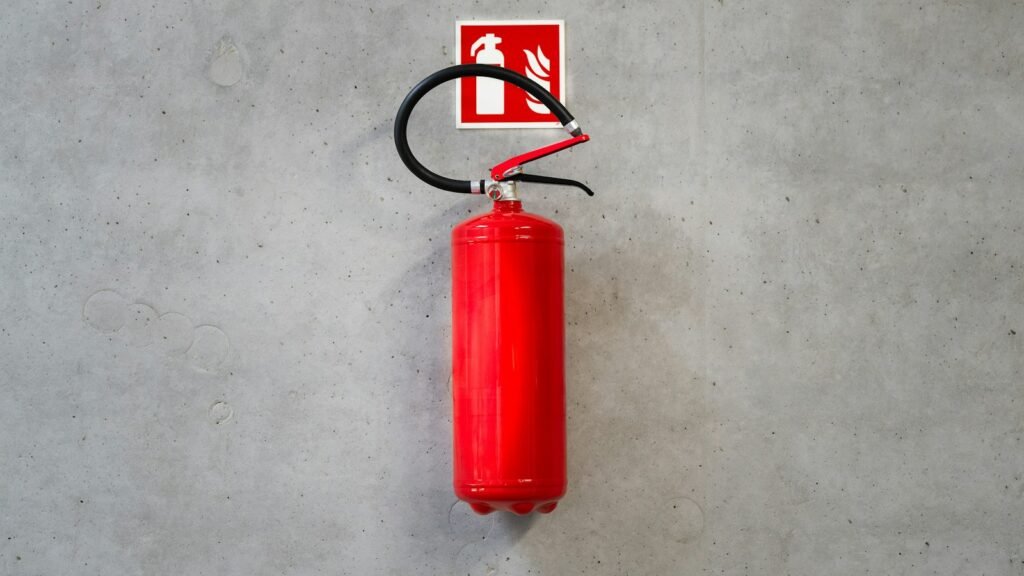
Portable extinguishers
The International Fire Code model requires extinguishers in factory, storage and high-hazard occupancies and wherever flammable liquids are stored, used or dispensed. NFPA 10 limits travel distance to Class B extinguishers to 30 or 50 ft (about 9 to 15 m) depending on rating and hazard, and its annex lists woodworking and vehicle repair among extra hazard examples. See our NFPA 10 portable fire extinguishers guide.
Steps to design a factory protection system
- List processes, materials and quantities from safety data sheets, and identify ignition sources.
- Prepare a fire hazard analysis and set the occupancy and hazard classification for each area.
- Identify the regulators: Civil Defense, and HCIS if the facility is in a supervised sector; confirm whether both apply.
- Select protection for each area and coordinate special suppression with electrical and air conditioning design.
- Size water supplies and pumps for the largest demand, with room for planned expansion.
- Approve the cause and effect matrix, including links to process emergency shutdown.
- Submit drawings and calculations, then install, test and commission with the authorities.
- Hand over as-built drawings and an inspection program, and train the site team on the emergency plan.
Common factory mistakes
- Raising storage height or changing the commodity without reassessing the sprinklers.
- Foam concentrate that is incompatible with the protected liquid or the proportioning equipment.
- Clean agent rooms that are not tight enough, so the agent leaks out before it works.
- Welding without a permit or without a fire watch after the work ends.
- Dust building up on high surfaces without a cleaning program.
- Extensions tied into the existing network without new hydraulic calculations.
More site examples are in our article on fire system installation mistakes in warehouses and factories.
Inspection, testing and maintenance
Water-based and foam-water systems are inspected and tested to NFPA 25, fire alarm to NFPA 72 and clean agent systems to NFPA 2001, at the frequencies set by the adopted edition and the authority having jurisdiction (AHJ). NFPA 10 requires monthly extinguisher inspection, at intervals not exceeding 31 days. Foam concentrate is also sampled and tested periodically, as the adopted NFPA 25 or NFPA 11 edition and the manufacturer require.
At HCIS sites, SAF-01 assigns inspection, testing and maintenance to the contractor and operator, with the operator keeping records. In any factory, a documented impairment procedure with interim measures is good practice.
What drives the cost of factory fire protection
- Hazard classification and the area needing special protection.
- Storage height and commodity, and whether in-rack sprinklers are needed.
- Water supplies, tanks, pumps and the hydrant network.
- Foam, water spray, special suppression and flame detection.
- The regulator’s submittal, review and witnessed testing requirements.
How AZEIDK helps
AZEIDK provides industrial facilities with engineering design and calculations, special fire suppression systems, fire fighting and fire alarm systems, technical supply, installation, testing and commissioning, and annual maintenance contracts.
Brands within AZEIDK’s supply scope include Jack Pump for stationary fire pumps, SafeGuard for foam concentrates, FirePro for condensed aerosol suppression of electrical panels and enclosures, AFC for valves, hydrants and gas suppression, and Tyco and Victaulic for sprinklers, with each model checked against the specification.
FAQ
Are sprinklers enough to protect a factory?
Not always. Sprinklers protect general and storage areas, but flammable liquids usually need foam, electrical and control rooms need clean agent or aerosol suppression, transformers need water spray, and fast-developing fires need flame detection. The fire hazard analysis decides what each area needs.
When does a factory fall under HCIS supervision?
When it belongs to a sector HCIS supervises; Saudipedia lists 13, including petroleum, petrochemicals, electricity and chemical industries. Such facilities follow the SAF directives and HCIS reviews, and it is advisable to confirm with the authorities whether separate Civil Defense permits are also needed.
When are sprinklers required in an industrial building?
In the IBC model, a moderate-hazard factory building is sprinklered throughout where a fire area exceeds 12,000 sq ft, is more than three stories above grade plane or combined areas exceed 24,000 sq ft, in some special cases such as woodworking, and in all high-hazard occupancies. Confirm the thresholds in the adopted Saudi code.
What is the right protection for factory electrical rooms?
Electrical and control rooms are usually protected by early detection and clean agent suppression to NFPA 2001, or condensed aerosol for panels and enclosures, because water can damage equipment and extend downtime. A clean agent only works if the room is tight enough to hold the concentration, so room integrity is tested at commissioning.
How are flammable liquid areas protected?
Protection starts with limiting quantities, storage method, spill containment and ventilation under NFPA 30, then foam or foam-water systems that blanket the liquid surface and prevent reignition. The foam concentrate type and percentage are chosen for the liquid, and Class B extinguishers are placed within the NFPA 10 travel distance.
What should happen when a factory expands or changes product?
Reassess the hazards before implementation, because a new commodity, higher storage or an added flammable liquid can make the existing design inadequate. Recalculate the network hydraulics, update the cause and effect matrix and drawings, and get the changes approved before the new area goes into operation.
Planning a new plant or an expansion? Send a process description and drawings and the AZEIDK team will prepare an initial protection review. Contact the AZEIDK team