Cement plant fire protection rarely starts at the kiln, which runs hot inside a controlled process. The real exposure sits in the solid fuel system: coal or petcoke mills, fuel bins and silos, dust collectors and the ductwork between them. Then come the conveyor belts and the electrical and control rooms that run the whole plant. Each area needs a different detection method and a different suppression approach, and mixing them up is the most common weakness.
This guide maps the fire risks in a cement plant, explains which fire alarm systems and suppression options suit each area, and shows how the scope is agreed with the owner and consultant. It belongs to AZEIDK’s industrial facilities sector page.
Key points
- The highest risk in a cement plant is the solid fuel system: mills, dust collectors, silos and the connecting ducts.
- Coal mills and fuel silos are usually protected by inerting with CO2 or nitrogen, triggered by CO, temperature and oxygen monitoring. This is part of the process design itself.
- Long conveyor belts are better served by linear heat detection cable than by point detectors.
- MCC rooms and the central control room need early detection and a clean suppression agent.
- In Saudi Arabia the binding framework is SBC 801 and the requirements of the competent authority. NFPA standards serve as technical references.
In this article
Where do cement plant fires start?
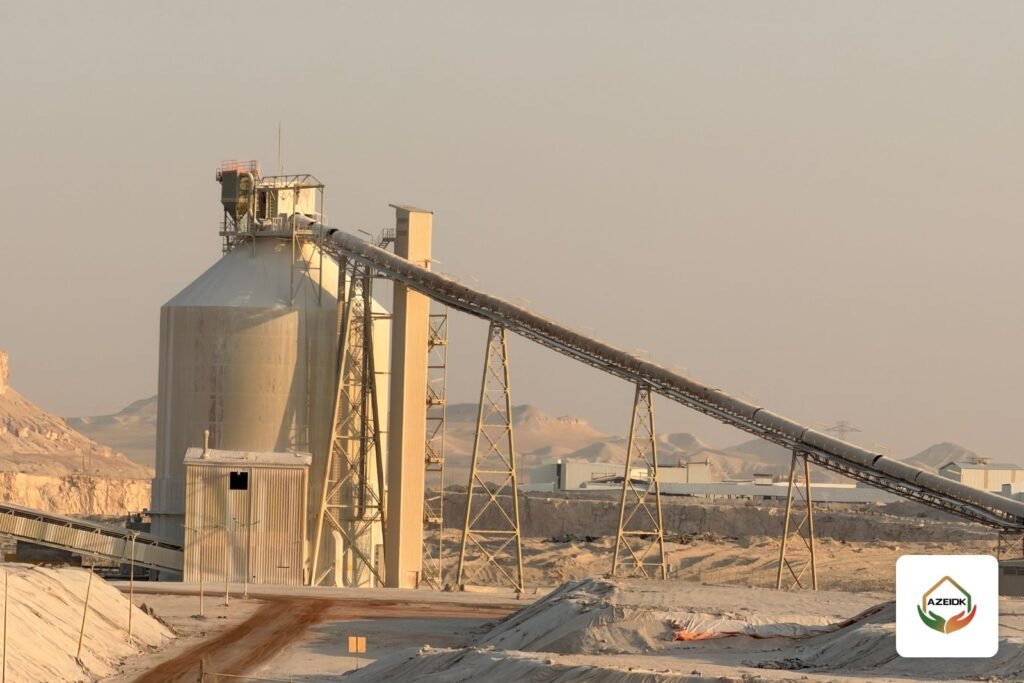
Solid fuel moves through several stages: receiving and stockpiling coal or petcoke, grinding and drying with hot air, then storing the pulverised fuel in bins before it is fed to the burner. KiddeFenwal, a fire suppression manufacturer, lists the areas most exposed to ignition and explosion as coal mills and pulverisers, cyclones and dust collectors, surge and fuel bins, raw coal and coke silos, and interconnected ductwork, because fine particles and heated air are present all the time.
The second source is the conveyor system: seized idlers, hot material build-up, and oil and grease on bearings. The third is electrical: MCC panels, indoor transformer rooms and long cable trays between departments. Bag stores, warehouses and workshops remain ordinary hazards that need conventional protection.
Cement plant fire protection in the solid fuel system
In mills and silos, waiting for a visible flame is too late. A technical article in Global Cement Magazine explains that control is achieved by reducing oxygen, because the coal and the ignition sources cannot practically be removed. A PLC monitors carbon monoxide, temperature and oxygen during grinding and storage, and when readings move out of range it starts inerting automatically with CO2 or nitrogen. The article notes that such systems follow European guidance such as VDI 2263-2 and CEN/TR 15281.
KiddeFenwal adds that CO2 systems are also used to extinguish fires in conveyance networks and dust collection systems based on NFPA 12, and that vapour CO2 injection limits spontaneous combustion in fuel bins and silos during idle and restart conditions.
In practice, inerting is a process safety system specified by the mill designer and supplier. The fire systems contractor coordinates with it: interfacing its alarm and release signals with the main fire alarm panel, defining CO2 suppression zones around the mill, and providing hose cabinets and hydrants nearby. AZEIDK supplies SFFECO CO2 suppression systems as part of its special fire suppression systems, and the final design for each area is set after reviewing the drawings and plant data.
Conveyor belts: why linear heat detection?
A conveyor can run hundreds of metres inside a tunnel or covered gallery, in heavy dust. Point smoke detectors there give false alarms or clog quickly. Linear heat detection works better: a cable runs along the belt above or beside the idlers, detects a temperature rise at any point and reports its location.
AZEIDK supplies Context Plus FirePlus-LHD linear heat detection cable. Its grades and typical uses on conveyors and cable trays are covered in our article on linear heat detection. The cable connects to the addressable panel through its interface unit, so the alarm shows the conveyor section by name in the control room.
At transfer points, where coal spills and accumulates, the designer may add water spray or sprinklers depending on the material. This is an engineering decision, not a single rule for every plant.
Electrical and control rooms
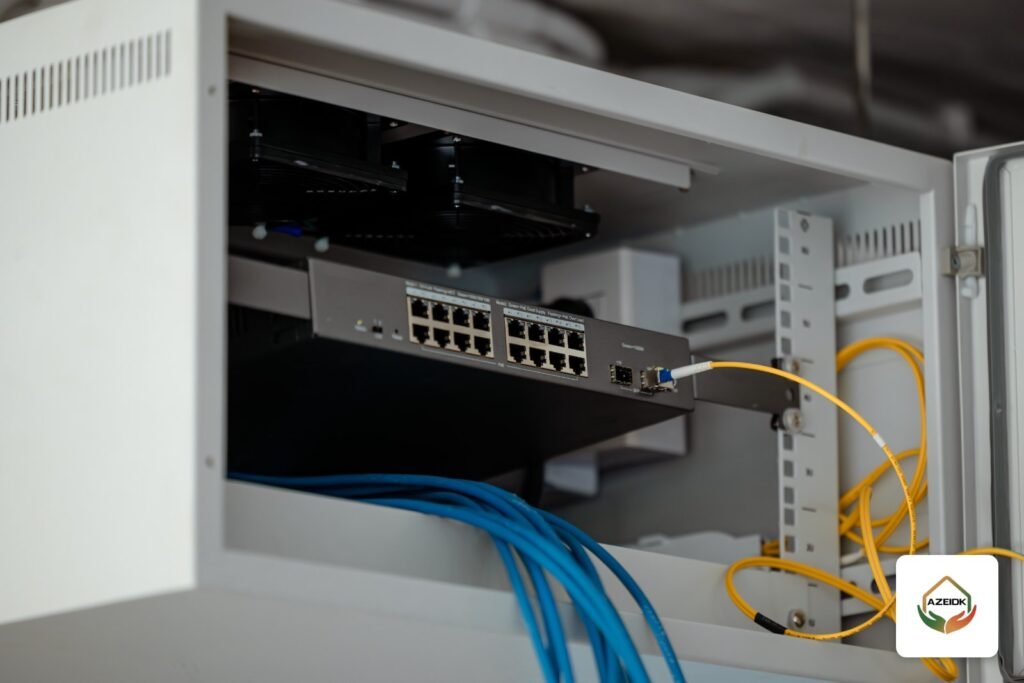
Losing an MCC room or the central control room stops the line. These rooms need early smoke detection with addressable detectors and an agent that leaves no water or residue. Typical options are clean agent systems for enclosed rooms, condensed aerosol for panels and small spaces, and CO2 for normally unoccupied areas only, because of its life safety risk.
Our article on electrical room fire protection covers these options. What sets a cement plant apart is dust: rooms should be kept sealed, with positive pressure or well-fitted doors, or dust will settle on detectors and panels.
Area-by-area summary
| Area | Main hazard | Suggested detection | Suggested protection |
|---|---|---|---|
| Coal mill and dust collector | Self-heating, dust explosion | CO, temperature and O2 monitoring in the process system | CO2 or N2 inerting per supplier design |
| Fuel bins and silos | Self-heating during shutdown | CO and temperature monitoring | Inerting or CO2 injection |
| Conveyor belts | Idler friction, material build-up | Linear heat detection cable | Hydrants and hose cabinets, water spray where needed |
| MCC and control rooms | Electrical fault | Addressable smoke detectors | Clean agent or aerosol |
| Bag stores and warehouses | Combustible packaging | Smoke or beam detectors | Sprinklers per hazard classification |
Alarms in noise and dust
Mills and fans drown out a standard sounder, so production areas need higher sound output and visual beacons, as explained in our article on industrial fire alarm systems. Areas classified as hazardous because of coal dust need devices certified for that zone, based on the plant’s hazardous area classification.
Which authority licenses a cement plant?
Depending on the facility and its classification, it may fall under the General Directorate of Civil Defense or the High Commission for Industrial Security. We explain the difference in our article on factory Civil Defense licensing. In both cases SBC 801 remains the binding framework for protection systems, while NFPA 72 for alarms and NFPA 12 for CO2 systems serve as technical references adopted by the designer.
How AZEIDK approaches an operating plant
In an existing plant the work starts with a site survey and an assessment of current systems, then the gaps in each area are listed, and installation is phased around planned maintenance shutdowns so production keeps running. Our existing systems assessment and scope definition service covers that stage, followed by preventive maintenance after handover. Fire alarms can also be linked to surveillance, as described in CCTV for factories.
FAQ
Does the cement kiln need a suppression system?
The kiln runs hot inside a controlled process and is not normally protected by sprinklers. Protection focuses on what surrounds it: the fuel and burner system, electrical rooms and conveyors, as set by the plant’s risk assessment.
What is the difference between inerting and CO2 suppression?
Inerting lowers oxygen inside the mill or silo before a smouldering fire develops and is driven by process signals. CO2 suppression is released after a fire is detected to extinguish it in a defined zone. A plant may use both.
Why not use smoke detectors on conveyors?
Heavy dust causes false alarms and clogs smoke detectors. Linear heat detection cable tolerates the environment, covers the full belt length and locates the hot spot.
Can CO2 be used in the central control room?
Control rooms are usually occupied, and CO2 at extinguishing concentration is dangerous to people. A clean agent suitable for occupied spaces is preferred, with CO2 kept for unoccupied areas with lock-out and evacuation procedures.
Does AZEIDK supply linear heat cable for conveyors?
Yes. AZEIDK supplies Context Plus FirePlus-LHD cable with its interface unit and fixing accessories. Cable length and alarm grade are set after reviewing the conveyor layout and operating conditions.
Can the work be done without stopping the plant?
Most cabling and installation can be done during operation. Interfacing and testing in mills and electrical rooms is scheduled with maintenance shutdowns in coordination with plant management.
Summary
A cement plant is not one hazard. The solid fuel system needs protection built into the process, conveyors need linear heat detection, electrical rooms need clean suppression, and the rest of the site needs well-designed conventional protection. Starting from a clear risk map saves cost and avoids disputes at approval.
Planning a fire system upgrade at a cement plant? Send us the site layout and list of departments, and we will review the right detection and suppression for each area with you. Contact the AZEIDK team
Related guides
- Fail Safe vs Fail Secure: Do Electronic Doors Open in a Fire or Power Cut?
- Parking Garage Fire Protection: Requirements and Solutions
- Dry Pipe Sprinkler System: Dry Pipe Valve, Air Compressor and Water Delivery Time
- Printing and Checking a Civil Defense Licence on Salamah: Steps, Licence Number and What to Do If It Is Missing