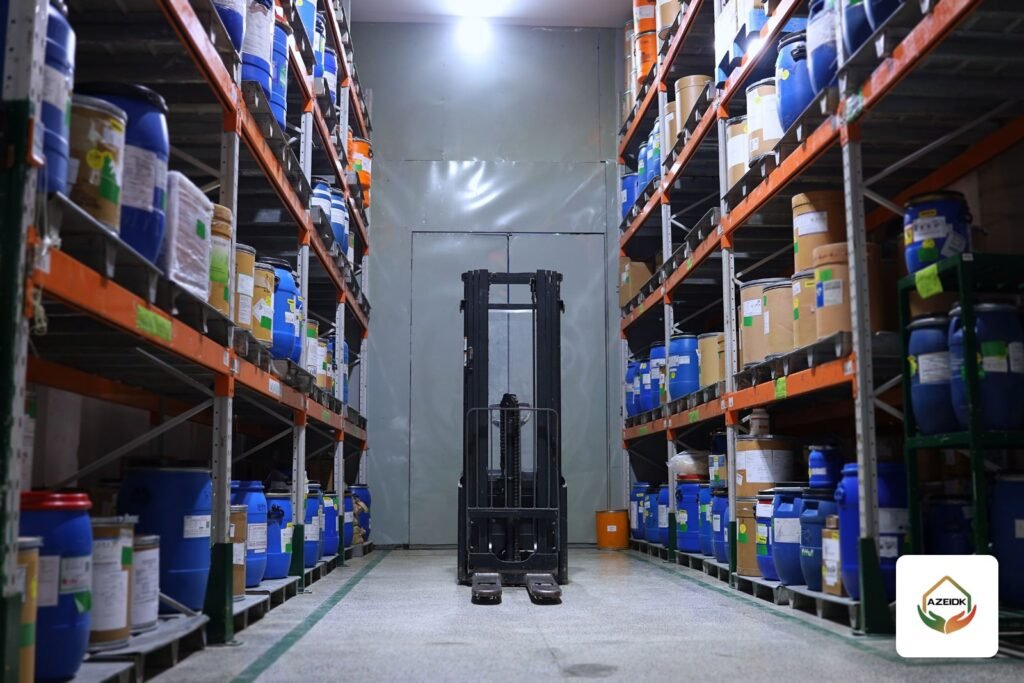
Anyone opening a drug warehouse, or a storage annex attached to one, in Egypt deals with two bodies on fire safety: the Egyptian Drug Authority (EDA), which licenses the warehouse, and the competent Civil Protection administration, whose approvals must be in place before the licence is issued. This guide sets out what the EDA regulatory guideline for drug warehouses actually says, separates it from what we recommend as engineering practice, and maps each point to the equipment AZEIDK Egypt supplies.
The equipment mentioned here is part of AZEIDK Egypt’s fire extinguishers, fire detection and alarm systems and fire fighting systems.
Quick summary
- The official reference is the EDA regulatory guideline on licensing requirements and procedures for drug warehouses (EDREX:GL.CAO.003, edition 04/2025).
- The licence file includes documents proving Civil Defense and Civil Protection measures from the competent administration, and Civil Protection approvals must be obtained before the licence is issued.
- The guideline requires a suitable number of working fire extinguishers of at least 6 kg each, or a fire extinguishing system.
- Building, floors and shelving must be non-combustible, and medicines must sit at least 20 cm from walls and 60 cm from the ceiling.
- The guideline does not name a fire alarm system; engineering details are set by Civil Protection and the Egyptian fire code.
In this article
- Who requires what when licensing a drug warehouse?
- What does the EDA guideline say about fire safety?
- Extinguishers: choosing what passes inspection
- What we recommend beyond the minimum (engineering practice, not guideline text)
- Checklist before the Civil Protection inspection
- Frequently asked questions
- Summary
- Sources
Who requires what when licensing a drug warehouse?
Drug warehouses under the EDA’s remit are licensed under a regulatory guideline issued by the Authority on the basis of EDA Chairman’s Decision No. 725 of 2024, with the current edition in force since March 2025. It covers two types of premises: the drug warehouse itself and the storage annex attached to a drug warehouse.
On fire, the guideline refers the details to Civil Protection. The licensing documents include the documents proving that Civil Defense and Civil Protection measures are in place, issued by the competent Civil Protection administration, and the warehouse requirements state that this applies without prejudice to obtaining the competent Civil Protection approvals before the licence is issued. The general engineering reference in Egypt is the Egyptian Code for the design principles and execution requirements for protecting buildings from fire, 2026 edition, issued by Minister of Housing Decree No. 355 of 2026, together with Building Law No. 119 of 2008, whose Article 49 requires licence applicants to apply fire protection requirements. We explain what the code means for owners in the Egyptian fire protection code, 2026 edition.
What does the EDA guideline say about fire safety?
The table below summarises the fire-related items as they appear in the guideline and what they mean when fitting out the warehouse.
| Item in the guideline | Drug warehouse | Attached storage annex | What it means in practice |
|---|---|---|---|
| Fire extinguishers | A suitable number of working extinguishers, each at least 6 kg, or a fire extinguishing system | A suitable number of extinguishers, each at least 6 kg | Number and placement follow the assessment and inspection; 6 kg is the minimum size |
| Building | Built from modern non-combustible building materials | Not stated in these terms | For insulated metal panels, a certificate from an accredited consulting engineer on the insulation type and that it is non-flammable |
| Floors | Non-flammable, smooth, with welded joints | Non-combustible, with welded joints | Avoid timber floors and unrated vinyl |
| Shelving | Metal racks or racks made of non-combustible materials | Metal or non-combustible shelves or pallets | No timber pallets in the storage area |
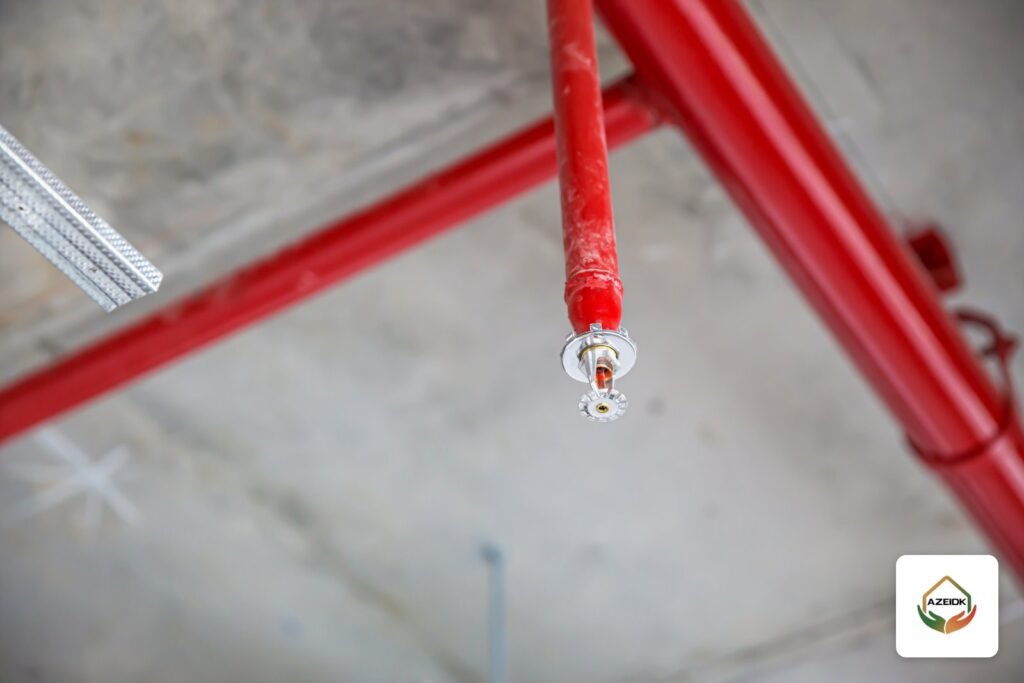
| Storage clearances | At least 20 cm from walls and 60 cm from the ceiling | Not stated in these terms | Ceiling clearance also keeps detectors and any sprinkler heads unobstructed |
| Electricity | A licensed, independent electricity meter for the premises | An independent meter for the premises only | A separate electrical panel that is easy to isolate, with a suitable extinguisher nearby |
| Ventilation and temperature | Fixed ventilation (fans or air conditioning), temperature not above 30 C | Same requirement | Air conditioning units are an electrical load that needs regular maintenance |
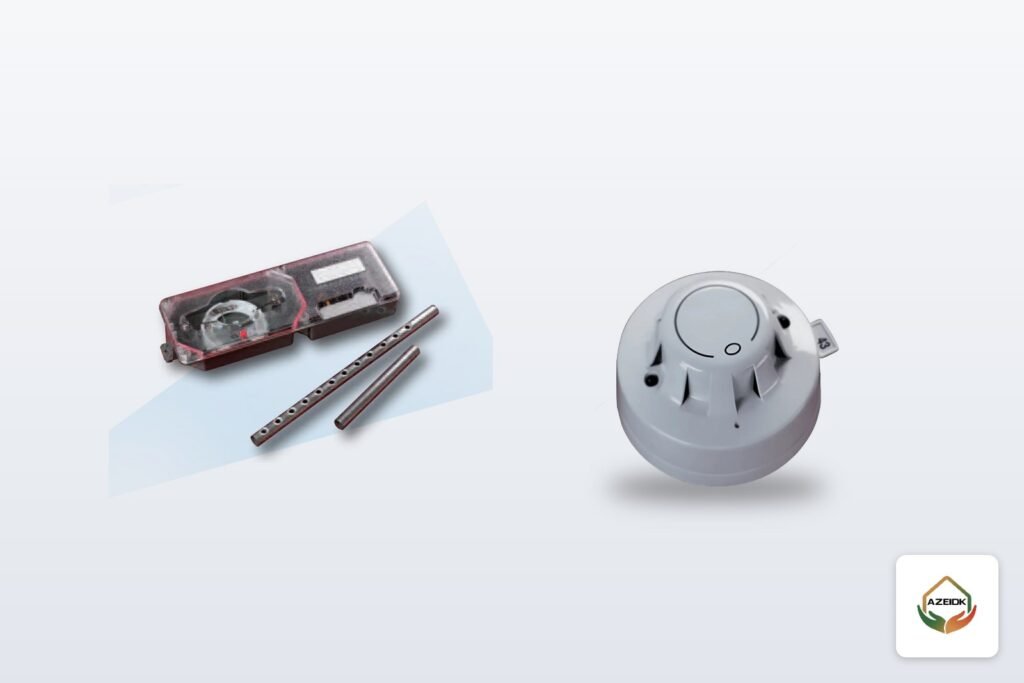
The guideline does not name smoke detectors, alarm systems or emergency exits. These are set by Civil Protection requirements and the Egyptian code according to the warehouse area and building type.
Extinguishers: choosing what passes inspection
The guideline is clear on the 6 kg minimum; the type depends on the hazard in each area. Medicine cartons, paper and plastic are ordinary solid combustibles, while the electrical panel and air conditioning units are an electrical hazard. Most drug warehouses therefore combine ABC dry powder in the storage area with CO2 next to the electrical panel, because CO2 leaves no residue on equipment. This is general technical guidance; the final word is what Civil Protection asks for at inspection.
AZEIDK Egypt supplies PYRAMID dry powder extinguishers in 6, 9 and 12 kg and CO2 extinguishers, which comply with Egyptian standards (ES 8442/2021 for powder, ES 735 for CO2) according to our product pages and each model’s datasheet. How to work out number and placement is covered in fire extinguisher quantity and placement, and servicing in fire extinguisher maintenance, since the guideline requires extinguishers to be in working order.
What we recommend beyond the minimum (engineering practice, not guideline text)
- Early detection: drug warehouses close at night and on holidays, and stock value is high. Smoke detectors connected to an alarm panel, such as Context Plus panels and detectors, warn before a fire spreads and can alert the person in charge or security.
- Clear aisles: leave aisles between racks so extinguishers and the exit route can be reached without moving cartons.
- Separate packaging: empty shipping cartons and plastic wrap add fire load and belong outside the storage area.
- Cold rooms: vaccine and cold-chain refrigerators run continuously, and their motors and cables need regular checks, as explained in fire protection for cold stores.
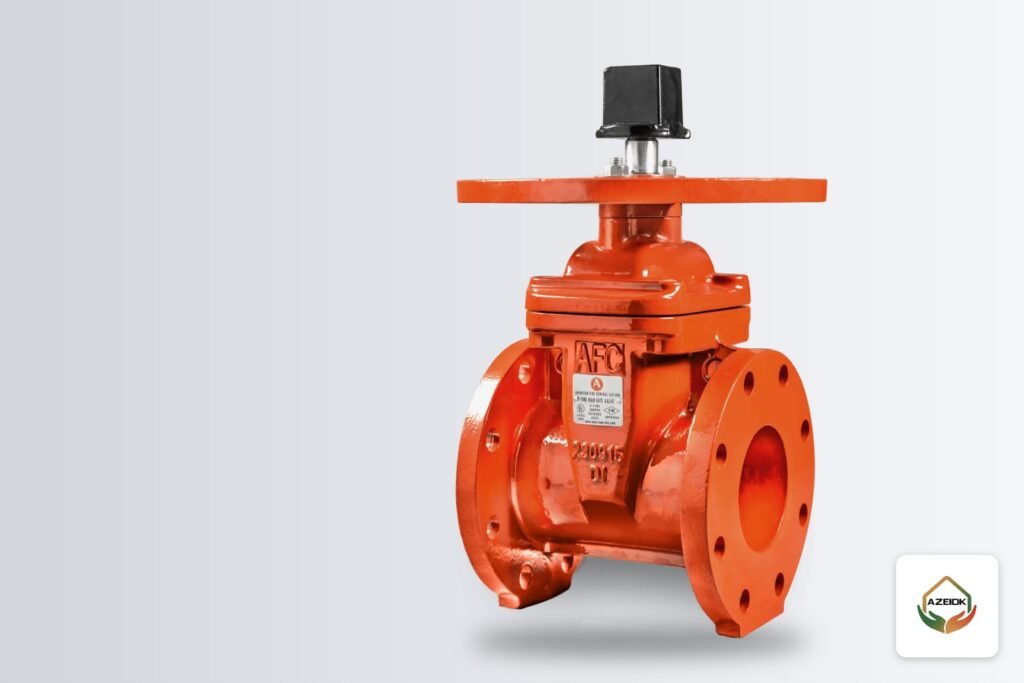
- Large warehouses: a standalone or large warehouse may need an approved design with fire hose cabinets and a water network, as determined by the consultant under the code.
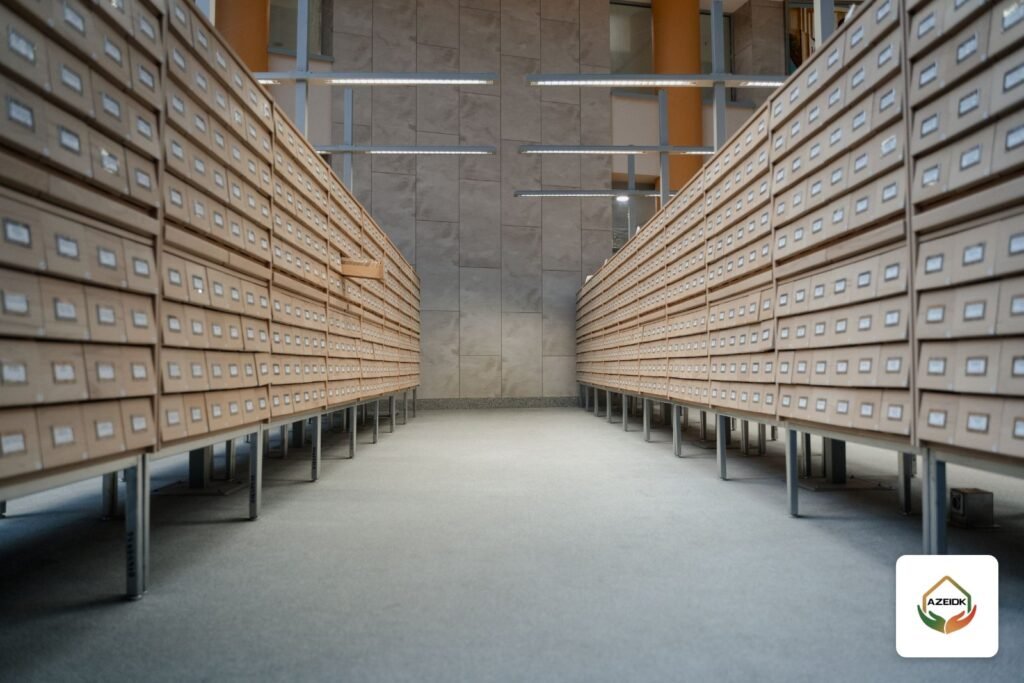
For general non-pharmaceutical storage see warehouse fire protection, for drug manufacturing see pharmaceutical factory fire protection, and for retail see pharmacy fire safety.
Checklist before the Civil Protection inspection
- Extinguishers of at least 6 kg, in working order, with a current service tag, visible and not blocked by stock.
- Metal or non-combustible racks, and no timber pallets.
- Stock kept 20 cm from walls and 60 cm from the ceiling.
- The consultant’s insulation certificate if the building uses insulated metal panels.
- An independent electricity meter, a sound electrical panel that is not overloaded, and a suitable extinguisher beside it.
- Fixed ventilation keeping the temperature below 30 C.
- A clear, unobstructed exit route.
Frequently asked questions
Is the EDA licence enough without Civil Protection approval?
No. The guideline itself requires documents proving Civil Defense and Civil Protection measures from the competent administration, and states that its approvals must be obtained before the licence is issued.
What is the minimum extinguisher size in a drug warehouse?
The guideline states that each extinguisher must be at least 6 kg, with a suitable number of working extinguishers or a fire extinguishing system.
Does the guideline require a fire alarm system?
The guideline does not name an alarm system. Detection and alarm requirements are set by Civil Protection and the Egyptian code according to area and building, and we recommend them in practice for warehouses that close at night.
Does AZEIDK Egypt obtain the warehouse licence or Civil Protection approval?
No. AZEIDK Egypt supplies, installs and maintains fire extinguishers, alarm and fire fighting systems and provides datasheets; licences and approvals come from the competent authorities.
Summary
Fire requirements for a drug warehouse in Egypt start with the EDA guideline: extinguishers of at least 6 kg, non-combustible building, floors and racks, set storage clearances, controlled electricity and ventilation, then Civil Protection approval before licensing. Anything beyond that, such as alarm and water networks, is set by the code and the approved design.
Fitting out a drug warehouse and need the fire equipment list before inspection? Send the warehouse area, number of rooms and building type, and the AZEIDK Egypt team will specify the extinguishers and the right alarm option for the site. Request a quote from AZEIDK Egypt
Sources
- Regulatory guideline on licensing requirements and procedures for drug warehouses (EDREX:GL.CAO.003), Egyptian Drug Authority
- Egyptian Code for protecting buildings from fire, 2026 edition, Minister of Housing Decree No. 355 of 2026
- Building Law No. 119 of 2008, Article 49