

- Home
- Media Center
- Knowledge Center
Short Technical Guides to Fire Protection
Practical answers to the most common questions when selecting fire protection systems, with links to related products and solutions.
Fire pumps: electric, diesel and jockey
Most fire pump rooms include three pumps, each with a defined role:
- Electric pump: the main pump supplying the network with the required flow and pressure.
- Diesel pump: a standby pump that runs on power failure or if the main pump fails.
- Jockey pump: a small pump that maintains network pressure and makes up minor leakage, so the main pump does not start unnecessarily.
Pumps and controllers are selected to the network design; installation and testing reference NFPA 20 and the Egyptian fire code.
Understanding the duty point: flow and pressure
A duty point is written as 750 GPM @ 9 Bar: rated flow in US gallons per minute and rated pressure in bar, determined by hydraulic calculations for the project’s most demanding hazard area.
- 1 GPM ≈ 3.785 L/min, and 1 bar ≈ 14.5 psi.
- Under NFPA 20, the pump must deliver at least 150% of rated flow at no less than 65% of rated pressure.
- Churn (shut-off) pressure must not exceed 140% of rated pressure for horizontal pumps.
Conventional or addressable alarm?
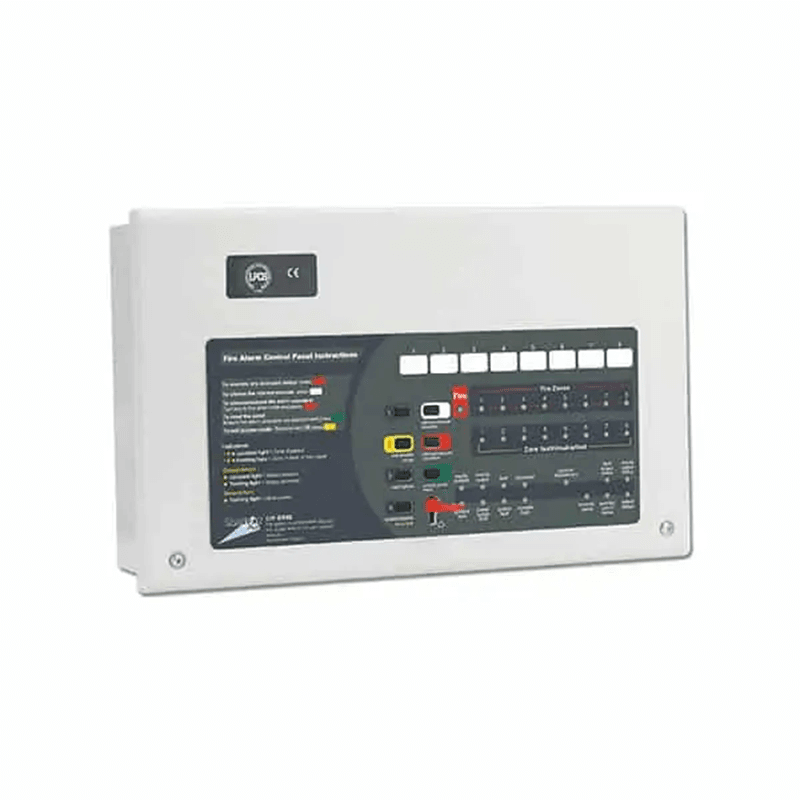
Conventional systems divide the building into zones; an alarm identifies the zone only. They suit small and mid-size buildings at lower cost.
Addressable systems give every device its own address, identifying the exact device and location, with finer cause-and-effect programming. They suit hospitals, factories and large multi-storey buildings.
In large areas with high ceilings such as warehouses, beam detection is often preferred over point detectors.
Fire classes and extinguisher selection
| Class (EN 2) | Burning material | Suitable extinguishers |
|---|---|---|
| A | Solids: wood, paper, textiles, plastics | Water, foam, ABC powder |
| B | Flammable liquids: petrol, diesel, oils | Foam, powder, CO₂ |
| C | Flammable gases | Powder |
| D | Combustible metals | Special metal powder |
| F | Cooking oils and fats | Wet chemical and kitchen suppression systems |
Electrical equipment is not a separate class in EN 2; CO₂ or powder is typically used. In NFPA 10, energized electrical fires are Class C and cooking oils are Class K.
Standard or certification?
A standard (such as NFPA 13 or EN 54) is a technical document setting design or test requirements. A certification (such as UL, FM, LPCB or BSI Kitemark) is issued by a certification body after testing a specific product. That is why certifications are stated per product and model, not as company certifications.
Let’s Build Safer Projects Together
For product inquiries, project quotations and technical consultation, connect with the AZEIDK Egypt team.

