PTFE tape is the first thing most fitters reach for when sealing threaded pipe joints, but it is not the only option. In MEP works, water networks and pump rooms, anaerobic liquid thread sealants and sealing cords such as Henkel’s LOCTITE products are also used. This article compares the three options, when each one fits, and what the official data sheets say about LOCTITE 55, 577 and 542.
AZEIDK supplies Henkel LOCTITE products for joint sealing and threadlocking in Saudi Arabia, as part of its fire fighting systems installation and maintenance supplies.
Key points
- PTFE tape is wrapped on the male thread. It is cheap and quick, but the seal depends heavily on how it is wrapped and how many wraps are used.
- Anaerobic sealants such as LOCTITE 577 and LOCTITE 542 fill the space between threads and cure in the absence of air, preventing loosening from vibration.
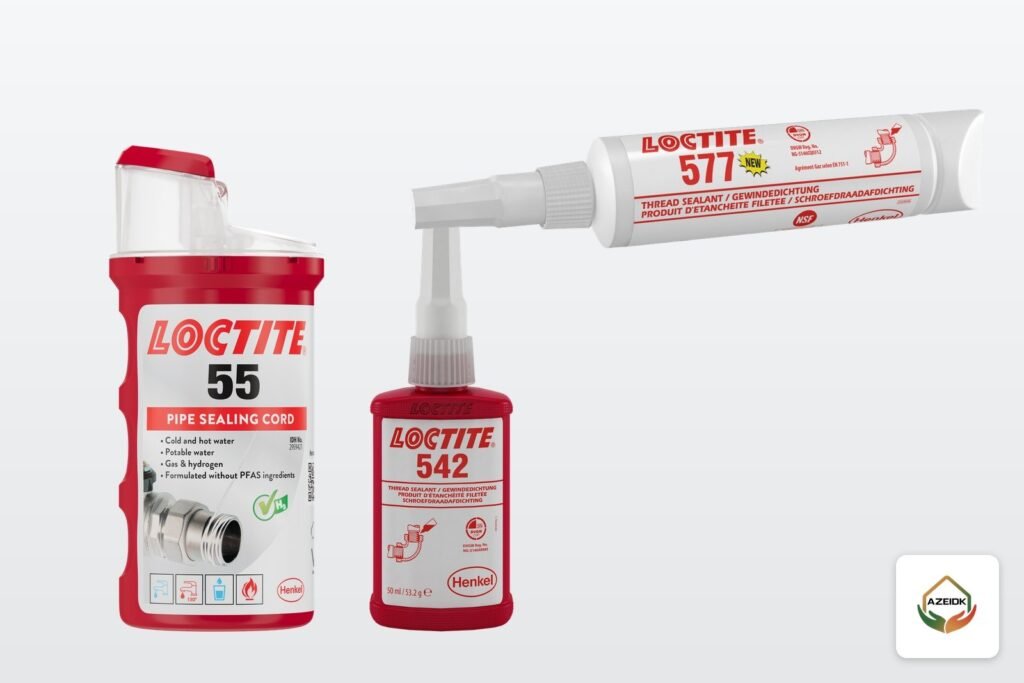
- LOCTITE 55 sealing cord needs no cure and, according to its data sheet, allows the joint to be readjusted by up to 45 degrees after tightening.
- The anaerobic sealants are for metal joints, while LOCTITE 55 suits both metal and plastic threads.
- For fire sprinklers, follow the sprinkler manufacturer’s installation instructions first.
How does each option stop leaks?
PTFE tape: a thin PTFE film wrapped on the male thread in the direction of the thread. It fills part of the gap between the threads and lubricates tightening. The seal is purely mechanical; nothing cures.
Anaerobic sealant: a liquid or paste applied to the thread that cures when confined between close-fitting metal surfaces away from air. The data sheets state that LOCTITE 577 and LOCTITE 542 are designed for locking and sealing metal pipes and fittings and prevent loosening and leakage caused by shock and vibration.
Sealing cord: LOCTITE 55 is a polyamide cord coated with an inert paste, wound from its dispenser onto the pipe threads. It does not cure, so the joint can be used immediately.
Quick comparison
| Item | PTFE tape | LOCTITE 577 / 542 | LOCTITE 55 |
|---|---|---|---|
| Type | PTFE tape | Anaerobic sealant (577 paste, 542 liquid) | Coated sealing cord |
| Pipes | Metal and plastic | Metal; not normally recommended on plastics | Metal and plastic tapered threads up to 4 inch NPT |
| Cure | None | Anaerobic, activator optional | None, immediate use |
| Resists loosening from vibration | No | Yes (medium strength) | No |
| Readjusting after tightening | Rewrap preferred | Only before cure | Up to 45 degrees per data sheet |
| Approvals in the data sheet | Depends on the tape maker | 577: EN 751-1, DVGW, NSF P1 | EN 751-2, DVGW, NSF/ANSI 61 potable water |
When to choose each option
- Quick maintenance and small joints: PTFE tape is practical and easy to find, as long as it is wrapped on the male thread only and no loose ends enter the pipe.
- Metal joints exposed to vibration: such as joints near pumps and rotating equipment. An anaerobic sealant helps here because it locks and seals the joint at the same time.
- Stainless steel: the data sheet states that LOCTITE 577 suits stainless steel without surface activation and fills gaps up to 0.25 mm.
- Immediate use or plastic pipes: LOCTITE 55 needs no cure time, suits metal and plastic joints, and lists potable water approvals in its data sheet.
What about fire sprinklers and fire network joints?
For sprinkler installation the first reference is the sprinkler manufacturer’s official installation manual, which sets the allowed sealant, the tightening torque and where the sealant goes. For example, the Victaulic manual calls for PTFE tape on the male threads only with a maximum torque, as explained in our article on Victaulic sprinkler installation. For threaded pipes and fittings in the network itself, the sealant is chosen to the project specification and the consultant’s approval. You can also review threaded fitting types in Hitachi vs JIANZHI threaded fittings for fire piping.
The data sheets of the LOCTITE products in this article do not mention UL or FM listing for sprinkler systems, so we do not treat them as a substitute for the sprinkler manufacturer’s requirements or the project specification.
Threadlocking is not pipe sealing
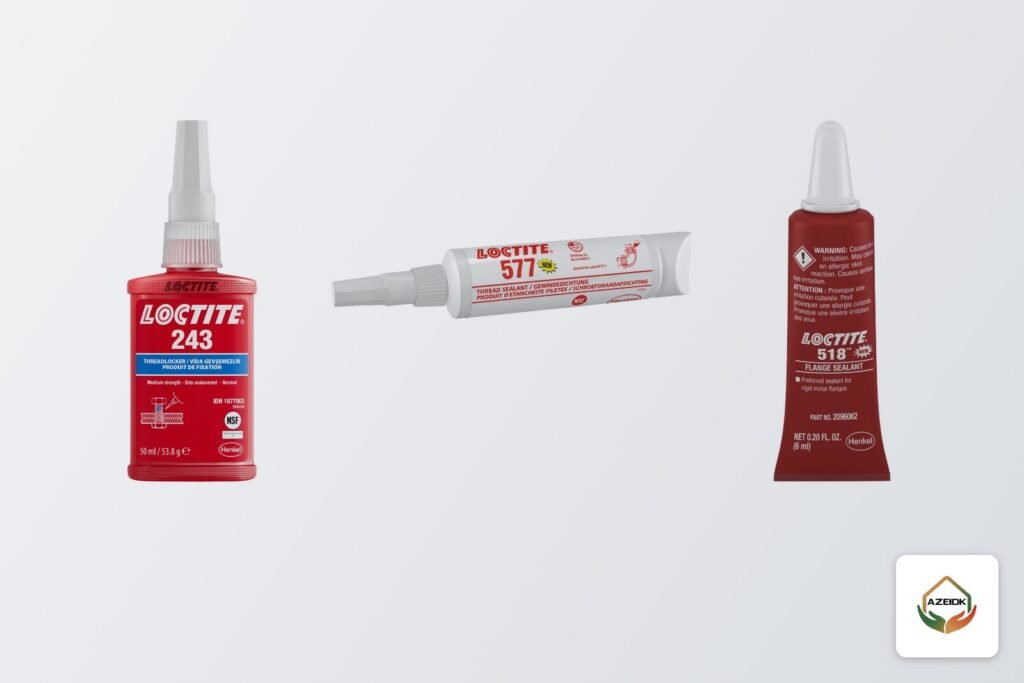
Thread sealants and threadlockers are often confused. Blue LOCTITE 243 is a medium-strength threadlocker that stops bolts loosening under vibration and can be removed with hand tools. Its data sheet names pump, motor and gearbox fasteners as typical uses, but it is not a pipe thread sealant. For close-fitting metal flanges there is LOCTITE 518 as a form-in-place gasket.
FAQ
Can PTFE tape and a liquid sealant be used on the same joint?
This is not advisable, because an anaerobic sealant needs direct contact between metal surfaces to cure. Choose one method per joint.
Is LOCTITE 577 suitable for plastic pipes?
It is not normally recommended on plastics, according to the data sheet. For threaded plastic pipes, LOCTITE 55 sealing cord is the fit.
Does a joint sealed with an anaerobic sealant need time before pressure testing?
Yes. Cure time depends on the metal, the gap and the temperature, and the data sheet shows cure speed curves for each case. LOCTITE 55 does not need to cure.
Are these products suitable for oxygen lines?
No. The data sheets for LOCTITE 55, 577 and 542 do not recommend them for pure oxygen or oxygen-rich systems.
To choose the right sealant for your project or to request the official data sheets, contact AZEIDK.
Related guides
- WATEX Fire Pumps: The Complete Guide to WATEX Pumps in Saudi Arabia (Models, Approvals, Capacities)
- ZKTeco in Saudi Arabia: Time Attendance, Access Control and Turnstiles in Riyadh, Dammam and Jeddah
- Gym Access Control System: Face or Card Terminal, Turnstile and Membership Software Link
- Fire Alarm Log Book and Inspection Report: What to Record and a Periodic Maintenance Report Template