Search for “LOCTITE” and you find dozens of numbers, and a common mistake follows: a threadlocker used on a pipe joint, or a pipe thread sealant used on a flange. The Henkel LOCTITE range is organised by joint type, and this guide sorts the five products AZEIDK supplies in Saudi Arabia by application, with what the official datasheet says about each.
These products are available from AZEIDK on the Henkel brand page and are used in installation and maintenance work in pump rooms, pipe networks and mechanical equipment linked to fire fighting systems.
Quick summary
- Locking bolts and nuts against vibration: LOCTITE 243.
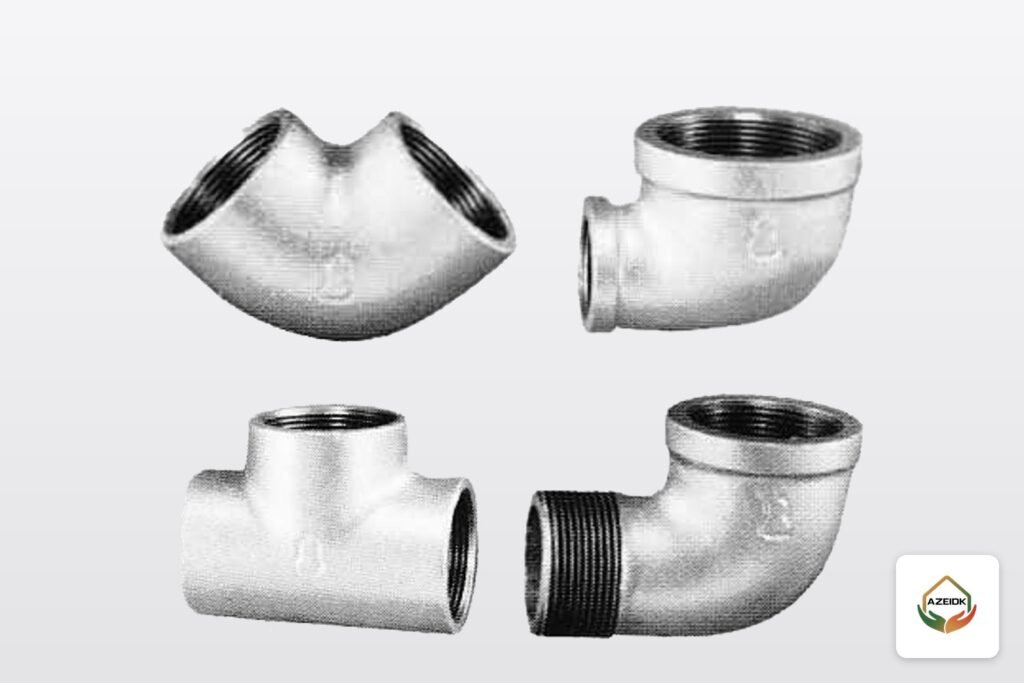
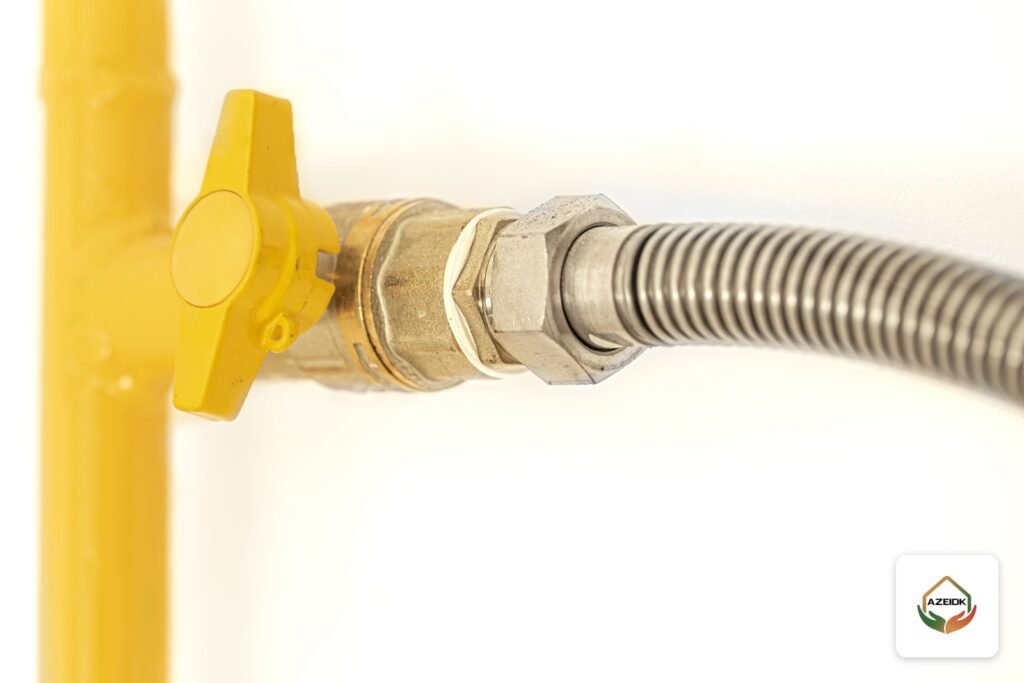
- Sealing threaded metal pipes and fittings: LOCTITE 577 as a paste, or LOCTITE 542 as a liquid.
- Sealing metal and plastic pipe threads with small readjustment after assembly: LOCTITE 55 sealing cord.
- Sealing close-fitting metal flanges as a liquid gasket: LOCTITE 518.
How anaerobic LOCTITE products work
Four of the five products are anaerobic: they stay liquid or paste-like in the bottle and cure when confined between close-fitting metal surfaces without air. They fill the gap between threads or flange faces and prevent loosening and leakage from shock and vibration. The datasheets state that cure speed depends on the substrate, the gap and the temperature, and that an activator can be used as a secondary cure.
LOCTITE 55 is different: a polyamide cord coated with a paste, wound onto the thread, with no curing.
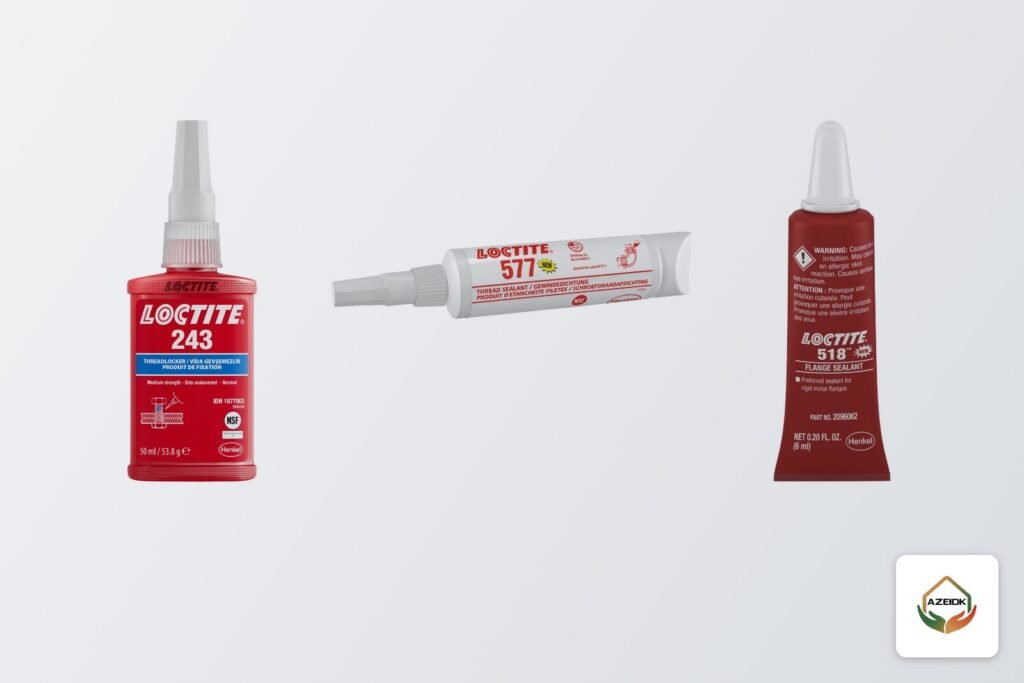
Threadlocking: LOCTITE 243
According to the datasheet, LOCTITE 243 is a blue, medium-strength threadlocker designed to lock and seal fasteners that need normal disassembly with standard hand tools. It works on active metals such as brass and copper and on passive surfaces such as stainless steel and plated parts, and tolerates minor oil contamination. Henkel lists it as suited to fasteners on pumps, gearboxes and motors.
It is a threadlocker, not a pipe joint sealant.
Pipe thread sealing: LOCTITE 577 or LOCTITE 542?
Both are medium-strength anaerobic sealants designed to lock and seal threaded metal pipes and fittings. The clearest differences are consistency and substrate:
- LOCTITE 577: a high-viscosity yellow paste that the datasheet describes as particularly suitable for stainless steel without surface activation, with gap performance to 0.25 mm and cure in the presence of minor cutting and lubrication oil residues.
- LOCTITE 542: a low-viscosity brown liquid for locking and sealing metal pipes and fittings.
For a detailed comparison of these sealants with PTFE tape and sealing cord, see PTFE tape or LOCTITE thread sealant.
Pipe sealing cord: LOCTITE 55
The datasheet describes LOCTITE 55 as a general-purpose pipe and fitting thread sealant wound straight from the dispenser onto the thread. It is recommended for metal and plastic tapered pipe threads up to 4 inch, in aqueous and non-aqueous fluids, and typically for applications up to 149 °C. The joint can be used immediately and accepts small readjustments after assembly.
Approvals listed in the datasheet include NSF/ANSI Standard 61 for potable water systems up to 82 °C, conformity to EN 751-2 and DVGW approval, with Henkel’s note that these are regional approvals to confirm with its technical service centre.
Flange sealing: LOCTITE 518
LOCTITE 518 is a red, medium-strength anaerobic gel used as a form-in-place gasket between close-fitting rigid metal flange faces, such as gearbox covers and engine casings. According to the datasheet it has gap performance to 0.25 mm and resists low pressures immediately after flange assembly, before full cure.
Quick selection table
| Product | Application | Form | Cures? |
|---|---|---|---|
| LOCTITE 243 | Locking bolts and nuts | Blue liquid | Yes, anaerobic |
| LOCTITE 577 | Sealing threaded metal pipes | Yellow paste | Yes, anaerobic |
| LOCTITE 542 | Sealing threaded metal pipes | Brown liquid | Yes, anaerobic |
| LOCTITE 55 | Sealing metal and plastic pipe threads | Coated cord | No |
| LOCTITE 518 | Liquid gasket for metal flanges | Red gel | Yes, anaerobic |
Common mistakes when choosing LOCTITE
- Using a threadlocker on pipe joints instead of a pipe thread sealant.
- Applying an anaerobic product to a plastic joint, when the product in this group meant for plastic pipe threads is LOCTITE 55.
- Pressure testing a joint before the time shown in the datasheet cure curves.
- Combining PTFE tape and liquid sealant in the same joint.
Frequently asked questions
What is LOCTITE?
LOCTITE is the Henkel brand for adhesives and sealants, including threadlockers, pipe thread sealants and flange sealants.
What is the difference between LOCTITE 243 and LOCTITE 577?
LOCTITE 243 is a medium-strength threadlocker that stops bolts and nuts from loosening, while LOCTITE 577 is a thread sealant for metal pipes and fittings.
Which LOCTITE should I use on plastic pipes?
Among the products AZEIDK supplies, LOCTITE 55 sealing cord is the one its datasheet lists for both metal and plastic threads.
Can bolts be removed after using LOCTITE 243?
Yes. The datasheet states it is designed for fasteners that need normal disassembly with standard hand tools.
Can LOCTITE 518 replace a conventional gasket?
It is used as a form-in-place gasket between close-fitting rigid metal faces, with gap performance to about 0.25 mm in the datasheet. Whether it suits your flange depends on its design and on what the equipment manufacturer specifies.
For the official datasheets or a quotation, contact AZEIDK.
Related guides
- Automatic Ceiling Fire Extinguishers and CO2 Extinguishers for Electrical and Server Rooms: SFFECO SFM and CD
- Fire Pump Replacement: When Repair Is Enough, When You Need a New Pump, and the Assessment and Commissioning Steps
- Civil Defense Violations and Fines in Saudi Arabia: The Most Common Facility Violations (Extinguishers, Alarm, Maintenance) and How to Avoid and Settle Them
- Central AC Contractor for Commercial Buildings in Saudi Arabia: HVAC Within an Integrated MEP Package