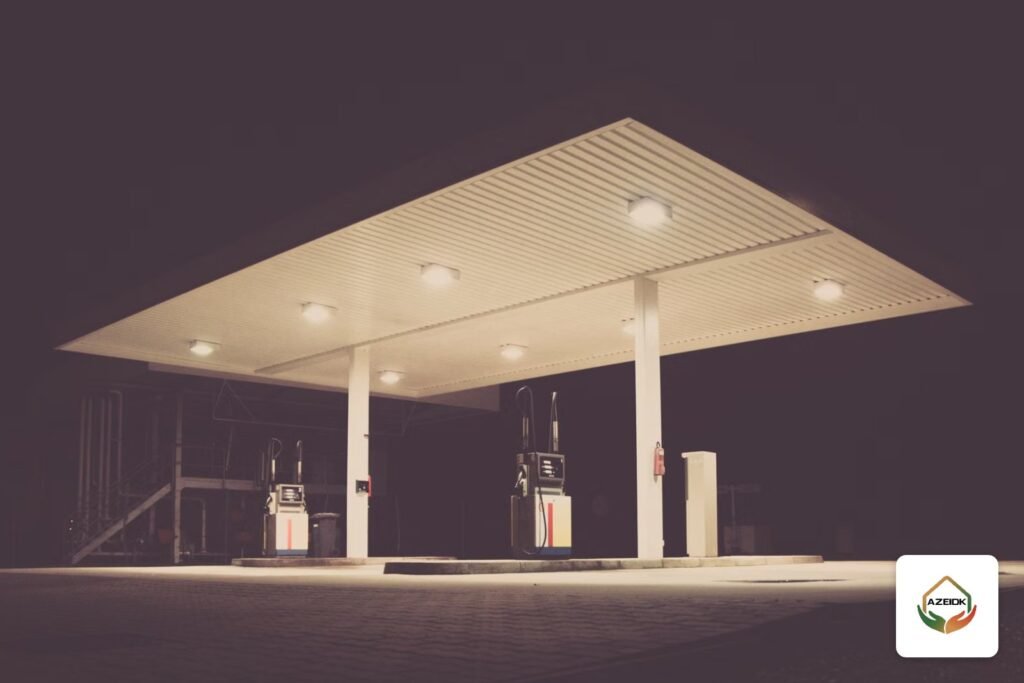
Fitting out a fuel station with safety systems runs through five stages: drawing review and approved design, equipment selection and supply, installation, testing and handover, then the Civil Defense file and Salamah licensing. Saudi Arabia’s Fuel Stations and Service Centers Requirements set the frame: design by a fire protection engineering consultancy, installation by a Civil Defense approved contractor, and a fire alarm system plus an approved suppression system per Chapter 9 of SBC 801.
This guide is for an investor or developer building a new station or rehabilitating an existing one who wants the order of work and the deliverables at each stage. For a summary of the rules themselves, see fuel station safety requirements.
Key takeaways
- Safety systems start from the approved design, not from buying equipment.
- The requirements (clause 4.7.1) call for design by a fire protection engineering consultancy and installation by a Civil Defense approved contractor.
- Extinguishers follow Chapter 23 of the code and sit no more than 22.5 m from dispensers and fill openings.
- Colour CCTV covering the whole station with off-site backup, and a fire alarm inside the station and its mosque.
- The project ends with a full handover file, the safety equipment installation certificate and the Salamah licence.
In this article
- Stage 1: drawing review and design
- Which systems does fitting out a fuel station with safety systems involve?
- Who does what on the project?
- Stage 2: technical selection and supply
- Stage 3: installation and site coordination
- Stage 4: testing, commissioning and handover
- Stage 5: Civil Defense and the Salamah licence
- Rehabilitating an existing station: what changes?
- Common fit-out mistakes
- After opening: maintenance and training
- FAQ
- Conclusion
Stage 1: drawing review and design
Before any purchase, review the station layout: dispenser count and fill point locations, attached buildings (store, restaurant, mosque, service bays) and escape routes. The requirements state that protection systems are designed by a fire protection engineering consultancy, so the approved design is the reference for everything after it. The contractor’s role here is to check that drawings and specifications are buildable, quantities are clear and systems do not clash. AZEIDK offers drawings and specifications review; see also our fire drawings review checklist.
Which systems does fitting out a fuel station with safety systems involve?
| System | What the requirements say | Example of what AZEIDK supplies |
|---|---|---|
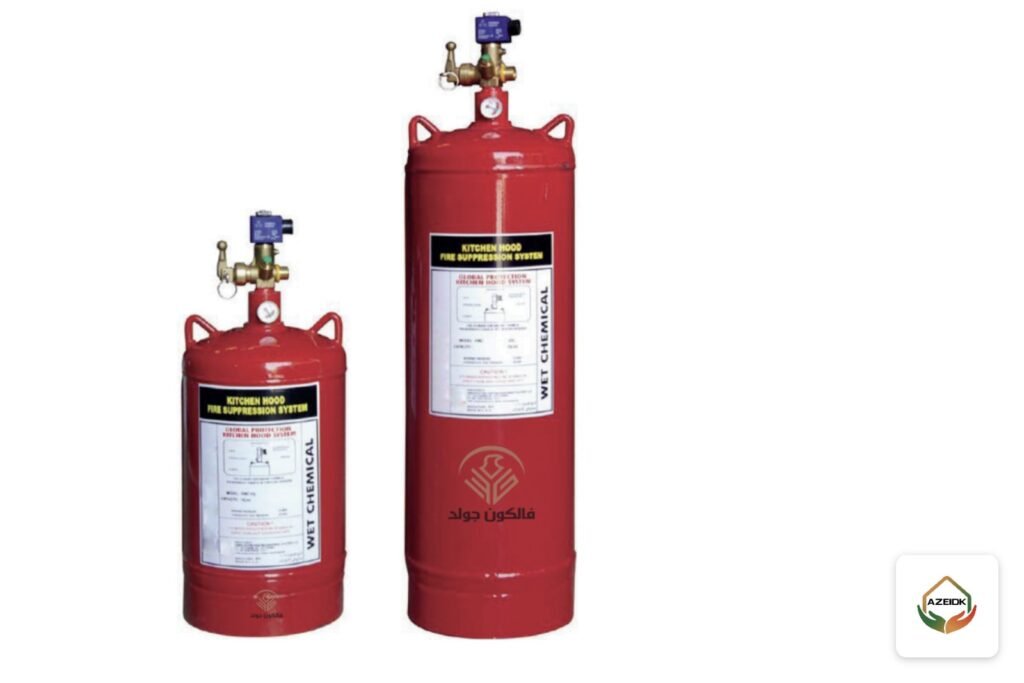
| Extinguishers | Per Chapter 23 of SBC 801, within 22.5 m of dispensers or fill openings | Falcon Gold extinguishers in several types and sizes |
| Fire alarm | A system inside the station per Chapter 9, and inside the mosque | Context Plus conventional and addressable panels and detectors |
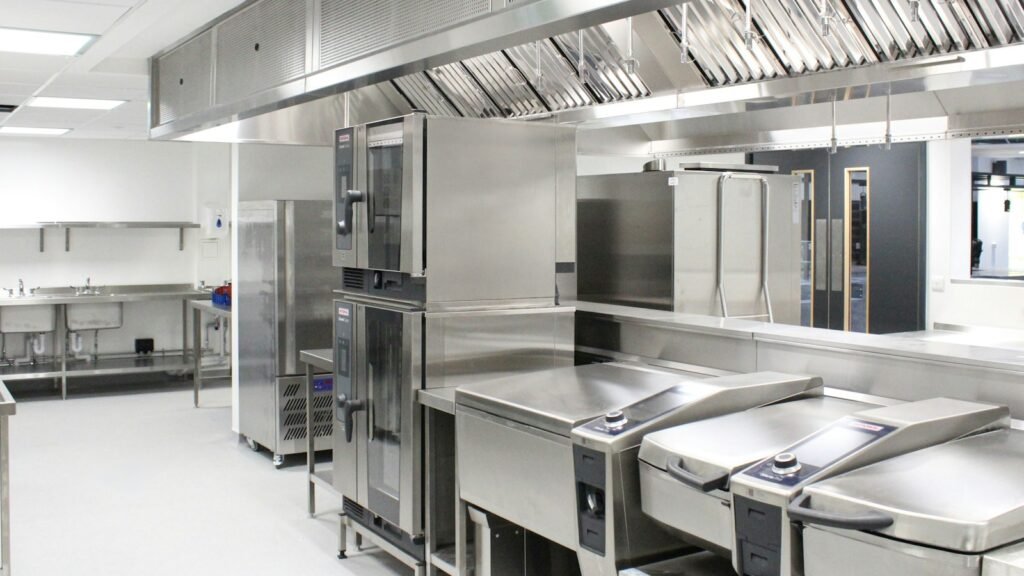
| Suppression | An approved system per Chapter 9, per the design | Per the approved design, including kitchen systems for restaurants |
| CCTV | Full coverage of the station and service centres, colour images, off-site backup | Hikvision and Dahua cameras and recorders |
| Safety equipment | On-site fire-fighting and emergency response facilities | Hose cabinets, fire blankets and first aid boxes |
Some clauses concern electrical and fuel works, such as emergency electrical disconnects 6 to 30 m from the dispensers and automatic shut-off valves in the dispensers. They are not fire systems, but they must be coordinated with alarm and CCTV drawings so routes do not clash.
Who does what on the project?
| Party | Safety systems responsibility |
|---|---|
| Engineering consultancy | Fire protection design and drawing approval |
| Safety systems contractor | Drawing review, shop drawings, supply, installation, testing and handover file |
| Main and electrical contractors | Cable routes, emergency electrical disconnects and coordination with the safety contractor |
| Owner or operator | Approving offers, appointing a safety officer, staff training, maintenance contract and records |
Stage 2: technical selection and supply
Once the design is approved, an equipment list is prepared by model, each with its datasheet and proof of compliance. This is where the owner decides on a conventional or addressable panel, extinguisher types and sizes, and camera count and recording period. For alarms see our fire alarm systems page, and for cameras CCTV for petrol stations. Sourcing everything from one supplier reduces schedule gaps and keeps warranty responsibility in one place. AZEIDK provides technical supply of extinguishers, alarm, CCTV and safety equipment.
Stage 3: installation and site coordination
In a new station, alarm and CCTV conduits go in during construction, before finishes. Most problems come from delaying this step, which later forces surface wiring or chasing. No standard device is installed inside the classified hazardous area around dispensers and fill points; where one is needed there, it must be a model suitable for the area. The requirements state that installation is done by Civil Defense approved contractors, so check the contractor’s approval before signing. AZEIDK handles installation of the systems it supplies.
Stage 4: testing, commissioning and handover
No system is accepted without documented tests: every detector, call point and sounder, the panel batteries, camera coverage, colour image quality and off-site backup, and extinguisher locations and distances. See our testing and commissioning service. The handover file should hold as-built drawings, datasheets, test reports, the extinguisher location list, CCTV passwords and user rights, and the maintenance schedule. It forms the basis of the records the requirements ask the station office to keep.
Stage 5: Civil Defense and the Salamah licence
Civil Defense safety licences are issued through the Salamah platform. AZEIDK issues the safety equipment installation certificate for systems it installed and handles the technical report through an approved engineering consultancy office, under its Civil Defense approval support service. The requirements also call for coordination with the nearest Civil Defense centre on intervention, evacuation, rescue and firefighting plans, and an emergency response plan per Chapter 4 of the code.
Rehabilitating an existing station: what changes?
An existing station starts from an assessment of what is there. Each system is checked: does the panel work and cover every building, are extinguishers sufficient and correctly spaced, are cameras colour, covering the whole station, with off-site backup? Then the scope is set: what to repair, replace or add. AZEIDK offers assessment of existing systems and scope definition. The main challenge is that the station keeps trading during the works, so work is split into short phases, new cable routes avoid the forecourt, and systems that need no chasing in the store are preferred.
Common fit-out mistakes
- Buying extinguishers and cameras before the design is approved, then finding counts or locations do not match.
- Leaving the mosque and service bays out of the alarm system.
- Cameras without off-site backup, although the requirements call for it.
- Adding a restaurant after opening without a suitable kitchen suppression system.
- Handover without as-built drawings and test reports, which stalls the Salamah file.
After opening: maintenance and training
From day one, the requirements call for monthly checks, periodic tests and maintenance of all fire protection systems, and a training programme including hands-on extinguisher use. Sign a preventive maintenance contract for the fire systems before opening, with a separate contract for CCTV.
FAQ
Who designs safety systems for a new fuel station?
The requirements state that a fire protection engineering consultancy designs them.
When should alarm and CCTV conduits be installed?
During construction, before finishes, to avoid surface wiring or chasing later.
What is the maximum distance between an extinguisher and a dispenser?
No more than 22.5 m from the dispensers or tank fill openings, per the requirements.
Does AZEIDK issue the Salamah technical report?
AZEIDK handles the technical report through an approved engineering consultancy office and issues the safety equipment installation certificate itself.
How much does it cost to fit out a fuel station with safety systems?
It depends on station size, buildings and the systems in the approved design. Send the drawings and we will prepare a bill of quantities and offer.
Are extinguishers enough for a small station?
No. The requirements also call for a fire alarm, an approved suppression system per Chapter 9 and CCTV covering the station.
Conclusion
Fitting out a fuel station with safety systems is a five-stage project: approved design, selection and supply, installation coordinated during construction, documented testing and handover, then the Civil Defense file. The earlier coordination starts, the fewer changes and costs. See the full sector offer on our fuel stations page.
Building a new fuel station? Send us the approved drawings and we will prepare the safety systems bill of quantities and a delivery plan. Contact AZEIDK
Related guides
- NAQUA Saudi Arabia: Seafood Plant and Warehouse Fire Safety
- Low Current Maintenance Contract: CCTV, Network, PBX and Access Control in One Agreement
- SABER Certificate of Conformity for Fire Equipment: Steps and Documents
- Fire Alarm Companies in Jeddah: Comparing Distributors, Consultants and Contractors