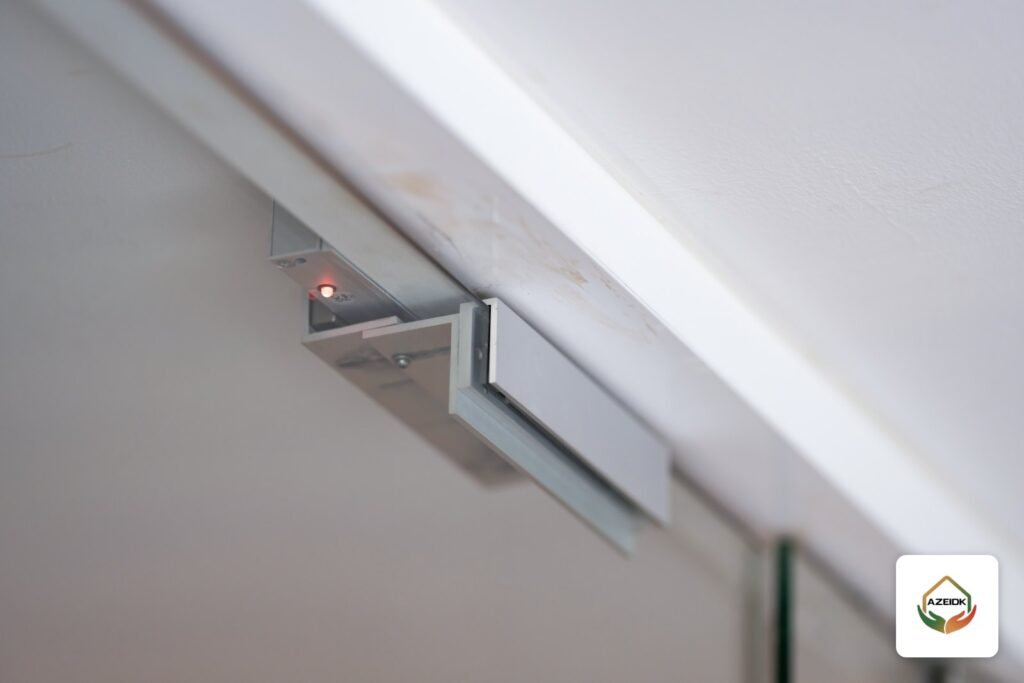
Magnetic lock vs electric strike: a magnetic lock (maglock) is an electromagnet on the door frame that holds a steel plate on the door while it is powered, and releases when power is cut. An electric strike sits in the frame in place of the ordinary strike plate and releases the latch of the door’s own lock when commanded, working with the existing lockset and handle. The maglock is easier to fit and suits glass and aluminium doors; the strike suits doors that need a mechanical lock and free egress by the handle.
This guide compares both on installation, security and behaviour during power loss and fire, within the access control systems AZEIDK delivers.
Key points
- A maglock needs power to stay locked, so it is fail safe by nature.
- An electric strike works with the door’s lockset and is often specified fail secure; check the datasheet.
- For electrically locked egress doors, the US codes NFPA 101 and IBC (reference values) require release on loss of power, and in the sensor-release arrangement also on fire alarm activation.
- Under those reference codes, in the sensor-release arrangement the exit button is 40 to 48 inches above the floor, within 5 feet of the door, and keeps the door unlocked for at least 30 seconds.
- In Saudi Arabia the binding reference is the Saudi Building Code, Civil Defense requirements and the project specification.
Magnetic lock vs electric strike compared
| Item | Magnetic lock | Electric strike |
|---|---|---|
| Principle | Magnet on frame holds a plate on the door | Frame component releases the lock latch |
| On power loss | Unlocks (fail safe) | Stays locked if fail secure; unlocks if fail safe |
| Installation | Surface mounted on the frame | Frame cut-out; needs a compatible lockset |
| Suitable doors | Glass, aluminium, light doors with brackets | Timber and steel doors with lock and handle |
| Egress | Button, sensor or release hardware per arrangement | Usually the door’s mechanical handle |
| Appearance | Visible at the top of the door | Concealed in the frame |
| Power draw | Continuous while locked | Only when releasing (fail secure) |
When to choose a magnetic lock
Maglocks are common in offices and shops because they fit glass and aluminium doors without cutting the door. Choose one for glass or aluminium doors, for doors that should open on power loss or fire alarm, and for internal doors between departments. Note that a power supply with a backup battery keeps the maglock locked during a building power cut, so locks must be released by the fire alarm panel, as explained in fail safe vs fail secure.
When to choose an electric strike
A strike suits doors that should stay mechanically locked, such as warehouse, archive and external doors, because it works with the existing lockset. Egress from inside is usually by the handle without relying on a button or sensor, and the strike is hidden in the frame. Check the datasheet for fail safe or fail secure operation, voltage and compatibility with the lockset.
What the codes require for electrically locked egress doors
| Item | Sensor release | Door hardware release |
|---|---|---|
| Egress | Sensor on the egress side detects an approaching occupant | Lever or panic hardware interrupts lock power directly |
| Power loss | Unlocks, including loss of power to the sensor | Unlocks |
| Fire alarm or sprinkler activation | Unlocks and stays unlocked until reset | Not required by this section |
| Exit button | Marked PUSH TO EXIT, 40 to 48 in high, within 5 ft, cuts power directly, door unlocked at least 30 s | Not required by the model codes |
| Operation | Sensor and button as above | One hand, all lighting conditions, immediate release |
The source also notes that some code editions require locking system units listed to UL 294. These are US model code requirements as explained by iDigHardware (Allegion); in Saudi Arabia, confirm with the Saudi Building Code, Civil Defense requirements and the consultant.
Wiring to the controller and fire alarm
The Hikvision DS-K2801 has a lock relay with NC, COM and NO terminals, an exit button input and a door contact input; NC is typically used for a maglock and NO for a fail secure strike. The ZKTeco F22 has interfaces for an electric lock, door sensor, exit button and alarm. Test every door before handover: card, exit button, power loss, fire alarm signal and door-held-open alert. See access controller door wiring and access control cost per door.
Frequently asked questions
What is the difference between a maglock and an electric strike?
A maglock holds the door with a magnet and releases when power is cut. A strike releases the latch of the door’s own lock.
Does a maglock open in a power cut?
Yes if its supply is cut, but a battery-backed power supply keeps it locked, so it must be released by the fire alarm.
Which suits glass doors?
Usually the maglock, mounted on the frame with suitable brackets.
Does an electric strike stay locked without power?
A fail secure strike does, while egress stays available through the handle. Check the datasheet.
Do I need a door contact?
It is recommended so the controller knows when a door is held or forced open; the DS-K2801 has a dedicated input.
Choosing locks for your doors? Send us photos of the doors, their type and whether they are on escape routes, and we will propose locks, readers, controllers and fire alarm integration. Contact AZEIDK
Related guides
- Access Gates for People and Vehicles: Types, Access Control Integration and Egress
- Sprinkler Systems: Wet vs Dry vs Pre-action vs Deluge
- Gym Fire Safety Requirements in Saudi Arabia: Alarm, Extinguishers, CCTV and Member Access Control
- Mall Fire Sprinkler Systems: Corridors, Shops, Hypermarkets, Car Parks and High Ceilings