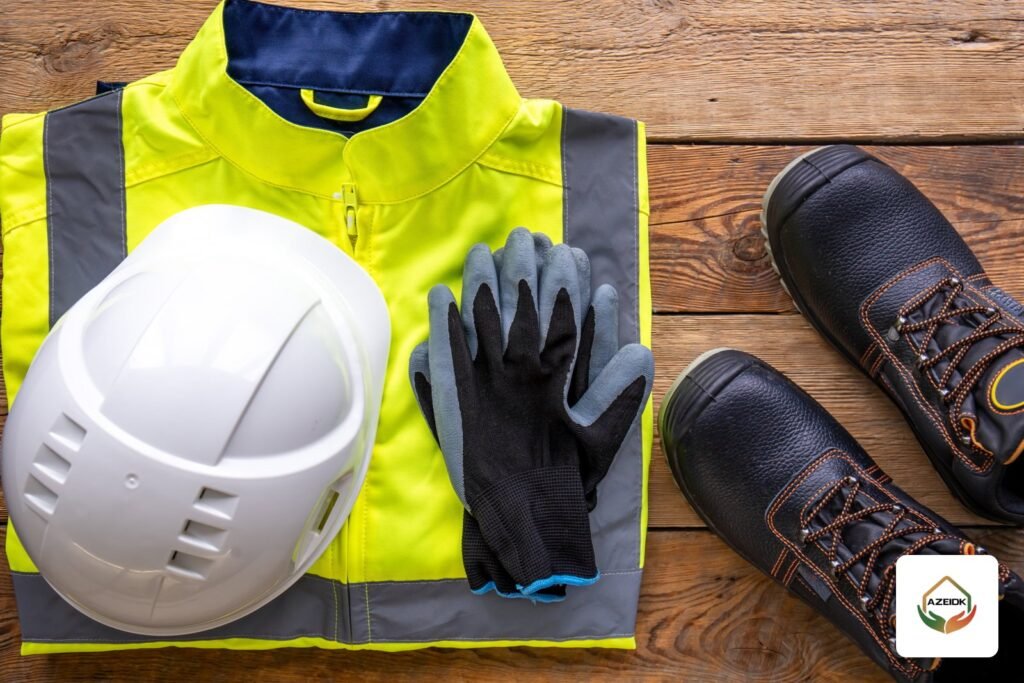
Coverguard is a personal protective equipment brand, and AZEIDK supplies three Coverguard products in Saudi Arabia: professional safety shoes, a high-visibility reflective vest and a bump cap for light impacts. Each has a specific job: the shoes protect the foot from falling objects, penetration and slips; the vest makes the worker visible to vehicles and plant; and the bump cap protects the head only against knocks on fixed objects, not against falling objects. This guide explains how to choose each item, which standard to ask about, and when a bump cap is not enough and a safety helmet is required. The products are available in the AZEIDK safety equipment range, for individuals at the branches and for projects in bulk.
Key takeaways
- The Coverguard product pages on the AZEIDK site describe each item as a general category; model, size and protection level are confirmed from the catalog at order stage.
- Safety shoes are classified under ISO 20345, and the class code on the shoe (such as S1P or S3) shows what it protects against.
- High-visibility clothing is graded under ISO 20471 into three classes by the area of fluorescent and retroreflective material.
- A bump cap under EN 812 does not protect against falling or moving objects, so it must not replace a helmet on construction sites.
- You can buy single items at AZEIDK branches or order quantities for projects and contractors.
In this article
Which Coverguard products does AZEIDK supply?
The Coverguard brand page lists three products. Here is what each product page says:
| Product | Protects against | Options by model | Confirm before ordering |
|---|---|---|---|
| Professional safety shoes | Objects falling on the toes, penetration from below on some models, slips | Low-cut or high-cut; steel, composite or aluminium toecap; oil or water resistance | Protection class on the datasheet, sizes and quantities |
| High-visibility safety vest | Not being seen in traffic and plant areas | Hi-vis yellow or orange; horizontal or shoulder bands; zip or hook-and-loop closure; pockets | Class and standard, sizes per worker |
| Bump cap for light impacts | Knocks against fixed objects and scrapes in low areas | Fabric shell with inner shell, vents, rear adjustment | Standard, size and colour in writing before purchase |
The pages themselves note that specifications vary by model, and that not every Coverguard vest or shoe offers the same protection level. Ask for the official catalog of the exact model you will receive, and check the standard marked on it.
Coverguard safety shoes: how to read the class
The international safety footwear standard is ISO 20345:2021, which sets basic and optional requirements for general-purpose safety footwear, including a toecap tested against a 200 J impact. Every certified shoe carries a class code such as S1P or S3, and each code bundles extra protections such as penetration resistance or water resistance. The exact meaning for each model is in its datasheet, so read it before ordering rather than relying on the product name.
Think about the site itself:
- Sites with nails or rebar: choose a model with a penetration-resistant midsole.
- Warehouses with smooth or oily floors: focus on slip and oil resistance.
- Outdoor work in the heat: breathable materials make a long shift more bearable.
- Electrical work: ask about the electrical properties of the specific model, since not every safety shoe suits it.
Correct sizing is part of protection: a loose shoe causes trips, and a tight one gets taken off mid-shift. That is why the product page asks for sizes and quantities with every order. For a wider comparison of footwear, coveralls and gloves, see our general article on personal protective equipment.
Reflective vests: which class do you need?
ISO 20471:2013 grades high-visibility clothing into three classes (Class 1, 2 and 3). Each class sets minimum areas of fluorescent background material and retroreflective tape, and the level is chosen from a site risk assessment. In practice, the faster the traffic around the worker and the poorer the light, the more visible material is needed.
The Coverguard vest page lists hi-vis yellow and hi-vis orange, with tape layouts that vary by model. Pick the colour that contrasts with the work environment; on a sandy or yellow background, for example, orange stands out more. Order sizes per worker, because an oversized vest can snag on equipment.
Bump cap or safety helmet?
This is the most important question in this guide. A bump cap is covered by EN 812, whose scope is protecting the head when it strikes hard, stationary objects. The standard states plainly that bump caps are not intended to protect against falling or thrown objects, or moving or suspended loads. The European Agency for Safety and Health at Work adds that bump caps should only be used where the risk assessment has identified no hazard from objects falling from above.
| Item | Bump cap (EN 812) | Industrial safety helmet (EN 397) |
|---|---|---|
| Protects against | Striking fixed objects (pipes, racks, low ceilings) | Objects falling from above |
| Typical places | Plant rooms, maintenance workshops, low warehouse aisles | Construction sites, work under cranes or scaffolding |
| Weight | Lighter | Heavier |
If your site has a crane, scaffolding or work happening above the worker, a bump cap is not suitable however comfortable it is. The Coverguard bump cap page itself says it is no substitute for an industrial safety helmet where falling objects are a risk.
On sites that have both conditions, such as a warehouse with low racking in one area and forklift loading in another, mark on the site plan where a bump cap is enough and where a helmet is required, and post it at each zone entrance so the decision is not left to the worker.
When should you replace safety shoes, vests or bump caps?
PPE loses protection with use, and the worker may not notice. Make a quick visual check part of the start of every shift, and replace the item in these cases:
- Shoes: when the toecap shows through the leather, after a heavy impact on the toes, when the sole tread has worn smooth, or when the sole separates from the upper.
- Vest: when reflective tape cracks or peels, the fluorescent colour fades, or dirt no longer washes out, because its whole value is being seen.
- Bump cap: when the inner shell cracks, the liner is damaged, or it has taken a hard knock.
Follow the manufacturer’s instructions in the model catalog for service life, washing and storage, and do not leave PPE in direct sun inside vehicles or on site for long periods. On projects, keep a simple log of issue dates per worker; it shows when replacement is due and stops worn items being handed to new workers.
How to buy Coverguard products from AZEIDK
There are two routes. Individuals and small businesses buy single items at AZEIDK branches; the branch list is on the contact page. Contractors and projects send a bill of quantities with sizes, and the order is supplied through technical supply together with other safety items such as fire extinguishers and first aid boxes. Either way, ask for the official catalog of the specific model before delivery, and check that the standard and sizes match your order.
Frequently asked questions
Can a bump cap replace a safety helmet?
No. A bump cap under EN 812 protects only against knocks on fixed objects, not falling objects. On construction sites or under cranes, an industrial safety helmet is required.
What do S1P and S3 mean on safety shoes?
They are class codes under ISO 20345 that add protections on top of the basic toecap, such as penetration or water resistance. The exact details are in the model’s datasheet.
What is the difference between hi-vis vest classes?
ISO 20471 sets three classes based on the minimum area of fluorescent material and reflective tape. Higher classes are for higher-risk areas, chosen through a risk assessment.
Can I buy a single pair of Coverguard shoes at a branch?
Yes. AZEIDK branches in Saudi Arabia sell single items to individuals as well as supplying projects.
How do I choose the right shoe or vest size?
Sizes vary by model, so check the size chart in the catalog. For projects, collect each worker’s size rather than ordering one size for everyone.
Are Coverguard products certified?
The standard and protection level vary by model, so ask for the official catalog of the specific model and check the standard it states before buying.
Conclusion
Choose Coverguard products by the real hazard on site: shoe class by floor and penetration risk, vest class by traffic and light, and a bump cap only where nothing can fall from above. In every case, confirm the standard and size from the model catalog before delivery.
Need safety shoes, reflective vests or bump caps for your team? Visit your nearest branch or send quantities and sizes, and the AZEIDK team will prepare the order with the official catalog for each model. Talk to the AZEIDK team
Related guides
- Fire Pump Rooms in Saudi Arabia: Components, Design and Installation
- Lithium Battery Storage in Warehouses and E-Scooter Shops: Thermal Runaway Risk and Protection
- Context Plus Fire Alarm Application Guide: Panel Selection, Programming, Commissioning and Maintenance
- Context Plus Addressable Smoke Detectors: Addressing, Bases, Loop Wiring and When to Choose Them