Barbershop requirements in Saudi Arabia start, on the safety side, with one clear rule: Civil Defense approval is needed before the municipal licence is issued, and the shop must follow the Saudi Fire Protection Code (SBC 801). The same applies to women’s beauty salons under the executive rules issued by the Ministry of Municipalities and Housing. In practice that means the right fire extinguisher for the hazard, sound wiring for appliances that heat up all day, organised storage of dyes, sprays and flammable products, a first aid box, and security cameras only where the law allows them. This guide explains each point in plain terms and shows where Civil Defense approval support fits in.
Key takeaways
- The Men’s Barbershop Requirements (Ministry of Municipalities and Housing, 1446 AH) require Civil Defense approval before the licence is issued and refer fire protection to the Saudi Fire Protection Code.
- The Executive Rules for women’s beauty salons (1446 AH) repeat the same condition, name the code explicitly (SBC 801) and refer electrical work to the Saudi Building Code.
- Both documents require a first aid box and hazardous waste containers for sharp tools and chemicals such as dyes, and both ban gas lighting inside and outside the shop.
- Security cameras follow the Law on the Use of Security Surveillance Cameras and its Implementing Regulation; women’s salons have specific locations set in Article 8 of the regulation.
- The number and type of extinguishers is not a guess. It depends on floor area, hazard type and what Civil Defense requires for your activity on the Salamah platform.
In this article
- What are the barbershop requirements in Saudi Arabia for safety?
- Women’s beauty salon requirements: what is different?
- Fire extinguishers for a barbershop: which type and how many?
- Electrical safety in barbershops: where the risk starts
- Storing flammable products in a salon
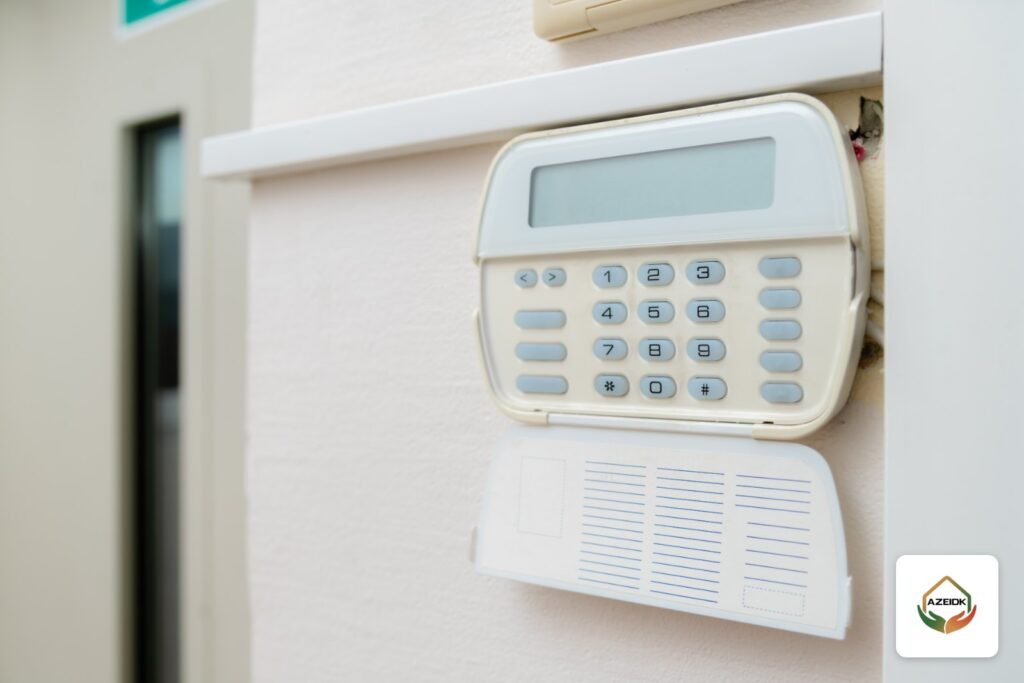
- Does a barbershop need a fire alarm system?
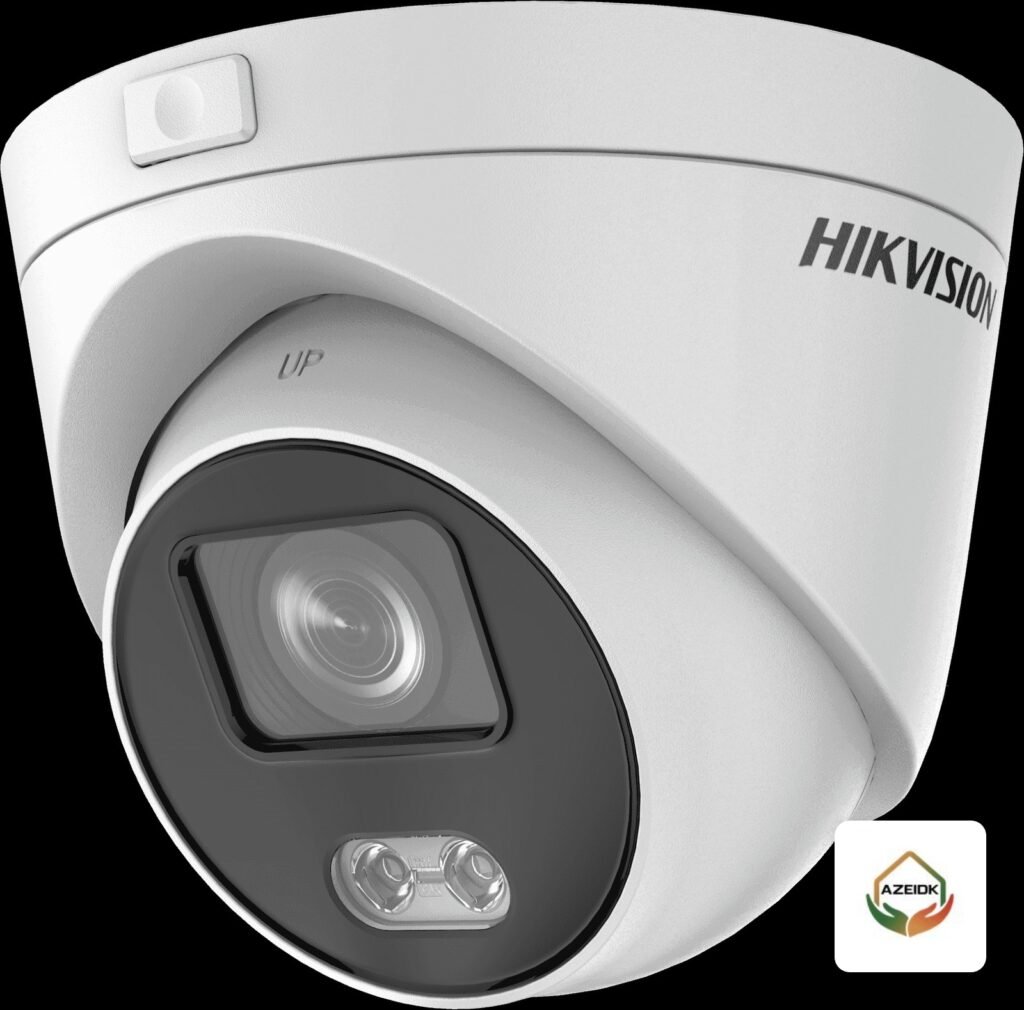
- CCTV in barbershops and women’s salons
- Steps to get Civil Defense approval for a barbershop
- Quick checklist for salon owners
- Frequently asked questions
- Conclusion
What are the barbershop requirements in Saudi Arabia for safety?
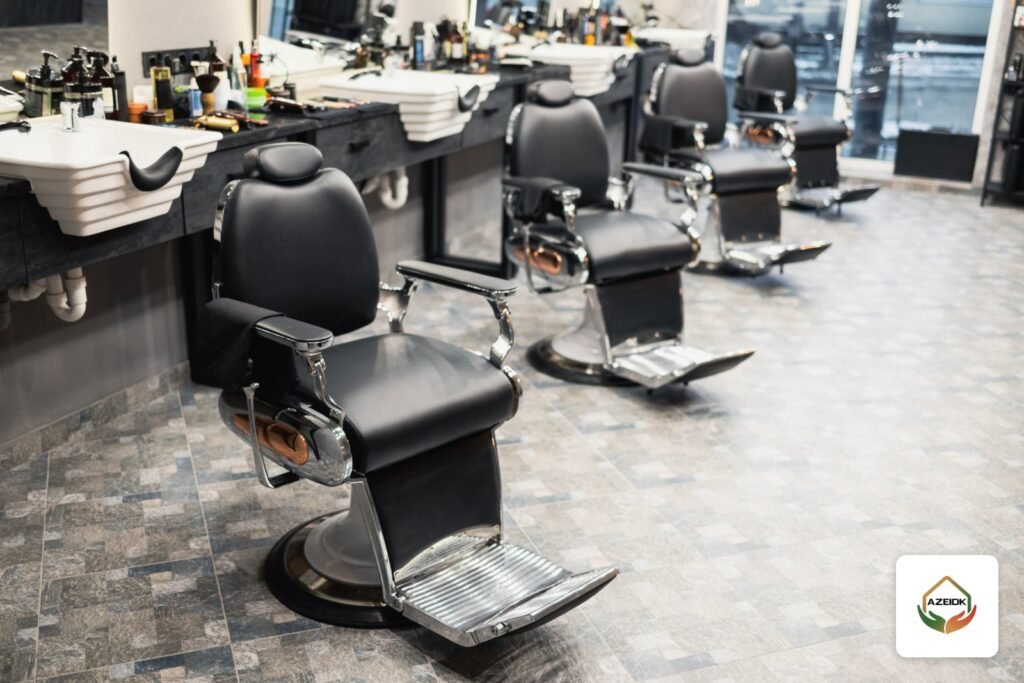
The Ministry of Municipalities and Housing issued the “Men’s Barbershop Requirements” under Ministerial Decision No. 4500735414/1 dated 28/02/1446 AH. The document covers location, frontage, floors, lighting, hygiene and staff, and includes several direct safety items:
- Licensing: Civil Defense approval must be obtained before the licence is issued.
- Fire prevention and protection: refer to all requirements of the Saudi Fire Protection Code.
- Lighting: fittings in the shop and its facilities, including the store room, must meet approved standards, and gas lighting is banned inside and outside the shop.
- Operation: a first aid box, at least one sterilising device, hazardous waste containers for sharp tools and chemicals, and dedicated cabinets for cleaning agents and disinfectants.
- Steps and outside walkways: kept free of obstructions that would slow a quick evacuation in an emergency.
Note that the document gives no number of extinguishers and no alarm type. Those details come from the code and from Civil Defense requirements for your activity, and this is where most shop owners get confused.
Women’s beauty salon requirements: what is different?
Women’s salons fall under the “Executive Rules for the Controls on Practising Women’s Beauty Activity” issued by the Ministry of Municipalities and Housing (1446 AH), which replace the earlier rules of 1444 AH. On safety they repeat most of the barbershop items and add a few details:
- Civil Defense approval before the licence is issued.
- Compliance with the Saudi Fire Protection Code (SBC 801) and with the Saudi Building Code including its electrical requirements, with the Saudi Electrical Code (SBC 401) listed among the reference documents.
- Entrances and exits on the frontage only; side and rear exits may be used only in emergencies. So a rear emergency exit, if there is one, must stay clear and must not become a store.
- No storage of materials unrelated to the activity and no products of unknown origin.
- Hazardous waste containers for sharp tools and chemicals such as razors and dyes.
- Maintenance of service lines, including gas lines where present, and no gas lighting.
Fire extinguishers for a barbershop: which type and how many?
A fire in a barbershop or beauty salon usually starts from one of two sources: ordinary combustibles such as towels, furniture and paper (Class A), or an electrical fault in appliances, wiring or the distribution board. The usual choice is:
| Area | Common extinguisher type | Practical note |
|---|---|---|
| Service area and corridors | Multi-purpose dry powder (ABC) | Covers solids, liquids and electrical fires, but leaves powder residue after use. |
| Near the distribution board and sterilisers | Carbon dioxide (CO2) | Suits electrical equipment and leaves no residue; ventilate a small closed room after discharge. |
| Small store for dyes and sprays | Dry powder (ABC) | Mount it outside the store door, not inside behind the stock. |
Quantity, travel distance and mounting height are set by the code and Civil Defense according to floor area and hazard, with NFPA 10 as the technical reference. For a first estimate use the fire extinguisher calculator, and for the technical detail read our NFPA 10 portable extinguishers guide. AZEIDK’s fire extinguisher range includes Falcon Gold dry powder and CO2 units such as the 6 kg dry powder extinguisher and the 6 kg CO2 extinguisher.
Three mistakes we see often in small shops: an extinguisher hidden behind a chair or inside a cabinet, an extinguisher months past its service date, and a single unit for a shop with a separate store room. Inspection and refilling are covered in fire extinguisher maintenance and refill.
Electrical safety in barbershops: where the risk starts
The requirements refer electrical work to the Saudi Building Code and do not list appliances. The nature of the work still creates clear risk points, because a salon runs heating appliances for long hours: hair dryers, straighteners, water heaters, sterilisers and air conditioners.
- Do not overload extension leads. A dryer, a straightener and a steriliser on one lead at each chair heats the lead and the plug. The right fix is enough wall sockets at each station, sized by a qualified electrician for the load.
- Switch off hot appliances after closing. A straightener left on a chair or towel is a classic cause of small shop fires.
- Keep water and power apart. Basins sit close to sockets in most salons, so make sure the circuit has the protective device your electrical engineer specifies.
- The distribution board is not a shelf. Keep towels and boxes away from it, keep it closed and easy to reach.
- Use appliances that meet approved standards. Unknown-origin devices may not cope with continuous use.
Storing flammable products in a salon
Many salon products are flammable: hair sprays (aerosols), nail polish remover that often contains acetone, alcohol and hand sanitisers, and some solvents and dyes. The danger comes less from the product itself than from keeping it next to a heat source.
- Keep them in a dedicated cabinet away from dryers, straighteners, heaters and direct sun. The barbershop requirements already call for dedicated cabinets for cleaning agents and disinfectants.
- Hold only working quantities. The women’s salon rules ban storing materials unrelated to the activity.
- Never store products in corridors or in front of the emergency exit.
- Dispose of dye residue, chemicals and sharp tools in the hazardous waste containers both documents require, with self-closing lids.
Does a barbershop need a fire alarm system?
Neither the barbershop nor the women’s salon document sets an alarm type. The reference is the code and the Civil Defense requirements for your activity, floor area and location in the building. A small street-front shop is not the same as a salon inside a mall with a central alarm system; in the second case you need to know whether the detectors in your unit are connected to the building panel. Where the activity or location calls for a system, we design and install it as part of our fire alarm systems. Emergency lighting and exit signs follow what Civil Defense asks for; see emergency lighting and exit signs.
CCTV in barbershops and women’s salons
Both documents refer security cameras to the Law on the Use of Security Surveillance Cameras and its Implementing Regulation. There is an important difference between the two activities:
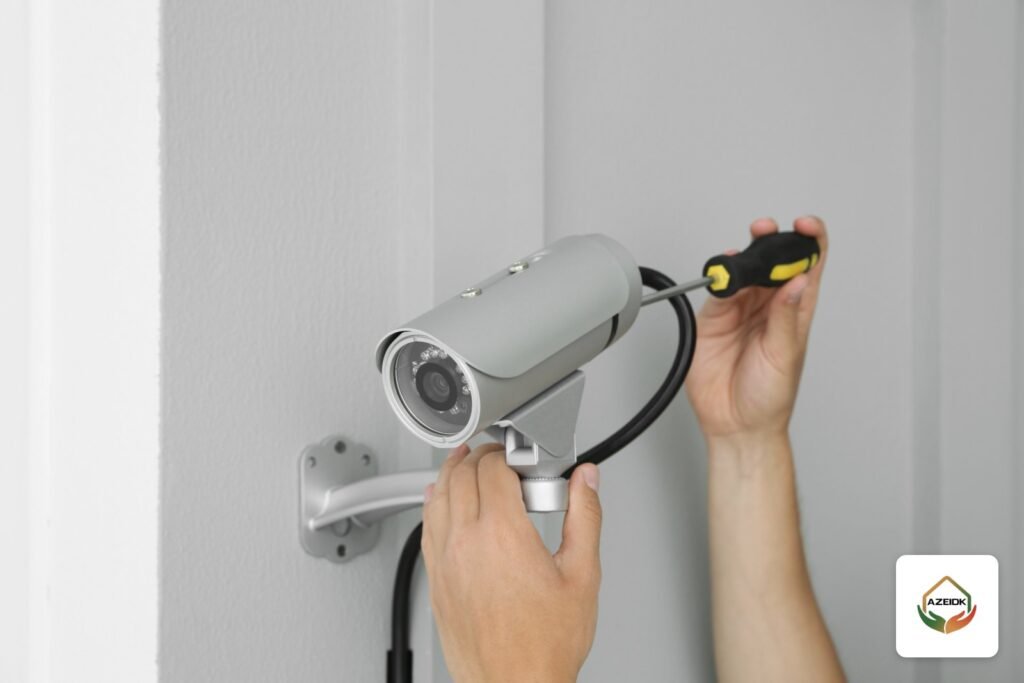
- Men’s barbershop: cameras go in the locations set by the law and its regulation, such as entrances.
- Women’s salon: when the law was approved in 2022, Okaz reported that it bans cameras inside women’s salons and clubs. Article 8 of the Implementing Regulation sets the camera locations for women’s salons by reference to specific items of Article 2, requires a privacy mask for certain camera types and bans enabling audio recording without approval from the competent authority.
So do not choose camera positions in a women’s salon yourself. Read the official text first, then design coverage around it. We explain the general obligations in the Saudi security cameras law and its obligations, and supply and install systems under security and surveillance systems.
Steps to get Civil Defense approval for a barbershop
- Log in to the Salamah platform and check your activity classification and requirements as the platform shows them.
- Prepare the shop: extinguishers mounted in visible places, emergency lighting and exit signs where required, sound wiring, clear corridors and exits.
- Prepare the documents the platform asks for, such as the safety equipment invoice or the technical report.
- Submit the application, then link the municipal licence on the Balady platform.
- After opening, keep extinguishers and systems maintained; licences are renewed and inspections can come at any time.
The technical report required on Salamah comes from an approved engineering office. AZEIDK installs the safety equipment, issues the safety equipment installation certificate and coordinates with the engineering office as part of Civil Defense approval support, and our maintenance team inspects and refills extinguishers. For the full platform walkthrough see the Salamah certificate guide, and check your shop before applying with the Salamah inspection checklist.
Quick checklist for salon owners
| Item | What to check |
|---|---|
| Extinguishers | Right type, mounted and visible, valid service tag, and the gauge on dry powder units in the green zone. |
| Electrical | No overloaded leads, no exposed wires, distribution board closed and accessible. |
| Flammable products | In a dedicated cabinet away from heat, working quantities only. |
| Hazardous waste | Containers for sharp tools and chemicals with self-closing lids. |
| First aid | Box available, contents in date. |
| Exits | Entrance, corridors and stairs clear; emergency exit not blocked by stock. |
| Cameras | Only in locations set by the law and regulation, no audio without approval. |
First aid boxes are available from Falcon Gold, such as the H-323 small first aid box. AZEIDK branches also sell extinguishers and safety equipment directly to shops and individuals.
Frequently asked questions
Does a barbershop licence need Civil Defense approval?
Yes. The Men’s Barbershop Requirements issued by the Ministry of Municipalities and Housing require Civil Defense approval before the licence is issued, and the women’s salon executive rules set the same condition.
How many fire extinguishers does a barbershop need?
There is no single number for every shop. It depends on floor area, hazard and travel distance under the code and Civil Defense requirements. Use the extinguisher calculator for a first estimate.
Which extinguisher suits a women’s salon?
Typically a multi-purpose dry powder (ABC) unit for the service area and store, and a CO2 unit near the distribution board and appliances because it leaves no residue.
Can cameras be installed inside a women’s salon?
Locations are governed by the security cameras law and its Implementing Regulation. Article 8 of the regulation sets camera locations for women’s salons, so do not install any camera before checking the text.
Where should hair spray and acetone be stored?
In a dedicated cabinet away from dryers, straighteners and heaters, in working quantities only, never in corridors or in front of an exit.
Is a first aid box mandatory in a barbershop?
Yes. Both documents require a first aid box at the premises.
Can AZEIDK help with a Salamah certificate for a salon?
Yes. We supply, install and maintain extinguishers and safety equipment, issue the safety equipment installation certificate, and coordinate with the approved engineering office that issues the technical report when your activity needs one. We do not quote fixed fees or timelines because they depend on the activity and the platform.
Conclusion
The safety side of barbershop and women’s salon requirements is short, but it relies on references outside the activity document: the fire code, the building and electrical codes, the security cameras law and the Salamah platform. Fit the right extinguishers, keep wiring and flammable products under control, check camera locations before installation, and Civil Defense approval should go through without a resubmission.
Opening a new barbershop or salon? Send us the floor area, city and activity type, and we will specify and install the extinguishers you need, issue the safety equipment installation certificate, and coordinate with an approved engineering office if your activity needs a technical report. Talk to the AZEIDK team
Related guides
- CCTV and Security System Maintenance: Periodic Checks and Contract Scope
- Selecting TYCO Sprinklers for Projects: Models by Application
- ISO Certification for Fire and Security Contractors: What ISO 9001, ISO 14001 and ISO 45001 Mean and How to Verify Them
- Non-Magnetic Fire Sprinklers for MRI Rooms: Why You Need One and How to Coordinate Design and Installation with the Hospital