Tyre shops and tyre stores are found in every Egyptian city, from a small shop on a highway to a large distribution warehouse in an industrial zone. What sets a tyre warehouse fire apart is that it is among the hardest fires to put out: dense black smoke, intense heat, and oil running out of burning tyres that spreads the fire further. Protection therefore starts with how the tyres are stored, before extinguishers and alarms. This guide explains why tyre fires are different, how to arrange the store, and what a small shop and a large warehouse each need.
The protection equipment mentioned here belongs to the fire fighting systems and fire extinguishers that AZEIDK Egypt supplies.
Quick summary
- Tyre fires are hard to put out with water and foam, last a long time, and produce dense smoke and flammable oil.
- The U.S. EPA states that one passenger car tyre can produce more than two gallons of oil when it burns.
- The most important prevention: storage layout, wide aisles, keeping flammable liquids away, and no welding or cutting without a permit.
- A small shop needs enough powder extinguishers on the exit route; a large warehouse needs early detection, a hydrant network and an approved design.
- In a tyre fire, the main job of water is cooling nearby tyres and stopping the spread.
In this article
- Why is a tyre warehouse fire different?
- Ignition sources in Egyptian tyre shops and stores
- Storage layout: half the protection before any equipment
- What does a small tyre shop need?
- Large tyre warehouses and distribution centres
- Common mistakes in tyre shops and stores
- Frequently asked questions
- Conclusion
- Sources
Why is a tyre warehouse fire different?
A tyre is made of rubber, petroleum-based materials, steel wire and fabric, and it holds a lot of energy in a small volume. The U.S. Environmental Protection Agency (EPA) sums up tyre fires in points that matter to any store owner:
- Once burning they are very hard to control, water and foam are often ineffective on the burning mass, and water is mainly useful for keeping nearby unburned tyres from igniting.
- A burning tyre breaks down into gases and oil, one passenger tyre can produce more than two gallons of oil, and that oil is itself flammable and runs across the floor.
- The smoke is dense, toxic and travels far, and firewater contaminated with oil needs to be contained.
- Some large tyre-pile fires have burned for weeks or months.
In practice your goal in the store is not just to put a fire out, but to stop it starting, detect it very early, and keep it from jumping from one stack to the next.
Ignition sources in Egyptian tyre shops and stores
| Source | Where it appears | Control |
|---|---|---|
| Welding, cutting and grinding | Rim and repair work attached to the shop | Hot-work permit, extinguisher at hand, a fire watch during and after the work |
| Electricity | Air compressor, balancing and changing machines, lighting | Periodic checks, no overloading, tyres kept clear of panels |
| Flammable liquids | Oils, petrol, aerosol cans | Separate storage away from tyres |
| Smoking and open flames | Inside the store and around outdoor stacks | Complete ban and clear signs |
| Waste | Cardboard, wooden pallets, scrap tyres | Regular removal, empty pallets stored separately |
Storage layout: half the protection before any equipment
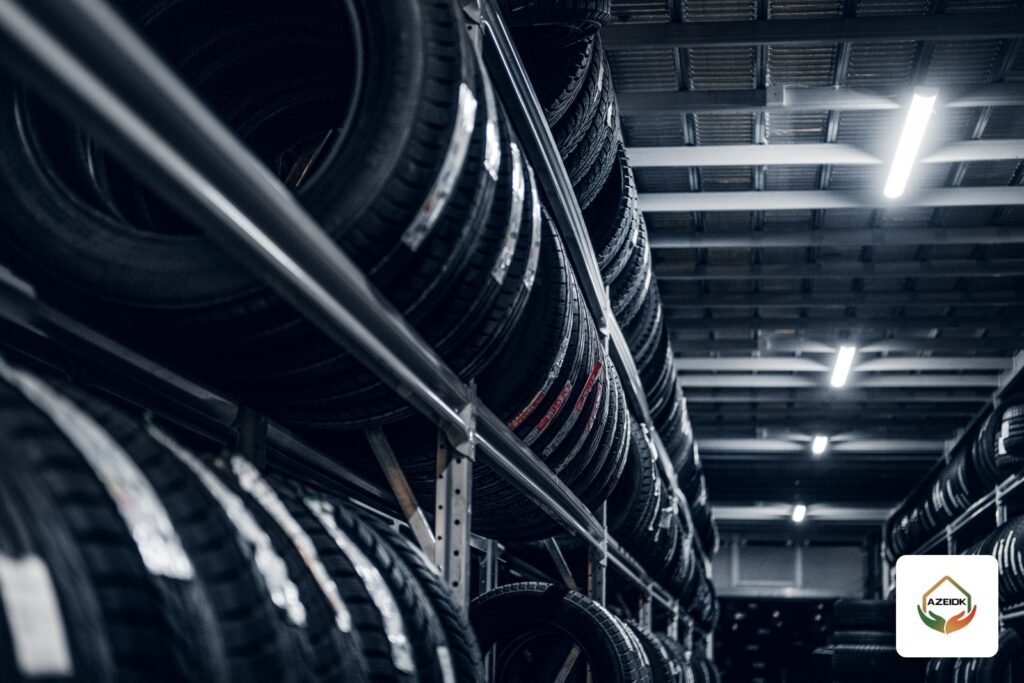
International tyre-storage guidance puts layout before equipment. For example, the South Australian Metropolitan Fire Service (MFS) guideline on rubber tyre storage calls for open-framed racking or palletised storage indoors, arranged so tyres cannot fall or roll, discourages on-edge storage unless it is restrained, asks for flammable liquids and easily ignited materials to be kept at least 30 m from tyre storage, and links the need for automatic sprinklers and smoke venting to building size and the quantity of tyres stored. This shows the logic used; it is not an Egyptian requirement. In Egypt the reference is the Egyptian fire code and the design approved by Civil Protection.
What any Egyptian store can apply from today:
- Clear aisles between racks for movement and access to extinguishers and cabinets.
- No stacking up to the ceiling or in front of electrical panels and exits.
- Damaged and used tyres kept apart from new stock, and not piled outside on the pavement or against walls.
- A separate store for oils and aerosols.
What does a small tyre shop need?
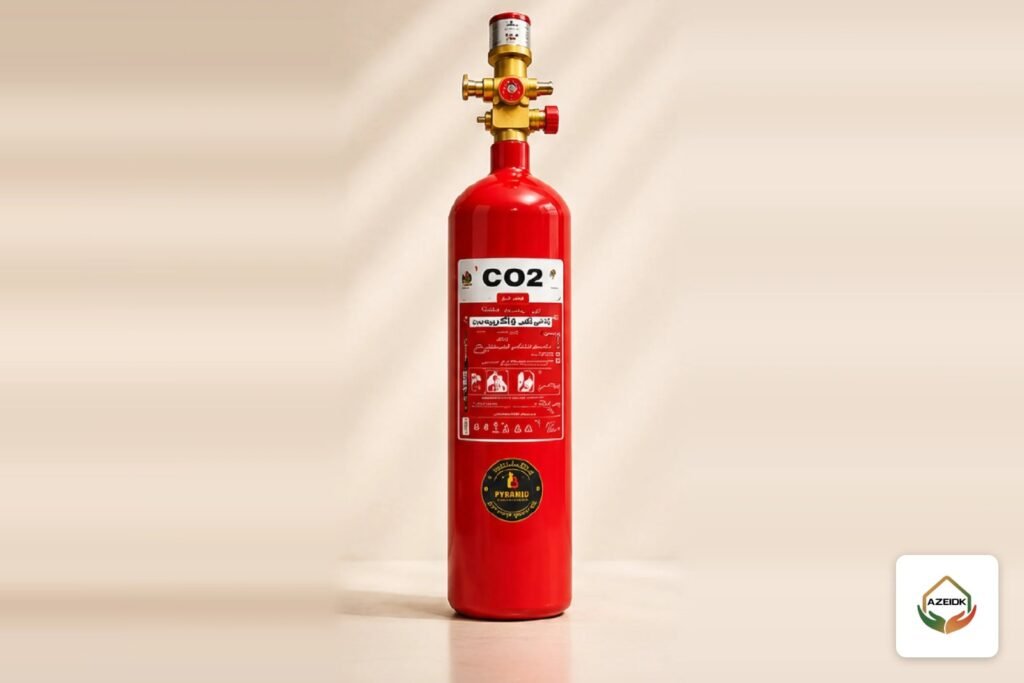
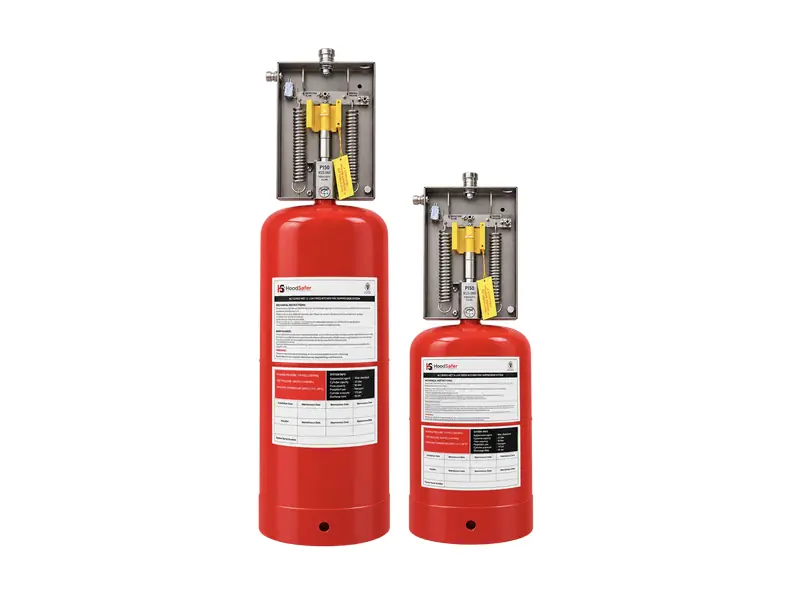
A shop that sells and fits tyres, with a balancing machine and a compressor, needs multi-purpose powder extinguishers in a number that covers the area, at least one close to the door, and a CO2 extinguisher beside the electrical panel and compressor. PYRAMID powder extinguishers come in sizes up to 12 kg, with 25 and 50 kg wheeled powder units for larger stores or open yards. For the attached workshop, see fire extinguishers for car service workshops.
Large tyre warehouses and distribution centres
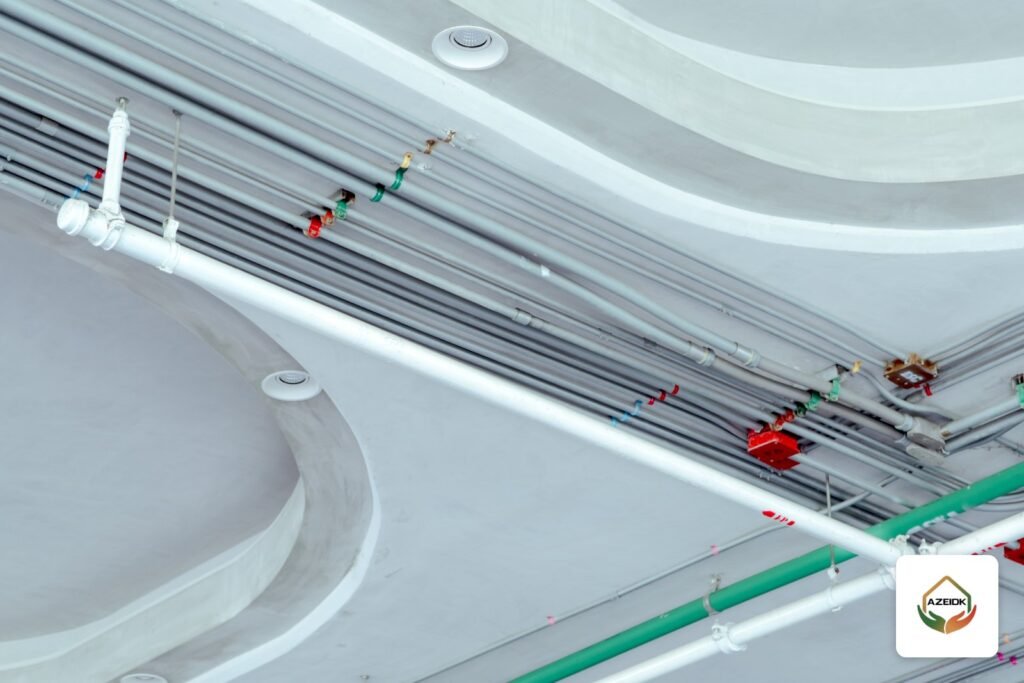
In a large warehouse, extinguishers are not enough. The design usually covers the following, with details set by the consultant according to area, storage height and the applicable code:
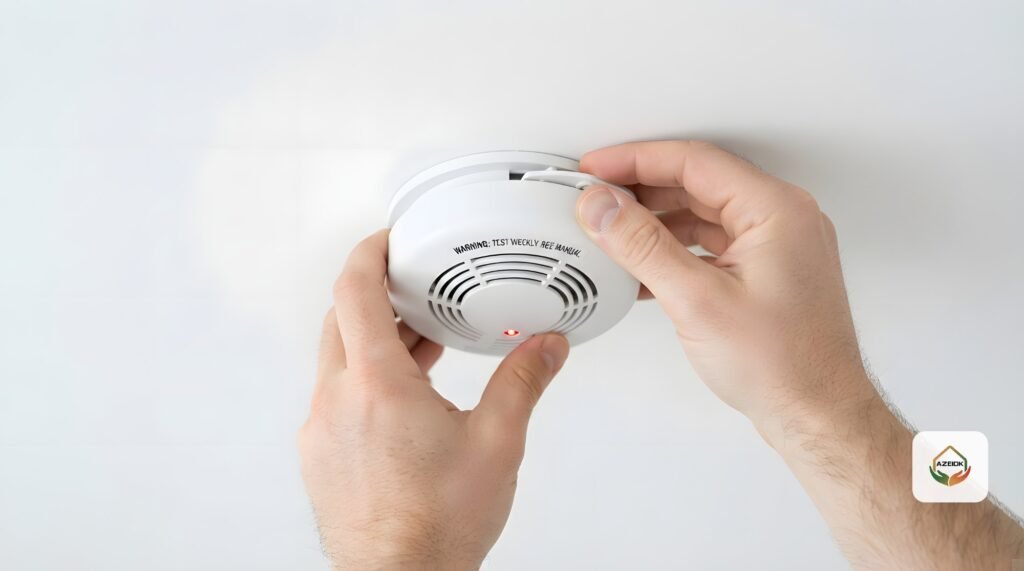
- Early detection: in high bays, beam detectors such as the Context Plus 55000-268 replace point detectors on the roof. See beam detector spacing.
- A hydrant network around the store: to cool neighbouring stacks and protect nearby buildings, using American Fire Control FW-9000 wet barrel hydrants or F-7700 and F-8700 dry barrel hydrants depending on the site.
- Internal hose cabinets: such as the Falcon Gold FG-1001S, made in Egypt with genuine Falcon Gold components, placed so the hose reaches every aisle.
- Pumps and an adequate water supply: a 3PUMP fire pump set (electric, diesel and jockey) at the flow set by the hydraulic calculation, with a fire water tank.
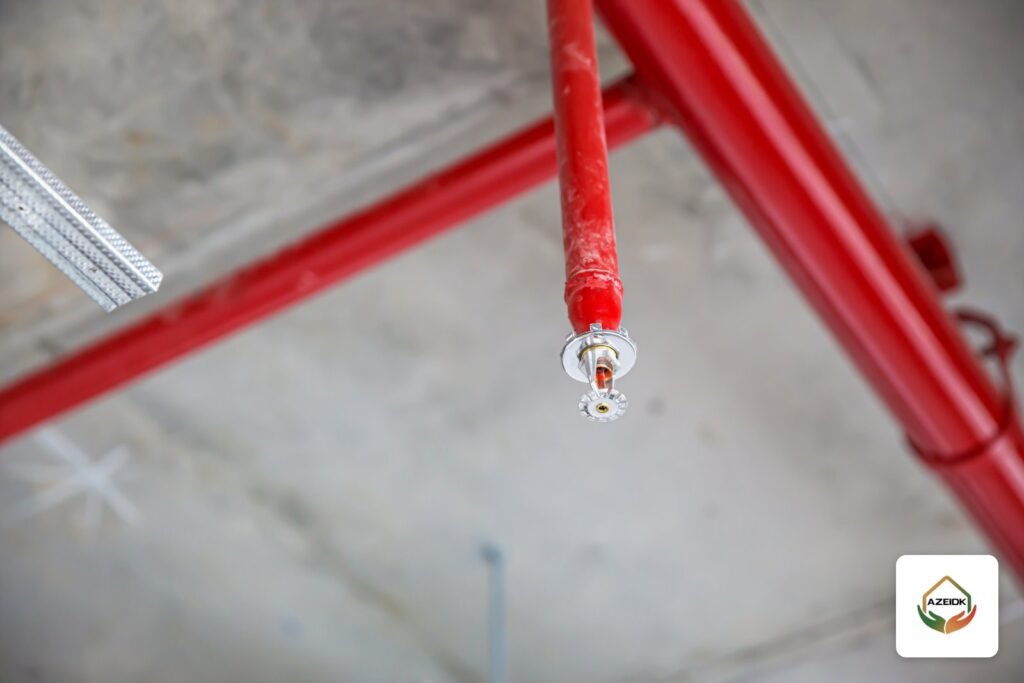
- Automatic sprinklers: where the code or the insurer requires them; tyre storage is designed under a dedicated chapter of NFPA 13 because of its difficulty.
For the general approach to storage buildings, see warehouse fire protection in Egypt.
Common mistakes in tyre shops and stores
- Stacking used tyres on the pavement or against the neighbouring building’s wall.
- Welding a rim inside the shop between tyre stacks without an extinguisher at hand.
- Storing oil and petrol cans in the same room as the tyres.
- Assuming water alone will put the fire out, and giving no thought to containing contaminated firewater.
- Blocking the rear exit with stock.
Frequently asked questions
Why are tyre fires so hard to put out?
A tyre holds a lot of energy and breaks down into gases and flammable oil, so the fire keeps going and flows across the floor, and water is often limited to cooling the surroundings.
Which extinguisher suits a tyre shop?
Multi-purpose powder extinguishers in a number that covers the area, CO2 for the electrical panel and compressor, and wheeled powder units in large stores and yards.
Does a tyre warehouse need automatic sprinklers?
The Egyptian code and the approved design decide this based on area, storage height and quantity, and tyre storage has its own requirements in NFPA 13.
What is the most important no-cost step?
No welding or cutting near tyres without controls, oils and petrol kept away from stock, and aisles and exits kept clear.
Conclusion
A tyre warehouse fire spreads fast, lasts long and is hard to put out, so protection begins with layout and control of ignition sources, then the right extinguishers in small shops, then early detection, a hydrant network and pumps in large warehouses. If the store is in an industrial zone, see also Civil Protection approval for industrial projects.
Have a tyre shop or warehouse and want its protection reviewed? Send the area, storage height and approximate number of tyres, and the AZEIDK Egypt team will set out what the site needs. Contact AZEIDK Egypt
Sources
- Tire Fires, U.S. Environmental Protection Agency
- Fire Safety Guideline: Rubber Tyre Storage, Metropolitan Fire Service, South Australia
Related guides
- Egypt’s Fire Protection Sector: Project Needs and Technical Trends
- Laundry and Dry-Cleaner Fires in Egypt: Dryer Lint, Oil-Contaminated Fabrics, Solvents and the Right Extinguishers
- Egyptian Customs Circular No. 6 of 2026: Release Rules for Imported Fire Extinguishers and Their Parts
- Call to Localise Fire Pump Manufacturing in Egypt and Share Fire Stations Between Factories (September 2026)