A laundry or dry-cleaning shop in Egypt looks like a quiet place: washers, dryers, a steam iron and racks of bagged clothes. Yet a laundry fire has well-known, repeated causes: lint building up inside the dryer, oil-contaminated towels and aprons that self-heat after drying, and solvents in some dry-cleaning machines. This guide explains the hazard in each corner of a laundry, the extinguishers and detectors that suit it, and the daily routines that stop most of these fires before they start.
The equipment mentioned here comes from the brands AZEIDK Egypt supplies under fire extinguisher solutions and fire detection and alarm systems.
Quick summary
- The leading cause of dryer fires is failing to clean the lint filter and exhaust duct regularly.
- Towels, aprons and work clothes contaminated with oil can self-heat and ignite after drying if they are piled up while hot.
- The cool-down stage at the end of a drying programme is not optional; stopping it early leaves the load hot.
- ABC powder covers the work floor, CO2 suits electrical panels, and AFFF foam suits areas with flammable solvents.
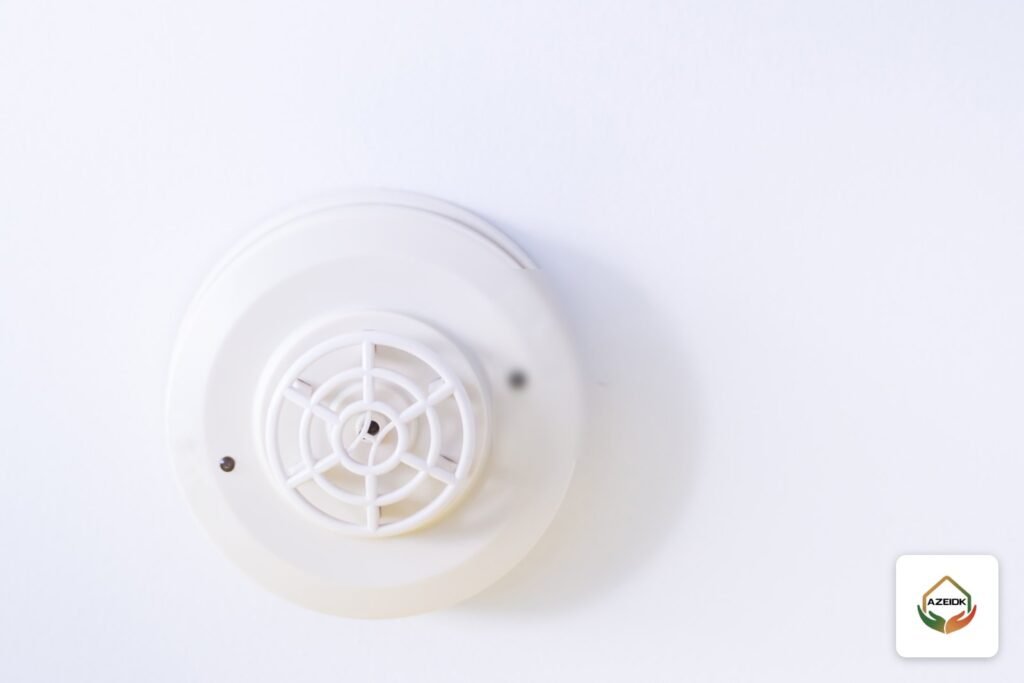
- Heat detectors suit the dryer and steam-iron area better than smoke detectors, because lint and steam cause false alarms.
Where does a laundry fire start?
Three main sources come up again and again in fire reports for laundries, ironing shops and dry cleaners. Their weight depends on the size of the shop and the type of machines:
1. Lint inside the dryer and its exhaust
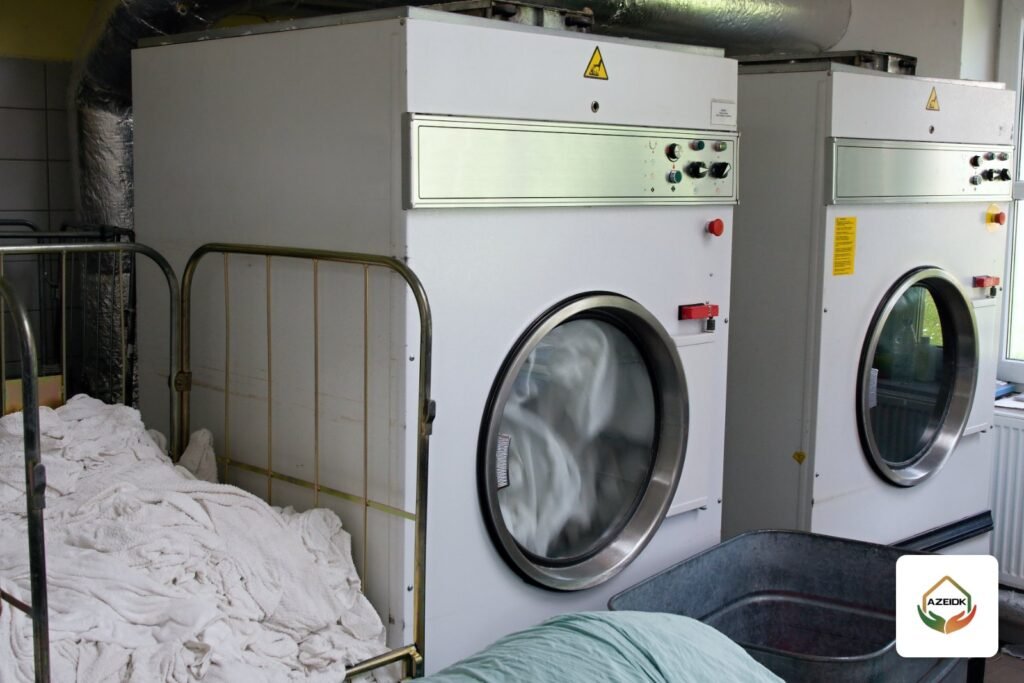
Every drying load leaves lint in the filter and in the hot-air path. Lint is light and ignites easily, and as it builds up it restricts airflow, so the dryer runs hotter. NFPA data on washer and dryer fires shows failure to clean as the leading contributing factor, and dust, fibre and lint are among the materials most often ignited first in dryer fires.
2. Self-heating of oil-contaminated fabrics
This cause surprises many laundry owners. Restaurant towels, kitchen aprons, salon towels and workshop overalls can carry oil or grease residue that a lukewarm wash does not remove. During drying the residue oxidises in the heat and generates more heat. If the load is left hot and piled up in the drum, a basket or a bag, the heat builds inside and can lead to ignition hours later, sometimes after the shop has closed. The UK Health and Safety Executive (HSE) notes in its information sheet on tumble dryer fires in laundry rooms that one recorded fire most likely involved oil-contaminated cloths after an inadequate cool-down.
3. Solvents, electricity and steam
Some dry-cleaning machines use flammable hydrocarbon solvents, while others use non-flammable solvents, so check which one your machine uses in the manufacturer’s datasheet or catalogue. Add to that heavy electrical loads from washers, dryers and irons on one panel, steam boilers or generators, and irons left plugged in. For the electrical side, see our guide to electrical fires in Egyptian buildings.
Laundry fire risk by area: hazard and protection
The table sums up each area of a laundry or dry-cleaning shop, its main hazard and the closest-fitting extinguisher and detector. Final quantities and spacing come from the approved design and the size of the shop.
| Area | Main hazard | Suitable extinguisher | Suitable detection |
|---|---|---|---|
| Row of dryers | Lint build-up, hot loads | ABC powder | Heat detector |
| Ironing and steam corner | Hot surfaces, fabric, electricity | ABC powder | Heat detector |
| Dry-cleaning machine with flammable solvent | Vapours and liquids | AFFF foam or powder | As advised by the designer |
| Main electrical panel | Overload, loose connections | Carbon dioxide (CO2) | Smoke detector |
| Store of bagged garments | High fuel load of fabric and plastic | ABC powder | Smoke detector |
| Customer reception | Electrical equipment | ABC powder | Smoke detector |
Extinguishers for a laundry shop
In most small laundries, one multi-purpose powder extinguisher near the dryers and another at the entrance are enough, with a CO2 extinguisher beside the electrical panel. AZEIDK Egypt supplies PYRAMID powder extinguishers in 1, 3, 6, 9 and 12 kg, CO2 extinguishers from 2 kg, and AFFF foam extinguishers in 6 and 9 litres, which are the better choice if the dry-cleaning machine uses a flammable solvent. To work out the number, spacing and mounting height, see the guide on how many extinguishers a space needs.
A practical point: do not hide the extinguisher behind the dryers or between the racks. It belongs on the exit route, so a worker picks it up while heading towards the door, not deeper into the room.
Detection and alarm in large laundries
Central laundries serving hotels, hospitals or garment factories need a real alarm system, not only extinguishers. An optical smoke detector above dryers and steam irons will react to lint and steam and give false alarms, so heat detectors are used in those areas and smoke detectors in stores, corridors and offices. Context Plus Series 65A conventional detectors include an optical smoke detector and a heat detector, working with Context Plus conventional panels in small shops and addressable panels in larger premises. For the difference, see conventional vs addressable fire alarm.
In large hotels the laundry is part of the building-wide system, so its detectors connect to the hotel panel and the design may call for a hose cabinet nearby. See also fire extinguishers for hotels in Egypt, since the laundry is one of its departments.
Daily routines that prevent most laundry fires
These steps are drawn from HSE guidance and insurer advice on commercial drying, and most of them cost nothing:
- Clean the lint filter before every load and do not let lint collect around or behind the dryer.
- Let the dryer finish its cool-down stage; do not stop it early to save time.
- Unload after cooling and shake out or spread the load until it is fully cool before folding.
- Do not pack hot laundry into plastic bags or boxes, and never leave it in the dryer overnight.
- Wash oil-contaminated towels and aprons in hot water with a detergent suited to removing grease before drying; a lukewarm wash does not remove oil residue.
- Do not tumble-dry items containing foam rubber or latex.
- Clean the exhaust duct and service the dryer as the manufacturer instructs.
- Switch off irons and machine panels at the end of the day and walk the shop before closing.
Common mistakes in laundries and dry cleaners
- Stopping the drying programme early, then stacking the hot load on the table.
- Accepting restaurant and workshop towels and drying them with other loads without a hot wash first.
- Fitting a smoke detector above the iron, then disconnecting it after repeated false alarms.
- One expired extinguisher behind the counter that nobody can find. See fire extinguisher expiry.
- Storing solvent containers next to the dryers or the electrical panel.
- Temporary wiring and a single extension strip feeding several machines.
Frequently asked questions
Can clothes catch fire after they leave the dryer?
Yes, if they carry oil or grease residue and are piled up while hot. Self-heating can go on for hours, which is why the cool-down stage must be completed and the load spread out to cool.
Which extinguisher suits a dry-cleaning shop?
ABC powder for the shop floor and ironing area, CO2 for the electrical panel, and AFFF foam if the machine uses a flammable solvent.
Why is a smoke detector a poor fit for the dryer area?
Lint and steam enter the detector chamber and cause repeated false alarms. A heat detector gives more suitable protection there.
How often should the lint filter be cleaned?
Before every load according to safety guidance, with the exhaust duct cleaned periodically as the dryer manufacturer instructs.
Conclusion
Most laundry fires can be prevented with simple operating habits: a clean filter, a full cool-down, no piling of hot loads, and a hot wash for oil-contaminated fabrics. After that come the right extinguisher in the right place, heat detectors above the dryers, and a full alarm system in central laundries. To see what Civil Protection reviews before a shop is licensed, read Civil Protection requirements for shops in Egypt.
Opening a new laundry or fitting out a central laundry for a hotel or hospital? Send the shop area, the number of machines and the type of dry-cleaning machine, and the AZEIDK Egypt team will specify the right extinguishers and detectors. Contact AZEIDK Egypt
Sources
- Tumble dryer fires in laundry rooms, Health and Safety Executive
- Clothes Dryer Fires Fact Sheet, NFPA
- Tumble dried laundry: how to reduce the risk of combustion, Zurich UK
Related guides
- Tyre Shop and Tyre Warehouse Fires in Egypt: Why They Are Hard to Put Out and What Protects the Store
- Checking for Recalled Sprinklers in Fire Network Maintenance in Egypt: What TIA 1944 Proposes for NFPA 25
- Egypt’s Fire Protection Sector: Project Needs and Technical Trends
- Egyptian Fire Code and Insurers Push Factories to Prove Systems Work