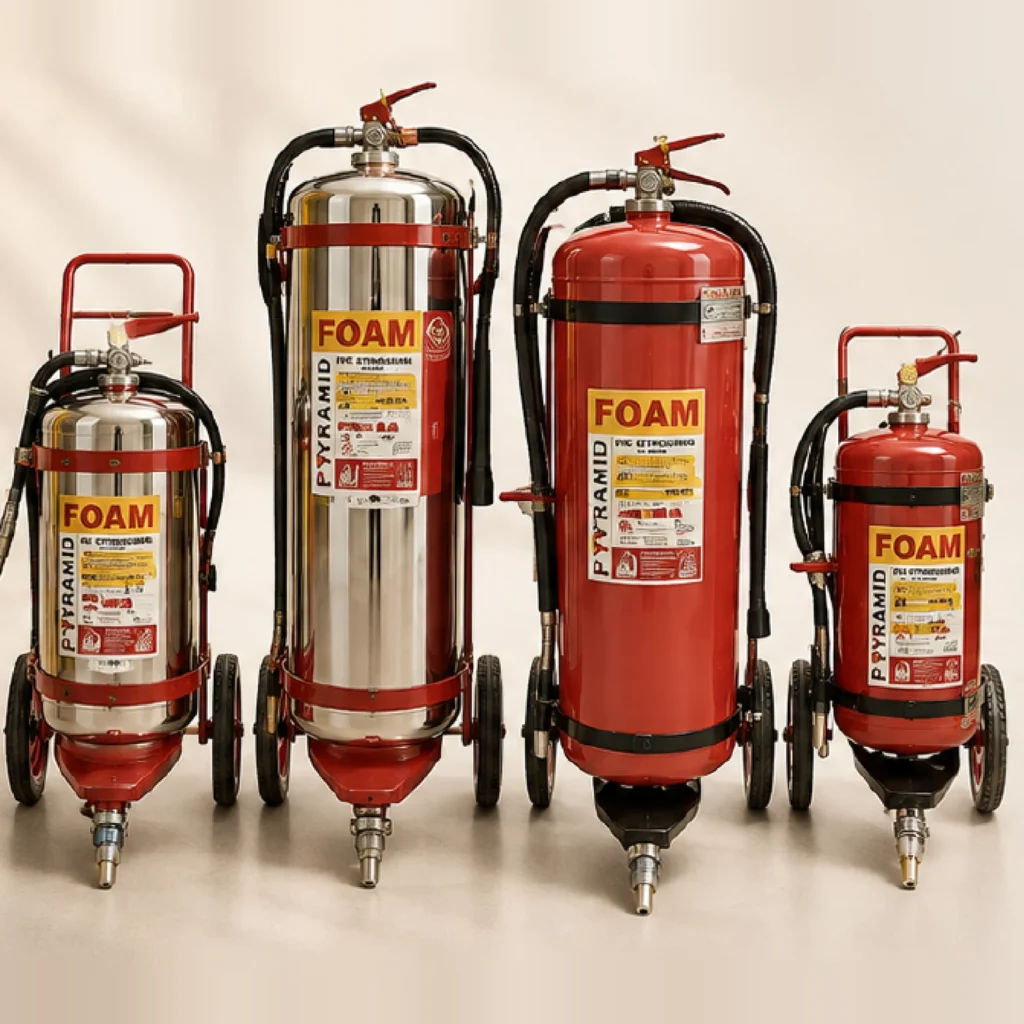
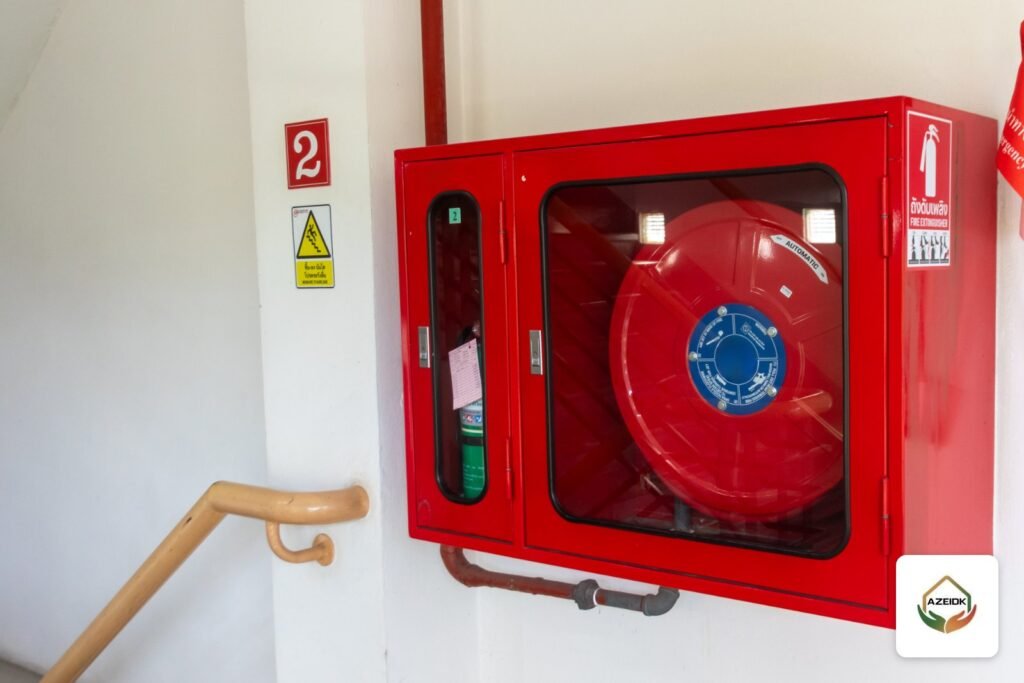
The first question a restaurant or café owner in Egypt asks when fitting out a shop is: how many extinguishers do I need, and which type? The right answer differs between the dining area, the cashier and the kitchen, because the likely fire in each is different. Choosing a fire extinguisher for a restaurant does not mean buying powder extinguishers for everywhere, especially above fryers and pans where cooking oil is the biggest hazard.
To compare fire extinguisher types and what each one is for, see our guide to choosing the right extinguisher for each hazard.
This guide explains the right extinguisher for each area of a restaurant, and when an extinguisher alone is not enough and a kitchen fire suppression system is needed over the hood, with examples from the PYRAMID extinguisher range and the HoodSafer system supplied by AZEIDK Egypt.
Key takeaways
- The dining area, corridors and store are usually protected with ABC powder extinguishers, and the cashier and electrical panel with a CO2 extinguisher that leaves no residue on equipment.
- Cooking oil fires are a special class (K), and a powder extinguisher is not chosen for them.
- NFPA 10 requires the travel distance from cooking appliances to a Class K extinguisher not to exceed 30 ft (9.1 m).
- The primary protection for the hood and cooking appliances is the fixed suppression system. The portable extinguisher is a secondary backup used after the system has been activated.
- HoodSafer is approved by the General Directorate of Civil Protection in Egypt and comes in HS-4, HS-8 and HS-16 models by number of discharge points.
In this article
- Why is a restaurant extinguisher different from an office one?
- Which fire extinguisher for a restaurant, area by area?
- The kitchen: why a powder extinguisher is not enough
- When do you need a hood suppression system instead of an extinguisher?
- Where to mount extinguishers in a restaurant
- Common mistakes
- Small café or large restaurant: what is the difference?
- Frequently asked questions
- Conclusion
Why is a restaurant extinguisher different from an office one?
In an office the main risk is paper, furniture and equipment. A restaurant combines three hazards in a small space: solids in the dining area (chairs, fittings and decor), electrical equipment at the cashier, fridges and panel, and hot cooking oil in the kitchen. Cooking oil is the hardest, because once alight it needs both extinguishing and cooling, and water on it is very dangerous.
So the restaurant is divided into areas, each with a suitable type. The binding reference remains what the General Directorate of Civil Protection requires when licensing the activity and the 2026 Egyptian fire code, with NFPA 10 and NFPA 96 used as technical references. What is usually reviewed before licensing is covered in civil protection requirements for shops.
Which fire extinguisher for a restaurant, area by area?
| Area | Main hazard | Suggested protection | Notes |
|---|---|---|---|
| Dining area and corridors | Solids | PYRAMID 6 kg ABC powder extinguisher | Mount near exits in a visible place |
| Cashier and POS devices | Electrical and electronic equipment | 2 or 3 kg CO2 extinguisher | Leaves no residue on equipment |
| Electrical panel | Electrical equipment | 6 kg CO2 extinguisher | Next to the panel, not in a distant locked room |
| Cooking appliances under the hood | Cooking oils and fats | Fixed system such as HoodSafer | The primary protection for this area |
| Kitchen (portable backup) | Cooking oils and fats | Listed Class K extinguisher within 9.1 m | Used after the fixed system has been activated |
| Dry store | Cardboard and packaging | 6 kg ABC powder extinguisher | At the store door, inside or outside depending on size |
Every member of staff should know where the restaurant’s main gas valve is, because closing it is one of the first actions in any kitchen fire. In kitchens protected by HoodSafer the system shuts the gas valve automatically on discharge, but knowing where the manual valve is remains essential.
The sizes in the table are common examples for small and medium restaurants. The actual number is worked out from floor area, travel distances and the civil protection requirements for the shop.
The kitchen: why a powder extinguisher is not enough
A powder extinguisher is excellent on solids and ordinary liquids, but it is not chosen for cooking oil fires. These fires need extinguishers listed for Class K, which combine extinguishing with cooling.
NFPA 10 (section 6.6.2 of the 2026 draft) requires the travel distance from a cooking hazard to a Class K extinguisher not to exceed 30 ft (9.1 m). Where a fixed suppression system is installed, it requires a placard near the extinguisher stating that the fixed system must be activated before the portable extinguisher is used. NFPA 96 treats the automatic system as the primary protection and portable extinguishers as secondary backup.
In practice: do not rely on one extinguisher next to the fryer. In a real fire the first step is to activate the hood system manually if it has not operated automatically, then use the extinguisher if needed.
When do you need a hood suppression system instead of an extinguisher?
If the kitchen has a hood over appliances that produce grease-laden vapours, such as fryers, grills and pans, the primary protection is a fixed system covering the hood, duct and appliances. The HoodSafer system supplied by AZEIDK Egypt is designed and manufactured in Turkey, operates automatically on heat or manually by a pull station, and shuts off the gas valve on discharge. The HS series is fully mechanical, the HSP series uses pneumatic detection, and the HS-4, HS-8 and HS-16 models differ by number of discharge points.
The system conforms to EN 17446:2021, holds BSI Kitemark KM 767382 and is approved by the General Directorate of Civil Protection in Egypt. Choosing a model by hood length and appliance count is covered in kitchen fire suppression for restaurants and cafés in Egypt, and cost factors in kitchen fire suppression cost.
Where to mount extinguishers in a restaurant
The right place for an extinguisher is one a worker reaches while moving away from the hazard, not towards it. So the kitchen extinguisher goes near the kitchen exit or on the circulation route, not right against the fryer where it may be hard to reach once the fryer is alight. The dining area extinguisher goes near the main exit in a place visible to staff and customers, and the cashier extinguisher on a fixed bracket beside the counter, not under it.
In small neighbourhood restaurants where space is tight, a fixed wall bracket is better than leaving the extinguisher on the floor, where it gets pushed behind boxes or splashed during cleaning. Review extinguisher positions whenever the kitchen layout changes or a new cooking appliance is added. Every worker on a shift should know where the nearest extinguisher is and where the hood system’s manual pull station is, and extinguishers should be checked visually once a month. An extinguisher does not warn guests in the dining room, so also see restaurant fire alarm systems for heat and smoke detector layout.
Common mistakes
- Using powder extinguishers throughout the shop, including above the fryers.
- Throwing water on burning oil, one of the most dangerous things to do.
- Mounting the extinguisher behind the kitchen door or inside a locked store where nobody can reach it quickly.
- Leaving the cashier extinguisher on the floor under the counter among boxes.
- Not showing staff where the hood system’s manual pull station is.
- Skipping monthly extinguisher checks and not recharging after any use.
Small café or large restaurant: what is the difference?
A café serving drinks and desserts with no frying or grilling may not need a hood suppression system. Extinguishers for the seating area, cashier and panel may be enough, depending on what civil protection requires for the activity. A restaurant that fries and grills in volume, or one inside a mall, needs fixed kitchen protection, often tied to the mall’s own requirements. Owner and tenant responsibilities in malls are covered in fire protection in malls.
Frequently asked questions
Which extinguisher should go in the kitchen?
The primary protection for cooking appliances under the hood is a fixed suppression system, backed by a listed Class K extinguisher within 9.1 m. A powder extinguisher is not chosen for cooking oil fires.
Is a CO2 extinguisher right for the cashier?
Yes, because it leaves no residue on electronic equipment. A small size such as 2 or 3 kg suits small shops.
Does a café need a hood suppression system?
It depends on whether there are cooking appliances producing grease vapours under a hood. A café that does not fry or grill may not need one, and civil protection requirements for the activity decide.
Is HoodSafer approved in Egypt?
Yes. It is approved by the General Directorate of Civil Protection in Egypt, conforms to EN 17446:2021 and holds a BSI Kitemark.
How many extinguishers does a restaurant need?
The number comes from floor area, travel distances and the hazard in each area, then is checked against civil protection licensing requirements.
Conclusion
Restaurant extinguishers are chosen area by area: powder for the dining area and store, CO2 for the cashier and panel, and a fixed suppression system over the cooking appliances with a Class K extinguisher as backup. That gives every hazard in the shop the right protection, instead of identical extinguishers that may fail where the risk is highest.
Fitting out a new restaurant or café? Send us the shop layout and photos of the hood and cooking appliances, and we will suggest the right extinguishers and suppression system. Talk to the AZEIDK Egypt team