In a restaurant, most fires start in the kitchen, but the people most at risk are in the dining room: guests who do not know the building, sometimes a single exit, and smoke that can reach them before anyone notices what is happening behind the kitchen door. An extinguisher and a hood suppression system are not enough on their own. A restaurant needs a restaurant fire alarm system designed around how each area is actually used.
This guide explains how to zone a fire alarm system in an Egyptian restaurant across the kitchen, dining room and stores, why the kitchen gets heat detectors rather than smoke detectors, when a conventional system is enough, and how the alarm should work with the hood suppression system and gas shut-off. It ends with the mistakes we see most often on site.
Key takeaways
- The kitchen needs heat detectors, not smoke detectors, because cooking fumes and steam cause constant false alarms.
- The dining room, corridors, stores and office are covered by smoke detectors, with manual call points at the exits and sounders every guest can hear.
- Context Plus Series 65A heat detectors combine fixed temperature and rate of rise, and come in two temperature ratings.
- A small single-floor restaurant usually works well with a conventional system and a few zones. A large multi-floor restaurant benefits from an addressable system.
- The hood suppression system’s release signal should reach the fire alarm panel whenever the system provides a signal output.
In this article
- Why does a restaurant need a fire alarm, not just extinguishers?
- Zoning a restaurant fire alarm system area by area
- The kitchen: why heat, not smoke?
- Linking the alarm to the hood system and gas shut-off
- Conventional or addressable: what suits your restaurant?
- Common restaurant fire alarm mistakes
- Frequently asked questions
- Conclusion
Why does a restaurant need a fire alarm, not just extinguishers?
Extinguishers and the hood system deal with a fire where it starts. They do not warn anyone. A fire alarm system detects a fire early anywhere in the restaurant and then sounds and flashes in every area so evacuation starts straight away. In restaurants that trade past midnight, or where the kitchen closes while stores and cold rooms keep running, the alarm is the only thing that will catch a fire nobody is there to see.
A restaurant is a public venue, so licensing and civil protection requirements look closely at alarm and evacuation provisions. See civil protection requirements for shops for the licensing side, and the AZEIDK Egypt fire alarm systems page for the components we supply.
Zoning a restaurant fire alarm system area by area
| Area | Suitable device | Notes |
|---|---|---|
| Hot kitchen (grills, fryers, ovens) | Heat detector | Away from the hood opening and direct steam outlets, with the room temperature in mind |
| Prep and wash area | Usually a heat detector | Steam from dishwashers and hot sinks confuses smoke detectors |
| Dining room | Smoke detector | Allow for suspended ceilings, decor and distance from AC outlets |
| Dry store and carton room | Smoke detector | Paper and carton fires usually smoulder before they flame |
| Electrical room, office, cashier | Smoke detector | The earliest way to catch a panel or wiring fire |
| Exits and stairs | Manual call point and sounder | At every exit, in plain view, not hidden by decor |
Final quantities and spacing depend on the restaurant layout and ceiling heights, and the design engineer checks them against the Egyptian code. General layout rules are in our article on smoke detector layout.
The kitchen: why heat, not smoke?
An optical smoke detector sees any particles that scatter light in its chamber. It cannot tell fire smoke from grill smoke or the steam off a boiling pot. In a busy restaurant kitchen, that means repeated alarms at peak hours, until staff cover the detector or isolate the zone, and the kitchen ends up with no protection at all.
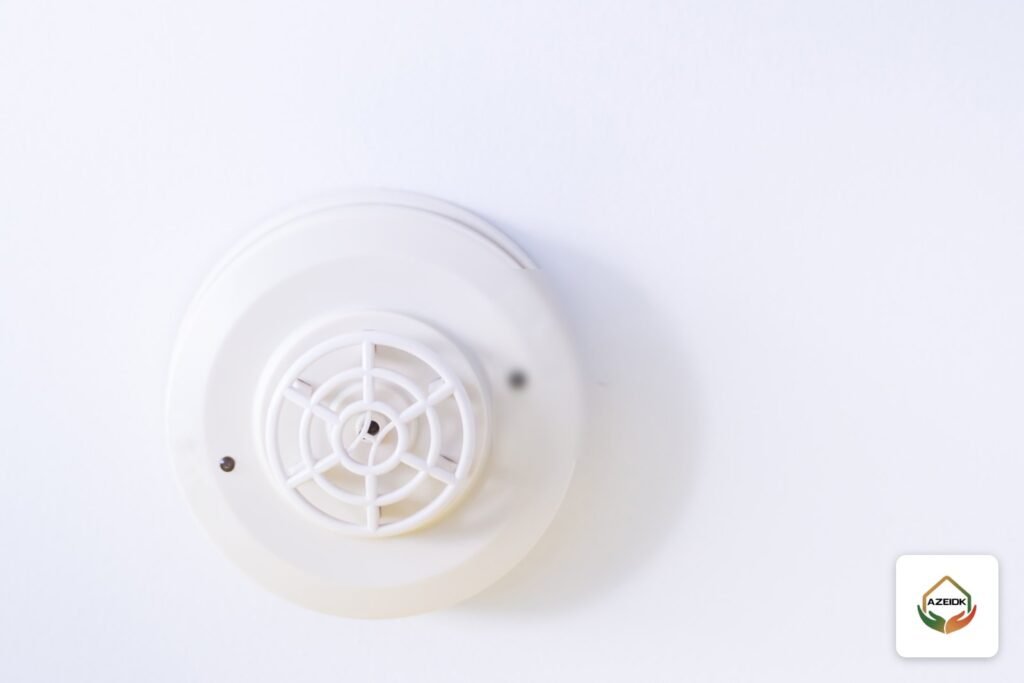
A heat detector ignores smoke and steam and responds to rising air temperature. According to the datasheet, Context Plus Series 65A heat detectors work on two principles together, fixed temperature and rate of rise, and come in two models:
- 55000-139IMC, rated at 135°F (about 57°C), Ordinary rating.
- 55000-145IMC, rated at 200°F (about 93°C), Intermediate rating.
The choice depends on the normal working temperature of the area. One point matters here: the datasheet gives an ambient operating range of 32 to 100°F for this series. So the detector does not go directly over the grill or in the hood airflow. It goes on the kitchen ceiling where normal temperatures stay within that range, and the designer confirms the position on the drawings.
Linking the alarm to the hood system and gas shut-off
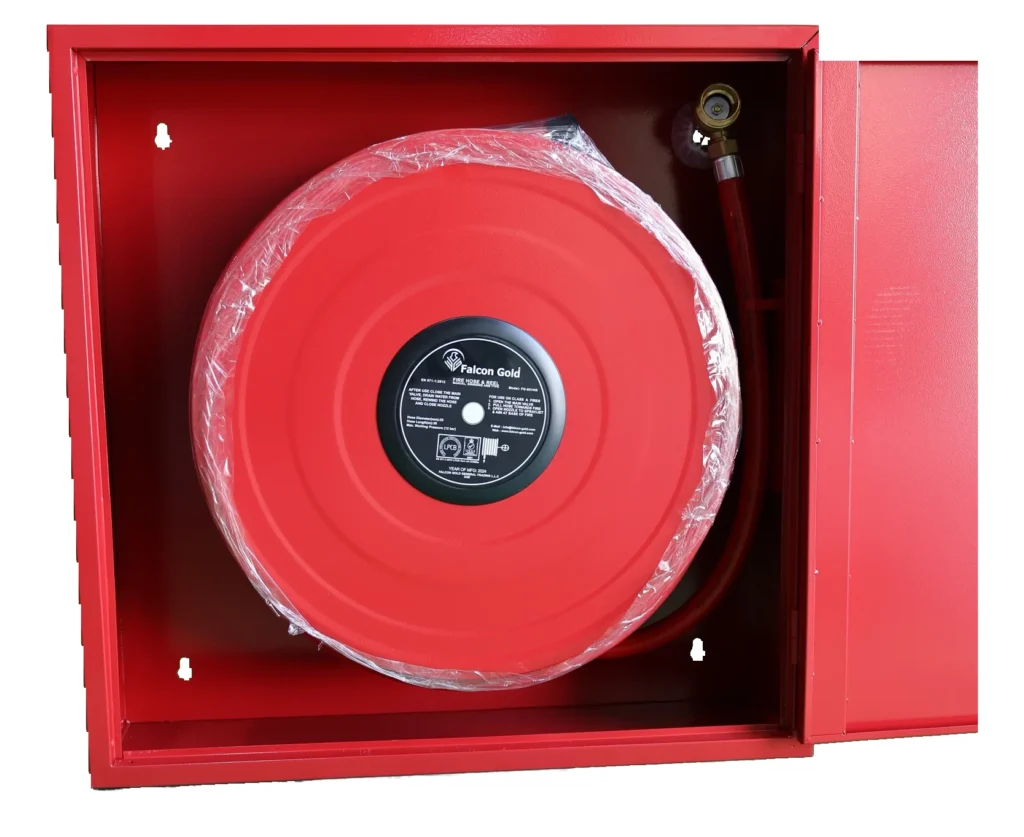
A restaurant runs two systems side by side: the hood suppression system, which puts out a fire over the cooking line and shuts off the gas, and the fire alarm, which warns people. How to select the hood system is covered in restaurant kitchen suppression selection. The goal is that neither system works in isolation:
- When the hood system discharges, its signal goes to the fire alarm panel whenever the system provides a signal output, so the panel alarms the dining room without waiting for heat to reach another detector.
- The link is made through an input module on the addressable loop, or a dedicated zone on a conventional panel, depending on the system type.
- Agree the cause and effect matrix with the designer: does the alarm stop the extract fans or the dining room AC, and what happens to the gas valve?
For links to other building services such as AC and lifts, see fire alarm interfaces with lifts and HVAC.
Conventional or addressable: what suits your restaurant?
| Restaurant type | Closest system | Why |
|---|---|---|
| Small single-floor restaurant or takeaway | Conventional (CFP or FP panel) | Few zones, lower cost, and knowing the zone rather than the exact detector is enough |
| Mid-size restaurant on two floors with a separate kitchen and stores | Conventional with clear zones, or addressable depending on size | One zone per floor, kitchen and store makes the alarm location obvious |
| Large multi-floor restaurant, or one inside a hotel or mall | Addressable (ZFP panel) | Pinpoints the exact device, gives a message per area, and integrates more easily with building systems |
If the restaurant sits inside a mall, its system will usually tie into the mall’s fire alarm, so coordinate with mall management before choosing a panel. A full comparison of the two system types is in conventional vs addressable fire alarm.
Common restaurant fire alarm mistakes
- Fitting a smoke detector in the kitchen, then bagging it or isolating it after the first week of false alarms.
- Mounting the heat detector directly over the grill or in the hot hood airflow.
- One sounder in the kitchen that guests cannot hear over music and crowd noise in the dining room.
- Manual call points behind the cashier or inside the kitchen instead of at the exits.
- Adding suspended ceilings or timber decor after fit-out without moving or adding detectors.
- A hood system that sends no signal to the alarm panel, so it discharges in the kitchen while the dining room has no idea.
Frequently asked questions
Does a restaurant need a fire alarm system?
In most cases yes, because it is a public venue, and alarm provisions are reviewed as part of licensing and civil protection requirements. The Egyptian code and the design engineer set the scope based on floor area and number of floors.
Which detector suits a restaurant kitchen?
A heat detector, because cooking fumes and steam do not affect it. Choose the model by the room’s normal temperature, and mount it away from the hood airflow.
Can the kitchen suppression system connect to the fire alarm panel?
Yes, whenever the suppression system has a signal output. Its signal goes to an input module on an addressable system or a dedicated zone on a conventional panel, so the whole restaurant goes into alarm.
Is a conventional fire alarm enough for a small restaurant?
Usually yes, for a single-floor restaurant with a few zones. As floors and areas increase, an addressable system becomes the better way to pinpoint where an alarm is coming from.
Where should manual call points go in a restaurant?
At the exits and along escape routes, in plain view and easy to reach, so anyone can operate one on their way out.
Conclusion
A restaurant fire alarm starts with zoning: heat detectors in the kitchen, smoke detectors in the dining room, stores and offices, and call points and sounders at the exits and wherever guests are. Then comes the link with the hood suppression system, so the dining room knows straight away what is happening in the kitchen. To complete the picture, see choosing extinguishers for a restaurant and the Context Plus range on the brand page.
Fitting out a new restaurant or reviewing an existing one? Send us the layout and number of floors, and we will work out the detector layout and the right panel with you. Talk to the AZEIDK Egypt team