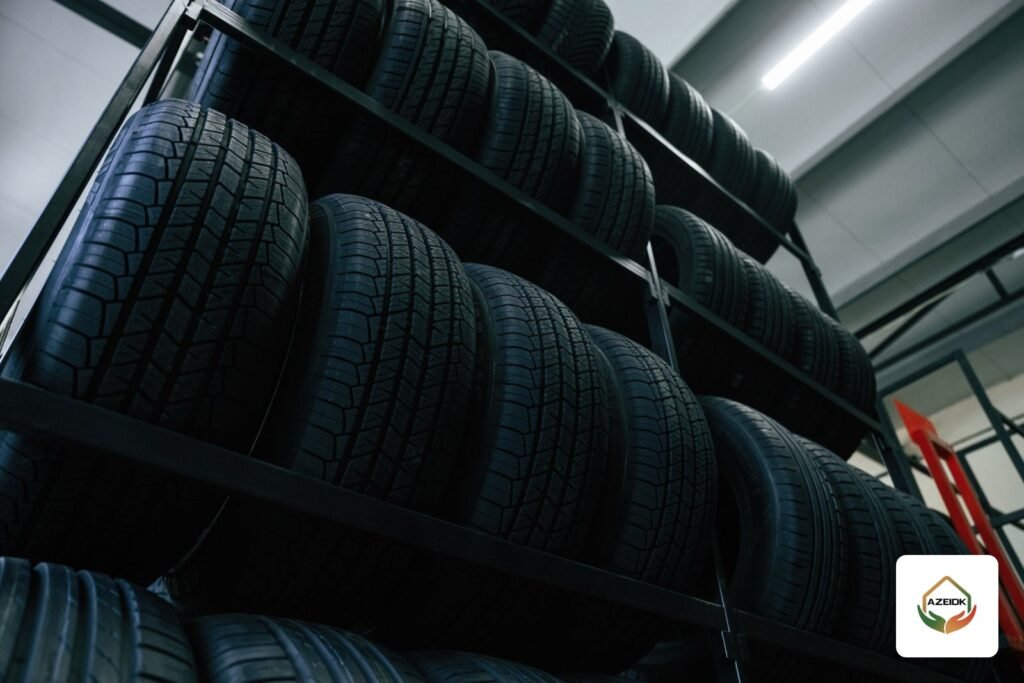
Tire storage fire protection is different from protecting an ordinary warehouse. Rubber tires are classed as high-hazard commodities, and a tire fire burns hot and long and produces dense black smoke that holds back fire crews. Design starts with how the tires are stored: on their sides or on their tread, on the floor or in racks, and to what height. Those inputs set the sprinklers, fire pump, detection and smoke extraction. This guide covers what a tire dealer or distribution centre in Saudi Arabia needs, from design to licensing and maintenance, as part of AZEIDK solutions for warehouses and logistics.
Key takeaways
- Rubber tires are listed as high-hazard commodities in the International Fire Code (IFC) commodity classification.
- NFPA 13 has separate protection criteria for tires based on storage arrangement and height; a general warehouse design does not cover them.
- The Saudi Fire Protection Code SBC 801 has a dedicated chapter on tire rebuilding and tire storage.
- Tire warehouses are in phase one of the third-party insurance requirement for Civil Defense licensing (August 2026).
- Smoke is the biggest challenge: plan smoke extraction and fire crew access from the start.
In this article
- Tire storage fire protection: why is a tire fire more dangerous?
- What does the Saudi code require for tire storage?
- How does the storage arrangement affect sprinkler design?
- Does a tire warehouse need smoke extraction?
- Which detection suits a tire warehouse?
- Is insurance required to license a tire warehouse?
- How does a tire warehouse get its Civil Defense licence?
- How does a tire warehouse project run with AZEIDK?
- Frequently asked questions
- Conclusion
Tire storage fire protection: why is a tire fire more dangerous?
A rubber tire carries a large fire load, and the hollow inside each tire lets air in and keeps water away from the flames. As the fire grows, the smoke becomes thick and toxic, and the heat can stop crews from going in. The storage guide of the Nevada State Fire Marshal Division describes tires in storage as “a very high fire hazard” and advises considering the automatic protection, building venting and whether crews can enter safely.
In the commodity examples of IFC Section 3203, the International Fire Code whose structure the Saudi code follows, “rubber tires” are listed as high-hazard commodities, alongside items such as foam mattresses.
What does the Saudi code require for tire storage?
SBC 801 includes a chapter on tire rebuilding and tire storage and a chapter on high-piled combustible storage (Chapters 34 and 32 per the ICC study companion table of contents for the 2018 edition). Under the IFC definition, as quoted by the Fairfax County Office of the Fire Marshal, high-piled storage starts when the top of storage is above 12 feet, and the threshold drops to 6 feet for high-hazard commodities such as rubber tires where the fire code official requires it. In the IFC model the tire chapter also covers outdoor yard storage, so check what the Saudi edition in force says on this.
The 2024 edition of the Saudi Building Code has been mandatory since 30 June 2025, so check the figures and sections in the edition that applies to your building permit before design. The Warehouses and Stores Requirements of the Ministry of Municipalities and Housing refer all fire requirements to the Saudi code, prohibit storage in aisles, require marked forklift routes and call for security cameras.
How does the storage arrangement affect sprinkler design?
NFPA 13 sets specific protection criteria for rubber tire storage; treating tires as general goods is not enough. The key inputs we ask for before design:
| Input | Common options | Effect on design |
|---|---|---|
| Tire orientation | On-side or on-tread | Changes fire behaviour and the protection criteria |
| Storage method | Floor piles, pallets, fixed or portable racks | Racks may need in-rack sprinklers |
| Storage height | Measured to the top of storage | Sets density and design area, or sprinkler type |
| Ceiling height | Clearance from top of storage to ceiling | Decides whether ESFR or other sprinklers can be used |
| Tire type | Passenger car, truck, equipment | Changes dimensions and stacking |
| Aisles | Width between piles and racks | Affects fire spread and crew access |
From these inputs the designer picks the protection method in the standard, and the hydraulic calculation then sets water demand, duration, fire pump and tank. This is the core of AZEIDK engineering design and calculations, followed by supply and installation under fire fighting systems: TYCO and Victaulic sprinklers, AFC valves, Jack Pump and WATEX fire pumps, and Falcon Gold hose cabinets.
Does a tire warehouse need smoke extraction?
Tire smoke is what makes these fires so hard to fight. Smoke extraction or smoke and heat vents help crews see and reach the seat of the fire, and reduce heat build-up under the roof. Whether a system is mandatory in your building depends on the code, the area, the storage type and the presence of sprinklers, and coordinating it with the sprinklers is an engineering decision for the designer. AZEIDK provides smoke extraction and emergency ventilation systems as part of the warehouse package.
Which detection suits a tire warehouse?
Early detection buys time to evacuate staff and use extinguishers before the fire grows. In high-roof warehouses, beam detectors or point smoke detectors are used depending on height and area, with manual call points at exits and the panel linked to sprinkler flow switches. AZEIDK supplies Context Plus addressable and conventional panels and detectors for fire alarm systems.
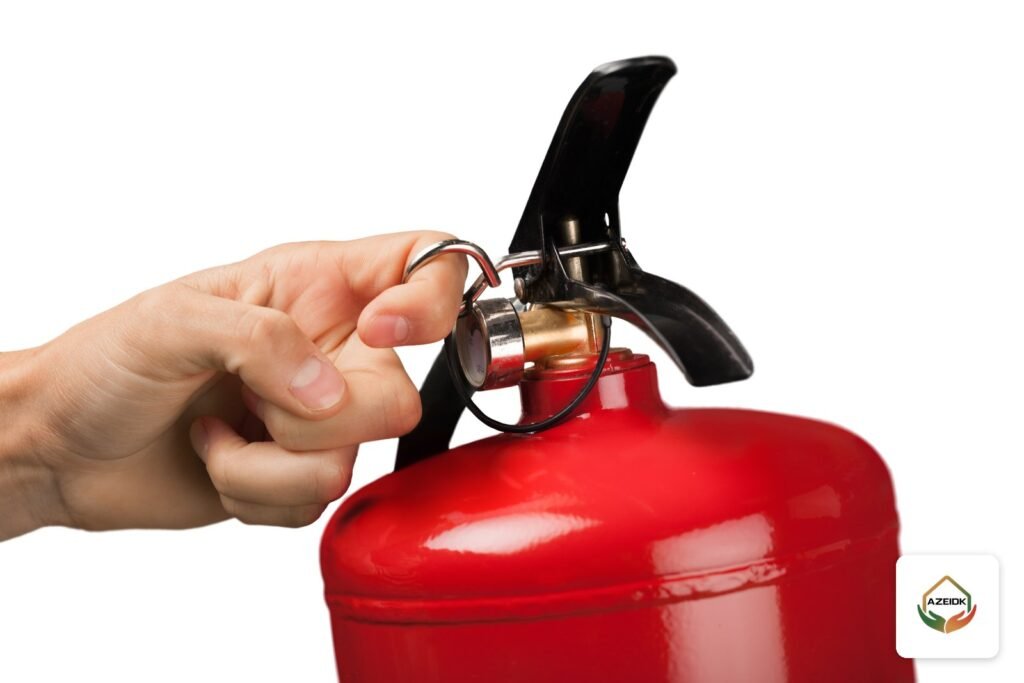
Extinguishers are placed per the code and hazard, and wheeled units help in large areas. Browse AZEIDK fire extinguishers.
Is insurance required to license a tire warehouse?
On 16 August 2026 the Insurance Authority and the General Directorate of Civil Defense launched third-party cooperative insurance for crowded venues and high-risk activities. On 17 August 2026 Okaz reported that Civil Defense requires the policy to issue and renew licences, and that phase one covers tire warehouses, along with general multi-goods warehouses, chemical storage and other activities. If you run a tire warehouse, put the policy in your renewal plan together with ready fire systems and maintenance records.
How does a tire warehouse get its Civil Defense licence?
Licensing goes through the Salamah platform of the General Directorate of Civil Defense. Engineering consultancy offices issue the technical report; AZEIDK supplies and installs the systems and then issues the safety equipment installation certificate for its own work, as part of Civil Defense approval support. After handover comes the annual maintenance contract for fire, safety and alarm systems, separate from the CCTV and low current maintenance contract. Sprinkler and pump inspection is covered in NFPA 25 inspection, testing and maintenance.
How does a tire warehouse project run with AZEIDK?
We run the project in clear steps, each with a deliverable for the owner:
- Site survey: visiting the site and recording the zones, storage method and any existing systems, under technical site inspection and assessment.
- Design and calculations: choosing the protection method, running the hydraulic calculation and laying out detectors, then shop drawings and coordination with other trades.
- Supply and installation: supplying equipment with datasheets and an approved submittal, then installation on site.
- Testing and commissioning: pressure tests and alarm and pump trials before handover, under testing, commissioning and handover.
- Certificate and maintenance: issuing the safety equipment installation certificate, then a routine maintenance contract for fire, safety and alarm systems.
In existing tire warehouses we first check whether the storage method or height has changed since the network was designed, because higher piles or new racks are common as stock grows, and may leave the current network short of the tire criteria.
Frequently asked questions
Are standard warehouse sprinklers enough for tire storage?
No. Rubber tires have their own NFPA 13 protection criteria based on orientation, storage method and height, which a general warehouse design does not cover.
Are tires a high-hazard commodity?
Yes. Rubber tires are listed as high-hazard commodities in the commodity examples of IFC Section 3203.
Can I use ESFR sprinklers in a tire warehouse?
They may be an option depending on storage method, storage height and ceiling height. The designer decides after checking the standard and the sprinkler datasheet.
Is smoke extraction required in a tire warehouse?
The code decides based on area, storage type and sprinklers. Even where it is not mandatory, smoke venting helps crews a great deal in tire fires.
Is insurance required to license a tire warehouse?
Per the Civil Defense announcement of August 2026, tire warehouses are in phase one of the third-party cooperative insurance requirement for issuing and renewing licences.
Can tires be stored in outdoor yards?
In the IFC model the tire chapter also covers outdoor storage, so check the SBC 801 edition in force before planning the yard.
Conclusion
Tire storage fire protection starts with an exact description of the storage: tire orientation, piles or racks, storage and ceiling heights. On that basis the sprinklers and fire pump are designed to the NFPA 13 tire criteria, and smoke extraction, early detection and crew access are planned. Then a Salamah licence with the required insurance policy, and a maintenance contract that keeps the systems ready.
Running a tire warehouse or planning a new distribution centre? Send the layout, storage method and height, and the AZEIDK engineering team will review them with you. Talk to the AZEIDK team
Related guides
- Fire Protection Shop Drawings: Content and Approval
- Retrofitting a Sprinkler System in an Occupied Existing Building
- CCTV Maintenance SLA: Response Time, Repair Time and Recording Availability
- General Contracting Companies in Jeddah (General Contractors): How to Choose One for Fit-Out or Building Works with MEP and Fire Systems