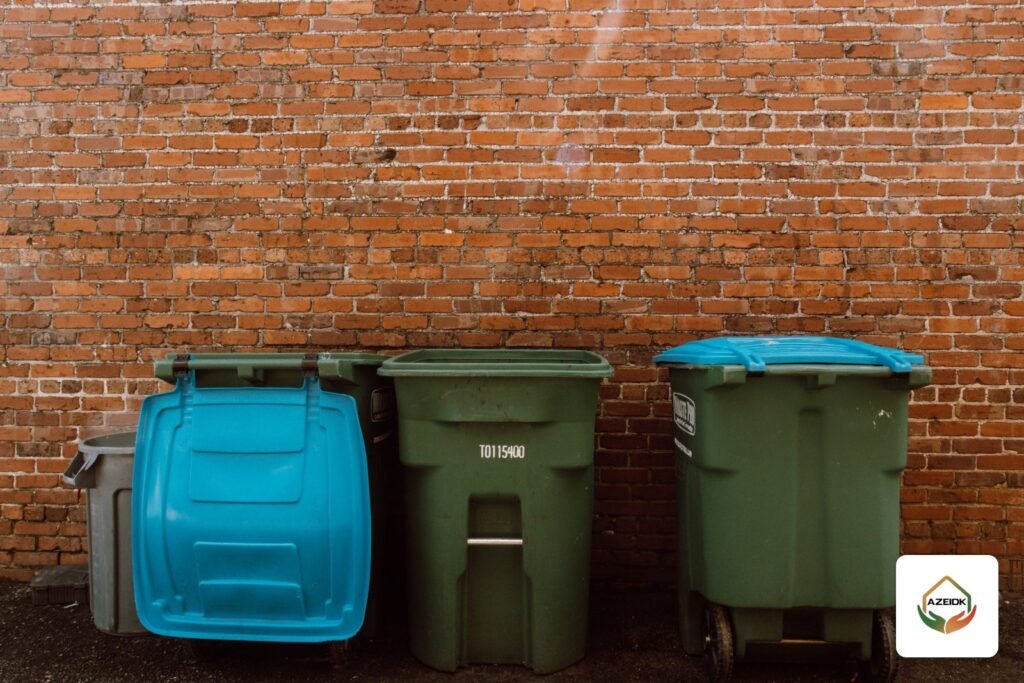
The waste room and the trash chute are places many building owners overlook, even though they gather a large fire load in a closed space. Paper, cardboard, plastics, food waste and oil residues, and sometimes a cigarette that was not put out, an aerosol can or a small battery thrown away with the rubbish, all pile up in bins inside a small room. In multi-storey buildings the chute links every floor through a vertical shaft, so a fire in the waste can act like a chimney and carry smoke to the upper floors.
This article explains where the risk comes from, what the reference codes require for sprinklers, doors and separation, and how protection is chosen within the fire fighting systems and fire alarm systems that AZEIDK supplies.
Key points
- The International Fire Code (IFC) text in section 903.2.11.2 requires sprinklers at the top of rubbish chutes and in their terminal rooms, with additional heads at alternate floors and at the lowest intake.
- Chute intake doors must be fire-protection rated, self-closing or automatic-closing, and fitted with a latch that keeps them shut.
- The dedicated US standard for waste and linen chutes is NFPA 82, and the Life Safety Code, NFPA 101, refers to it.
- In Saudi Arabia the binding requirements come through the Saudi Building Code (SBC 201 and SBC 801) and Civil Defense approval; the exact clause is checked in the adopted edition.
- A waste room needs a detector suited to its conditions (usually heat detection) connected to the fire alarm panel, and a fire-rated door that stays closed.
Why do waste rooms catch fire?
Most waste room fires start small: a cigarette end in a bag, oily waste reacting, or a damaged battery crushed inside a bin. The problem is that the room is usually unattended, and a slow smouldering fire can run for hours before anyone notices. In restaurants, hotels, hospitals and residential compounds the volume of waste is large and daily, so keeping the room tidy becomes part of the fire protection, not only a cleaning matter.
In high-rise residential and hotel buildings the risk is greater: the chute is a vertical shaft passing every floor, and every intake door left open or not closing properly becomes a path for smoke. This is why the codes treat the chute as a protected shaft with its own fire-resistance requirements, as covered in high-rise requirements in the Saudi Building Code.
What do the codes say about trash chutes?
Sprinklers inside the chute and in the terminal room
The Saudi Building Code is based on the ICC international codes, and the International Fire Code text in section 903.2.11.2, Rubbish and linen chutes, requires an automatic sprinkler system at the top of the chute and in the terminal room it discharges into. It also requires additional sprinkler heads at alternate floors and at the lowest intake. Where a rubbish chute extends more than one floor below the lowest intake, recessed sprinklers clear of the drop area are installed at alternate floors. The text adds that chute sprinklers must be accessible for servicing.
This text is a reference; the binding clause is checked in the SBC edition adopted for your project and with Civil Defense requirements. The sprinkler network itself, from hazard classification to spacing, is designed to NFPA 13; see NFPA 13 hazard classification and sprinkler spacing.
Chute intake doors
According to UL, every chute door must carry a fire-protection rating to keep the shaft’s fire and smoke integrity, and the International Building Code requires chute doors to be self-closing or automatic-closing, with a positive latch that holds the door shut if the spring fails. Chute-type fire doors are certified to UL 10B. An ordinary door or a site-made metal hatch is not enough.
NFPA 82 and NFPA 101
The dedicated standard is NFPA 82 (Incinerators and Waste and Linen Handling Systems and Equipment), and the Life Safety Code, NFPA 101, requires waste and linen chutes to be installed and maintained in accordance with it. On Saudi projects NFPA 82 usually enters through the project specification and the designer’s and consultant’s decisions.
The terminal room and ground floor waste rooms
The room at the bottom of the chute, and stand-alone waste rooms in restaurants, malls and compounds, are treated as a limited hazard room. What is normally checked:
- Separation: fire-resistance-rated walls and ceiling as set by the code for the room and the shaft; the difference between a fire wall and a fire barrier is explained in fire wall vs fire barrier vs partition.
- Door: a self-closing fire-rated door that is never wedged open by a block or a bin. AZEIDK supplies fire-rated doors and emergency exits.
- Sprinklers: full sprinkler coverage of the room as designed, with head guards where bins are moved underneath.
- Detection: usually a heat detector, because dust, odours and humidity make an ordinary smoke detector prone to false alarms. The options are covered in heat detector types and installation.
- Extinguisher: a suitable extinguisher outside the room door, as in fire extinguishers for residential buildings.
Protection by location
| Location | Suppression | Detection and alarm | Notes |
|---|---|---|---|
| Top of the chute | Automatic sprinkler | Flow switch signal to the alarm panel | Accessible for servicing |
| Inside the chute at alternate floors and the lowest intake | Additional sprinklers | Within a supervised sprinkler zone | Clear of the drop area |
| Terminal room | Sprinklers covering the room | Heat detector on the panel | Rated separation and fire-rated door |
| Restaurant or mall waste room | Sprinklers as designed | Heat detector | Daily cleaning, no cardboard stored outside bins |
| Intake doors on each floor | Not applicable | Not applicable | Fire-rated, self-closing, latching doors |
The table is a guide only; the final design of each building is set by the designer under the adopted code and Civil Defense requirements.
Common site mistakes
- Wedging the waste room door open to move bins, which cancels the fire separation.
- Intake doors with a broken spring or latch that stay half open.
- A sprinkler at the top of the chute that nobody can reach, so it goes years without inspection.
- Cardboard and bags stacked outside the bins until they block the room sprinklers.
- A smoke detector in a dusty, smelly room that keeps false alarming and is then disconnected.
- Batteries and aerosol cans thrown in with general waste with no awareness for residents and staff.
Inspection and maintenance
Chute and room sprinklers are part of the sprinkler system and are inspected and tested under the NFPA 25 programme, as described in our guide to inspecting and maintaining water-based systems. The routine round should also check that every intake door closes and latches, that the room door and closer work, that detectors are clean and connected, and that the room is free of stacked waste. This can be included in an annual maintenance contract.
Frequently asked questions
Are sprinklers required inside a trash chute?
The International Fire Code text, on which the Saudi Fire Code is based, requires sprinklers at the top of the chute and in the terminal room, with additional heads at alternate floors and at the lowest intake. Check the clause in the edition adopted for the project.
Which standard covers trash chutes?
NFPA 82. The Life Safety Code, NFPA 101, refers to it for installing and maintaining waste and linen chutes.
Is an ordinary door enough for an intake opening?
No. A chute door must carry a fire-protection rating, be self-closing or automatic-closing, and have a latch that keeps it shut.
Which detector suits a waste room?
Usually a heat detector, because dust and odours can cause false alarms on a smoke detector. The designer sets the type and position for the room.
Does AZEIDK supply the chute intake doors?
AZEIDK supplies sprinklers, fire alarm systems and fire-rated doors for the rooms. Chute doors certified to UL 10B normally come with the chute system from its supplier, and we review their fit with the design.
Summary
A waste room and a trash chute need planned protection: sprinklers in the chute and the terminal room, fire-rated doors that stay closed, a suitable detector on the alarm panel, and daily housekeeping that prevents stacking. Civil Defense inspectors check this in residential developments and hotels, and our Civil Defense approval support covers it.
Designing a building with a trash chute, or reviewing an existing waste room? Send the drawings, the number of floors and the occupancy, and the AZEIDK team will review sprinklers, detection and doors and quote supply and installation. Request a quote