Hotel access control is the system that decides who can enter a hotel’s back-of-house areas and when: staff entrances, stores, electrical and network rooms, kitchens and the floor buttons inside the lifts. It works with cards, face recognition or PIN codes, links to CCTV so every movement is recorded on video, and links to the fire alarm so locked exit doors release automatically in an emergency. Guest-room locks are not covered here; they are a separate system supplied by lock manufacturers.
Key takeaways
- Define access zones before choosing any device: public, staff, stores, technical rooms and admin areas.
- Card-based lift control limits access to guest and technical floors, and must be agreed with the lift company in advance.
- NFPA 101, the Life Safety Code, states that electrically locked exit doors must unlock on loss of power and when the fire alarm or sprinkler system operates.
- Linking door events to CCTV turns the access log from a list of card numbers into video evidence.
- Guest-room locks are outside this scope; coordination is needed only if the hotel wants one card for the room and the lift.
In this article
What does hotel access control cover?
A hotel has two kinds of movement: guests and visitors at the front, staff and suppliers at the back. The hotel access control system discussed here mainly serves the back, protecting the spaces a guest or visitor should never reach.
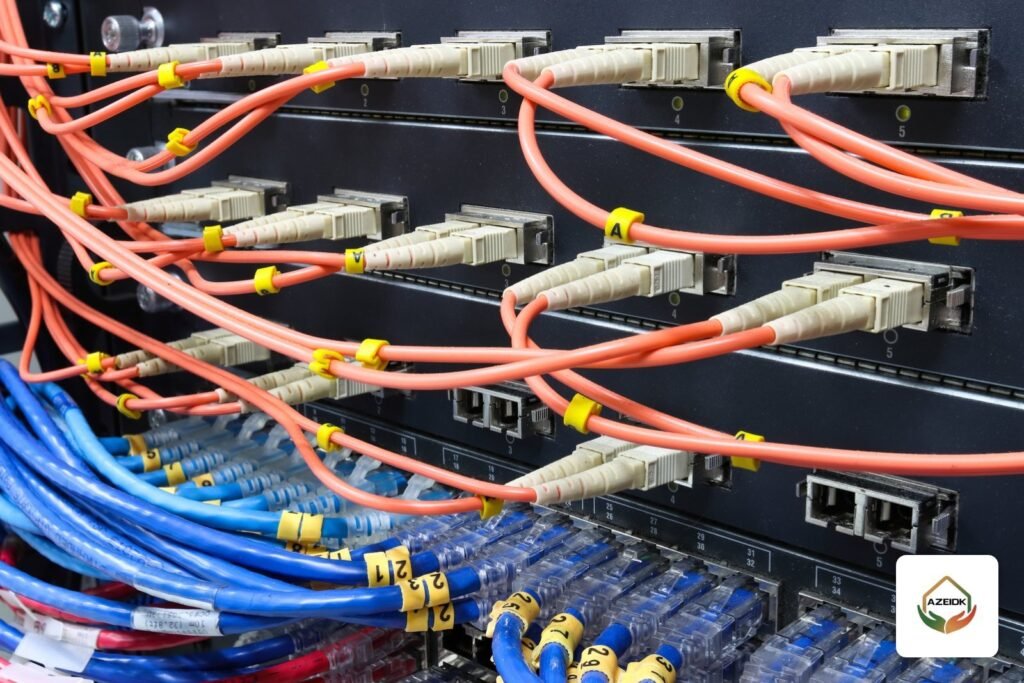
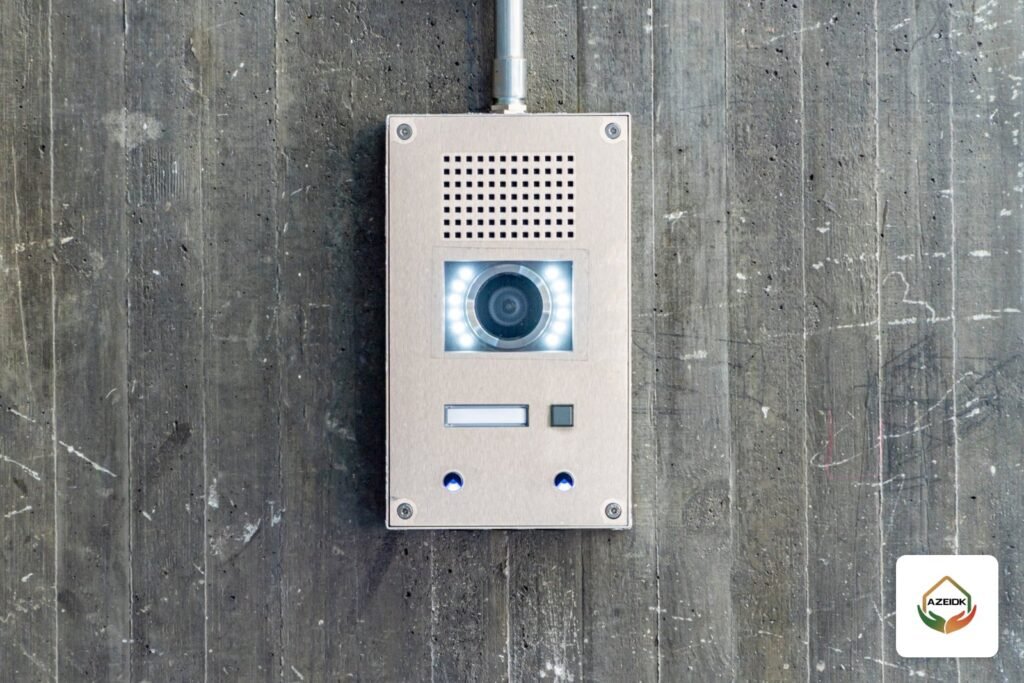
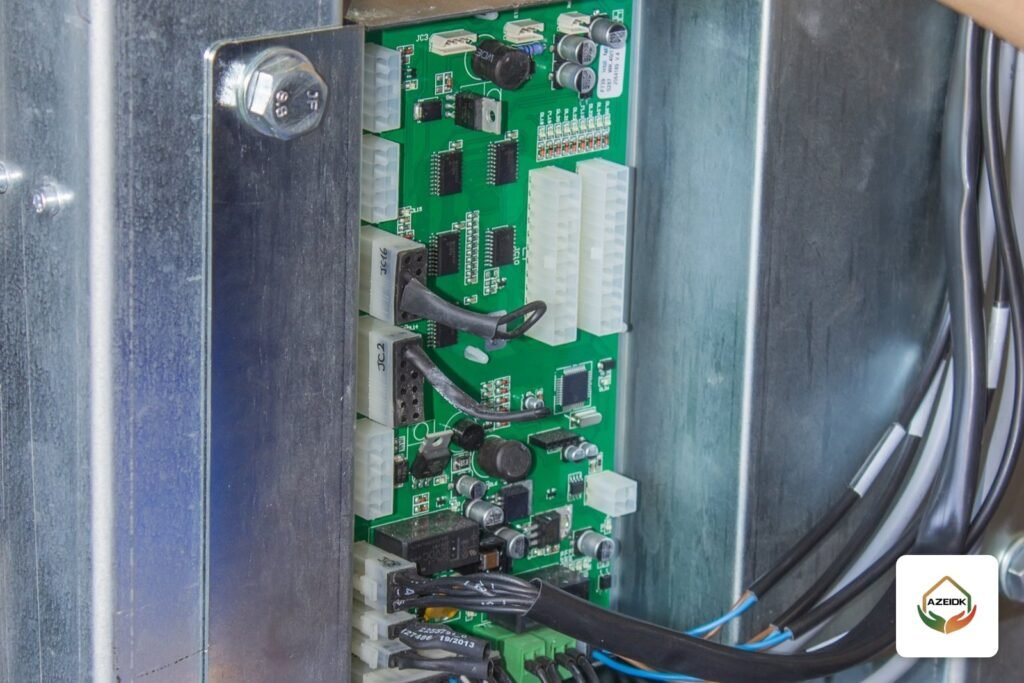
Every controlled door has the same core parts: a reader (card, face or fingerprint), a controller that grants or denies access, an electric or magnetic lock, a door position contact and an exit button. All controllers sit on the network under one management software that holds the permissions and the event log. This is part of the low current systems AZEIDK delivers, and it works together with our security and surveillance systems.
Guest-room locks have their own software and card encoders at reception, and AZEIDK does not supply them. People searching for hotel room access control usually mean one of two things: the room lock itself, or stopping non-guests from reaching the guest corridors. The second is solved with lift control and controlled doors leading to guest floors.
How do you split a hotel into access zones?
A common mistake is to start with a device count before the zones are defined. Sit with hotel management first and agree, for each zone, who enters, at what times and with which credential. The table below is a practical starting point to adjust to the hotel’s size and operation.
| Zone | Examples | Suggested credential | Notes |
|---|---|---|---|
| Staff entrance | Service door, locker rooms | Face recognition or card with a turnstile | Can double as time attendance |
| Stores | Food, beverage, linen, spare parts | Card plus PIN | Limited to named staff and shift times |
| Technical rooms | Electrical, network, generator, pump rooms | Card for maintenance team only | Alert on door held open |
| Kitchen and prep areas | Main kitchen, cold rooms | Card | Plan for heavy traffic and hygiene |
| Admin areas | Accounts, safe, CCTV control room | Face or fingerprint plus card | Two-factor for sensitive rooms |
| Guest floors | Lift floor buttons, stair doors from the lobby side | Card | Must never block exit from the stair to outside |
Once approved, each zone becomes a door group and an access level in the software. A new employee is then added to the right group instead of being programmed door by door.
How does card-based lift control work?
A card reader sits inside the lift car, and a controller enables only the floor buttons the cardholder is allowed to use. A guest presents the card and the buttons for their floor and the public floors, such as the lobby and restaurant, become active while the rest stay disabled. Some hotels leave the lifts open during the day and apply restrictions at night.
There are two common integration methods:
- Relay integration: each floor button is routed through a controller output. It is widely used and needs no software link with the lift company, but it means wiring work inside the car operating panel.
- High-level integration: some modern lift systems accept floor commands directly from the access control system. This depends entirely on what the lift manufacturer offers.
In both cases, do not start work without the lift company’s written approval of the connection point and method, since any change inside the lift panel can affect its warranty and maintenance contract. The integration must also never interfere with emergency or firefighter operation as set by the lift company under the adopted code.
If the hotel wants guests to use the room card in the lift, the card technology (chip type and encryption) must be compatible between the lock system and the lift readers. Settle this with the lock supplier at design stage, not after installation.
Exit doors and the fire alarm interface
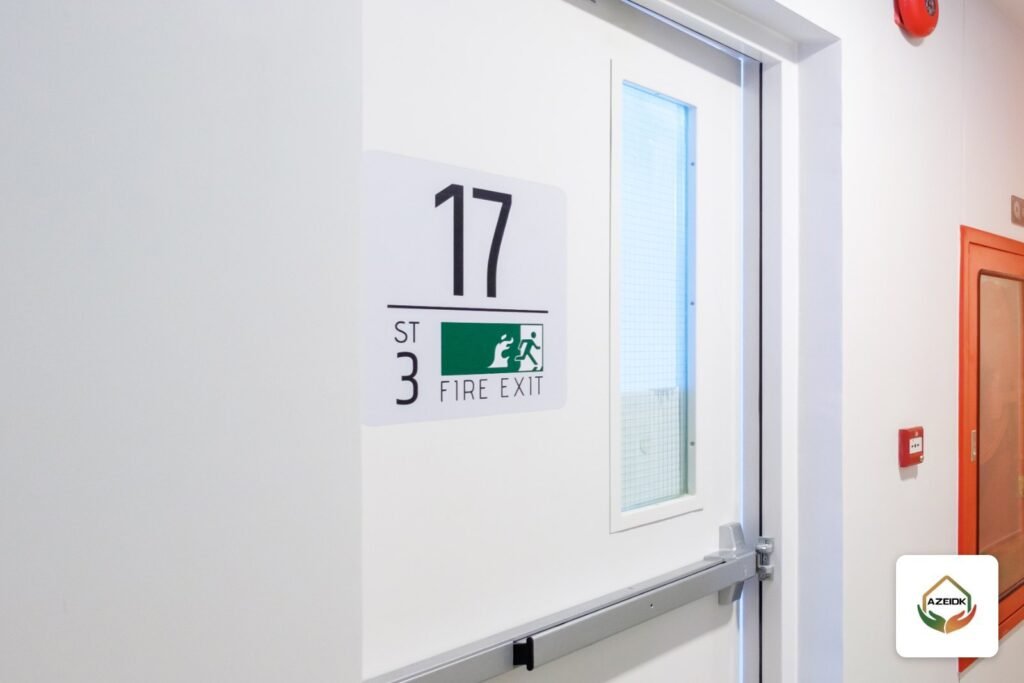
This is the most important life-safety point in any access control project. An electrically locked door on an escape route must open without delay in an emergency. NFPA 101, Section 7.2.1.6.2 (Access-Controlled Egress Door Assemblies), sets conditions including:
- A sensor on the egress side that unlocks the door when an occupant approaches.
- Automatic unlocking on loss of power to the sensor.
- Automatic unlocking when the fire alarm system operates, and when a sprinkler or detection system, if provided, operates.
- A manual release within 60 in. (1525 mm) of the door that directly cuts power to the lock for at least 30 seconds, signed PUSH TO EXIT.
In Saudi Arabia, Civil Defense enforces the Saudi Building Code, and the design consultant sets the reference adopted for each project. We therefore treat NFPA 101 as a technical reference and confirm project requirements on the approved drawings. In practice this becomes a line in the fire alarm cause and effect matrix: the alarm signal drops power to the locks on escape routes, sends the lifts to their emergency mode as designed, and logs the event in the access control software.
We always separate two door types: doors on an escape route, which must release on alarm, and secure rooms such as the safe, which may stay locked if they are not an exit path. The consultant approves this decision and it is shown on the drawings before installation.
Linking access control with CCTV
An access log on its own says card number X opened the store door at 2:14 a.m. It does not say who was holding the card. Once the two systems are linked, every event is tied to a video clip from the camera covering that door, so you see who entered and who came in with them.
What the integration needs in practice:
- A camera covering each controlled door, angled to see faces rather than the tops of heads.
- One management platform for both systems, or a working integration between the access software and the video recorder.
- Instant alerts to the control room for forced doors or doors held open.
- A recording retention period long enough to review events, in line with the Saudi law on the use of security surveillance cameras.
Using one brand for cameras and controllers, such as Hikvision or Dahua, usually makes this easier. Where brands differ, confirm compatibility before purchase. We check this as part of our programming and systems integration service.
Choosing the right devices for a hotel
The choice depends on the number of doors, whether they are spread across several buildings, and whether the hotel wants central software. Devices available from AZEIDK include:
- The Hikvision DS-K2801 card access controller.
- The Dahua ASI1212F standalone unit for single doors such as small stores.
- ZKTeco InBio and C3 networked panels for projects with many doors managed from one software. ZKTeco offers the InBio Pro series in one-door, two-door and four-door versions.
- Face recognition terminals such as the ZKTeco F34 Lite for staff entrances.
- Turnstiles for the staff entrance, compared in our access gates and turnstiles guide.
Exact figures for each device (user and card capacity, communication options) are taken from the manufacturer’s official datasheet when we prepare the technical offer. We do not estimate them.
Common mistakes on hotel projects
- Magnetic locks on emergency exit doors with no fire alarm release or no manual release button.
- Lift control installed before the lift company has agreed the connection point.
- A camera too far from the door, or at an angle that misses faces, which makes the integration useless.
- No backup battery for the controllers, so the system stops during a power cut.
- Every employee given every door because no one defined the zones.
- Cards of departed staff and temporary supplier cards never cancelled.
Read more about what the sector needs on our hotels and hospitality page.
Frequently asked questions
Do you supply guest-room locks?
No. Room locks are a separate system from lock manufacturers. Our scope is service doors, stores, technical rooms, lifts, and the links to CCTV and the fire alarm.
Can the room card work in the lift?
Yes, if the card technology is compatible between the lock system and the lift reader. This must be settled with the lock supplier during design.
What happens to locked doors during a fire alarm?
Doors on escape routes must unlock automatically on alarm and on loss of power, as NFPA 101 states. This is defined in the cause and effect matrix.
What is the best credential for a staff entrance?
Face recognition suits busy entrances because it needs no card and no touch. Card plus PIN is better for stores and sensitive rooms.
Can the system also record staff attendance?
With many devices, yes. The staff entrance terminal handles both entry and attendance, depending on the device and software chosen.
Does card lift control mean modifying the lift panel?
With relay integration, yes, and the lift company must approve it. With high-level integration it depends on what the lift system supports.
Conclusion
A successful hotel access control system starts with a zone and permission table approved by management, then a correct fire alarm release on escape doors, early coordination with the lift company and a well-placed camera at every door. Devices are then chosen by door count and how the hotel wants to manage them.
Planning access control for your hotel? Send the drawings and your zone list, and our team will review them and propose the devices and integration method. Talk to the AZEIDK team
Related guides
- Safety and Fire Fighting Company in Buraydah and Qassim: Fire Alarm, Firefighting, Extinguishers and Civil Defense Licensing
- Fire Alarm Cable: FPLR Shielded vs BS 6387 Fire-Resistant Cable (Belden 9581 and 79001FS)
- Certificate of Conformity for Network and Telecom Devices (Switches, Routers, Wi-Fi and IP Phones) on SABER: The Technical Regulation and What It Requires from the Supplier
- Atrium Smoke Control in Malls to NFPA 92: Smoke Exhaust and Make-Up Air Calculation