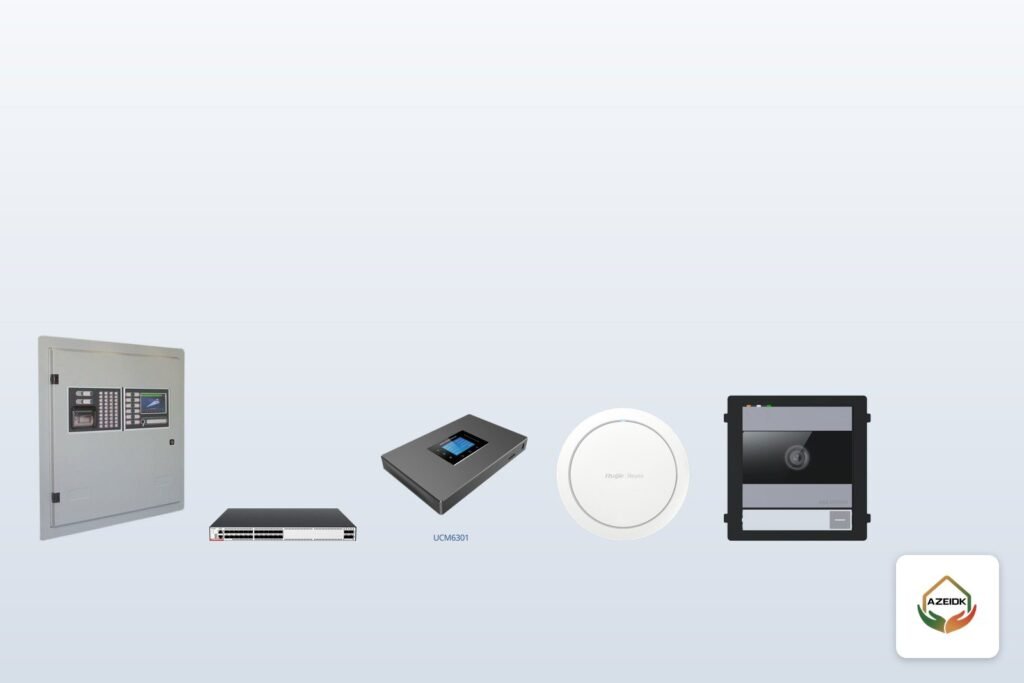
A smart building is not a device you buy. It is a set of systems that talk to each other instead of working in isolation: the fire alarm signals access control, lifts and voice evacuation; CCTV cameras and recorders run on one organised network; and operators follow system status from one place. This guide is for building owners, developers and consultants in Saudi Arabia: what to put in the scope, what sets the size and cost of a proposal, and how to compare proposals before signing.
AZEIDK delivers smart buildings and systems integration through the systems it actually supplies and installs: structured cabling, networks and Wi-Fi; CCTV cameras and recorders; access control, time attendance, gates and barriers; intercom and telephony; public address and audio; and fire alarm systems.
Key takeaways
- Start from the list of systems and the integration scenarios you need, not from a device list.
- A converged network is the base of a smart building, and its design drives much of the cost.
- The fire alarm stays independent; the BMS link is for monitoring and coordination only.
- Handover is complete only when the integration scenarios are tested and documented with drawings and operating instructions.
What a smart building means in practice
In Saudi commercial and residential projects, a smart building usually has one network layer carrying the low current systems. CCTV, access control, telephony and public address run on that layer, and the links between these systems and the building management system (BMS) are added where the project calls for them. The technical side, converged networks, BACnet and Modbus, and cybersecurity, is covered in smart buildings and low current integration.
Scope checklist before you ask for proposals
The clearer the scope, the more comparable the proposals. State in your request:
- Systems covered: network and Wi-Fi, CCTV, access control and gates, intercom, telephony, public address, fire alarm, and the BMS if there is one.
- Integration scenarios: for example releasing escape route doors on fire alarm, lift recall, evacuation messages, and showing the camera linked to a door event.
- Monitoring point: where the systems are monitored, who operates them and which permissions they need.
- Project stage: a new building on drawings, or an existing building that needs an assessment of existing systems and scope definition.
- Documentation: shop drawings, the datasheet for every device, the cause and effect matrix and operating instructions.
What sets the size and cost of a proposal?
There is no fixed price for a smart building, because the cost is built from specific items. The main factors:
- The number of systems and devices per system: cameras, doors, speakers, network points and access points.
- Network infrastructure: structured cabling, fibre, switches, racks and VLAN segmentation. See ELV network VLAN design and network cabling cost factors.
- The number and complexity of integration scenarios: each scenario needs interfaces, programming and testing.
- The BMS link: the protocol, the number of monitored points and the integration limits. See BMS integration with fire and safety systems.
- Software and licences: video management, access control and PBX software and the number of users.
- Coordination with MEP works: cable routes and clashes with HVAC and sprinklers. See coordinating MEP with fire safety and low current systems.
- Testing, handover, training and later maintenance.
To estimate low current systems for a new building item by item, see low current systems cost factors for a new building.
Integration limits: why the fire alarm stays independent
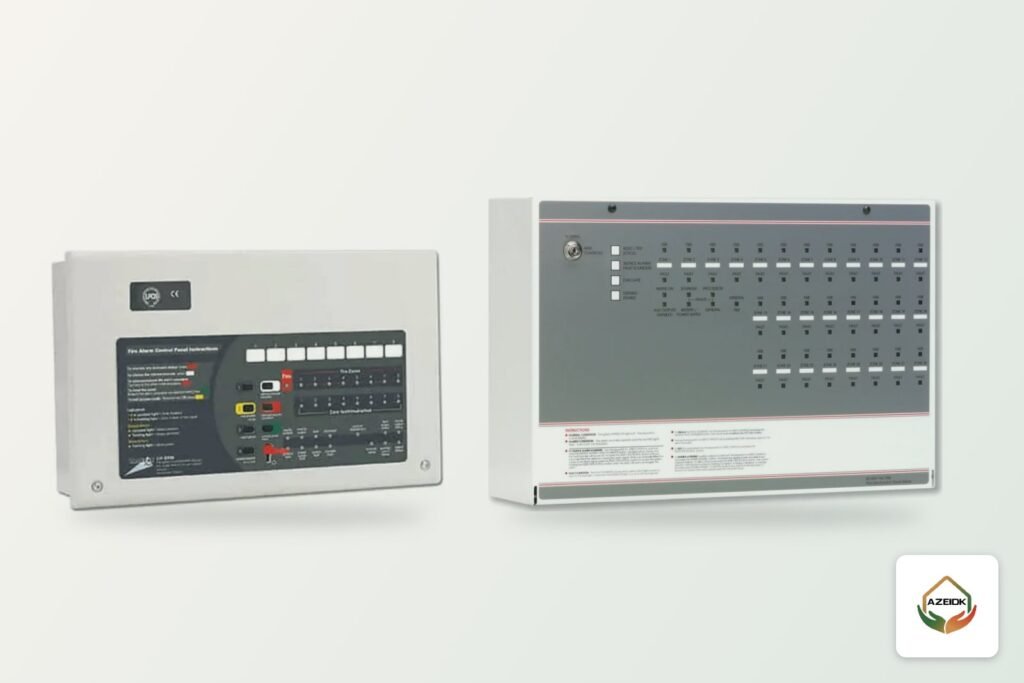
The fire alarm is a life safety system, so it works independently and sends its signals to the other systems, while the BMS receives its status for monitoring without controlling it. Any proposal that makes the fire alarm depend on the building network or the BMS needs review. Details in BMS integration with fire systems; see also AZEIDK’s fire alarm systems.
How to compare smart building proposals
- Does the proposal name the brand and model of every device, with official datasheets?
- Does it list the integration scenarios by name, and how each will be tested?
- Does it include network design and segmentation, or assume an existing network?
- Does it state software licences and user counts?
- Does it include integrated testing before handover? See integrated systems testing before handover.
- Does it deliver as-built drawings, operating instructions and operator training?
What you receive from AZEIDK
- A design for the network infrastructure and low current systems based on the building’s needs.
- Equipment from established brands, with official datasheets.
- Installation, commissioning and programming of the systems and the links between them, through the programming and systems integration service.
- Tested and documented integration scenarios, with drawings and operating instructions.
The systems include network and communication systems, security and surveillance systems and integrated low current systems.
Frequently asked questions
Can an existing building become a smart building?
Usually yes, after assessing the current systems: what can be linked as it is, what needs replacing or added interfaces, and what the network needs.
Do I need a BMS for a smart building?
Not always. Many buildings achieve the needed links between fire alarm, access control, CCTV and public address without a full BMS, and a BMS is added when other systems must be monitored.
How long does a smart building project take?
It depends on the building size, the project stage and the number of systems, and is set in the programme once the scope and drawings are approved.
Planning a smart building or linking the systems of an existing one? Send the drawings and the list of systems you need, and the AZEIDK team will propose the scope and integration scenarios with a clear quotation. Request a quote from AZEIDK
Related guides
- PoE Switches for CCTV: Power Budget, Ports and Distance
- Mini CCTV Cameras: Small Cube and Pan-Tilt Cameras from EZVIZ and Hikvision, Wi-Fi or SD Card, and What Saudi Law Allows
- Comprehensive vs Non-Comprehensive Fire and Security Maintenance Contracts: Spare Parts, Emergency Call-Outs and How to Choose
- Saudi Quality Mark for Fire Equipment: What It Is and How It Relates to the SABER Certificate of Conformity