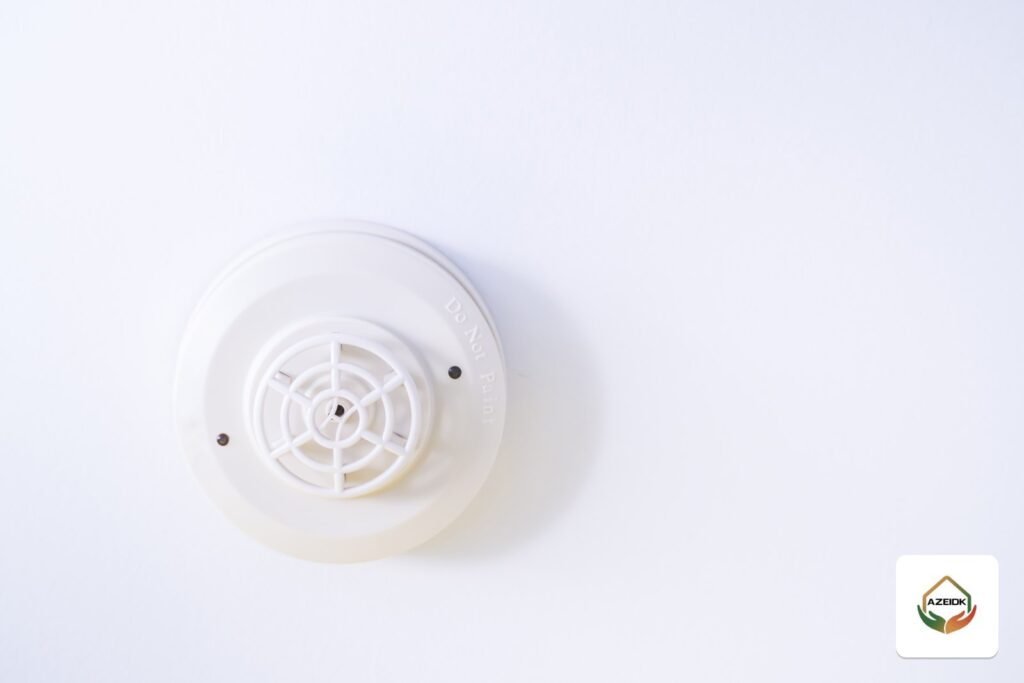
Choosing a conventional smoke detector or a heat detector does not end with the type. The BOQ and submittal need the part number, voltage, standby and alarm current, base and ambient limits. These numbers feed the zone and battery calculations.
This guide covers the Series 65A conventional detectors from Context Plus supplied by AZEIDK Egypt: the 55000-326IMC optical smoke detector, the 55000-139IMC heat detector rated 135 °F and the 55000-145IMC heat detector rated 200 °F. All figures come from the Context Plus conventional detectors catalogue published on the brand page at AZEIDK Egypt.
Key takeaways
- According to the Context Plus catalogue, Series 65A is UL listed and includes one optical smoke detector and two combined fixed temperature and rate-of-rise heat detectors.
- All three models run on 9 to 33 V and draw 52 mA in alarm at 24 V.
- Standby current at 24 V: 45 µA for the smoke detector and 55 µA for each heat detector.
- The catalogue gives an ambient operating range of 32 to 100 °F (0 to about 38 °C) for all three models, which matters in hot spaces.
- A heat detector suits spaces where a smoke detector cannot work, but it is not a life-safety substitute for one.
In this article
What is in the Series 65A range?
Context Plus is a British fire alarm manufacturer working since 1984. Series 65A detectors belong to conventional fire detection and alarm systems: they sit on two-wire zone circuits connected to a conventional panel, and each detector has no individual address.
Per the catalogue, the project range consists of:
- 55000-326IMC optical smoke detector: a photo-electric smoke detector with a flashing LED and red LED alarm indication.
- 55000-139IMC heat detector: a fixed temperature and rate-of-rise (Fixed Temp / Rate of Rise) detector rated 135 °F, about 57 °C, listed in the catalogue as Ordinary rating.
- 55000-145IMC heat detector: the same type rated 200 °F, about 93 °C, Intermediate rating.
- Bases: the standard 45681-200IMC base and the 45681-245 relay base.
- Remote LED indicator (RLI), part number BF318.
The catalogue states the detectors are UL listed and made in England. The listing belongs to the manufacturer’s model. It does not mean AZEIDK holds any certification. Check the supplied part number against the BOQ.
Electrical and operating data from the catalogue
Published catalogue figures for the three models:
| Item | Smoke detector 55000-326IMC | Heat detector 55000-139IMC | Heat detector 55000-145IMC |
|---|---|---|---|
| Detection principle | Optical smoke | Fixed temperature with rate of rise | Fixed temperature with rate of rise |
| Temperature rating | Not applicable | 135 °F (Ordinary) | 200 °F (Intermediate) |
| Supply voltage | 9 to 33 V | 9 to 33 V | 9 to 33 V |
| Standby current at 24 V | 45 µA | 55 µA | 55 µA |
| Standby current at 9 V | 40 µA | 50 µA | 50 µA |
| Alarm current at 24 V | 52 mA | 52 mA | 52 mA |
| Alarm current at 9 V | 17 mA | 17 mA | 17 mA |
| Alarm indication | Red LED | Red LED | Red LED |
| Ambient temperature | 32 to 100 °F | 32 to 100 °F | 32 to 100 °F |
| Effect of wind | Not affected | Not affected | Not affected |
| Remote output (R-) | Sink to -ve, max 17 mA | Sink to -ve, max 17 mA | Sink to -ve, max 17 mA |
The Series 65A catalogue gives no figures for humidity, IP rating or dimensions. If the specification asks for them, request them from the manufacturer.
Smoke detector, or heat detector at 135 °F or 200 °F?
The practical rule is to start with the optical smoke detector wherever it can work, and move to a heat detector only where smoke, steam or dust is part of normal operation. Electrical Contractor magazine notes that heat detectors are mainly used where a smoke detector is impractical, and that most residential fire deaths come from smoke inhalation. So a heat detector does not go in an escape corridor or a hotel bedroom just to cut nuisance alarms.
Two questions follow when you pick a heat detector. Does the space see fast, normal temperature rises? And what is the highest expected ceiling temperature? The same article recommends a detector rated at least 20 degrees above the maximum expected ceiling temperature. The table is a starting point for spaces we see often on Egyptian projects. The final decision stays with the designer and the code. The general selection logic by space is in our smoke and heat detector selection guide.
| Space | Usual model | Check before approval |
|---|---|---|
| Offices, corridors, electrical rooms | Optical smoke 55000-326IMC | Room stays within 32 to 100 °F; BF318 indicator if the detector is out of sight |
| Restaurant and hotel kitchens | Heat 55000-145IMC or 55000-139IMC, by room temperature | Normal ceiling temperature against the 100 °F limit; effect of oven doors on the rate-of-rise element |
| Boiler and generator rooms | Heat | Ceiling temperature in operation against the 100 °F catalogue limit |
| Car parks | Heat 55000-139IMC, usually | Exhaust, humidity and summer ceiling temperature |
| Dusty factory halls | Heat | Dust level; height may call for a beam detector |
| Top floors under uninsulated metal roofs | Case by case | Summer ceiling temperature may exceed the stated limits |
When to choose 200 °F
The 55000-145IMC gives a wider margin and suits short heat surges, such as a cooking line near grills. But the catalogue gives an ambient range of 32 to 100 °F for both heat models. A higher rating does not automatically make the detector suitable for a ceiling that normally runs above 38 °C. In boiler rooms, or under hot roofs in Upper Egypt in summer, get written confirmation of application limits from the manufacturer before approving the model.
What the rate-of-rise element does
The rate-of-rise element alarms when temperature climbs quickly, even before it reaches the fixed rating. It can cause false alarms near an oven door that opens often. The catalogue does not give the rate-of-rise value for these models, so do not write one into the specification from general sources.
Wiring the detectors on a conventional zone
In a conventional system, the detectors on one zone are wired in parallel across two wires from the panel. At the end of the circuit sits the end-of-line device specified by the panel. The panel monitors the circuit through this device and shows a fault on an open or short circuit.
- Bases first: install and wire the bases and test the circuit before fitting detector heads. The catalogue says Series 65A bases let you plug in the detector without force, that all versions are lockable and that the base has no electronic parts to damage during installation.
- End-of-line device: its value and type come from the panel manual, not the detector. Fit it at the last device on the circuit, not inside the panel.
- No T-taps: do not branch the zone circuit. A branch beyond the tee point is not monitored.
- 45681-245 relay base: use it when you need a local output from the detector, and check its contact data in its own datasheet.
- BF318 remote indicator: use it for detectors hidden above suspended ceilings or in locked rooms. The catalogue notes that a current-limiting series resistor may be required.
Smoke and heat detectors can share one zone if it covers a single fire area that civil protection crews can locate easily. Spacing and ceiling height rules are covered in our guide to smoke and heat detector spacing.
Zone current and its effect on the battery
The catalogue figures make the zone calculation simple. A zone with 20 smoke detectors 55000-326IMC draws 20 × 45 µA = 0.9 mA in standby. A zone with 12 smoke and 8 heat detectors draws 12 × 45 + 8 × 55 = 980 µA, about 1 mA. The panel’s own current, from its datasheet, is far larger.
The 52 mA alarm current applies to the detector at 24 V and falls to 17 mA at 9 V. So the real alarm current depends on the panel’s zone circuit. Check the panel manual for the maximum number of detectors per zone and how to calculate alarm current. Battery sizing with standby time, alarm time and the ageing factor is covered in our article on fire alarm battery calculation.
Common mistakes with Series 65A detectors
- Swapping a smoke detector for a heat detector to stop nuisance alarms: it fixes the nuisance and creates a bigger problem, late warning in occupied spaces.
- Choosing 200 °F for every hot space: without comparing the actual ceiling temperature with the ambient limit in the catalogue.
- Fitting detector heads during finishing works: gypsum dust and paint get into the smoke chamber and cause false alarms later. Fit heads after dusty works finish, or keep them covered.
- Copying figures from another series: the same catalogue holds another series with different figures, so the submittal must match the model actually supplied.
- Ignoring the R- output when wiring a remote indicator: loading the output beyond its 17 mA limit.
- Not testing each detector: test every detector with smoke or heat as the manufacturer instructs.
Frequently asked questions
What is the difference between the 55000-139IMC and 55000-145IMC heat detectors?
Both are fixed temperature and rate-of-rise heat detectors with the same electrical data. The difference is the rating: 135 °F (about 57 °C, Ordinary) for the first and 200 °F (about 93 °C, Intermediate) for the second.
Can Series 65A detectors run on a 12 V panel?
The catalogue gives a 9 to 33 V supply range, but compatibility depends on the panel manual and its zone circuit. Confirm it with the panel supplier before approval.
How many detectors can go on one zone?
The maximum is set by the panel and its manufacturer’s instructions, along with the code and project specification. Low standby current is not the only factor.
Is a heat detector suitable for a hotel bedroom?
Not recommended. A heat detector responds after the fire has grown, and a sleeping guest needs early warning, so sleeping areas use smoke detection.
When do I need the BF318 remote indicator?
When the detector is out of sight, above a suspended ceiling or in a locked room, so responders can see which detector alarmed.
Are Series 65A detectors UL listed?
The Context Plus catalogue states that all three models are UL listed. The listing belongs to the manufacturer’s model and is checked by part number in the manufacturer documents.
Conclusion
Context Plus Series 65A is a small, clear range: one optical smoke detector and two heat detectors with two ratings, with almost identical voltage and current figures that keep calculations simple. The real decisions are the right type for each space, actual ceiling temperature against catalogue limits, and zone wiring to the panel manual.
Preparing a detector BOQ for a conventional system? Send us the layout and proposed panel, and we will review the Series 65A models and bases with you. Talk to the AZEIDK Egypt team