Flour mills and grain silos are a core part of Egypt’s wheat and flour supply chain, and many run around the clock. Their biggest hazard is not only ordinary fire but flour and grain dust explosion inside bucket elevators, conveyors and silos, along with the risk of a worker being engulfed in flowing grain. This guide brings together what official references say about the hazards, and what a mill or silo needs in prevention and fire protection. See also our article on Fire and Explosion Protection for Sugar Factories in Egypt.
The protection systems mentioned here are part of the fire fighting systems and fire alarm systems supplied by AZEIDK Egypt.
Key points
- Grain dust is the main fuel for explosions in grain handling facilities, according to the U.S. Occupational Safety and Health Administration (OSHA).
- Common ignition sources: a hot bearing, an overheated motor, a misaligned conveyor belt, and welding and cutting.
- Housekeeping is the most important preventive measure, and OSHA sets priority areas where dust accumulation must not exceed 1/8 inch (about 3 mm).
- Silo entry is a separate hazard: flowing grain can bury a worker in seconds.
- Protection covers early detection, a hydrant network, a fire pump and extinguishers, plus specialist explosion protection on equipment.
How a dust explosion happens in a mill
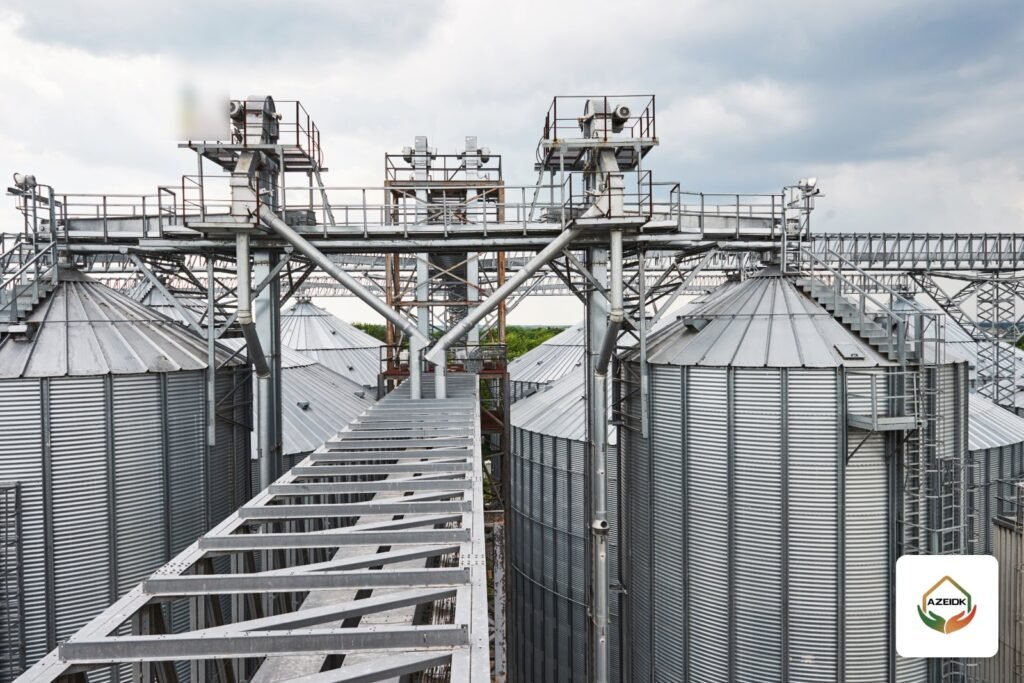
OSHA explains that grain dust can ignite once enough of it is airborne, or settled on surfaces, and meets an ignition source. The first explosion often happens inside enclosed equipment such as a bucket elevator or conveyor casing, then shakes the building and lifts dust from floors and beams, which ignites in a larger secondary explosion. Safety in a mill therefore depends as much on housekeeping as on equipment.
Ignition sources and how to control them
| Ignition source | Where it appears | Action |
|---|---|---|
| Hot bearing | Bucket elevators, conveyors, motors | Lubrication, temperature checks and replacing worn parts |
| Overheated motor | Mills, fans, conveyors | Regular maintenance and keeping dust off motors |
| Misaligned belt | Bucket elevators and conveyors | Alignment checks; OSHA requires bucket elevators to have motion detection that shuts them down when belt speed drops by no more than 20% of normal |
| Welding, cutting and brazing | Maintenance work | Hot work permit, area cleaning and equipment stopped |
| Static electricity | Bucket elevator belts | OSHA requires elevator belts bought after 30 March 1988 to be conductive, with surface resistance not exceeding 300 megohms |
These are U.S. requirements cited as a documented reference, not a substitute for Egyptian Civil Protection requirements or the approved design.
Housekeeping: priority areas
OSHA requires grain facilities to have a written housekeeping programme to reduce dust on ledges, floors and equipment, and sets priority areas where accumulation must not exceed 1/8 inch:
- Floors within 35 feet (about 10.7 m) of inside bucket elevators.
- Enclosed areas containing grinding equipment.
- Enclosed areas containing grain dryers inside the facility.
In practice for an Egyptian mill: clean dust with vacuum rather than compressed air, do not leave flour bags open or spilled, and focus on beams and high surfaces above the milling lines.
Silo entry: a hazard beyond fire
OSHA warns that flowing grain behaves like quicksand and can bury a worker in seconds. Required precautions before entering a bin include locking out powered equipment, prohibiting walking down grain, a body harness with a lifeline, an observer outside the bin, and testing the air for combustible and toxic gases and oxygen before entry.
Fire protection for mills and silos
Early detection
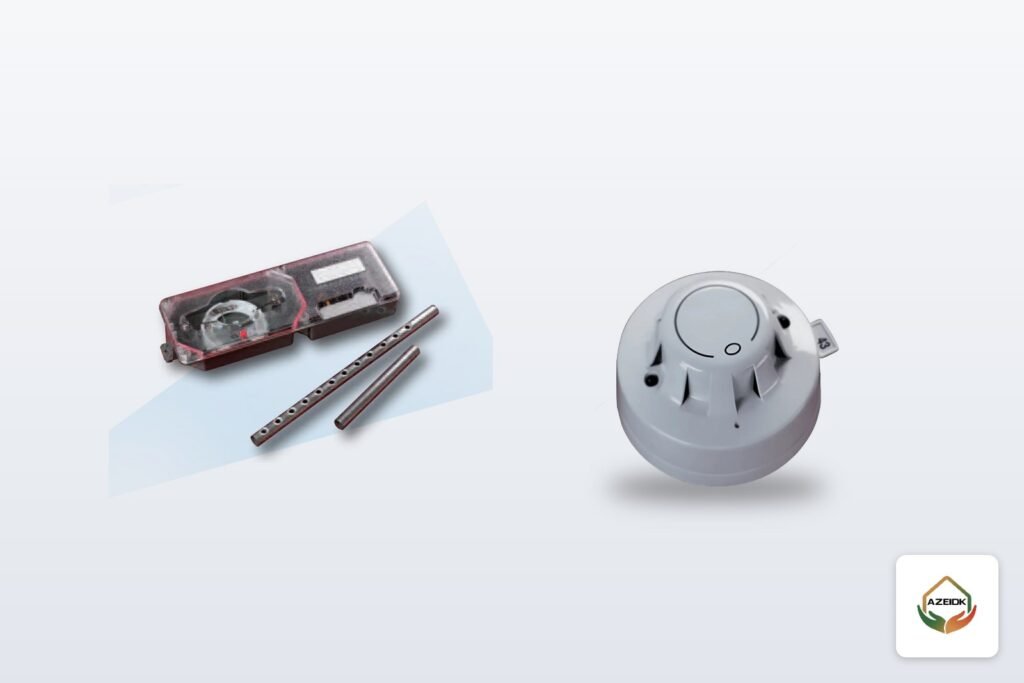
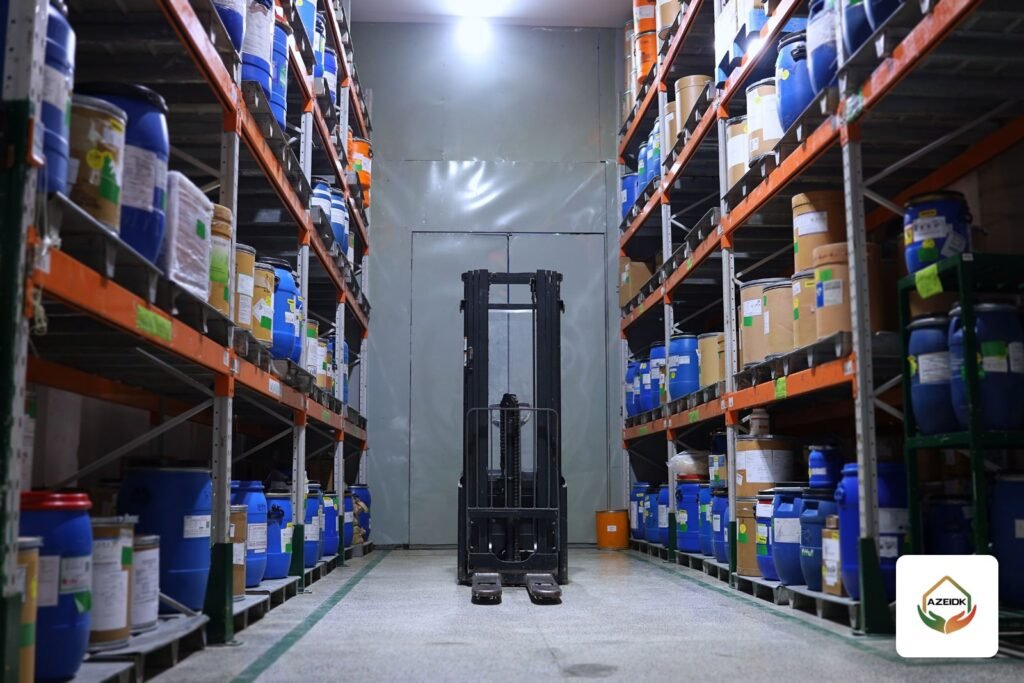
A fire alarm system covering electrical and motor rooms, flour and bag stores and packing halls, such as Context Plus panels and detectors. In high-roof stores, beam detectors such as TANDA are used after a beam detector layout study.
Hydrant network and fire pump
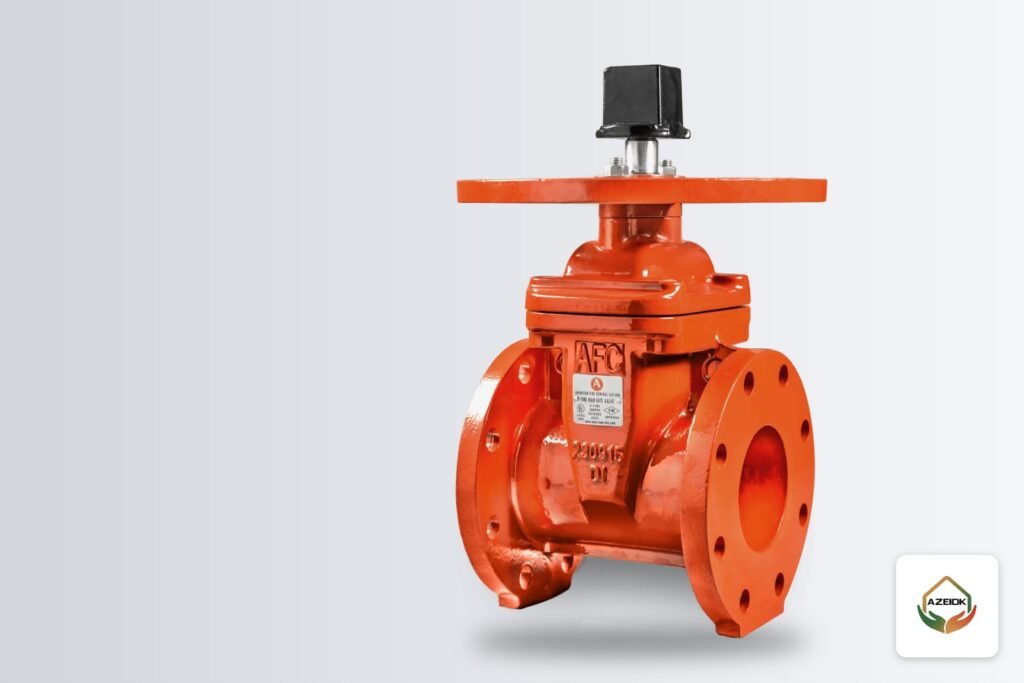
An external hydrant network around silos and buildings and internal hose points in stores, fed by a fire pump with adequate water storage, such as 3PUMP pump sets, American Fire Control hydrants and Falcon Gold cabinets, with a fire department connection where it is easy to reach.
Extinguishers
Multi-purpose powder extinguishers in stores and packing halls, and CO2 beside electrical panels, from PYRAMID.
Explosion venting and isolation inside elevators and filters is specialist protection designed with the equipment supplier to the applicable standards.
FAQ
Can flour really explode?
Flour stacked in bags burns rather than explodes, but airborne flour dust in an enclosed space at enough concentration can explode if it meets an ignition source, which is what OSHA warns about in grain facilities.
What is the most dangerous point in a mill?
Bucket elevators and enclosed conveyors, because they combine dust, movement and friction in one place.
Is a fire alarm system enough on its own?
No. The alarm gives early warning, but explosion prevention depends on housekeeping, maintenance and ignition control, and firefighting needs hydrants, a fire pump and extinguishers.
Summary
Mill and silo safety starts with housekeeping, elevator and conveyor maintenance and hot work control, then safe silo entry procedures, then fire alarm, hydrants and a fire pump. See also fire protection for food factories and warehouse fire protection.
Want the fire protection of a mill or silo reviewed? Send the layout, storage capacity and store areas, and the AZEIDK Egypt team will propose the right design. Contact AZEIDK Egypt
Sources
- Grain Handling, OSHA
Related guides
- Egyptian Fire Code and Insurers Push Factories to Prove Systems Work
- Egyptian Customs Circular No. 6 of 2026: Release Rules for Imported Fire Extinguishers and Their Parts
- Civil Protection Requirements for Shops in Egypt: Fire Equipment Checked Before Licensing
- Fire Protection for Cotton Gins and Bale Warehouses in Egypt: Hidden Fire Inside the Bale, Hydrants and Early Detection