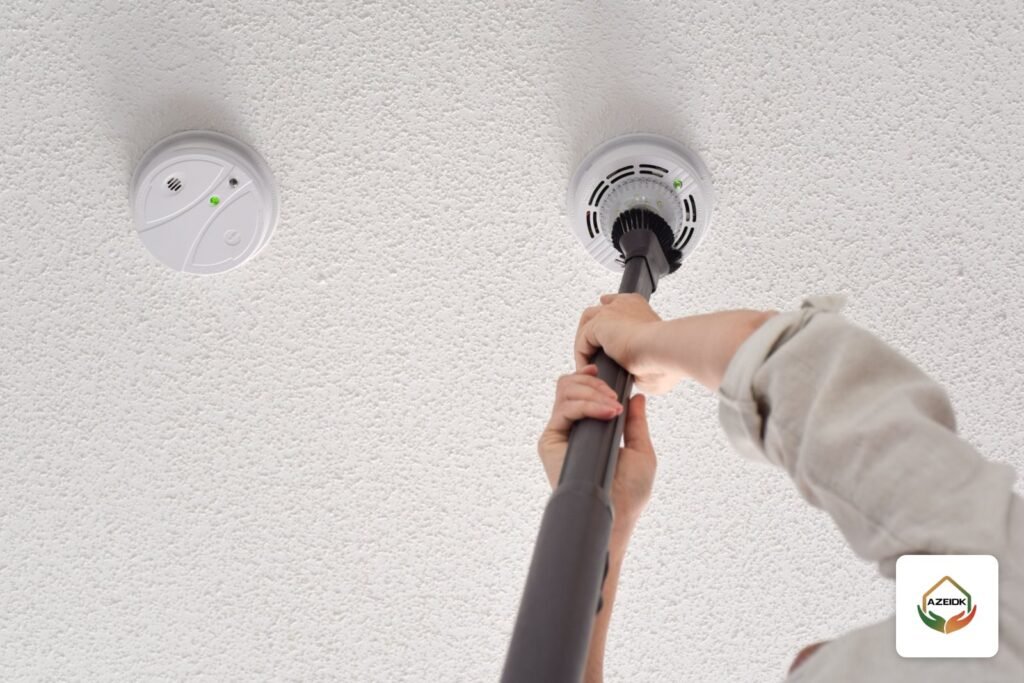
A method statement for testing and commissioning of fire alarm system work is the document in which the contractor explains to the consultant, step by step, how the testing will be done: references, equipment, responsibilities and acceptance criteria. An inspection and test plan (ITP) is a table that sets each inspection activity, when it happens, who attends and which record proves it. Both are submitted and approved before work starts, and together they turn testing from improvisation on site into a documented procedure that supports testing, commissioning and handover.
Key takeaways
- The method statement answers “how”. The ITP answers “what, when and who witnesses”.
- Both documents are contract and consultant requirements. The acceptance criteria themselves come from the code adopted for the project and the manufacturer’s instructions.
- Fire alarm testing follows NFPA 72 Chapter 14 (inspection, testing and maintenance), and acceptance is documented in the Record of Completion.
- In fire fighting work, the hydrostatic test, flushing and the fire pump test are key witness or hold points in the ITP.
- The usual reasons for rejection: a document copied from another project, references that do not match the adopted edition, no acceptance criteria, and test instruments without calibration certificates.
In this article
- Method statement vs ITP: what is the difference?
- What goes into a fire system method statement?
- Method statement for testing and commissioning of fire alarm system: the steps
- Inspection and test plan for fire fighting works
- Hold, witness and review points: what do they mean in an ITP?
- Why do consultants reject fire system method statements?
- From test records to handover and Civil Defense
- Frequently asked questions
- Conclusion
Method statement vs ITP: what is the difference?
The two are often confused, and consultants reject many submissions because one was written in the format of the other:
| Item | Method statement | ITP |
|---|---|---|
| Purpose | Explains how work or a test is carried out | Sets inspection and acceptance points |
| Format | Numbered steps with attachments | Activity table |
| Core content | Scope, references, responsibilities, equipment, safety, sequence | Activity, reference, acceptance criterion, point type, record |
| Main users | Site execution team | Contractor, consultant and owner, for tracking |
| When submitted | Before the activity concerned | Before work starts, updated as needed |
Typically there is one method statement per major activity (pipe installation, hydrostatic testing, fire alarm testing and commissioning), while one ITP covers the whole system or each system separately.
What goes into a fire system method statement?
There is no single official template for this document in Saudi Arabia. Its format is set by the contract and the consultant’s quality system. An acceptable document usually includes:
- Purpose and scope: the system, building, floors and phase covered.
- References: project specifications, approved shop drawings, the approved material submittal, the manufacturer’s installation and operation manuals, the adopted code with its edition (for example NFPA 72 or NFPA 13 in the edition named in the contract), and the Saudi Fire Protection Code SBC 801.
- Responsibilities: project manager, site engineer, QA/QC engineer, safety engineer, and the manufacturer’s representative where required.
- Equipment and test instruments: with a valid calibration certificate for every measuring instrument.
- Safety: risk assessment, permits to work, and isolation of areas during testing.
- Sequence: the steps in order, with hold points before each stage.
- Acceptance criteria: in figures and references, not phrases like “works properly”.
- Records and forms: the test forms to be completed and signed.
Approved shop drawings are a precondition for any method statement, and they are part of our shop drawings and coordination service.
Method statement for testing and commissioning of fire alarm system: the steps
NFPA 72 requires acceptance testing of new systems under Chapter 14, which covers inspection, testing and maintenance and sets test methods for each device type. The method statement turns that into site steps:
Before power-up
- Confirm installation is complete and matches the approved drawings, with detectors fitted after finishing works and dust are over.
- Test cables before termination at the panel (continuity, insulation and earth) per the manufacturer’s instructions, and record the results.
- Check the programming against the approved cause and effect matrix. See our fire alarm cause and effect matrix article.
During testing
- Run the panel on primary power, then verify changeover to batteries and compare their capacity with the approved battery calculation.
- Functionally test every initiating device (smoke or heat detector, manual call point, flow or supervisory switch) by the method set by NFPA 72 and the manufacturer, and confirm the correct address shows on the panel.
- Test audible and visual notification appliances, and voice evacuation where installed.
- Test interfaces with other systems: HVAC shutdown, lifts, fire doors, smoke extract fans, and sprinkler valves and switches.
- Simulate faults: open a circuit, remove power, and confirm the trouble signal appears.
After testing
- Complete the Record of Completion, for which NFPA 72 provides a form, and have it signed by the parties concerned.
- Hand over the final programme and a backup copy with the as-built drawings.
For the installation stages before testing, see fire alarm installation in Saudi Arabia.
Inspection and test plan for fire fighting works
A fire fighting ITP tracks the work from material receipt to handover. This is an example structure. The actual activities depend on the project scope:
| Activity | Reference | Point type | Record |
|---|---|---|---|
| Material receipt against submittal | Approved submittal | Review | Material inspection form |
| Pipe and hanger installation | Shop drawings, NFPA 13 | Inspection | Inspection request |
| Underground flushing | NFPA 24 | Witness | Contractor’s Material and Test Certificate, underground |
| Hydrostatic test | NFPA 13 (aboveground piping) | Hold | Contractor’s Material and Test Certificate, aboveground |
| Valve and flow switch tests | Manufacturer’s instructions | Witness | Test form |
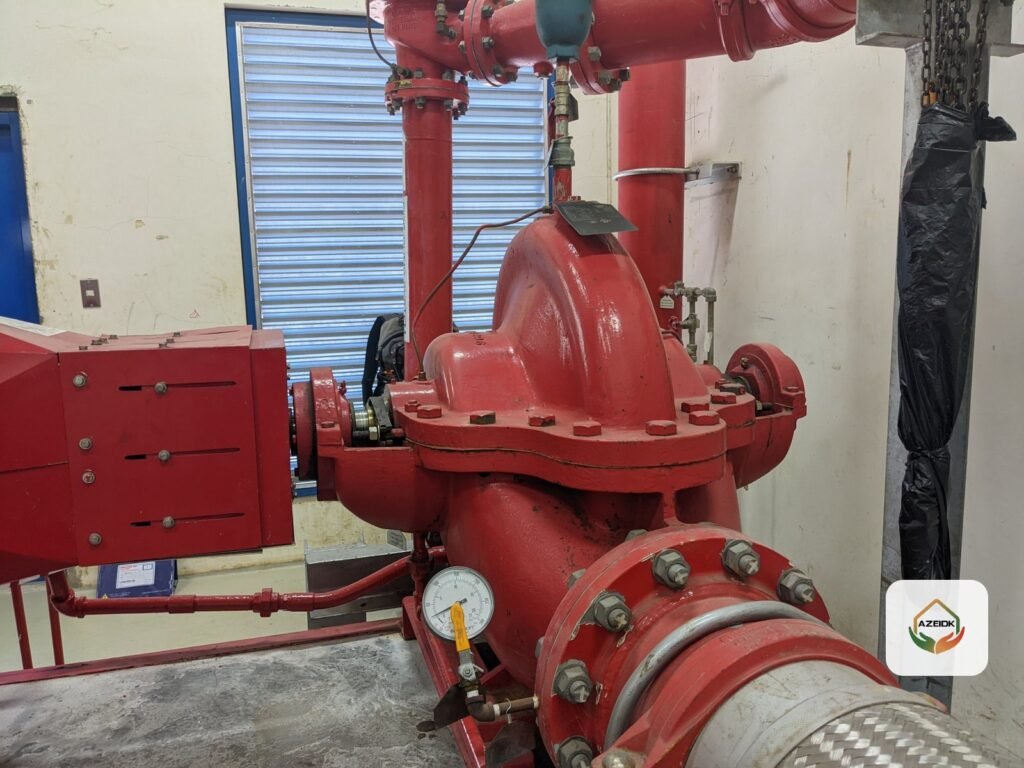
| Fire pump field acceptance test | NFPA 20 | Hold | Pump test report |
| Final test and handover | Specifications, Civil Defense requirements | Hold | Handover certificate |
Under NFPA 13, aboveground piping is hydrostatically tested at 200 psi for 2 hours, or 50 psi above working pressure where that exceeds 150 psi, with no pressure loss or visible leakage. Details are in our fire fighting hydrostatic pressure test article, and pump testing in fire pump acceptance testing and commissioning.
Hold, witness and review points: what do they mean in an ITP?
- Hold point: work does not continue until the consultant or owner’s representative attends and signs. Example: the hydrostatic test before ceilings are closed.
- Witness point: the consultant is notified of the time. If they do not attend, work proceeds and the absence is recorded.
- Review point: a document review without attendance, such as material certificates and test results.
- Inspection: an internal check by the contractor’s QA/QC engineer.
These terms come from project quality management practice. The contract sets how many points there are and the notice period before each.
Why do consultants reject fire system method statements?
- A document copied from another project, naming systems or devices that are not on this one.
- References to a code edition different from the one in the specifications.
- No numerical acceptance criteria, or criteria written in general terms.
- Test instruments without valid calibration certificates.
- Interface tests with other systems left out.
- No reference to the manufacturer’s instructions for the approved devices.
- No risk assessment or isolation procedure during testing.
An early review of drawings and specifications reduces these comments. See our fire drawings and specifications review checklist.
From test records to handover and Civil Defense
Signed test records form the core of the handover file: the fire alarm Record of Completion, the Contractor’s Material and Test Certificates for the piping, the fire pump test report and the as-built drawings. They are compiled under documentation and final handover and used in later inspections, as our fire safety log book and inspection records article explains. Where Civil Defense approval is needed, see Civil Defense approval support.
Frequently asked questions
What is a method statement in fire systems?
A document the contractor submits to the consultant explaining how an activity or test will be carried out: references, equipment, responsibilities, safety, sequence and acceptance criteria.
What is the difference between a method statement and an ITP?
The method statement explains how the work is done. The ITP is a table of inspection activities, their acceptance criteria, who witnesses them and the record required.
Is a method statement a legal requirement?
It is mainly a contract and consultant requirement. The tests themselves and their acceptance criteria come from the code adopted for the project and the manufacturer’s instructions.
What is the reference for fire alarm testing and commissioning?
NFPA 72 in the edition adopted for the project, specifically its inspection, testing and maintenance chapter, together with the panel and device manufacturer’s instructions.
What is a hold point?
A stage that cannot be passed until the consultant or owner’s representative attends and signs, such as the hydrostatic test before ceilings are closed.
Which records prove a successful test?
The fire alarm Record of Completion, the Contractor’s Material and Test Certificate for the piping, and the fire pump test report, all signed by the parties concerned.
Conclusion
A clear method statement and a specific ITP save a project weeks of comments and retesting. State references with their editions, acceptance criteria in figures, hold points before every stage that cannot be undone, and link each activity to a signed record. The handover file is then ready for the final inspection of fire alarm systems and fire fighting systems.
Need a method statement or ITP for fire systems? The AZEIDK team prepares the documents and carries out testing, commissioning and handover. Talk to the AZEIDK team
Related guides
- Fire Extinguisher Colour Code in Saudi Arabia: EN 3 Bands vs UK and US Labels
- Home CCTV Cameras on Your Phone: Secure Hik-Connect and DMSS Setup, User Permissions and Connection Troubleshooting
- First Aid Box Contents for Facilities, Homes and Vehicles in Saudi Arabia: Falcon Gold H-323, H-324 and H-325 Sizes
- FM200 Calculation for a Room: Formula, Design Concentration, Temperature Factor and Cylinder Size