Landlord and tenant responsibility for fire safety in Saudi Arabia starts from a default split: the landlord hands over the property fit for use and carries necessary repairs, while the tenant takes reasonable care, handles customary upkeep and pays for damage caused by fault, unless the parties agree otherwise. The Salamah safety license for a shop is requested by the business operator, who is usually the tenant. The practical answer is to write the split for extinguishers, fire systems and their maintenance into the lease.
Key takeaways
- The Civil Transactions Law requires the lessor to make the repairs needed for full use of the property, and lets the parties agree otherwise.
- The lessee must take reasonable care of the property, maintain it according to custom unless agreed otherwise, and compensate for harm caused by misuse or negligence.
- The Ejar platform has stated that consumable maintenance is on the tenant and basic maintenance on the landlord.
- The Salamah license is requested by the facility owner or investor on the Salamah platform, with proof of site possession such as the lease.
- A clear lease clause prevents most disputes: who installs, who maintains, who pays and who keeps the records.
In this article
- What does the Civil Transactions Law say about maintenance and repairs?
- What has Ejar said about basic and consumable maintenance?
- Whose name is on the Salamah license for a shop, and who meets its requirements?
- Landlord and tenant responsibility for fire safety, item by item
- A shop in a commercial building or mall: what changes?
- Residential apartments: who is responsible for safety systems?
- How to write the safety clause in a lease
- The maintenance contract: who signs it and how is it documented?
- Frequently asked questions
- Conclusion
What does the Civil Transactions Law say about maintenance and repairs?
The Civil Transactions Law, issued by Royal Decree No. (M/191), is the general reference for leases. We summarize the relevant articles from the official English translation; the Arabic text prevails.
- Article 416: the lessor delivers the leased property and its appurtenances in a condition that allows full use.
- Article 419: the lessor performs all repairs necessary for full use. If the lessor fails after notice, the lessee may obtain court permission to make the repairs and recover reasonable costs. Urgent or customarily minor repairs can be made without court permission and deducted from rent to the extent custom accepts, with an account to the lessor. The parties may agree otherwise.
- Article 430: the lessee exercises reasonable care in maintaining the property and compensates for harm caused by transgression or negligence.
- Article 433: the lessee maintains the property during the lease according to custom, unless agreed otherwise.
- Article 434: the lessee may not prevent the lessor from carrying out repairs needed to preserve the property.
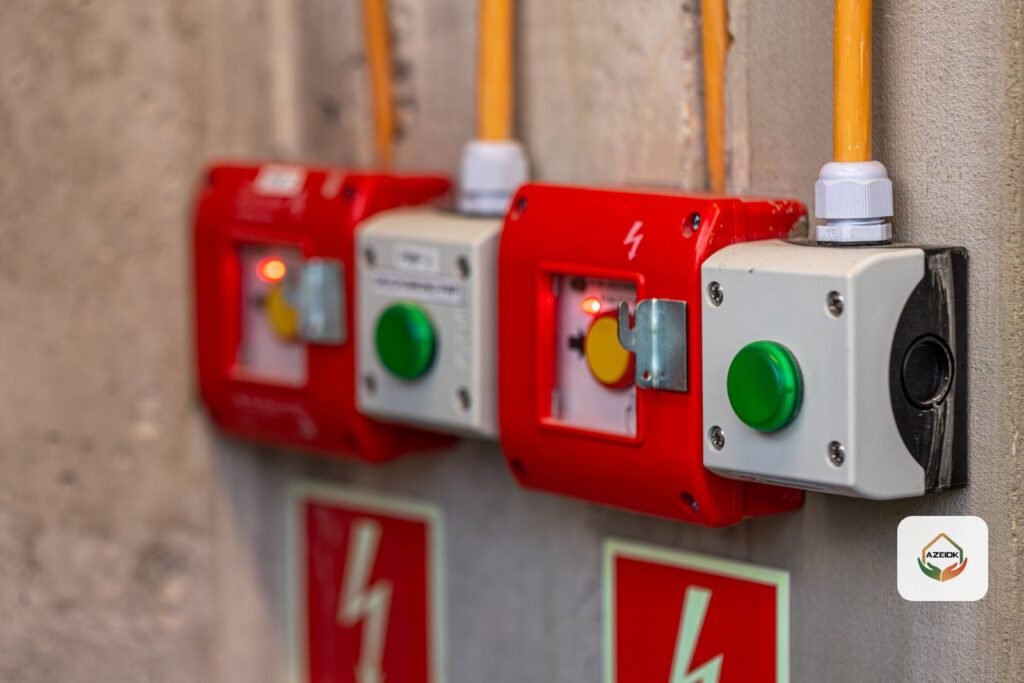
How does this apply to fire systems? The law does not name extinguishers or sprinkler networks. A fire alarm or fire fighting system installed in the building is, however, part of the property and its appurtenances, and a failed system can block the Salamah license altogether. A major fault therefore sits closer to a “necessary repair” for the landlord. Periodic inspection, recharging and damage from misuse sit closer to customary upkeep for the tenant. This is a practical engineering reading, not legal advice, and a written contract overrides the default.
What has Ejar said about basic and consumable maintenance?
In January 2024, as reported by Sabq, the Ejar platform stated that consumable maintenance of a leased property is the tenant’s responsibility, basic maintenance is the landlord’s, and disputes on the point go to the Ministry of Justice. Earlier, in August 2022, Ejar’s program director gave the example that the building’s foundation is the owner’s to maintain, while fittings such as light bulbs are the tenant’s.
Electronic contracts on Ejar can also include additional terms agreed by both parties, according to the Ministry of Municipalities and Housing. That is the place to write the safety clause instead of relying on interpretation later.
Whose name is on the Salamah license for a shop, and who meets its requirements?
The safety license is issued through the Salamah platform of the General Directorate of Civil Defense. The applicant is the facility owner or investor, meaning the business registered in the commercial registration and municipal license. In a leased shop that is usually the tenant, who submits the lease as proof of site possession.
So the tenant deals with Civil Defense and the tenant’s business stalls if requirements are not met. If the problem lies in a system owned by the building, the tenant needs the landlord’s cooperation to fix it. For activities that require a maintenance contract with a qualified safety company, renewal depends on a valid contract covering the systems actually installed. Platform details are in our Salamah certificate guide, and you can run a first check with the Salamah inspection checklist.
Landlord and tenant responsibility for fire safety, item by item
This is not a legal text. It is a common split consistent with the articles above, which we recommend confirming in writing in the lease:
| Item | Closest to the default | What to write in the lease |
|---|---|---|
| Handing over installed building systems (alarm, fire fighting, hose cabinets) in working order | Landlord (Articles 416 and 419) | Handover record stating each system’s condition and last service date |
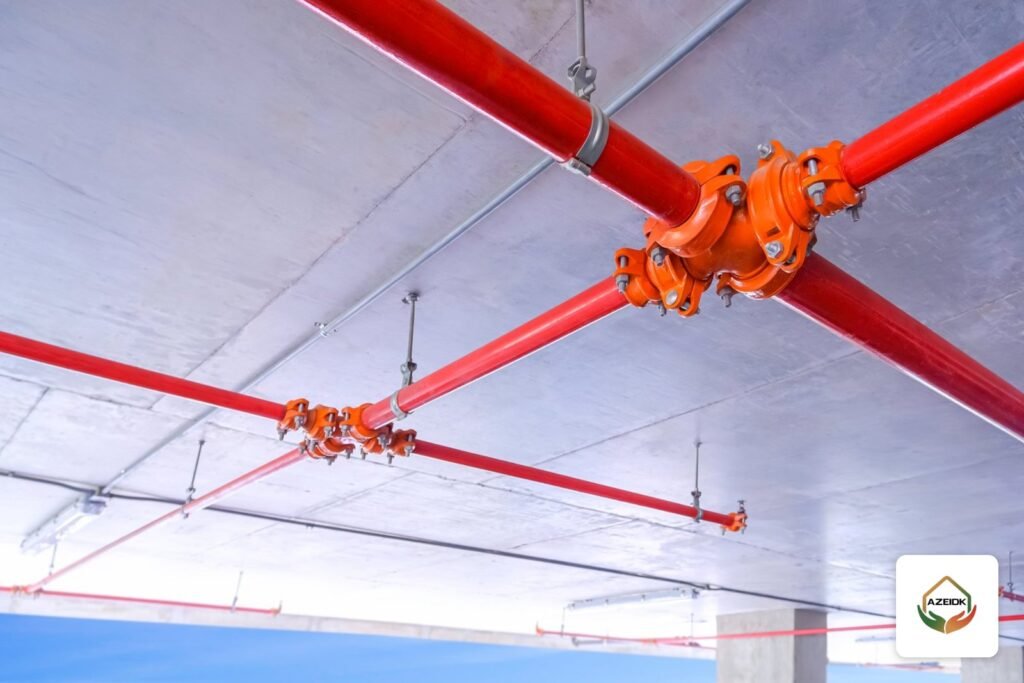
| Major faults in networks, pumps and panels | Landlord (necessary repair) | Response time and a written notice procedure |
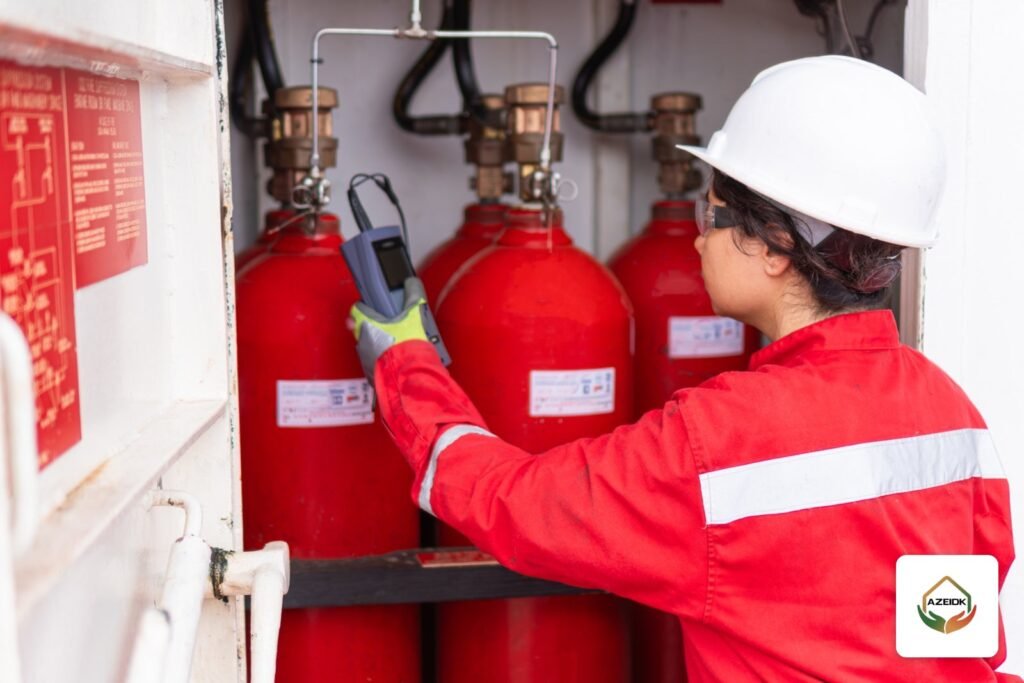
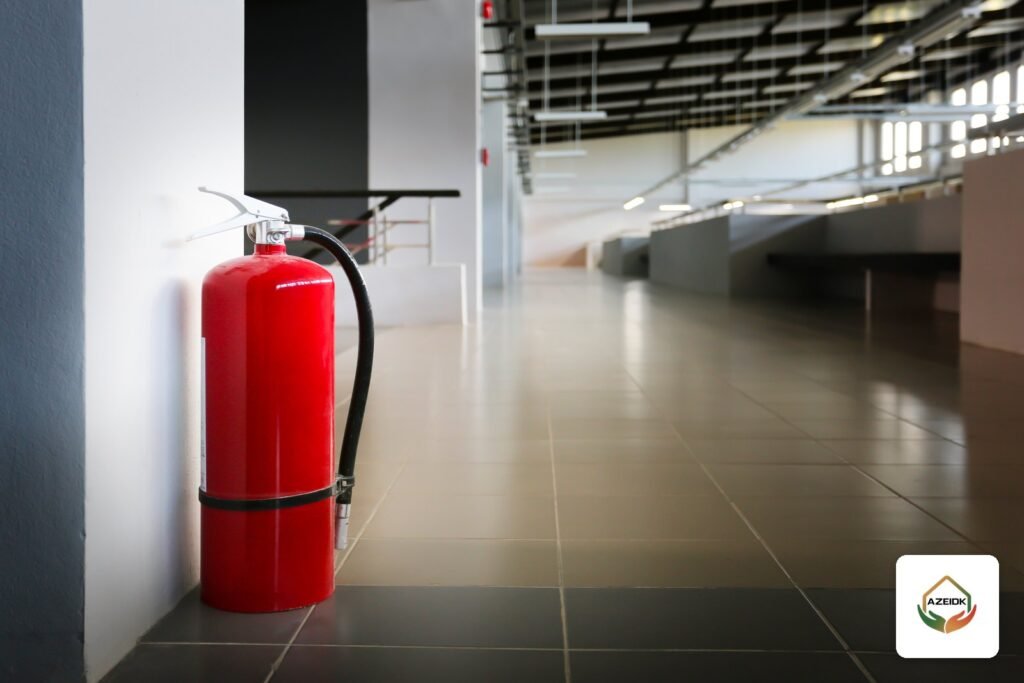
| Fire extinguishers inside the shop tied to the activity | By agreement | Who supplies them, who inspects and recharges |
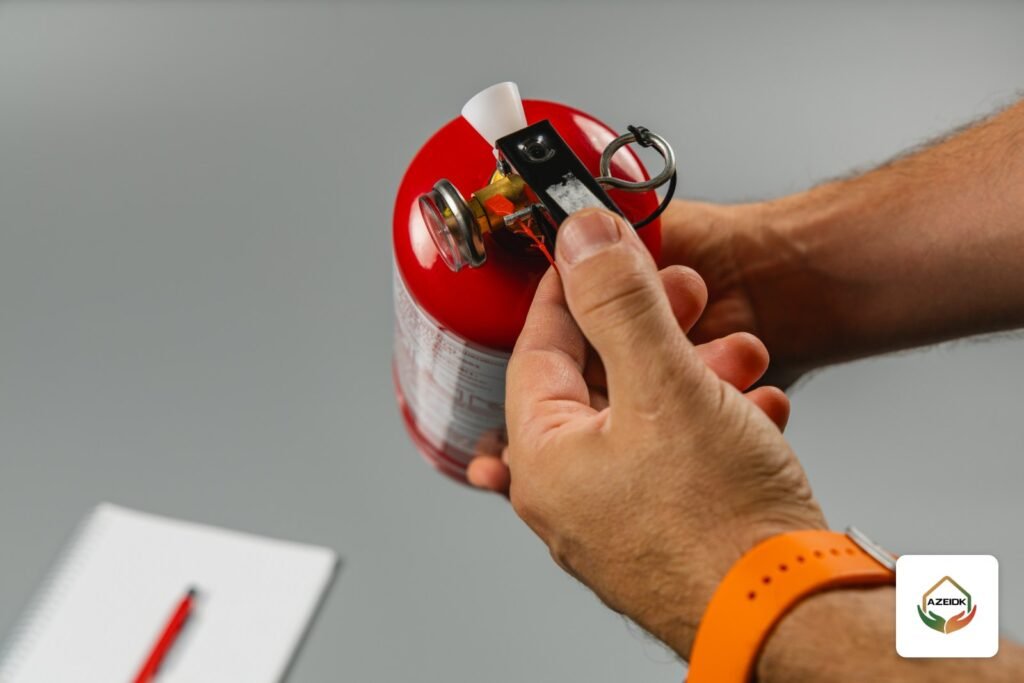
| Periodic inspection and routine upkeep | Tenant by custom (Article 433) unless agreed otherwise | Service provider, visit frequency, reports to both parties |
| Damage from misuse or tampering | Tenant (Article 430) | Explicit compensation clause |
| Fit-out changes affecting detectors or sprinklers | By agreement | Prior landlord approval and technical review before work |
| Applying for and renewing the Salamah license | Business operator (usually the tenant) | Landlord to provide available drawings and certificates |
A shop in a commercial building or mall: what changes?
In commercial buildings and malls, fire systems are often shared: one sprinkler network, a central alarm panel and pumps in a single pump room. The tenant does not own these systems and cannot maintain them alone, yet they run through the shop. The lease should state what belongs to the unit (detectors and sprinklers inside it, extinguishers) and what stays with building management (the main network, pumps, main panel). Any change to the false ceiling or partitions can affect sprinkler or detector layout, so nothing should be done without a technical review. See our page on malls and commercial buildings.
Residential apartments: who is responsible for safety systems?
In an apartment building, fire systems in corridors, stairs and exits are part of the building, so major repairs stay with the owner under the default rule. The tenant owes reasonable care: no blocked exits, no disabled or covered detectors, no tampering with shared extinguishers, and written notice to the owner when a fault appears. Dated notice, through Ejar or in writing, matters if Article 419 is needed later. Residential systems are covered in our article on safety systems for compounds, villas and residential buildings.
How to write the safety clause in a lease
A good clause answers six questions without ambiguity:
- Which systems exist at handover and in what condition? Attach an inspection report or handover record.
- Who carries major repairs, and within how many days of notice?
- Who contracts the periodic maintenance, with whom, and how often per year?
- Who supplies and recharges the extinguishers?
- Does any change to the unit need prior approval and a technical review?
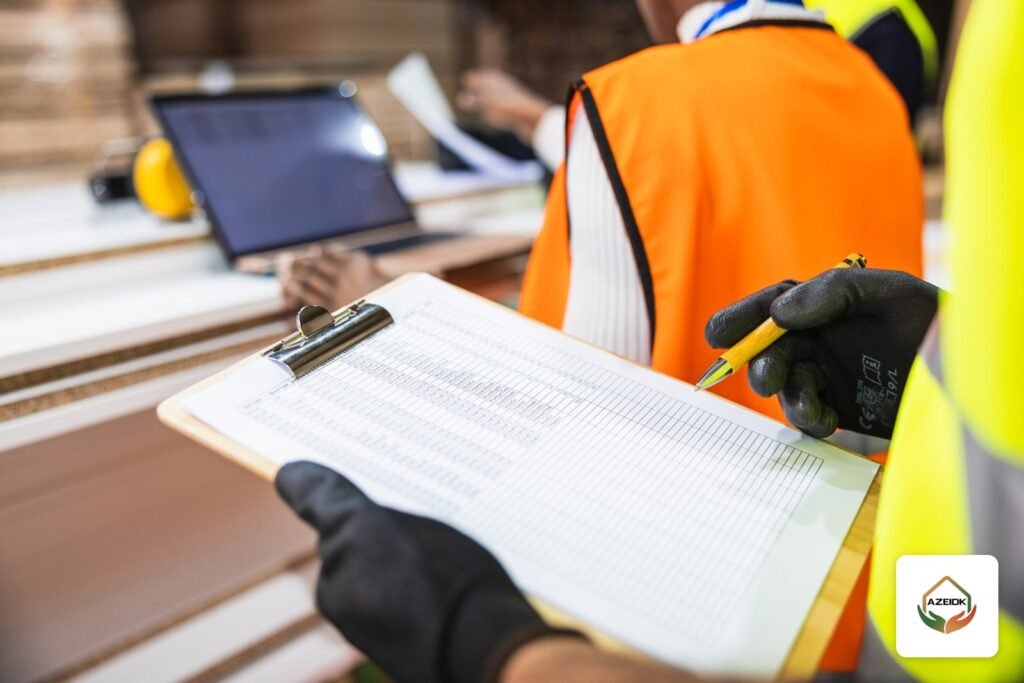
- Who keeps the maintenance log and reports, and how does the other party get a copy?
Before signing for an older shop, a technical inspection that records the condition of existing systems and the repair scope tells each party what it is taking on. That is the purpose of our existing systems assessment and scope definition service.
The maintenance contract: who signs it and how is it documented?
Who signs matters less than having one clear fire, safety and alarm maintenance contract that covers the systems actually installed (CCTV and low current systems go under a separate contract), with reports going to both parties. In a standalone shop the tenant usually signs, because the contract is needed for the Salamah license. In a multi-unit building the owner or building management signs for shared systems. AZEIDK provides preventive and planned maintenance contracts for fire systems, and the contracting party can be the owner or the tenant, as they agree. Records are explained in our fire safety log book guide, and extinguisher servicing in our extinguisher maintenance and refill guide.
Frequently asked questions
Is fire extinguisher maintenance the landlord’s or the tenant’s responsibility?
No text names extinguishers specifically. Inspection and recharging are closer to customary upkeep for the tenant unless the parties agree otherwise. Write it into the lease.
Who applies for the Salamah license for a leased shop?
The registered business operator, usually the tenant, through the Salamah platform, with the lease as proof of site possession.
The shop’s fire alarm is faulty and the landlord will not fix it. What can I do?
Notify the landlord in writing. Under Article 419 of the Civil Transactions Law, you can seek court permission to make the repair and recover the cost. Urgent or customarily minor repairs can be made without permission and deducted from rent within customary limits.
Does the landlord’s maintenance duty include fire systems?
The landlord must make repairs necessary for full use of the property, and installed building systems are part of it. The parties may agree a different split.
Can a tenant modify the sprinkler network during fit-out?
We advise against any change without the landlord’s written approval and a technical review, because moving a sprinkler or detector can break system coverage.
Where are maintenance disputes between landlord and tenant heard?
According to Ejar, disputes over maintenance responsibility are heard by the Ministry of Justice.
Conclusion
The legal default is clear: necessary repairs on the landlord, reasonable care and routine upkeep on the tenant. Fire systems sit in a grey zone, and in a dispute the business operator pays the price when the license is delayed. Put the clause in the lease, record system condition at handover, and make the maintenance contract clear on party and scope.
This article is engineering guidance and does not replace legal advice in an active dispute.
Taking over a shop or leasing out a building? We inspect existing fire systems, report their condition and repair scope, and offer a maintenance contract both parties can agree on. Talk to the AZEIDK team
Related guides
- Fire-Rated Doors: How to Order and Accept Them on Saudi Projects (Ratings, Components and Checklist)
- Wi-Fi CCTV Camera: How It Works, SD Card vs Cloud, Range Limits and When to Go Wired
- Fire Pump UL and FM Approval: How to Check the Certificate and Model Before You Buy
- Structured Cabling and Network Systems: Standards and Testing