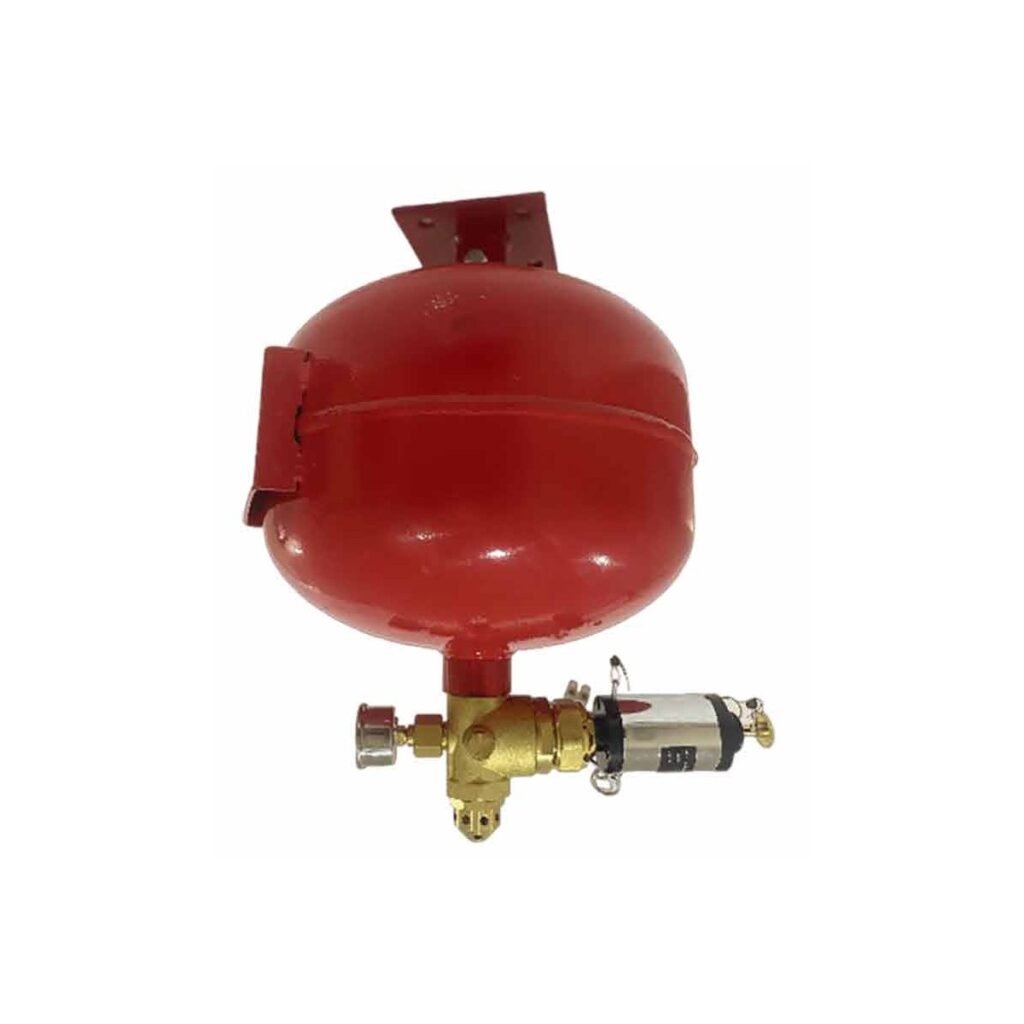
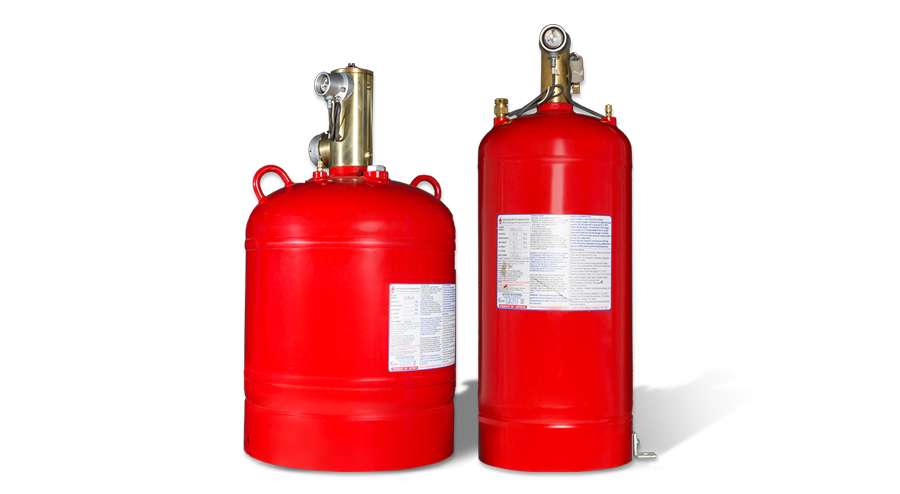
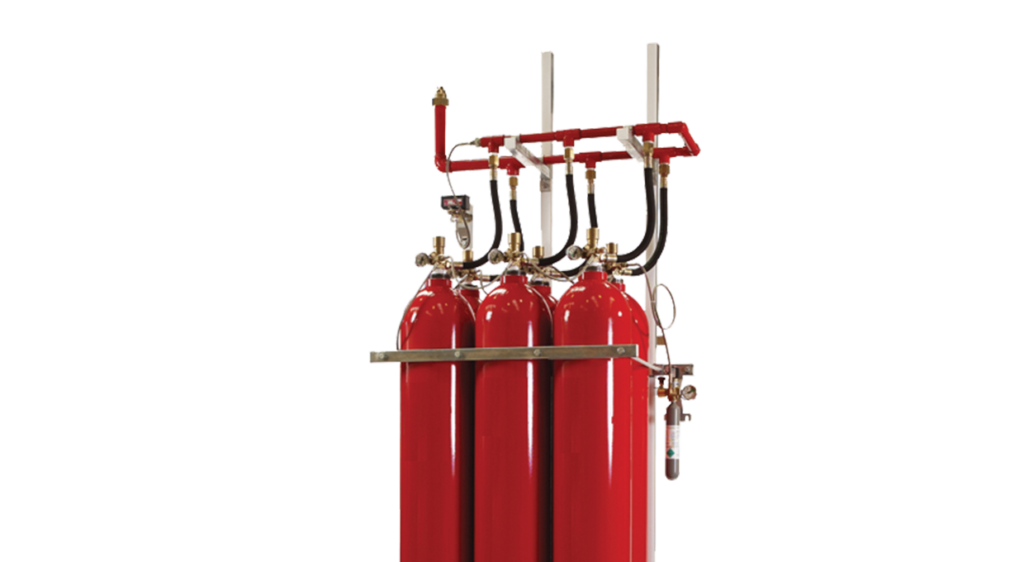
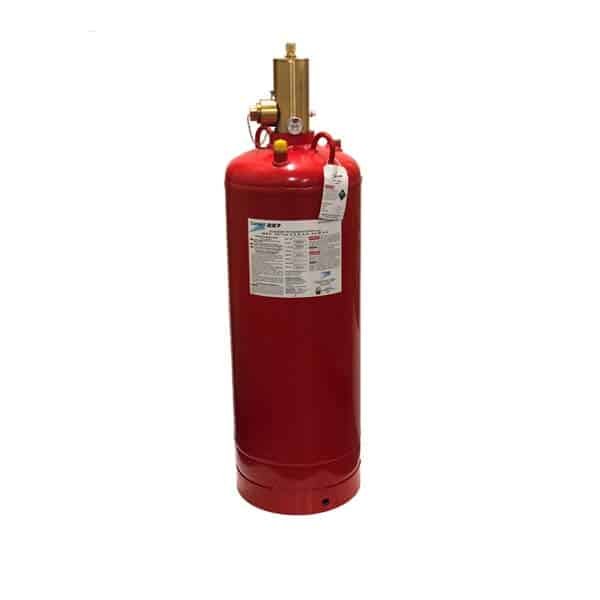
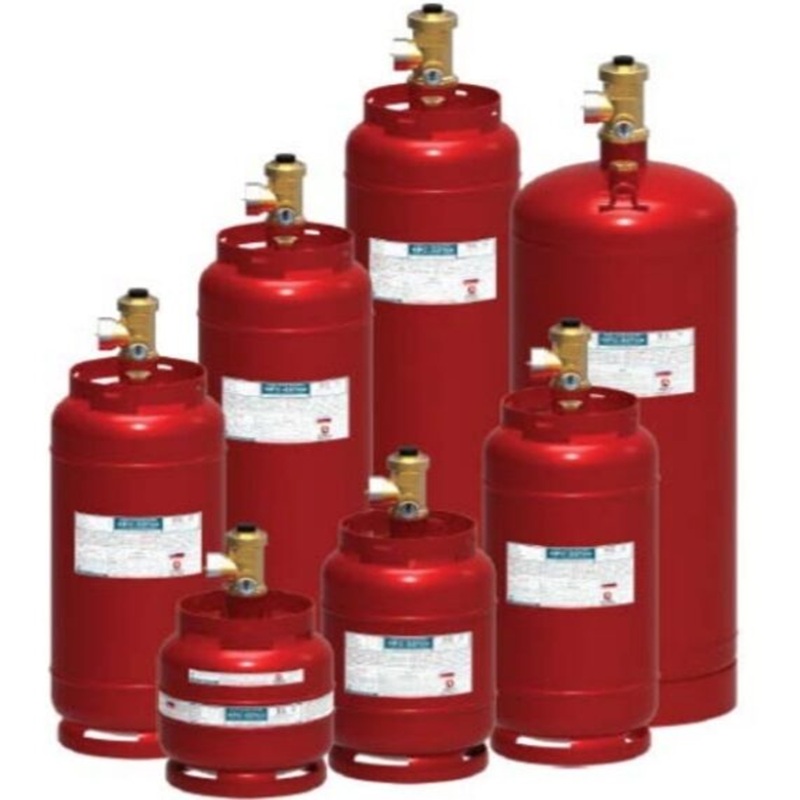
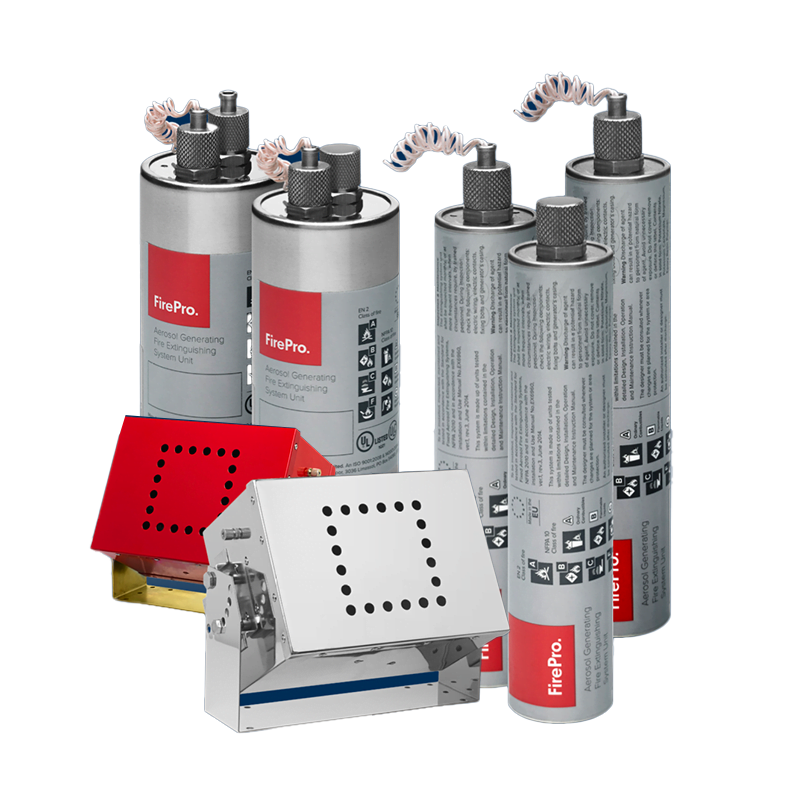
The FIRESYS FM-200 Clean Agent Generator is a pre-engineered, fixed suppression unit: a suspended storage cylinder filled with the clean agent HFC-227ea (known by the trade name FM-200), fitted with a solenoid valve, pressure gauge, pressure signal device and discharge nozzle. The unit is mounted directly inside the protected room, so no cylinder room or long piping network is needed.
HFC-227ea suits sensitive equipment because it is colourless, odourless, electrically non-conductive, leaves no residue after discharge and has zero ozone depletion potential. Systems are designed to NFPA 2001, the standard for clean agent fire extinguishing systems.
AZEIDK supplies this generator in Saudi Arabia together with design and calculations, installation, testing, commissioning and maintenance.
How it works:
• Smoke and heat detectors monitor the protected room and report to the extinguishing control panel.
• A signal from one detector raises an audible and visual alarm without discharge, to limit false releases.
• When both detectors confirm a fire, the panel signals evacuation and shuts down fans and linked equipment, then opens the solenoid valve after the 30-second delay given in the datasheet, and the agent is released.
• The pressure signal device confirms the discharge to the control panel.
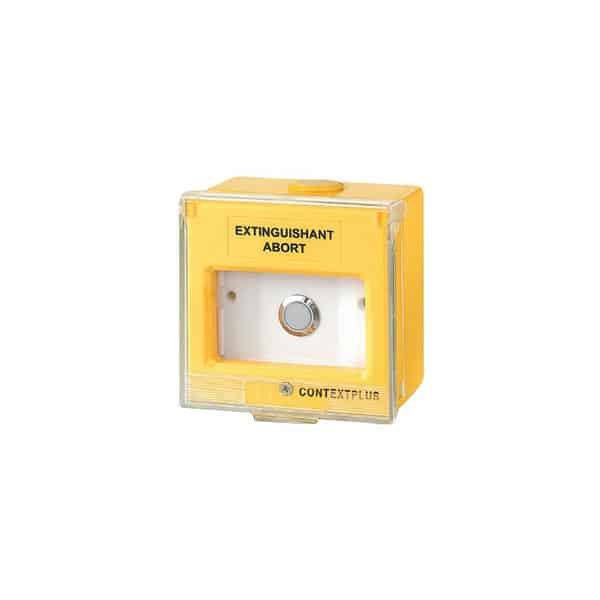
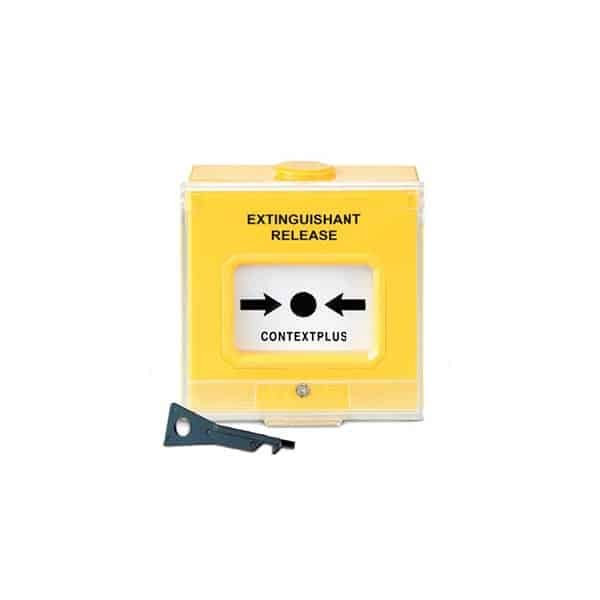
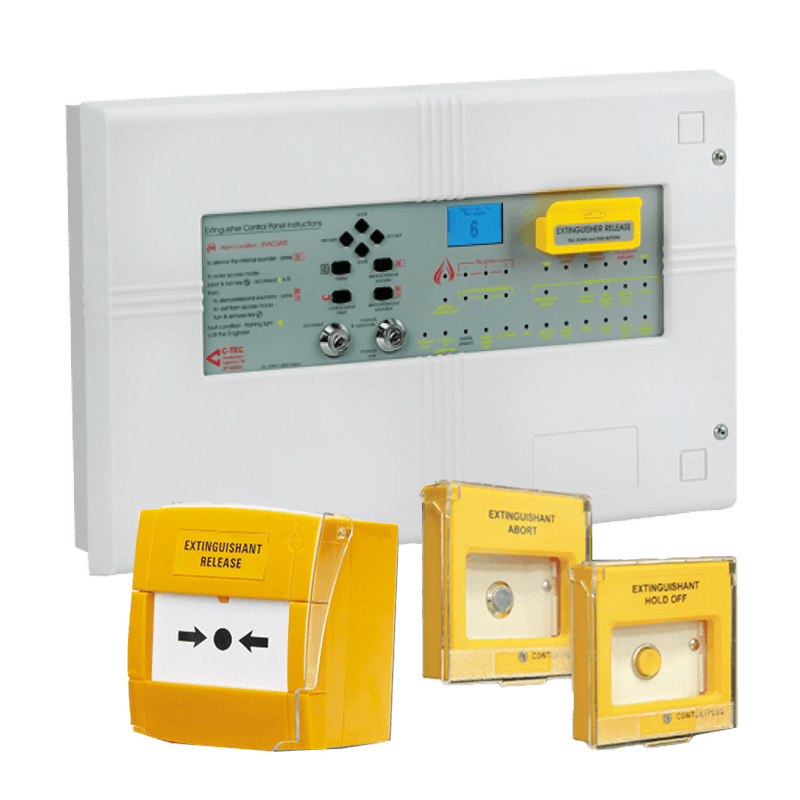
• The system can be released manually with the emergency start button, and the countdown can be stopped with the abort button before discharge.
Available sizes:
• XQQC6/1.6: 6 kg (6 L), height 345±15 mm, diameter 250 mm, approx. protected volume 9.11 m³.
• XQQC10/1.6: 10 kg (10 L), height 340±15 mm, diameter 300 mm, approx. protected volume 13.89 m³.
• XQQC16/1.6: 16 kg (16 L), height 430±15 mm, diameter 300 mm, approx. protected volume 22.22 m³.
• XQQC20/1.6: 20 kg (20 L), height 415±15 mm, diameter 350 mm, approx. protected volume 27.78 m³.
• XQQC30/1.6: 30 kg (30 L), height 525±15 mm, diameter 350 mm, approx. protected volume 41.67 m³.
The protected volumes are the manufacturer’s approximate figures. The final number and size of generators come from an NFPA 2001 agent quantity calculation based on room volume, temperature, altitude and design concentration.
Technical data:
• Agent: HFC-227ea (FM-200).
• Storage pressure: 1.6 MPa.
• Maximum working pressure: 2.5 MPa.
• Maximum filling density: 1 kg/L.
• Discharge time: 8 s or less per the datasheet (the NFPA 2001 limit is 10 s).
• Actuation supply: DC 24 V / 1.6 A.
• Operating temperature: 0 to 50 °C.
• Cylinder: steel with red anti-corrosion epoxy finish.
Generator components:
• Cylinder and mounting bracket.
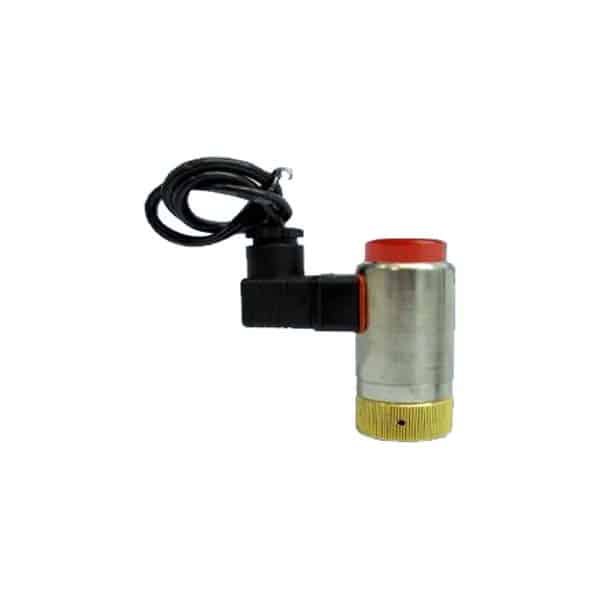
• Solenoid valve QRF20/2.5: 2.5 MPa working pressure, 3/4 inch, 24 V, 1.6 A, with pressure gauge.
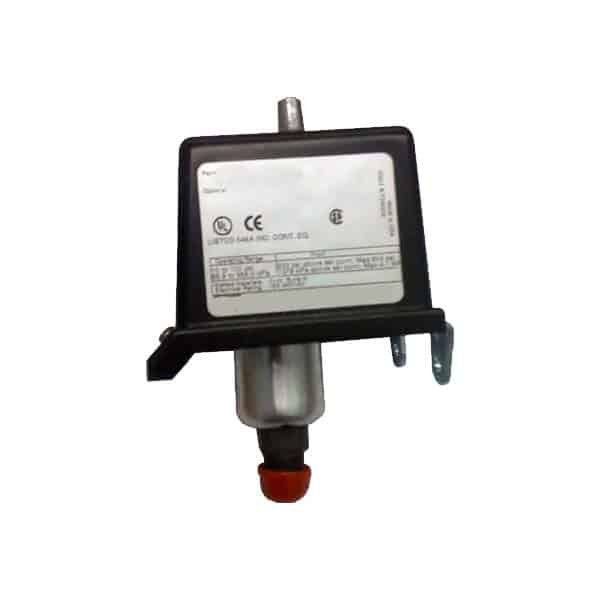
• Pressure signal device QXF0.06/2.5: 2.5 MPa working pressure, action pressure 1 MPa or less, micro-switch DC 24 V / 1.6 A.
• Discharge nozzle QPT20-X: 20 mm inlet, ZG 3/4 thread, 30 mm long, for all XQQC models.
Agent approvals:
The approvals shown in the datasheet cover the HFC-227ea agent made by Hangzhou Kec Fire Chemical: a UL listing as a clean agent (file EX28542) and FM Approvals for the agent under the name Super 227 (certificate FM24FPUS0065). These cover the agent, not the generator as a complete unit.
Approximate comparison with aerosol generators:
According to the comparison table provided by FIRESYS, the generator sizes correspond approximately to the following aerosol masses (varying by aerosol manufacturer):
• 6 L: approx. 1.4 to 2.2 kg of aerosol.
• 10 L: approx. 2.6 to 3.6 kg of aerosol.
• 16 L: approx. 3.8 to 4.7 kg of aerosol.
• 20 L: approx. 5.2 to 6.2 kg of aerosol.
Applications:
• Main distribution board (MDB) and electrical rooms.
• Server and data storage rooms.
• Telecom and electronic equipment rooms.
• Control rooms, archives and high-value equipment.
Installation and commissioning:
• The generator is fixed to the ceiling or wall with a suitable bracket inside the protected room.
• Room tightness is reviewed before commissioning, since holding the agent concentration depends on sealed openings.
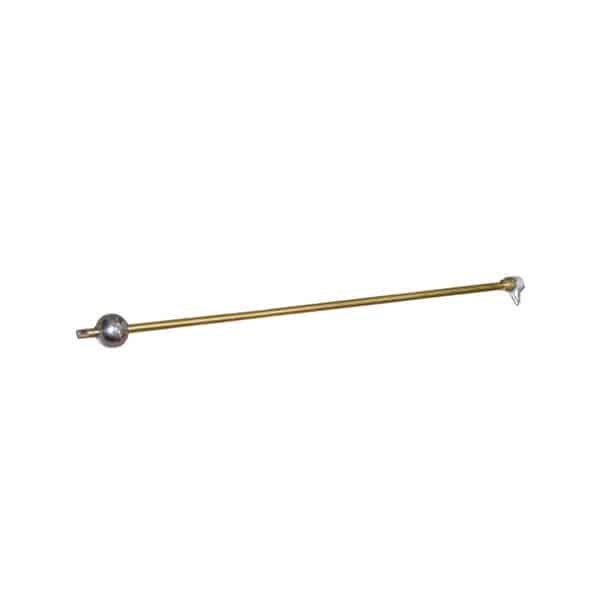
• Automatic release circuits and alarms are tested without discharge; nitrogen is used instead of the agent for a simulated discharge test.
• A commissioning report records the room, number of generators and agent quantity.
Periodic maintenance:
• Monthly check of the generator, valve, signal device and nozzle, and of the gauge reading against the filling pressure.
• Comprehensive inspection twice a year, covering room conformity with the design, nozzle cleanliness and an automatic release test.
• After discharge the generator can be refilled and returned to service after inspection.
AZEIDK services for this product:
• Design and NFPA 2001 calculation of agent quantity and number of generators.
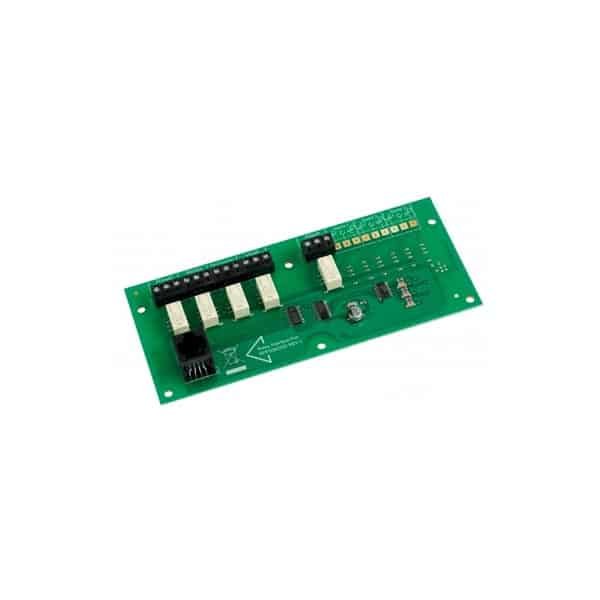
• Supply, installation and connection to the extinguishing control panel and alarm systems.
• Room integrity (door fan) testing by AZEIDK’s own technical team.
• Testing, commissioning, handover and maintenance contracts.
Download the datasheet using the button above, or request a quotation with the dimensions of the room to be protected.