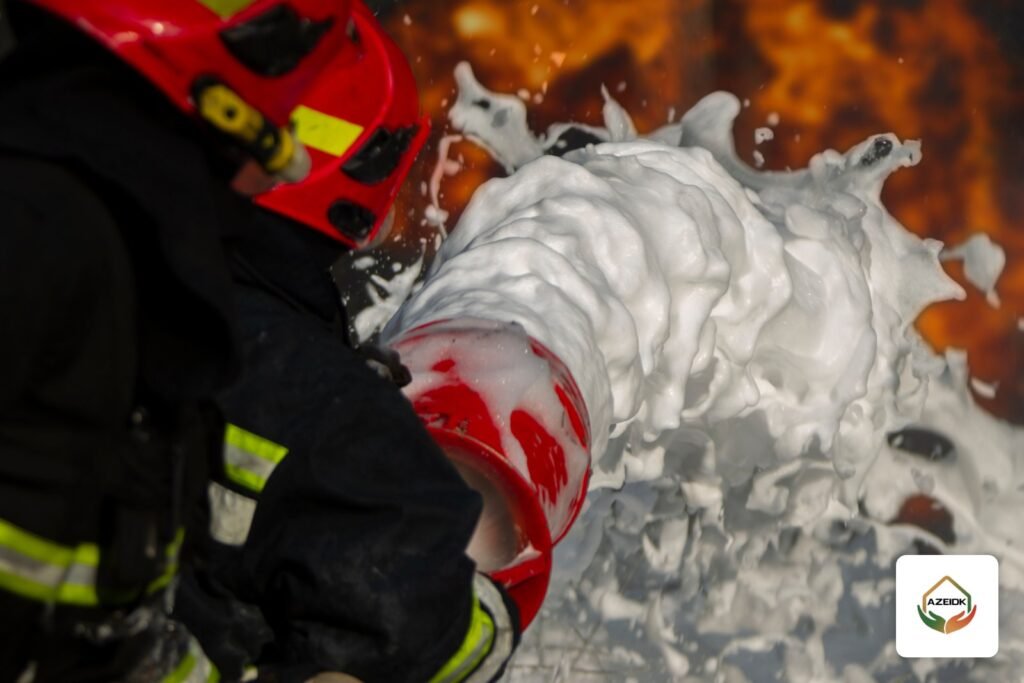
Firefighting foam is made by mixing foam concentrate with water and then air. The foam blanket covers a burning liquid, cuts it off from oxygen and stops vapours rising. It is used mainly on flammable liquid fires such as fuels, oils and solvents, where water alone does not work and may spread the fire.
AZEIDK supplies, under fire fighting systems, Safe Guard AFFF 3% and AFFF 6%; the 1% concentrate is coming soon.
Key points
- Foam extinguishes by smothering, vapour suppression and cooling, for Class B liquid fires.
- AFFF forms a thin aqueous film on hydrocarbon fuels.
- AR-AFFF is alcohol resistant and needed for polar solvents such as alcohols.
- 1%, 3% or 6% is the concentrate-to-water ratio, not foam strength.
How firefighting foam works
Foam covers the liquid surface to separate it from oxygen, holds down flammable vapours and cools the surface with its water content. Being lighter than fuel, it floats, while plain water sinks and can make burning fuel splash. Laboratories such as UL test foam performance on Class B liquid fires.
Main foam types
| Type | Idea | Use |
|---|---|---|
| AFFF | Forms a thin aqueous film over the fuel and spreads fast | Petrol, diesel, kerosene, lube oils |
| AR-AFFF | Alcohol resistant AFFF forming a protective membrane | Alcohols, ketones, some solvents, ethanol blends |
| Protein and fluoroprotein | Older protein-based foams, slower but stable | Some fuel tanks |
| Fluorine-free | Foams without fluorinated compounds | Selected by listing for the hazard |
| Medium and high expansion | High-volume foam that fills spaces | Hangars, some warehouses, tunnels |
Foam system design follows NFPA 11; see also the foam sprinkler system guide.
What 1%, 3% and 6% mean
The number is the concentrate share in the solution: 3% means 3 litres of concentrate with 97 litres of water. A lower percentage is more concentrated and needs a smaller tank for the same run time, but it must match the system proportioner. See choosing the brand and concentration and foam proportioning and bladder tanks.
Where foam is used
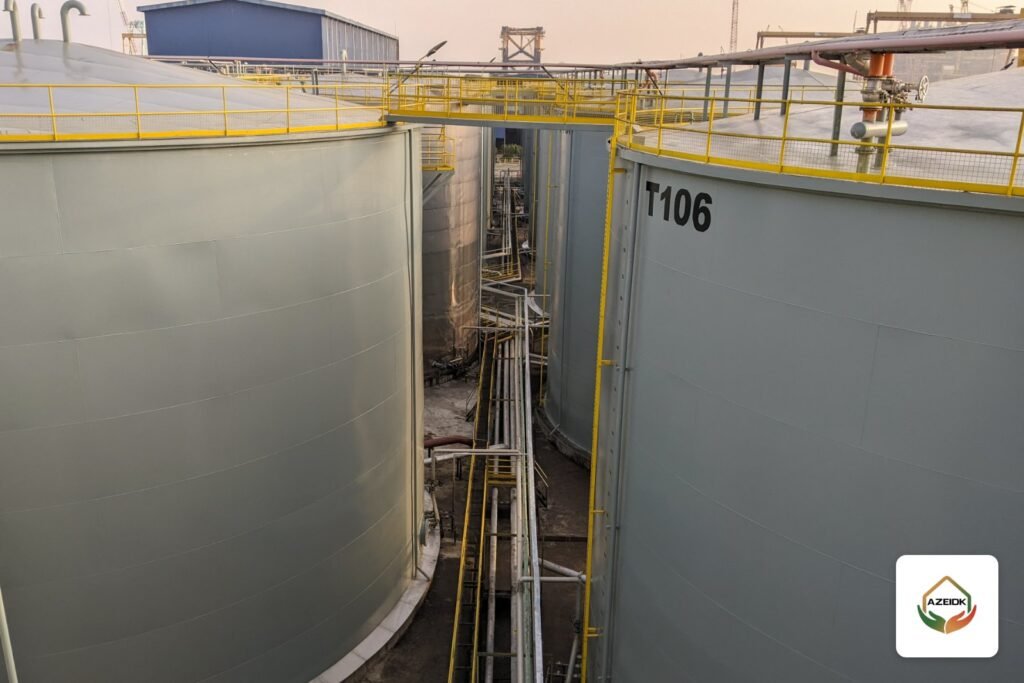
- Fuel tanks and loading areas, with foam chambers and SFFECO foam monitors.
- Hangars and helipads, with foam sprinklers or monitors.
- Generator and diesel pump rooms, as designed.
- Portable extinguishers, such as the Falcon Gold 25 L foam extinguisher.
Storage and testing
Keep concentrate sealed and away from high heat, sample it periodically, and never mix types or brands in one tank without confirming compatibility. See AFFF shelf life and testing and mixing foam concentrates.
Frequently asked questions
What is firefighting foam in short?
A blanket of concentrate, water and air that covers a burning liquid and cuts off oxygen.
What is the difference between AFFF and AR-AFFF?
AFFF is for hydrocarbon fuels; AR-AFFF is alcohol resistant for polar solvents.
Can foam be used on electrical fires?
Foam contains water, so it is not used on live electrical equipment.
Is 3% better than 6%?
Neither is stronger; the concentrate must match the proportioner. 3% needs a smaller tank.
Does AZEIDK supply 1% foam?
Safe Guard 1% is coming soon; 3% and 6% are available now.
Need foam concentrate? Tell us the hazard and the proportioner ratio, and AZEIDK will advise the concentrate and quantity. Contact AZEIDK
Related guides
- Time Attendance System Faults: Fingerprint Not Recognised, Device Offline, Wrong Date and Time
- Public Address and Background Music Systems in Commercial Buildings
- Fire Doors in Jeddah: Supply and Installation of Fire Rated Doors for Towers, Hotels and Warehouses
- CCTV Installation Tenders in Saudi Arabia: Specifications, Scope of Work and BOQ