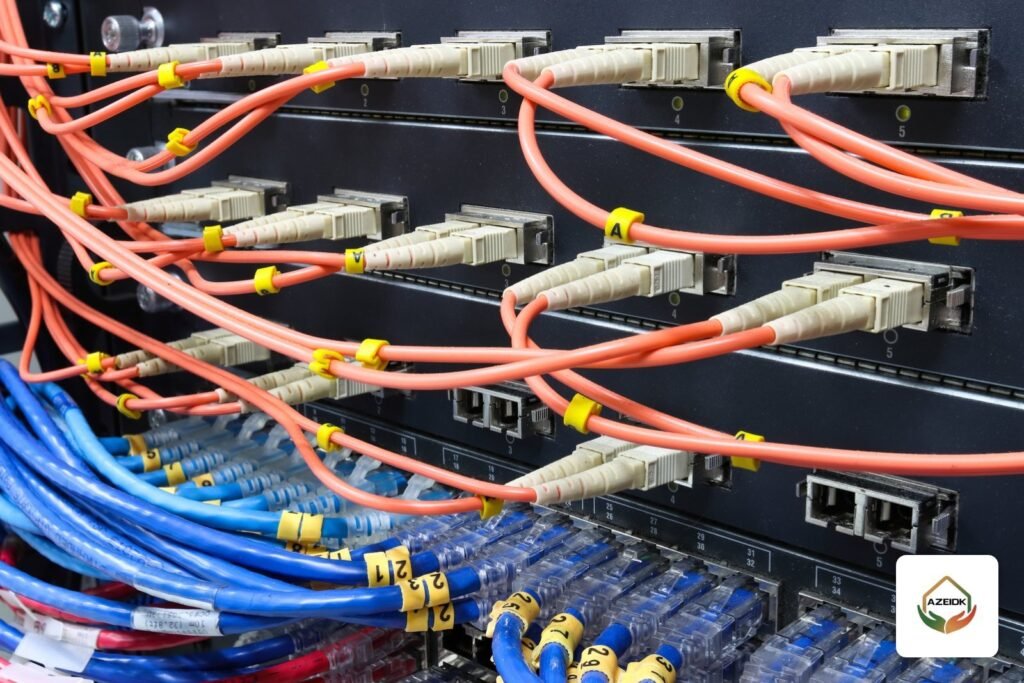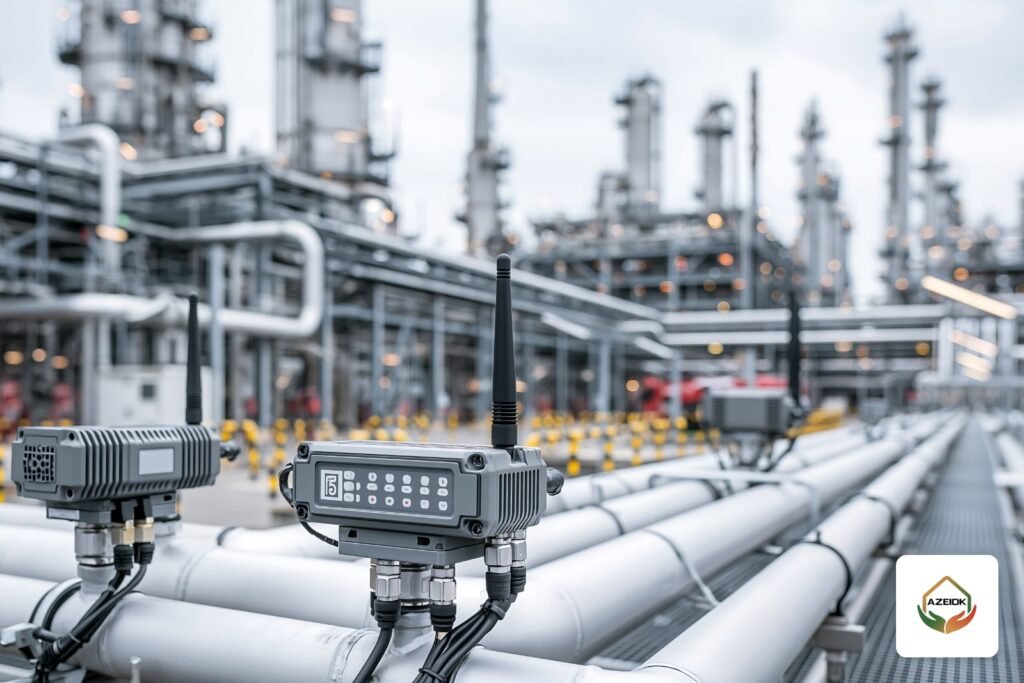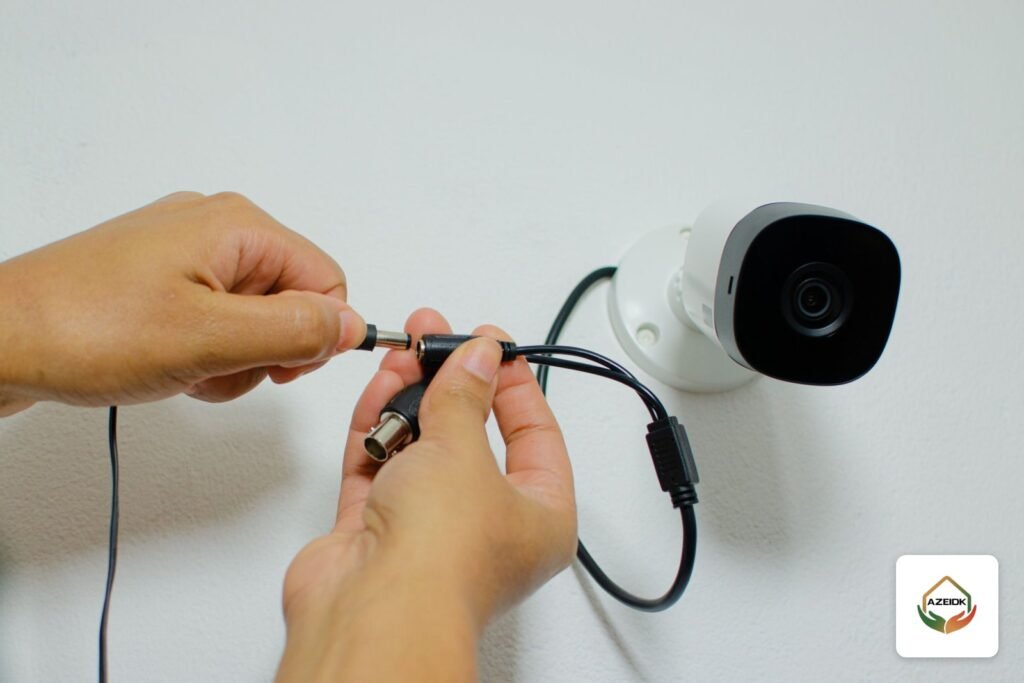
UTEPO is a brand focused on moving data and power to CCTV cameras: UTEPO PoE switches, Ethernet extenders and fibre media converters. The product most often asked for on upgrade jobs is the UTP7301EPoC Ethernet-over-coax extender, which carries network and power to an IP camera over an existing coaxial cable for up to 500 m. AZEIDK supplies UTEPO products in Saudi Arabia as part of CCTV and network projects.
Key takeaways
- The UTP7301EPoC is a two-unit kit, one unit at the switch or NVR and one at the camera, running over an existing coax cable.
- UTEPO states up to 500 m on coax and up to 400 m on network cable, at up to 100 Mbps, with bandwidth falling as distance grows.
- It supports IEEE 802.3af and 802.3at PoE and is powered from a PoE switch or a 48 to 57 V DC supply.
- The UTEPO PoE switches listed by AZEIDK range from 8-port unmanaged to 24-port L2 managed, plus an L3 model with 10G ports.
- Detailed switch power sizing has its own article; this one is about choosing the right UTEPO device for each link.
Which UTEPO products does AZEIDK carry?
The UTEPO brand page at AZEIDK lists ten products. Grouped by their job in a CCTV project:
| Job | Model as listed by AZEIDK | When you need it |
|---|---|---|
| Network and power over coax | UTP7301EPOC | Analog to IP upgrade without pulling new cable |
| Extending a network cable run | UTP3-VER01-POE PoE Ethernet repeater | A camera beyond the usual copper limit |
| Powering a single camera | UPI3301-PSC 60 W PoE injector | A non-PoE switch, or a camera needing more power |
| Converting to fibre | UOF7201GE gigabit fibre media converter | Building-to-building links or very long runs |
| Unmanaged PoE switch | UTP3310TS-PSB (8 ports), UTP3318S-PSB250-M0 (16 ports) | Small and mid-size sites without VLANs |
| L2 managed PoE switch | UTP3310TS-PSB-L2 (8 ports), UTP3328TS-PSB-L2 (24 ports) | Separating cameras on a VLAN and monitoring ports |
| Industrial switch | UTP7308GE-POE (8-port PoE+ managed) | Outdoor or industrial locations |
| L3 aggregation switch | UTP5628S-PSB-L3 with 10G ports | Core of a large camera network |
What is the UTEPO UTP7301EPoC coax Ethernet extender?
EoC stands for Ethernet over Coax. UTEPO’s UTP7301EPoC adds power to that, which is why UTEPO calls it EPoC. The kit has two units: an SV unit at the switch or NVR end, and an IPC unit at the camera. The two units talk over the existing coax, and each connects to its own device with a short patch cable.
Specifications as published on UTEPO’s official product page, also shown on the UTEPO UTP7301EPoC page at AZEIDK:
| Item | Published value |
|---|---|
| Distance on coax | Up to 500 m |
| Distance on network cable | Up to 400 m |
| Bandwidth | Up to 100 Mbps; Ethernet ports 10/100 Mbps |
| PoE standard | IEEE 802.3af and 802.3at, end-span and mid-span |
| Power input | PoE or 48 to 57 V DC |
| Own consumption | Under 2 W |
| Cable | 75-5 coax or better, and Cat5e/6 |
| Operating temperature | IPC unit -40 to 70 °C; SV unit 0 to 55 °C |
| Dimensions | 63.2 x 82 x 25 mm |
Note that the camera-end unit is rated for higher temperatures than the head-end unit. That suits Saudi sites, where the camera and its junction box sit outdoors while the SV unit stays in the equipment room.
When is an EoC extender the right answer?
The clearest case is an older building with analog cameras and coax already run through ceilings and walls, where the owner wants IP cameras without opening the ceilings. One kit per camera is enough and the old cable stays in place. Other upgrade options and the difference between the two systems are covered in IP vs analog CCTV.
The second case is a camera far from the equipment room, on a perimeter wall or in a car park, beyond the usual copper limit. UTEPO’s own page for the UTP3310TS-PSB switch gives a transmission distance of 0 to 100 m in default mode. If the camera is further away, the options are the coax extender, the UTP3-VER01-POE repeater on network cable, or fibre through a media converter.
Before you rely on the old cable
- Cable grade: UTEPO specifies 75-5 coax or better. Read the print on the existing cable jacket before you design around it.
- Connectors: old, oxidised or taped-up connectors are a common cause of lost video. Replace them during installation.
- Real bandwidth: bandwidth drops with cable length, as UTEPO notes. Compare the bitrate of the camera you will fit with what is available at your distance, and size recording and streaming with our PoE switch sizing guide and the related storage article.
- Camera power: cameras with strong IR or PTZ motors draw more. Check the camera datasheet and the kit datasheet together.
Which UTEPO PoE switch suits your cameras?
Port counts and PoE budget calculations are covered in detail in PoE switches for CCTV: power budget. Here we look at how to choose between the UTEPO classes themselves.
Unmanaged or managed?
An unmanaged switch works as soon as it is plugged in, and suits a small site with one recorder. The UTP3310TS-PSB is an example: 8 gigabit PoE+ ports, one copper uplink and one SFP uplink, and a 120 W total PoE budget according to UTEPO. Its VLAN mode isolates the downlink ports from each other while keeping them connected to the uplinks, and in that mode it supports PoE watchdog to restart a camera that hangs.
An L2 managed switch suits sites where cameras share the building network. The UTP3310TS-PSB-L2 has a similar port layout, a 130 W budget, IEEE 802.1Q VLAN and web management, plus scheduled PoE port reboots. Putting the cameras on their own VLAN protects recording from the load of other devices.
When do you need an industrial or L3 switch?
The industrial UTP7308GE-POE is chosen for outdoor cabinets and industrial sites. The UTP5628S-PSB-L3 with 10G ports belongs at the core of large projects, where floor or building switches come together. Both are selected after the network is designed, not before, and that design review can be part of AZEIDK’s network and communication systems work.
UTEPO’s official pages for the UTP3310TS-PSB and UTP3310TS-PSB-L2 both list 6 kV surge protection. That figure does not replace proper earthing of the network cabinet and outdoor cameras.
Common mistakes when upgrading CCTV with UTEPO devices
- Fitting the kit the wrong way round: SV unit at the camera and IPC unit at the switch. Each unit has a defined end.
- Counting on 500 m for a high-resolution camera without checking the real bandwidth at that distance.
- Leaving old analog hardware, such as video splitters, on the coax run between the two units.
- Buying a switch with only today’s PoE budget, then adding cameras later and watching ports shut down.
- Running outdoor cameras without earthing or surge protection at the cable end.
AZEIDK delivers security and surveillance systems from site survey to handover, with the steps set out in our CCTV installation guide. After handover the devices can be covered under a low current and CCTV maintenance contract, which is separate from the fire systems maintenance contract.
Frequently asked questions
Can an IP camera run on old coax cable?
Yes, with an EoC extender such as the UTEPO UTP7301EPoC: one unit at the switch, one at the camera, and the coax between them carries network and power for up to 500 m according to UTEPO.
How fast is the UTEPO coax Ethernet extender?
Up to 100 Mbps according to UTEPO, and the real figure drops as the distance grows, so match it to the camera’s bitrate.
Does the kit need a separate power supply?
Not if the switch provides PoE. It can also be powered from a 48 to 57 V DC supply at the head-end unit.
What is the difference between a managed and an unmanaged UTEPO PoE switch?
Unmanaged works out of the box and suits small sites. L2 managed lets you put cameras on a VLAN, monitor ports and control PoE from a web interface.
How do I connect a camera more than 100 m from the switch?
Three ways: a PoE repeater on network cable, an EoC extender on coax, or fibre with a media converter. The distance and the existing cable decide which fits best.
Does the UTEPO extender work with any IP camera?
It works with network cameras powered by 802.3af or 802.3at PoE. Check the camera’s consumption in its datasheet, especially PTZ cameras and cameras with strong IR.
Conclusion
UTEPO earns its place in CCTV projects on the awkward links: old coax, a distant camera, or a network that needs separation and management. Start with the existing cable and the distance, choose between extender, repeater and fibre, then pick a UTEPO PoE switch that carries the total load with room to grow.
Upgrading an old CCTV system to IP? Send the camera count and cable lengths and the AZEIDK team will propose the right UTEPO devices. Talk to the AZEIDK team
Related guides
- CCTV Connectors and Accessories: BNC, Video Baluns, RJ45 and the Installation Accessories Checklist
- CCTV Camera Placement & Coverage
- Foam Fire Extinguisher (AFFF): Which Fires It Suits, Foam vs Dry Powder, and 6 to 12 Litre Sizes
- Honeywell Gent Vigilon Plus Fire Alarm System: Design, Loops and S-Cubed Devices in Saudi Arabia