Plastic factory fire protection starts with one question: what plastic is stored, and how is it stored? Plastics carry one of the highest fire loads found in factories and warehouses, and sprinkler standards treat many of them with their strictest criteria. That is why a resin and pellet store is designed differently from extrusion and injection lines, and both differ from electrical room protection. This article explains how plastics are classified and what that means for sprinklers, detection and hose cabinets, how production lines are protected, and the route to a Salamah licence and maintenance, as part of AZEIDK solutions for factories and industrial facilities.
Key takeaways
- Plastics are grouped A, B and C by heat of combustion. Group A carries the strictest sprinkler criteria.
- The storage form changes the design: expanded or solid, cartoned or exposed, on wooden or plastic pallets.
- Raw material and finished goods stores are designed to a specific storage method (density/area, ESFR or in-rack sprinklers) chosen by the designer.
- Extrusion and injection lines need heat detection and suitable extinguishers; electrical rooms may need special suppression.
- Licensing goes through Salamah, and the technical report comes from an engineering consultancy office.
In this article
- Plastic factory fire protection: why are plastics so hard to protect?
- What changes the sprinkler design in a plastics store?
- When does plastics storage count as high-piled?
- How are extrusion lines, injection machines and electrical rooms protected?
- Does a plastics factory need hose cabinets and standpipes?
- What design mistakes are common in plastics factories?
- How does a plastics factory get its safety certificate?
- How does a plastics factory project run with AZEIDK?
- Frequently asked questions
- Conclusion
Plastic factory fire protection: why are plastics so hard to protect?
Plastics burn hot, melt and flow, carrying the fire to lower levels, and release dense smoke. Standards therefore split plastics into three groups by heat of combustion: Group A is the most hazardous, then B, then C. As the US National Fire Sprinkler Association (NFSA) explains in a July 2025 article, both the International Fire Code (IFC) and NFPA 13 require Group A plastics to meet the most stringent protection criteria.
The same article notes that the IFC treats Group C plastics as Class III commodities and Group B plastics as Class IV, while Group A plastics are listed as high-hazard commodities. NFPA 13 (2022 edition) lists Group A plastics in Section 20.4.5.1, and Section 20.4.5.2 requires them to be split into expanded (foamed) and nonexpanded. This is from the 2022 edition; the 2025 edition has been issued since, so check the section number in the edition your project uses.
What changes the sprinkler design in a plastics store?
Classification is not about the material alone. The product, its packaging and the pallet type are assessed together, as NFSA stresses. These are the inputs we ask the factory owner for before design:
| Input | Why it matters | What we need from you |
|---|---|---|
| Plastic type | Sets Group A, B or C | List of raw materials and products |
| Expanded or solid | Expanded Group A plastics face stricter criteria | Any foam or polystyrene in the product or packaging |
| Cartoned or exposed | Exposed plastic burns faster | Photos of actual storage |
| Pellet form | Free-flowing pellets are treated specifically in commodity classes | How pellets are bagged and stored |
| Pallet type | Plastic pallets can raise the commodity class | Wood or plastic |
| Storage and ceiling height | Sets the protection method and water demand | Top of storage and ceiling heights |
| Floor or rack storage | Racks may need in-rack sprinklers | Rack layout and aisle widths |
From these inputs the designer picks the NFPA 13 protection method: control mode density/area (CMDA), early suppression fast response (ESFR) sprinklers, or in-rack sprinklers. The hydraulic calculation then sizes the fire pump and tank. This step is the core of our engineering design and calculations service.
When does plastics storage count as high-piled?
According to NFSA, under the IFC high-piled combustible storage generally starts when the top of storage is above 12 feet, and the threshold drops to 6 feet for high-hazard commodities such as Group A plastics where the fire code official requires it. NFSA notes that NFPA 13 applies its storage criteria to Group A plastics stored above 5 feet. The Saudi Fire Protection Code SBC 801 has a chapter on high-piled combustible storage (Chapter 32 per the ICC study companion table of contents for the 2018 edition). Check the figures in the edition that applies to your building permit; the 2024 edition of the Saudi Building Code has been mandatory since 30 June 2025.
The Warehouses and Stores Requirements of the Ministry of Municipalities and Housing cite cartons and plastics as examples of medium-hazard stores, exclude high-hazard stores from their scope, and refer fire requirements to the Saudi code. For a large plastics store, do not stop at the municipal requirements; start from the code and the standard.
How are extrusion lines, injection machines and electrical rooms protected?
An extruder or injection moulding machine has electric heaters and molten plastic, and injection machines also carry hydraulic oil under pressure. What we usually review in this area:
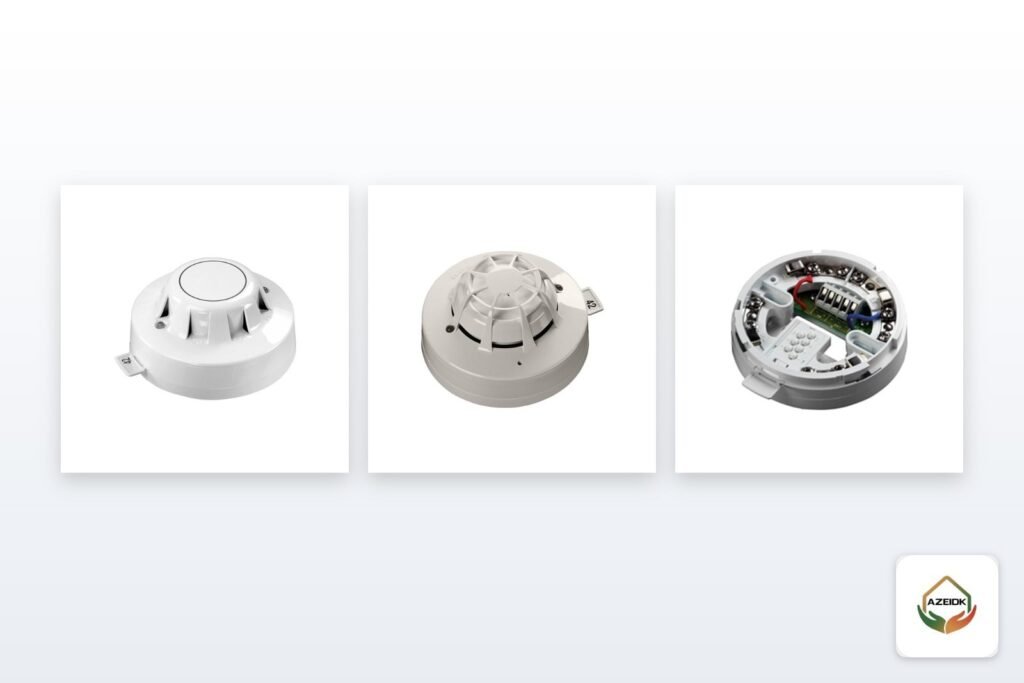
- Detection: heat detectors over the lines instead of smoke detectors where fumes and heat cause false alarms. See heat detector types and installation.
- Sprinklers: production area coverage to the hazard classification, with attention to obstructions above machines and conveyors.
- Extinguishers: CO2 near electrical panels, and dry powder or foam to suit the materials. Types are covered in Falcon Gold fire extinguisher types.
- Electrical rooms and control panels: the designer may choose clean agent or condensed aerosol suppression, such as the FirePro system, under special fire suppression systems.
Does a plastics factory need hose cabinets and standpipes?
Usually, yes. A fire in a plastics store needs a fast response from the plant team and then from Civil Defense crews, so fire hose cabinets and hose outlets are designed to the code and NFPA 14. See our article on NFPA 14 standpipe and hose systems. AZEIDK supplies Falcon Gold hose cabinets, fire pumps and AFC valves as part of fire fighting systems.
What design mistakes are common in plastics factories?
- Designing the store for “ordinary goods” and then filling it with expanded or exposed plastics.
- Switching from wooden to plastic pallets without reviewing the design.
- Raising storage height or adding racks after the licence is issued.
- Installing smoke detectors over extrusion lines and then isolating them because of false alarms.
- Storing goods in aisles, which the warehouse requirements explicitly prohibit.
Any change in material or storage method deserves an engineering review before it happens.
How does a plastics factory get its safety certificate?
Licensing goes through the Salamah platform of the General Directorate of Civil Defense. Engineering consultancy offices issue the technical report; AZEIDK supplies and installs the systems and then issues the safety equipment installation certificate for its own work, as part of Civil Defense approval support. After handover comes the fire, safety and alarm maintenance contract, which is separate from any CCTV and low current maintenance contract. Routine sprinkler inspection is covered in NFPA 25 inspection, testing and maintenance.
How does a plastics factory project run with AZEIDK?
We run the project in clear steps, each with a deliverable for the owner:
- Site survey: visiting the site and recording the zones, storage method and any existing systems, under technical site inspection and assessment.
- Design and calculations: choosing the protection method, running the hydraulic calculation and laying out detectors, then shop drawings and coordination with other trades.
- Supply and installation: supplying equipment with datasheets and an approved submittal, then installation on site.
- Testing and commissioning: pressure tests and alarm and pump trials before handover, under testing, commissioning and handover.
- Certificate and maintenance: issuing the safety equipment installation certificate, then a routine maintenance contract for fire, safety and alarm systems.
What speeds up design in a plastics plant is an accurate list of raw materials and products and the real storage layout, because any wrong assumption about plastic type or storage height feeds straight into pump and tank size.
Frequently asked questions
Do all plastics carry the same fire hazard?
No. They are grouped A, B and C by heat of combustion, with Group A the most severe. Design also separates expanded from solid, and exposed from cartoned.
Are standard warehouse sprinklers enough for plastics storage?
Not necessarily. Warehouse sprinklers are designed for the commodity class and storage height, and an “ordinary goods” design may not cover Group A plastics.
When do I need ESFR sprinklers in a plastics factory?
ESFR is one of the NFPA 13 storage protection options, not a rule for every store. The designer decides based on the commodity, storage and ceiling heights and rack layout.
Does pallet type affect sprinkler design?
Yes. Product, packaging and pallet are assessed together for the commodity class, and plastic pallets can raise it.
Which extinguisher suits extrusion lines?
CO2 near electrical panels, and dry powder or foam to suit the materials in the area. Number and spacing follow the code and the hazard.
Who issues the factory safety certificate?
Civil Defense issues the licence through Salamah, an engineering consultancy office issues the technical report, and AZEIDK issues the safety equipment installation certificate for the systems it installed.
Conclusion
Plastic factory fire protection depends on knowing the materials and how they are stored. Classify the plastics, identify expanded and exposed goods, pallet type and storage height, then design sprinklers and the fire pump on that basis. Protect production lines with heat detection and the right extinguishers, protect electrical rooms with special suppression where needed, and never change storage without an engineering review.
Building or expanding a plastics or packaging plant? Send the materials list, store layout and storage height, and the AZEIDK engineering team will review them with you. Talk to the AZEIDK team
Related guides
- Upright Sprinkler vs Pendent Sprinkler: The Difference and When to Use Each
- Context Plus Addressable Smoke Detectors: Addressing, Bases, Loop Wiring and When to Choose Them
- Diesel Fire Pump Components: Engine, Fuel Tank, Batteries, Controller and NFPA 20
- MEP Contractors in Saudi Arabia: MEP Scope, Fire Systems and How to Choose