A mall fire system maintenance contract differs from a residential or office contract in three ways. Most tests that sound the alarm or shut sprinkler valves have to run at night after the shops close. Tenant fit-outs keep moving sprinklers and detectors. And the records must be ready for licence renewal and for any Civil Defense visit. This guide covers what the contract should say on each point, and how AZEIDK preventive and periodic maintenance is organised for a commercial building that trades until late.
Key takeaways
- The contract must list the systems actually installed in the mall, with visit numbers and test frequencies. A contract that leaves out systems on site is a known cause of rejected Salamah applications.
- Alarm tests, fire pump runs and valve closures need an agreed night work window with mall management and security.
- Under NFPA 25, if a sprinkler system is out of service for more than 10 hours in 24, an alternative measure such as a fire watch is required.
- Tenant modifications affecting more than 20 sprinklers are tested at not less than 200 psi for two hours under NFPA 13.
- The fire system contract covers fire, safety and alarm systems only. CCTV and low current systems (with access control, intercom and networks) have their own separate maintenance contract and are never combined with it.
In this article
- Why mall fire system maintenance is different
- What does a mall fire system maintenance contract cover?
- Night maintenance: running the work window in a mall
- Tenant fit-out changes to sprinklers and fire alarm
- The fire safety log and licence renewal
- Classifying findings and repair times
- What drives the cost of a mall maintenance contract?
- Frequently asked questions
- Conclusion
Why mall fire system maintenance is different
A mall is one building run by one operator, but it holds dozens or hundreds of tenants. The fire alarm, sprinklers and fire pumps serve the whole building, while every tenant changes its own ceilings and walls during fit-out. That is why malls and commercial buildings face issues other buildings do not:
- Trading hours: shops stay open late, so sounders cannot be tested and sprinklers cannot be isolated while visitors are inside.
- Changing units: one shop closes and another opens with a new layout, and every fit-out can move sprinklers or block detectors.
- Mixed hazards: food court, back-of-house stores, car parks and electrical rooms each have different systems or detectors.
- Many parties: mall management, security, tenants, fit-out contractors and the maintenance company. Each one needs to know its role before anything is shut down.
What does a mall fire system maintenance contract cover?
The table lists the main inspection and test items that drive the visit schedule. Frequencies come from the NFPA 25 2026 summary tables as shown in the committee report, and from Chapter 14 of NFPA 72 for alarm systems. Confirm the edition adopted for your project:
| Item | Activity | Frequency |
|---|---|---|
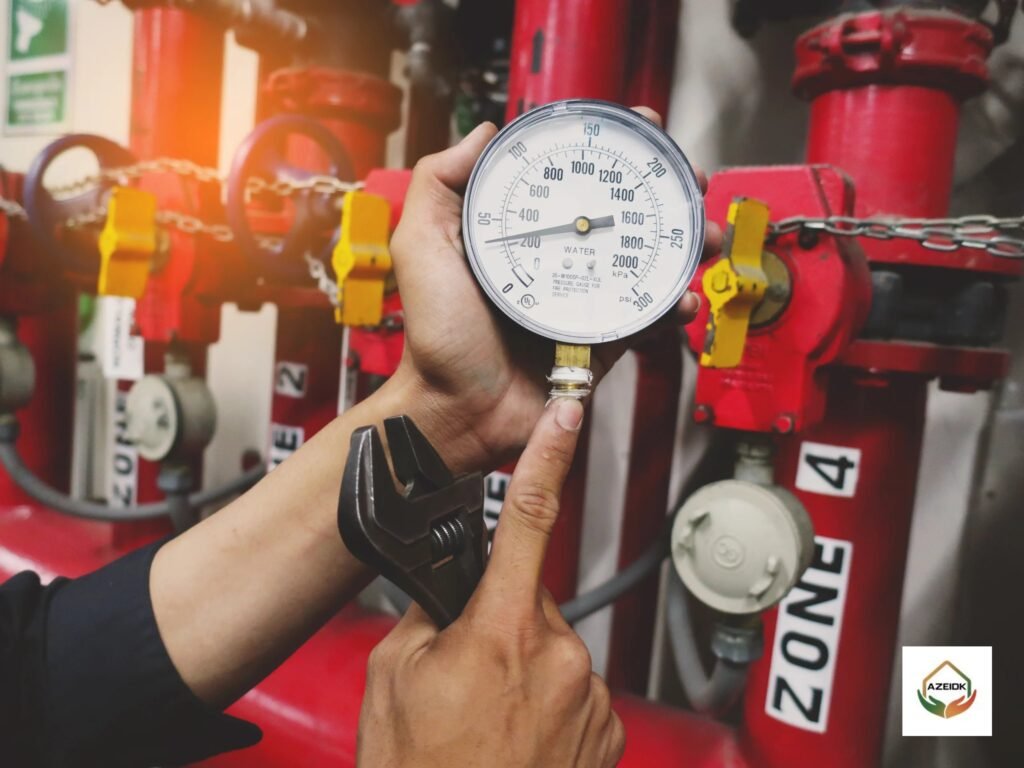
| Control valves | Position inspection | Weekly unless locked or supervised; monthly if locked; quarterly if electrically supervised |
| Control valves | Operation and position test | Annually |
| Waterflow alarm devices (flow switches) | Inspection and test | Inspect quarterly; test quarterly or semiannually |
| Main drain | Test | Annually or quarterly |
| Fire pumps | No-flow run | Weekly for diesel; weekly or monthly for electric |
| Fire pumps | Flow performance test | Annually |
| Fire department connection and hose valves | Inspection | Quarterly |
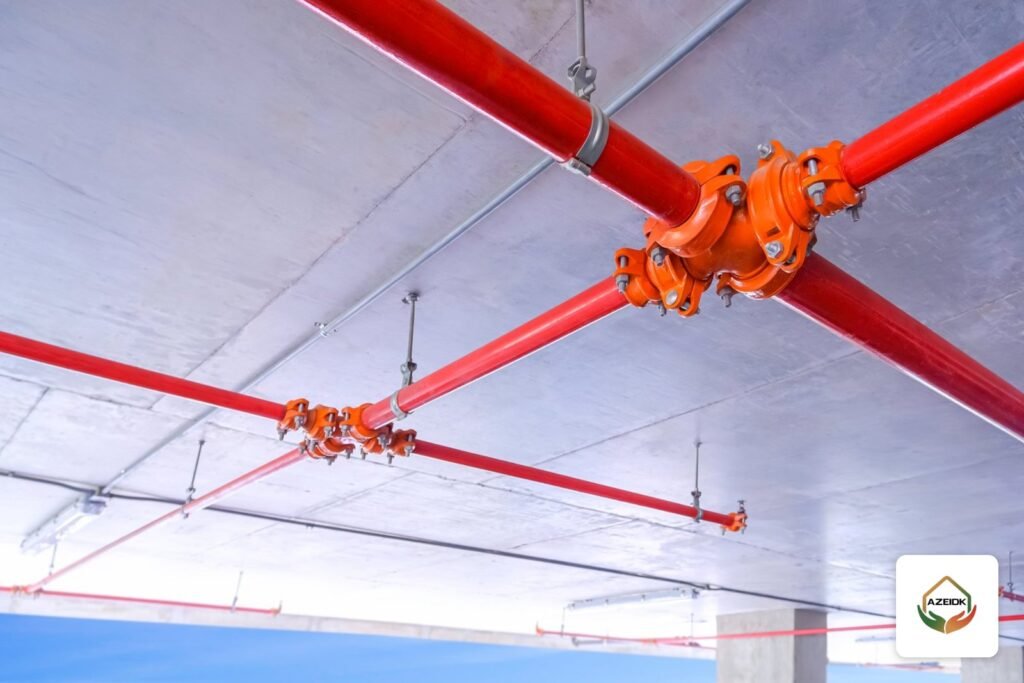
| Sprinklers, pipe and hangers | Visual inspection from floor level | Annually |
| Smoke detectors | Sensitivity measurement | Within one year of installation, then every two years; extendable up to five years after two consecutive in-range results |
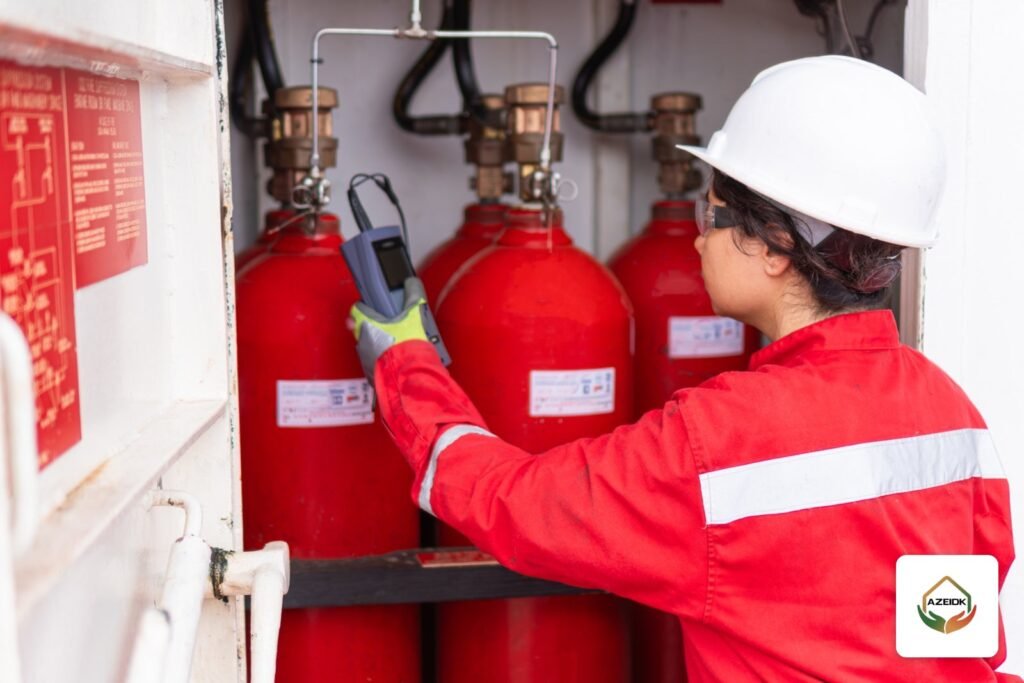
For a full walk-through of these tables and how findings are classified, see our NFPA 25 inspection, testing and maintenance guide. An AZEIDK contract sets monthly, quarterly or semi-annual visits depending on the system and scope, with a report after each visit covering results, observations and recommended corrective actions.
Night maintenance: running the work window in a mall
A test that sounds the alarm during trading hours confuses shoppers and teaches them to ignore it. Closing a sprinkler valve while people are inside leaves part of the building unprotected. The answer is a night work window written into the contract. Practical steps:
- Advance schedule: dates for every test that sounds the alarm or takes part of a system out of service, approved by mall management well ahead.
- Notify before shutdown: NFPA 25 requires notifying the authority having jurisdiction, the fire department (Civil Defense in Saudi Arabia) and the alarm-receiving facility when an impairment is found or before a test or shutdown, and again on return to service.
- Impairment coordinator: the owner assigns an impairment coordinator. If nobody is named, the owner is the coordinator.
- Tag the impaired system: tag the system or closed valve, and have tools and parts on site before work starts.
- Fallback for long shutdowns: if the system will be out for more than 10 hours in 24, the coordinator arranges one of: evacuation of the affected area, an approved fire watch, a temporary water supply, or an approved programme to remove ignition sources and limit fuel.
- Restore before opening: test the system when work is done, then remove the tag and notify the same parties.
Any new device or temporarily isolated zone affects the cause and effect matrix, such as HVAC shutdown or smoke fan start. Check it before the mall goes back to normal operation.
Tenant fit-out changes to sprinklers and fire alarm
Shop fit-outs are the main source of hidden problems in mall fire systems. A new suspended ceiling may mean moving sprinklers or adding them below it. A new wall or tall shelving can block a sprinkler or split a room that one detector used to cover. The contract and the mall’s fit-out rules should cover:
- Drawing review before work: sprinkler and alarm changes in a tenant unit are reviewed before work starts; drawings can be prepared through shop drawings and coordination.
- Testing the modification: under NFPA 13, modifications to existing systems are tested at system working pressure. Where a modification affects more than 20 sprinklers, the new section is isolated and tested at not less than 200 psi for two hours. See our hydrostatic test guide.
- Reporting changes: the 2025 edition of NFPA 72 clarifies that inspection and maintenance staff are not required to evaluate the adequacy of the original design, but a building change that affects system performance should be reported to the owner as an observation. Make this an explicit line in every visit report.
- Programming and drawings: every detector added or moved needs a correct address and description on the panel, and an updated as-built drawing.
- Who pays and who signs off: the tenant and its fit-out contractor, or mall management and the maintenance contractor. Put it in the lease and fit-out rules before the first unit raises the question.
A practical habit: have the maintenance contractor walk each unit after fit-out and before opening, to check sprinklers and detectors against the approved drawing.
The fire safety log and licence renewal
The log is what the inspector sees. A good maintenance contract produces an up-to-date log that can be shown at inspection or renewal: the date of each visit, who carried it out, which devices were tested, the result for each, and any findings with the action taken. See our fire safety log book guide.
For the Salamah licence, our Salamah certificate guide explains that indirect (high-risk) activities need a safety company contract, maintenance contracts and a Civil Defense inspection, and that renewal depends on a valid maintenance contract covering the systems actually on site. So check three things: the contract lists every system, its term does not end before the licence, and the company is qualified on the platform.
Classifying findings and repair times
NFPA 25 separates findings into three classes: a noncritical deficiency that does not materially affect performance, a critical deficiency that could, and an impairment, meaning the system or part of it is out of order. Repairs are made within a time frame approved by the authority. As generally accepted practice, not a requirement, the annex gives 30 days for critical and 90 days for noncritical deficiencies, and impairments as soon as practical. Put these times in the contract, and state whether repairs and spare parts are included or quoted separately through corrective maintenance and technical support.
What drives the cost of a mall maintenance contract?
- The number and size of systems: alarm points, sprinklers, fire pumps and any special suppression systems.
- Visit numbers and the test frequencies required.
- Night work and the number of technicians per window.
- Whether spare parts are included or priced when needed.
- The condition of the systems at contract start, established by a site survey before pricing.
- The response time required for emergency faults.
Mall operators who also run enclosed car parks should read our guide to car park fire protection. CCTV and low current maintenance is a separate contract with its own scope, never combined with the fire system contract.
Frequently asked questions
How many visits does a mall fire system maintenance contract need?
It depends on the systems and scope. Some items are weekly or monthly, such as valve inspections and pump runs, others quarterly or annual. The contract is built on a monthly or quarterly visit schedule to match.
Can the fire alarm be tested while the mall is open?
Tests that sound the alarm or take part of a system out of service are best done at night after the shops close, with the relevant parties notified and everything restored and tested before opening.
Who is responsible for changing sprinklers in a tenant unit?
The lease and fit-out rules decide. What matters is that drawings are reviewed before work, the change is tested under NFPA 13, and the maintenance company reports any change that affects system performance to mall management.
What happens if a sprinkler valve stays closed for a long time?
Under NFPA 25, an impairment longer than 10 hours in 24 needs an alternative such as a fire watch or evacuation of the affected area, with Civil Defense and the other parties notified.
Does the fire system contract include CCTV maintenance?
No. The fire system contract covers fire, safety and alarm systems; CCTV, low current, access control and network maintenance is a separate contract with its own scope and technicians.
Does AZEIDK maintain systems another company installed in the mall?
Yes, after a site survey to establish the systems’ condition and the right maintenance scope.
Conclusion
A mall fire system maintenance contract works when it settles three things from day one: a written night window for tests and shutdowns, a clear process for tenant fit-outs covering review, testing and updates, and a fire safety log updated after every visit. Write these into the contract with system names and frequencies, and inspections and licence renewals will hold no surprises.
Running a mall or shopping centre and need a fire system maintenance contract? Send the system list and drawings, and the AZEIDK team will survey the site and propose the visit schedule and contract scope. Talk to the AZEIDK team
Related guides
- Fire-Rated Doors: Periodic Inspection and Maintenance of Closers, Panic Hardware and Frames to NFPA 80
- Sprinkler Systems: Wet vs Dry vs Pre-action vs Deluge
- Saudi Local Content Mandatory List: What It Means for Fire and Security Supply on Government Projects and How to Check an Item
- Intercom Price for Villas and Apartment Buildings: What Drives the Installation Cost (Units, Monitors, IP or 2-Wire)