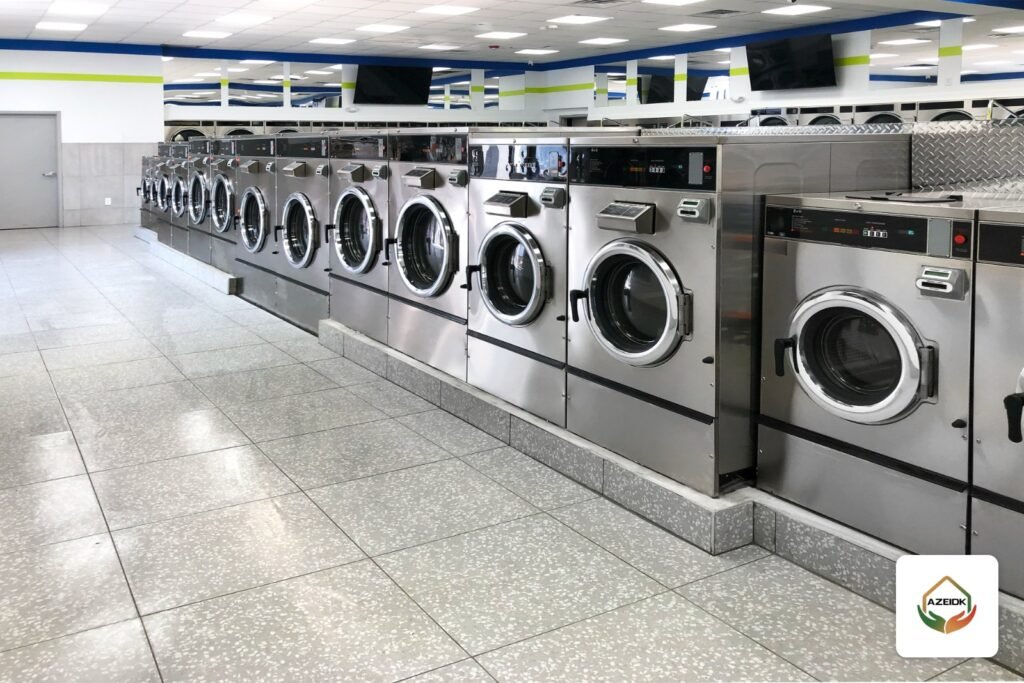
Laundry shop safety requirements in Saudi Arabia come from two authorities. The Ministry of Municipalities and Housing requires Civil Defense approval before a laundry licence is issued and refers fire protection to the Saudi Fire Protection Code (SBC 801), while Civil Defense issues the safety licence through the Salamah platform. Inside the shop, the risk sits in four places: dryer lint, heat and steam from ironing, electrical loads, and the detergent and chemical store. This article covers each one and what is expected before you open or renew.
Key takeaways
- The Ministry of Municipalities and Housing requirements for clothes and linen laundries call for Civil Defense approval before the licence is issued.
- Fire protection in the laundry is referred to the Saudi Fire Protection Code (SBC 801).
- The requirements ask for hot air from washers to be vented outside, flues with extract fans above ironing presses, and a dedicated space for the steam generator.
- Detergents and chemicals are kept in a well-ventilated store, and gas lighting is banned inside and outside the laundry.
- The U.S. Fire Administration (USFA) reports that failure to clean was the leading factor in residential clothes dryer fire ignitions.
In this article
- What do laundry shop safety requirements cover?
- Laundry licence: where do Civil Defense and Salamah come in?
- Dryers: why fires start with lint
- Ironing shops: steam pressing and the steam generator
- Electrical safety: heavy loads in a damp space
- Detergents and dry cleaning: storage and ventilation
- Fire extinguishers and safety equipment in a laundry
- Escape routes and routine maintenance
- Frequently asked questions
- Conclusion
What do laundry shop safety requirements cover?
The Ministry of Municipalities and Housing has issued requirements for the “clothes and linen laundries” activity, published among the activity attachments on the Balady platform. Their scope covers drop-off and pick-up points, clothes and linen laundries, central laundries, hospital and patient laundries, and self-service laundries. A laundry is defined as a shop that washes and irons clothes and linen together or offers either service on its own, so an ironing shop falls under the same activity.
On safety, three clauses matter most: Civil Defense approval before the licence is issued, compliance with the Saudi Building Code including its electrical, mechanical, ventilation and air conditioning requirements, and reference to the Saudi Fire Protection Code (SBC 801) for fire protection. In other words, the document does not set a number of extinguishers or a specific alarm type. It sends you to the code and to the Civil Defense requirements for the activity.
It also sets operating rules that directly affect fire risk: heat and steam discharge, automatic dryers, the steam generator location, the chemical store, lighting, escape routes and a first aid box.
Laundry licence: where do Civil Defense and Salamah come in?
The Civil Defense licence is issued online through Salamah, the platform of the General Directorate of Civil Defense. Salamah splits activities into direct ones (low to medium risk), licensed after the safety equipment invoice or technical report is entered, and indirect ones (high risk), which need a contract with a safety company, maintenance contracts and a Civil Defense inspection before issue. Check your own activity’s classification through the platform’s investor journey service rather than assuming it.
We walk through the steps in our Salamah certificate guide, including the one-year validity from final approval and renewal one month before expiry. Where an activity accepts a technical report, it is issued by an approved engineering office. AZEIDK installs the safety equipment, issues the safety equipment installation certificate and coordinates with the office as part of our Civil Defense approval support service.
The right order for a new laundry: pick a location where the zoning allows the activity, fit out the shop to the ministry requirements and the code, supply and install the safety equipment, obtain the Salamah licence, then complete the municipal licence. Fixing a shop after the fit-out is finished costs more than getting it right during the works.
Dryers: why fires start with lint
Every drying cycle pulls fine fibres from the fabric. Some are caught in the lint filter, the rest travel into the hot air path and build up inside the exhaust duct and behind the machine. These fibres are dry, light and ignite easily, and in a commercial laundry the dryer runs for hours at a time.
In its report “Clothes Dryer Fires in Residential Buildings (2008-2010)”, the USFA stated that failure to clean was the leading factor contributing to ignition, at 34 percent. The data is for U.S. homes, but the same cause applies in a commercial laundry, where the number of cycles is far higher.
What reduces the risk in practice:
- Clean the lint filter as often as the dryer’s operating manual specifies, and log it on a daily sheet signed by the shift supervisor.
- Inspect and clean the exhaust duct at regular intervals and keep its outlet to the outside clear.
- Do not run dryers after closing or with no staff present.
- Do not pile hot clothes and linen in large heaps next to the machines straight out of the dryer.
- Keep garment bags and cartons away from the back of the dryers and the steam generator.
The municipal requirements also call for automatic dryers (with an exception for items that need manual drying) and for hot air from washers to be discharged outside the laundry. Good ventilation serves safety and health at the same time.
Ironing shops: steam pressing and the steam generator
An ironing shop usually runs steam presses, steam irons and a small steam generator (boiler). The requirements call for flues fitted with extract fans above the ironing press, a dedicated space for the steam generator with steam piped to the outside, and no visible discharge of ironing steam to the public outside the shop.
On the shop floor, watch three things: iron plugs and cords, which move all day and wear their insulation; hot irons placed on a proper rest, never on fabric; and servicing of the steam generator and its safety valve as the manufacturer specifies. Never leave an iron or press plugged in when the shop closes.
Electrical safety: heavy loads in a damp space
A laundry packs washers, dryers, presses and a steam generator into what is often a small space, with water and humidity all the time. That is why the requirements refer to the electrical provisions of the Saudi Building Code, and the installation is best designed and signed off by an electrical engineer.
- A dedicated circuit for each large machine with a breaker sized to its rating, and no heavy appliances on power strips or extension leads.
- A closed, labelled distribution board away from water, with clear access in front of it.
- Re-check the wiring whenever a new machine is added, and whenever a socket runs hot or smells of burning.
Detergents and dry cleaning: storage and ventilation
The requirements allow a well-ventilated store connected to the washing and drying area for detergents and chemicals. They define dry cleaning as the use of liquid cleaners directly inside the machine without water, and note that these liquids evaporate quickly. A shop that offers dry cleaning therefore needs extra care with ventilation and with keeping these products away from heat sources such as dryers and the steam generator.
Keep containers closed in their original packaging, never decant them into water or drink bottles, and keep the supplier’s safety data sheet for each product. If the shop uses flammable solvents, check what the code and Civil Defense require for that use before you start operating.
Fire extinguishers and safety equipment in a laundry
The municipal requirements refer fire protection to SBC 801 and the Civil Defense requirements for the activity, so the number, size and location of extinguishers depend on the shop’s area and classification. In general terms, a laundry has two main hazards: fabrics and other ordinary combustibles (Class A fires), and electrical boards and equipment.
| Hazard in the laundry | Prevention | Common extinguishing or safety equipment |
|---|---|---|
| Dryers and lint | Clean the filter and duct, never run unattended | Multi-purpose dry powder extinguisher near the drying area |
| Distribution board and machines | Dedicated circuits and correct breakers, no power strips for heavy loads | CO2 extinguisher near the board |
| Steam presses and irons | Flues with extract fans, iron rests, power off at closing | Extinguisher suited to fabric and electrical fires in the ironing area |
| Detergent and chemical store | Good ventilation, closed containers, distance from heat | As the product type, the code and Civil Defense require |
| Minor injuries and burns | Train staff to report and give basic first response | First aid box (required by the regulations) |
For a first estimate of extinguisher numbers, use our fire extinguisher calculator, then check the result against the activity requirements. Available models are on the fire extinguishers page, and our dry powder extinguisher guide and CO2 extinguisher guide compare the types. First aid boxes are also available, such as the Falcon Gold H-325 large first aid box.
Central laundries and larger premises may need additional systems under the code or Civil Defense requirements, such as fire alarm systems. That is decided by reviewing the area and classification, not by guesswork.
Escape routes and routine maintenance
The document requires entrance stairs, external walkways and ramps to be kept free of anything that would block fast evacuation in an accident or emergency. Apply the same rule inside: no garment bags at the door, no shelving that narrows the aisle, and extinguishers mounted where they are visible and easy to reach.
Extinguishers need routine inspection and refilling after use or when the gauge shows it. We cover this in our extinguisher maintenance and refill article, and AZEIDK services extinguishers with its own team under our preventive and routine maintenance services. Before an inspection or renewal, walk the shop with our Salamah inspection checklist.
Frequently asked questions
Does a laundry need Civil Defense approval?
Yes. The Ministry of Municipalities and Housing requirements for clothes and linen laundries call for Civil Defense approval before the licence is issued, and the safety licence is issued through Salamah.
Does the laundry licence also cover ironing-only shops?
The definition covers washing and ironing together or either service on its own, so an ironing shop falls under the same activity.
How many extinguishers does a laundry need?
The municipal requirements give no number and refer to SBC 801 and the Civil Defense requirements. The number depends on area and classification. Start with the extinguisher calculator, then confirm against the requirements.
How often should the dryer lint filter be cleaned?
Follow the manufacturer’s operating manual for the dryer, clean the filter as often as it specifies, clean the exhaust duct periodically and keep a daily log.
Is gas allowed in a laundry?
The requirements explicitly ban gas lighting inside and outside the laundry. Any other use of gas is referred to the code and Civil Defense requirements.
Is a first aid box mandatory in a laundry?
Yes. The requirements call for a first aid box in the laundry.
Does AZEIDK issue the Salamah technical report?
No. The technical report is issued by an approved engineering office. AZEIDK installs and maintains the safety equipment, issues the safety equipment installation certificate, and can coordinate with the engineering office as part of its Civil Defense approval support service.
Conclusion
Laundry shop safety requirements go well beyond an extinguisher by the door. The ministry requires Civil Defense approval and refers to SBC 801, and it sets clear rules on heat and steam discharge, the steam generator location, the chemical store and the ban on gas lighting. The biggest day-to-day risk comes from dryer lint and electrical loads, and the answer is regular cleaning, sound wiring and suitable extinguishers that are inspected on schedule.
Fitting out a laundry or ironing shop and need a Salamah licence? The AZEIDK team can inspect the shop, supply, install and service extinguishers and first aid boxes, issue the safety equipment installation certificate, and coordinate with an approved engineering office where the activity requires a technical report. Talk to the AZEIDK team
To buy an extinguisher or book its maintenance, see AZEIDK fire extinguishers.
Related guides
- Fire Extinguishers in Makkah and Taif: Choosing Extinguishers for Hotels, Shops, Homes and Rest Houses and Preparing Them Before Peak Season
- FM-200 Fire Extinguisher (Clean Agent): For Server Rooms and Electrical Panels, 1 to 12 kg Sizes, and When You Need a Fixed System
- Souq Fire Safety: Extinguishers, Wireless Alarms and Shared CCTV for Adjoining Shops
- CCTV Cameras for Malls and Shopping Centres: Corridors, Car Parks, Control Room and People Counting