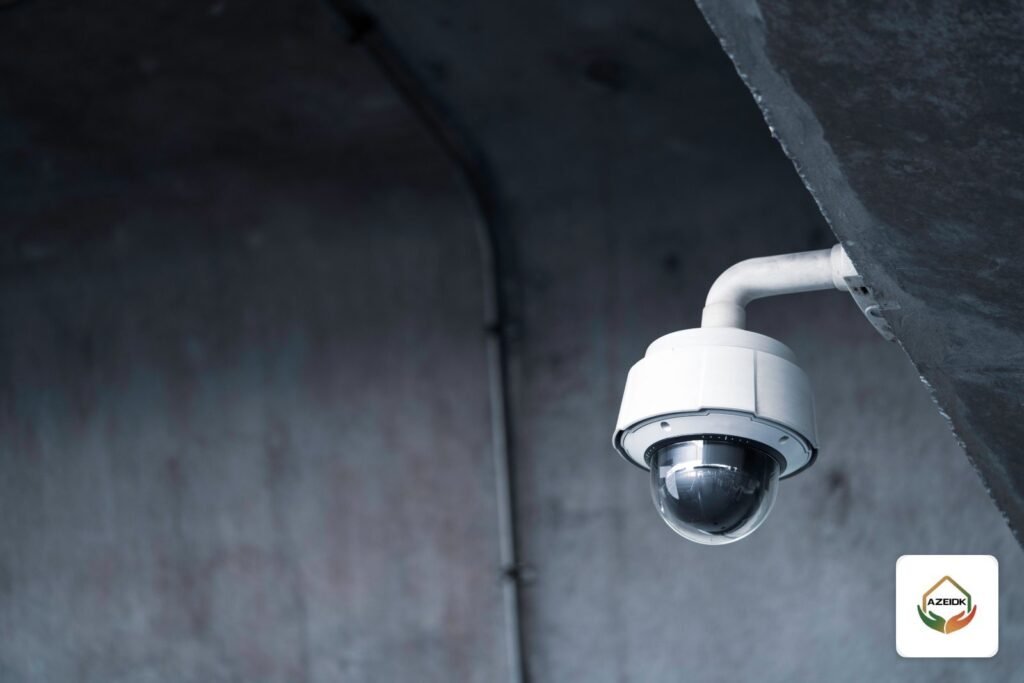
The advantages of CCTV camera systems come down to three things: they deter, they record evidence, and they let you watch a site remotely. The disadvantages are just as real. A camera does not stop an incident on its own, and with factory settings and no maintenance it can intrude on privacy or be hacked. This guide sets out the benefits for businesses and homes, the risks, and how to reduce each one when you design and run security and surveillance systems.
Key takeaways
- Main benefits: deterrence, recorded evidence, remote viewing and operational oversight.
- Main drawbacks: privacy, hacking risk, storage and maintenance cost, and dependence on power and network.
- Cameras record but do not intervene, so they work best alongside intrusion alarms, access control and guarding.
- In Saudi facilities, privacy is governed by the Security Surveillance Cameras Law and its executive regulation, not by the installer’s judgement.
- Many compromises start with a weak password or a port open to the internet, and both can be fixed.
In this article
- What are the advantages of CCTV cameras?
- Benefits of CCTV for businesses and homes: how the goal differs
- What are the disadvantages of CCTV?
- CCTV risks: privacy and hacking
- How to reduce the disadvantages
- Advantages and disadvantages of CCTV cameras in one table
- Maintenance: what keeps the benefits
- Frequently asked questions
- Conclusion
What are the advantages of CCTV cameras?
The benefits of CCTV fall into four roles, and each one only works under a condition:
- Deterrence: a visible camera at the entrance or cashier makes an offender think twice. It has to be real and working; a dummy camera records nothing when something happens.
- Evidence: footage shows what happened, when, and where a person came in. Resolution and angle must be good enough to recognise a face or read a plate, and recordings must be kept for the required period.
- Remote viewing: a shop or home owner can watch live video on a phone and get motion alerts during set hours.
- Operations: in warehouses, factories and restaurants, cameras help follow loading and unloading, queues, and whether staff follow safety procedures.
Smart cameras add analytics such as line crossing, intrusion zones and human and vehicle classification, which cuts false alerts from trees or cats. See our article on AI CCTV cameras.
Benefits of CCTV for businesses and homes: how the goal differs
| Item | Businesses (shops, warehouses, commercial buildings) | Homes |
|---|---|---|
| Main goal | Protection, records, and compliance for obligated categories | Peace of mind for the family and property, watching the front door |
| Typical system | IP cameras with an NVR and local storage | Wi-Fi cameras or a few cameras with a small recorder |
| Who watches | A control room or security officer with defined rights | Family members through a phone app |
| Biggest risk | Network intrusion, poor maintenance, regulatory violations | Weak app password, filming the neighbours |
For homes, the EZVIZ and Hikvision pages show indoor and outdoor Wi-Fi cameras. For facilities, design starts with camera placement and storage sizing, as covered in our CCTV camera types guide.
What are the disadvantages of CCTV?
- It records, it does not prevent: a camera does not lock a door or sound an alarm by itself. If nobody watches it and it is not linked to an alarm, its value shows after the incident, not during it.
- Privacy: a wrong angle can cover a neighbour’s home or a place that should not be filmed, and enabling audio without approval is a violation for facilities covered by the law.
- Hacking: cameras and recorders are networked computers. A device with a default password or old firmware can be exploited.
- Running cost: hard drives wear out, lenses collect dust, cables and power supplies fail. An unmaintained system can stop recording without anyone noticing.
- Power and network dependence: a power cut stops recording without backup power, and an internet outage stops remote viewing and phone alerts.
- Image limits: at night or against strong backlight, a face may not be clear if the camera does not suit the location.
CCTV risks: privacy and hacking
Privacy under Saudi law
In Saudi Arabia this is governed by the Security Surveillance Cameras Law and its executive regulation, which our article covers in detail. Examples from the regulation: audio recording may not be enabled without the Directorate’s approval; a privacy mask must be enabled to block private areas in cases that include cameras with pan, tilt or zoom and rooftop exterior cameras whose coverage extends beyond the site boundary; warning signs go at entrances and exits; and recordings are handed over only on an official request from the Ministry of Interior’s law enforcement bodies. Check the article and the official text before design rather than relying on a seller’s word.
How do cameras get hacked?
Many known cases start with one of three gaps: a weak or default password, a recorder port forwarded to the internet, or firmware that has not been updated for years. Our article on CCTV camera hacking walks through causes and protection in detail.
How to reduce the disadvantages
The hardening steps below come from the best practices Dahua publishes for its devices and from EZVIZ support, and the principles apply to most systems:
| Drawback or risk | How to reduce it |
|---|---|
| Weak password | A strong password per device (at least eight characters of two or more types, per Dahua) and account lockout after failed attempts. |
| Outdated firmware | Update firmware and client software from the manufacturer’s source only. |
| Ports open to the internet | Disable port mapping on the router and switch off unused services such as UPnP and SNMP. |
| Cameras on the office network | Put cameras on a separate VLAN and enable the IP allow list. |
| Over-broad permissions | One account per user with the minimum rights needed; review online users and logs regularly. |
| Stolen app account | Enable two-step verification on the EZVIZ account, which sends a code by email or SMS when signing in from a new phone. |
| Filming what should not be filmed | Set angles and privacy masks at installation, and keep audio off unless approved. |
| Recording stops unnoticed | Alerts for disk faults and video loss, and periodic checks under a maintenance contract. |
| Power cuts | A UPS for the recorder and switch, sized for the runtime required. |
Dahua also recommends HTTPS for browser access, encrypted audio and video transmission for sensitive data, and physical protection of storage devices in a locked space.
Advantages and disadvantages of CCTV cameras in one table
| Advantages | Disadvantages |
|---|---|
| Deters theft and vandalism at entrances and tills | Does not stop an incident without an alarm or someone watching |
| Time-stamped recorded evidence | Needs the right resolution and angle to be useful |
| Live view and phone alerts | Remote access opens a door to hacking if set up badly |
| Oversight of operations and safety | Can intrude on privacy if angles and audio are not controlled |
| Smart analytics reduce false alarms | Ongoing cost of storage, maintenance and backup power |
Maintenance: what keeps the benefits
Most drawbacks build up over time: a dirty lens, a full or failed disk, a camera that dropped offline, a former technician’s account still active. Periodic checks find these before you need the footage. CCTV maintenance sits in its own low-current and surveillance contract, separate from the fire and alarm systems contract. See CCTV maintenance for the checklist and common CCTV faults for issues such as No Video or stopped recording.
Frequently asked questions
What are the benefits of CCTV for a shop?
It deters theft at the till and entrance, records any dispute or incident, and lets the owner follow the shop from a phone. A shop may also fall within the categories the law obliges to install cameras.
Does CCTV prevent theft?
It reduces the chance through deterrence and helps establish what happened, but it does not prevent theft alone. Linking it with intrusion alarms and access control makes it more effective.
What are the privacy risks of CCTV?
Wrong angles, audio recording without approval and leaked footage. Correct angles, privacy masks and user rights deal with most of this; for facilities, the reference is the law and its regulation.
Can home security cameras be hacked?
Yes, if the password is weak, firmware is not updated or router ports are open. A strong password, two-step verification and regular updates cut the risk considerably.
Which CCTV camera has the best features?
No single camera is best for every site. The choice follows the location, the lighting, the distance needed for identification, and whether the manufacturer keeps issuing security updates.
Is a dummy camera enough?
No. It may deter for a while, but it records no evidence and does not meet the requirements for facilities covered by the law.
Conclusion
The benefits of CCTV outweigh the drawbacks when the system is designed for the site, set up securely, maintained, and kept within the law on privacy. A camera installed with factory settings and left alone can turn from a protection tool into a weak point.
Planning CCTV for a facility or home? Send the layout or site photos and our team will help with camera placement, equipment selection and security settings. Talk to the AZEIDK team
Related guides
- Fire System Maintenance Contract Cost in Saudi Arabia: What Drives the Price (Systems, Area, Visits and Spare Parts)
- Fire Alarm Brands in KSA: Who Makes What and How to Verify Each Model’s Approval
- Fire Alarm Cables in Saudi Arabia: Types, Specifications and Selection
- Saudi Fire Code SBC 801 vs SBC 201 vs Civil Defense Requirements: What Each Covers and Who Applies It