


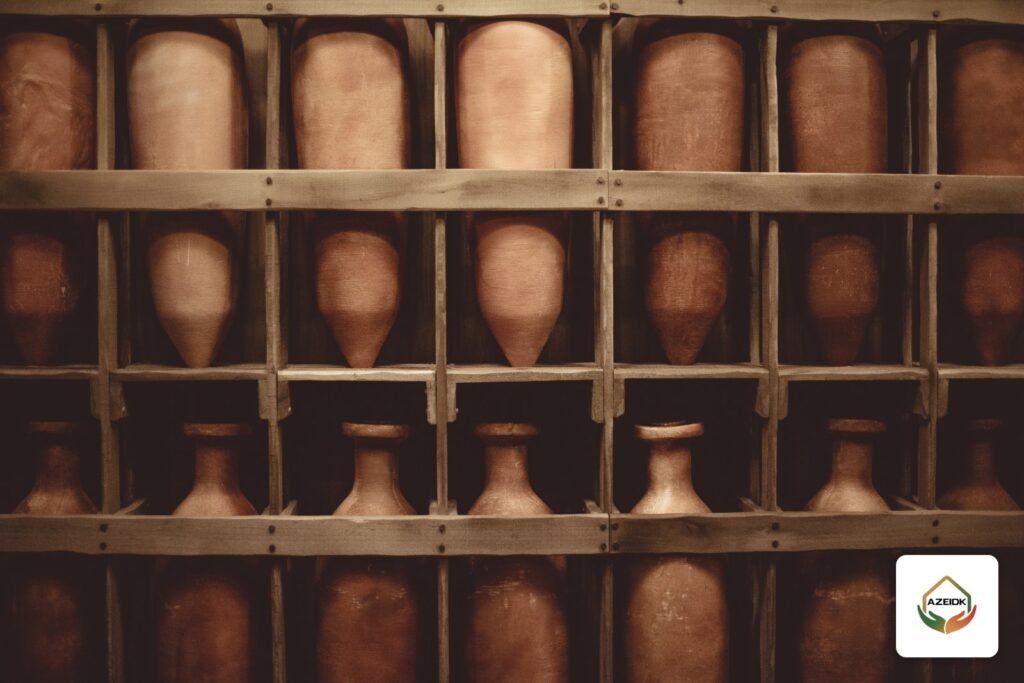
In a museum or an antiquities store, putting out the fire is not enough. It has to be put out without water or powder residue damaging an object thousands of years old, or a manuscript with no second copy. That is why museum fire protection and archive protection differ from any other public building: detection must be very early, and in closed storage rooms suppression is usually by clean agent instead of water.
This article explains how protection is divided between galleries, antiquities stores and archive rooms, using the special fire suppression and fire detection and alarm solutions supplied by AZEIDK Egypt.
Key takeaways
- NFPA 909 is the US technical reference for protecting cultural resource properties: museums, libraries, places of worship, their contents and collections.
- Closed antiquities stores and storage rooms are usually protected with a clean agent system such as AFC-227 from American Fire Control, because it leaves no residue.
- Open galleries rarely suit gas systems; they rely on early detection, extinguishers and whatever the design specifies.
- Context Plus addressable detection shows the exact gallery or showcase, which is the basis of any fast response plan.
- The Egyptian code, 2026 edition, and Civil Protection approval are binding; NFPA is a design reference.
In this article
- What makes a museum a special case?
- Museum fire protection by type of space
- Why clean agent instead of water in storage rooms?
- Galleries: early detection first
- Archives and historic libraries
- The binding reference and the maintenance plan
- Common mistakes in museums and archives
- Frequently asked questions
- Conclusion
What makes a museum a special case?
An ordinary building is designed to protect life and the structure. Museums and archives add a third goal: protecting the collection itself. NFPA 909, the code for cultural resource properties, covers museums, libraries and places of worship. It deals with protecting the building, its contents and its collections from any condition that could cause damage or loss, not only fire.
The hazard classification annex of NFPA 13 lists museums and libraries as light hazard, except large library stack rooms, which are Ordinary Hazard Group 2 because of the dense paper load. That classification helps when designing sprinkler systems, but it does not answer the main question: how do you protect an object that must not get wet?
Museum fire protection by type of space
| Space | What needs protecting | Detection | Suppression |
|---|---|---|---|
| Open gallery | Visitors and exhibits | Addressable smoke detectors, beam detector in high halls | CO2 extinguishers near equipment; fixed system per design and code |
| Closed antiquities store | Objects that cannot tolerate water | Smoke detectors in the room, linked to the release panel | AFC-227 clean agent system, provided the room is sealed |
| Archive and manuscript room | Paper, manuscripts, documents | Early smoke detection not blocked by shelving | Clean agent in sealed rooms; CO2 extinguishers at the entrance |
| Conservation labs | Small quantities of chemicals and solvents | Detectors suited to the space, per design | CO2 and AFFF foam extinguishers, depending on the materials used |
| Electrical and server rooms | Control, lighting and environmental monitoring systems | Smoke detectors | CO2, or automatic CO2 in small cabinets |
Why clean agent instead of water in storage rooms?
Water sprinklers are very effective at controlling fire and protecting the building, but water itself can ruin paper, textiles, ancient wood and pigments. So the closed rooms holding the most sensitive objects are usually protected by a clean agent system. It floods the room to a fire-extinguishing concentration and is then vented without leaving residue on surfaces.
The AFC-227 system from American Fire Control supplied by AZEIDK Egypt uses HFC-227ea, known in the Egyptian market as FM-200. Its components are covered in AFC-227 clean agent system, and the quantity calculation in FM-200 agent quantity calculation.
What a gas system in an antiquities store needs to work
- A sealed room: the agent must hold its concentration inside the room long enough, so openings are sealed and integrity is tested before handover. See room integrity testing for gas suppression.
- A fixed, known room volume: any later change to the room, or a new door, means the calculation must be reviewed.
- A pre-discharge delay and warning: so staff can leave before the agent is released.
- A safe cylinder location: close to the room and easy to reach for maintenance, away from visitor routes.
Galleries: early detection first
Large galleries open onto each other and onto corridors, and visitors move through them all day, so they are hard to seal for a gas system. Here the first line of defence is early detection. Addressable ZFP panels from Context Plus identify the detector that raised the alarm, so security knows the gallery and the showcase before moving. In halls with high ceilings, a beam detector such as the TANDA TX7130 can cover a large area with one device, without fitting many detectors on a ceiling that may be part of the architecture.
Whether a gallery has sprinklers, and of what type, is for the consultant to decide under the Egyptian code and the nature of the exhibits. The extinguishers chosen here are PYRAMID CO2 units near electrical panels and lighting systems, because they leave no residue. Dry powder is used with care in corridors and service areas away from open exhibits, because the powder spreads and leaves a deposit that is hard to clean from delicate surfaces.
Archives and historic libraries
A historic archive combines two risks: a heavy fire load from stacked paper, and the irreplaceable value of each document. It is better divided into separate rooms than kept as one huge hall, so the most important rooms can be protected with clean agent. NFPA 232, the standard for the protection of records, is a useful technical reference here because it covers records protection equipment, facilities and handling methods.
Even with the best suppression system, orderly storage is essential: shelving that does not block detectors, clear aisles, and no cartons or packing materials stored inside the storage rooms.
The binding reference and the maintenance plan
In Egypt, Building Law No. 119 of 2008 and its executive regulations require fire protection to follow the Egyptian code; the current edition is the 2026 code issued by Ministerial Decree No. 355 of 2026. The General Directorate of Civil Protection (Ministry of Interior) reviews drawings and systems and inspects before occupancy. NFPA 909 and NFPA 232 are technical references that help the consultant; they do not replace the code.
After handover, a museum needs a clear maintenance plan because it runs all year and cannot afford a gap in protection. The plan usually covers testing detectors, call points and the alarm panel, checking the pressure and weight of clean agent cylinders as the manufacturer requires, and confirming that protected rooms have not changed. It helps to log every change to galleries or stores, because moving a showcase or adding a tall shelf can affect detection. Inspection is covered in FM-200 system maintenance. Security staff should know how to read panel messages and where every gas-protected room is, so nobody enters during or right after a discharge before the room is ventilated.
Common mistakes in museums and archives
- Adding new lighting or display equipment to galleries without reviewing its electrical load and detection.
- Opening a door or ventilation opening in a gas-protected store without retesting integrity.
- Keeping packing materials and cartons inside the antiquities store itself.
- Using dry powder extinguishers near open exhibits.
- Disabling detection during maintenance or installation work and forgetting to restore it.
Frequently asked questions
Is clean agent safe for antiquities?
HFC-227ea leaves no residue on surfaces after discharge, which is why it is used in closed rooms holding sensitive collections.
Can a whole gallery be protected with clean agent?
Usually not, because galleries are large and open. Gas suits closed rooms and stores that can be sealed.
What is the technical reference for museum fire protection?
NFPA 909 for cultural resource properties and NFPA 232 for records. The Egyptian code, 2026 edition, is binding.
Which extinguisher suits a gallery?
A CO2 extinguisher near electrical equipment, as it leaves no residue. Avoid dry powder near open exhibits.
Does an antiquities store need a separate alarm system?
It needs detection linked to the gas release panel, which is also connected to the main building alarm panel so security sees the alarm.
How often is a clean agent system inspected?
As the manufacturer’s instructions and the standard used in the design require. Our maintenance articles explain what routine inspection covers.
Conclusion
Museum and archive fire protection rests on three things: early addressable detection that pinpoints the risk, clean agent in the closed rooms and stores that hold the most valuable objects, and extinguishers that leave no residue near exhibits. The Egyptian code and Civil Protection approval remain the reference, with NFPA 909 and NFPA 232 as design references.
Fitting out an antiquities store or archive room that needs water-free suppression? Send us the room dimensions and the nature of the collection, and we will propose the detection and clean agent system that fit. Talk to the AZEIDK Egypt team





