A medical laboratory is often a small space, yet one room can hold alcohols, solvents, gas cylinders, analysers running all day, reagent fridges and loaded electrical panels. That is why fire protection in medical laboratories is not a box to tick in the licensing file. It is part of the accreditation standards reviewed by Egypt’s General Authority for Healthcare Accreditation and Regulation (GAHAR).
This article explains what the GAHAR clinical laboratory standards require in the Environment and Facility Safety chapter, and how those requirements translate into a fire alarm system and the right extinguisher for each room, with examples from the fire detection and alarm systems and fire extinguishers supplied by AZEIDK Egypt.
Key takeaways
- The GAHAR accreditation standards handbook for clinical laboratories (second edition, 2025) requires labs to comply with laws, regulations and civil protection requirements (EFS.01).
- Standard EFS.03 calls for a documented fire and smoke plan covering prevention, early detection, response and safe evacuation.
- Evidence of compliance includes fire alarm systems that are available, functioning and regularly inspected, tested and maintained, with 24/7 central alarm monitoring.
- Flammable liquids and compressed gases need special storage (EFS.01), and the fire plan covers safe storage and handling of highly flammable materials (EFS.03).
- Analyser rooms and panels need CO2 extinguishers; corridors and stores need ABC dry powder.
In this article
- What GAHAR expects from a laboratory’s fire file
- A hazard map of the laboratory
- Fire alarm for fire protection in medical laboratories
- Choosing extinguishers zone by zone
- Storing flammable materials and how it shapes the fire plan
- Inspection, maintenance and records before the accreditation visit
- Common mistakes
- Frequently asked questions
- Conclusion
What GAHAR expects from a laboratory’s fire file
The clinical laboratory standards place the fire file in the Environment and Facility Safety (EFS) chapter. Three standards matter to anyone fitting out a new lab or upgrading an existing one:
| Standard | What it requires, in short | What the surveyor looks at |
|---|---|---|
| EFS.01 | Compliance with laws, regulations and civil protection requirements; ventilated, well-lit storage with special storage for flammable liquids and compressed gases; corrective action plans for external inspection findings; current work permits | Drawings, work permits, external authority reports and a budget for maintenance and upgrades |
| EFS.02 | Environment and facility safety overseen and monitored by trained staff | Defined responsibilities, inspection rounds, and findings reported to lab leadership at least quarterly |
| EFS.03 | A fire and smoke plan covering prevention, early detection, response and safe evacuation, including civil protection compliance, safe storage of highly flammable materials and 24/7 central alarm monitoring | The approved plan and its annual evaluation, alarm and fire-fighting systems that work and are inspected and tested, at least one fire drill a year with records, and staff training |
EFS.03 also asks for a fire drill at least once a year, with each drill recorded with date, time, participants, areas and shifts, then evaluated with a corrective action plan. Those records belong to the lab’s management. The equipment supplier’s job is to make sure the system itself is ready and working on drill day and on survey day.
A hazard map of the laboratory
Before choosing any device, split the lab into zones, because each zone carries a different hazard:
- Reception and sample collection: furniture, paper and waiting patients. The main hazard is ordinary combustibles, so early warning and easy evacuation come first.
- Analyser room: analysers, computers and UPS units running for long hours. The hazard is electrical, and powder residue harms the equipment.
- Sample preparation and staining: small amounts of alcohols and solvents that ignite quickly.
- Reagent and consumables store: cardboard, plastics, chemical containers and sometimes gas cylinders.
- Electrical panel and server room: a constant electrical load, often in a tight corner.
This zoning is what makes the EFS.03 fire plan realistic, because it fixes where each detector and each extinguisher goes.
Fire alarm for fire protection in medical laboratories
The EFS.03 evidence of compliance asks for fire alarm systems that are available, functioning and regularly inspected, tested and maintained, and the plan must include a central alarm monitoring method that runs 24/7. In small and medium labs a conventional system is usually enough. Lab chains and multi-storey buildings are better served by an addressable system that pinpoints the alarm to the room.
AZEIDK Egypt supplies Context Plus CFP and FP conventional panels, ZFP addressable panels, and Series 65A conventional detectors, which include a photoelectric smoke detector and 135°F and 200°F heat detectors, plus manual call points and sounders. The choice between smoke and heat detection depends on the room: smoke for reception, corridors and the analyser room; heat where steam or fumes could cause false alarms. Our article on choosing smoke and heat detectors covers this in detail.
One practical point: put a manual call point next to every exit, and check that the sounder is clearly heard in the sample collection room and in the store, because staff there are busy and will miss a weak signal.
Choosing extinguishers zone by zone
| Zone | Suitable extinguisher | Why |
|---|---|---|
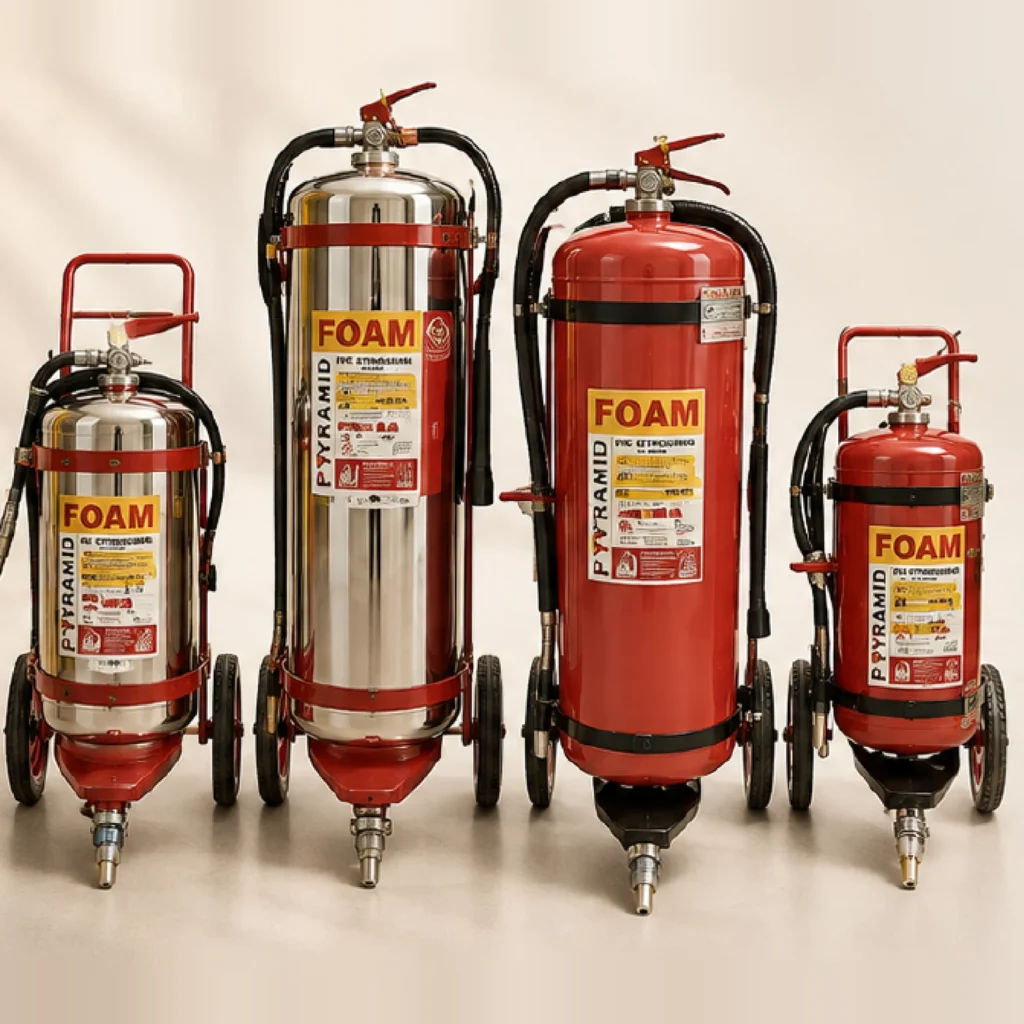
| Reception and corridors | PYRAMID ABC dry powder, 6 kg | Covers ordinary combustibles, liquids and electrical fires |
| Analyser room | PYRAMID CO2 | Leaves no residue on sensitive equipment |
| Electrical panel and server room | CO2, or a Fire Search automatic CO2 unit of 3 or 6 kg | Permanent protection for a closed space that runs unattended |
| Reagent and consumables store | ABC dry powder | A mix of cardboard, plastics and containers |
| Sample preparation | CO2 or ABC powder, depending on solvent quantity and nearby equipment | Flammable liquids next to equipment |
NFPA 10 says dry chemical extinguishers should not be relied on to protect delicate electronic equipment, because the powder residue can damage it. That is why CO2 goes into the analyser room. CO2 in a small closed room needs care, though: use it, leave the room and ventilate it before going back in. Our article on PYRAMID CO2 extinguishers explains this.
Portable PYRAMID dry powder extinguishers comply with Egyptian standard ES 8442/2021 and EN3, CO2 units comply with ES 735 and EN3, and the EOS-approved products carry the Egyptian quality mark. Under NFPA 10, an extinguisher weighing up to 18.14 kg is mounted with its top no higher than 1.53 m and its bottom at least 102 mm above the floor.
Storing flammable materials and how it shapes the fire plan
EFS.01 requires special storage for flammable liquids and compressed gases, and the EFS.03 fire plan covers safe storage and handling of highly flammable materials. Day to day, that means alcohols and solvents are not left on benches in quantities beyond the day’s needs, they are kept away from heat sources and electrical panels, and gas cylinders are secured in place. These are operating practices owned by the lab’s management, but they decide where the nearest extinguisher goes and which type it is. The storage plan and the extinguisher and detector layout must agree.
Inspection, maintenance and records before the accreditation visit
EFS.03 does not stop at having a system. It asks for alarm and fire-fighting systems that are available and functioning, and that are inspected, tested and maintained on a regular basis. The lab therefore needs a simple, up-to-date file that holds:
- The as-built layout of detectors, manual call points and extinguishers.
- A periodic test log for the panel, detectors and sounders, with the repairs made.
- An inspection tag on every extinguisher, and a log of refills or replacements.
- The datasheet for every device, so the surveyor knows what is installed.
AZEIDK Egypt provides maintenance and technical support for alarm systems and extinguishers through its services. If your lab sits inside a hospital, the wider picture is in our article on fire protection in Egyptian hospitals.
Common mistakes
- One powder extinguisher for the whole lab, including the analyser room.
- An alarm panel installed with no inspection or maintenance log, although the standard asks for documented inspection.
- A smoke detector above a source of steam, giving repeated false alarms until someone disables the system.
- A crowded reagent store that hides the extinguisher or blocks the exit.
- Moving to a new branch without updating the approved drawings and the fire plan.
Frequently asked questions
Do GAHAR standards require a fire alarm system in a lab?
Yes. EFS.03 evidence of compliance includes fire alarm systems that are available, functioning and regularly inspected, tested and maintained, with 24/7 central alarm monitoring.
Which extinguisher suits the analyser room?
A CO2 extinguisher, because it leaves no residue on the equipment. NFPA 10 says dry chemical should not be relied on to protect delicate electronic equipment.
Is a conventional alarm system enough for a small lab?
Usually yes for a small single-floor lab. Large or multi-floor labs are better served by an addressable system that pinpoints the alarm location.
Who prepares the fire plan required by EFS.03?
The lab’s management, with the trained staff assigned to environment and facility safety. The equipment supplier helps with the detector and extinguisher layout and the inspection and maintenance records.
How should alcohols and solvents be stored in a lab?
EFS.01 requires special storage for flammable liquids. Good practice is a ventilated place away from heat and electrical panels, with limited quantities on the benches.
Conclusion
GAHAR standards do not prescribe specific devices for a lab. They ask for a working system, a documented plan and records that prove inspection and maintenance. When the design starts from a hazard map of the lab, the choice of detectors and extinguishers becomes clear, and the accreditation visit becomes a review of what is really there.
Opening a new lab branch or preparing for accreditation? Send us the lab layout with the analyser and store locations, and we will propose the alarm system and the extinguisher types and positions. Talk to the AZEIDK Egypt team
Related guides
- Car Fire Extinguisher in Egypt: Traffic Law Rules by Vehicle Type
- Smoke and Heat Detectors: Choosing the Right Detector for Each Space
- Fire System Maintenance on the North Coast and Ain Sokhna Before Summer: Salt Air, Seasonal Shutdown, Pumps, Alarms and Extinguishers
- 750 GPM Fire Pump at 9 bar (3PUMP Set): Reading the Datasheet, 150% Point, Churn and Jockey