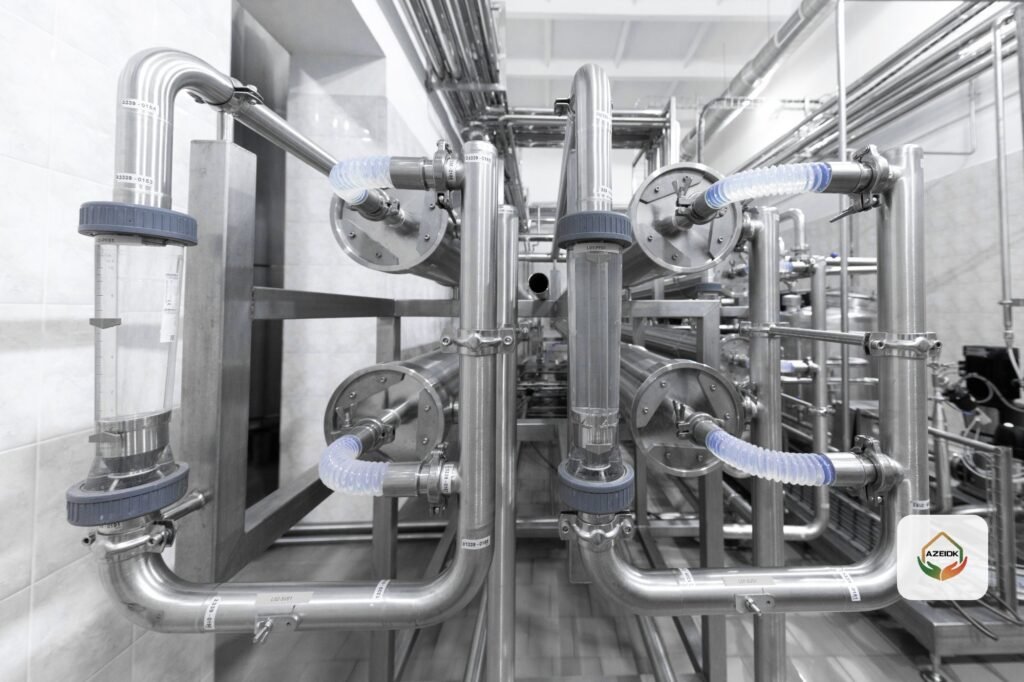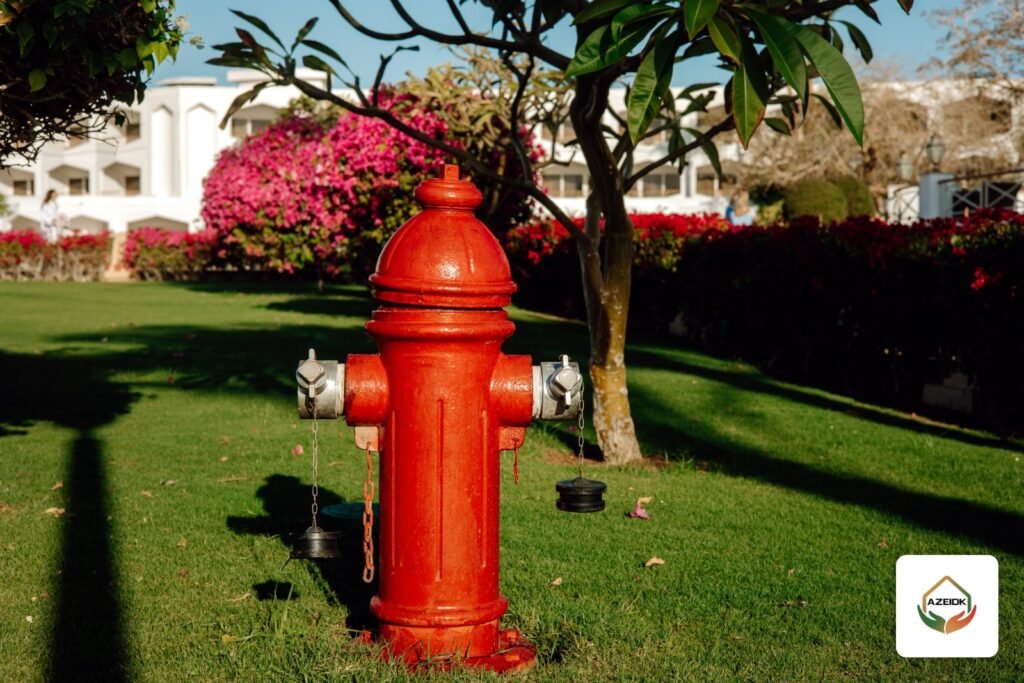
Most resort villages on the North Coast and in Ain Sokhna sit almost empty for eight months or more, then fill up in summer. That pattern makes fire system maintenance on the North Coast a different job from maintaining a building that runs all year. The pump has not run for months, the alarm panel batteries are flat and the extinguishers have spent winter in salt air.
This article covers what deteriorates during the seasonal shutdown, how to leave the systems at the end of summer, and a clear pre-season recommissioning plan for facility managers and owners’ associations. Through its services, AZEIDK Egypt provides testing, commissioning and handover, plus maintenance and technical support, for fire alarm systems, fire networks, fire pumps and extinguishers.
Key takeaways
- Long shutdowns and salt air speed up metal corrosion, drain batteries and seize valves.
- Taking any part of the system out of service, or draining it, is an impairment under NFPA 25 and needs notice and written procedures.
- NFPA 25 (2026 edition) calls for a weekly no-flow run of the diesel fire pump and an annual flow test at 0%, 100% and 150% of rated flow.
- Stored diesel fuel is tested for degradation at least once a year under NFPA 25, which matters for a tank that sat idle all winter.
- Extinguishers are inspected monthly and maintained annually under NFPA 10; salt air makes the visual check of the shell and gauge even more important.
- Start recommissioning weeks before the season, not days before residents arrive.
In this article
- Fire system maintenance on the North Coast and in Ain Sokhna: why it is different
- What deteriorates during the seasonal shutdown?
- Before shutdown: how to leave the systems at the end of summer
- Pre-season recommissioning plan
- References: what is mandatory and what is guidance?
- Common mistakes in seasonal villages
- Frequently asked questions
- Conclusion
Fire system maintenance on the North Coast and in Ain Sokhna: why it is different
The systems are the same as in any Cairo compound. The difference comes from three factors:
- Salt air and humidity: sea spray settles on exposed pipework, valves, hydrant bodies, hose reel cabinets and extinguishers hung on outdoor walkways.
- Long idle periods: a pump that does not run for months, a valve that is never operated, packing that dries out and fuel that sits unused in the tank.
- Power cuts and thin supervision: many units and service buildings are disconnected in winter, so the alarm panel runs on batteries until they are flat, and the reduced site team may not notice fault messages.
So a maintenance contract written as equal visits through the year is not enough. A seasonal village needs a programme with three stages: an orderly shutdown at the end of summer, light supervision through winter, and a full recommissioning before the season. For periodic contract scope, see fire system maintenance contracts in Egypt.
What deteriorates during the seasonal shutdown?
The table lists the components most affected and the pre-season check for each. It is based on NFPA requirements and good practice, and does not replace the manufacturer’s instructions.
| Component | What happens during shutdown | Pre-season check |
|---|---|---|
| Diesel fire pump | Stale fuel may degrade or collect water; engine starting batteries run down | Fuel level and a sample for degradation testing, battery and charger condition, no-flow run |
| Electric pump and jockey pump | Packing dries out; controller contacts are affected by humidity | Packing leakage, start and stop pressures, controller signals |
| Control valves | Stiff operation and rust on stems and bolts | Full open and close, each valve in its design position, tamper switches |
| Outdoor hydrants and fire department connection (Siamese) | Corroded caps and couplings; caps missing or stuck | Remove caps and grease threads, flush the hydrant until water runs clear |
| Alarm panel and batteries | Deep discharge when the power is cut | Battery voltage and replacement date, event log, detector and sounder tests |
| Portable extinguishers | Rust on the shell or valve base, pressure loss, damaged labels | Gauge reading, seal, hose and nozzle condition, date of last maintenance |
Before shutdown: how to leave the systems at the end of summer
The riskiest end-of-season decision is to shut the whole system down or drain the network to save on supervision. NFPA 25 treats taking any part of the system out of service as an impairment. The current 2026 edition asks for notice of a planned impairment stating its purpose, the affected part, the timing and the expected duration, with the impairment procedures applied until the system is back in service. A village is never fully empty in winter: security staff, maintenance workers and some owners stay on, and fit-out and renovation works raise the fire risk.
The practical alternative is to keep the system in service with minimum operation:
- Keep the network full of water and the control valves open, and record the position of every valve at the end of the season.
- Keep power to the alarm panel and pump controllers, even if the units are disconnected.
- Name one person on site to check the alarm panel and the pump room every week and report any fault message.
- Record pressure readings, fuel level and battery condition, so you have a baseline at recommissioning.
- Move extinguishers hung in spots fully exposed to the sea into a dry store if no occupied area needs them, and put them back before the season.
If part of the network must be shut down for works or a leak, do it under a written plan with notice, and set the date it goes back into service.
Pre-season recommissioning plan
Start four to six weeks before the first wave of residents, leaving time to order parts or replace batteries and extinguishers if a problem turns up.
Pump room
The current edition of NFPA 25 (2026) calls for a no-flow (churn) run of the diesel pump every week, and of the electric pump weekly or monthly depending on the installation, for the minimum run time the standard sets. It also calls for an annual flow test at no flow, 100% and 150% of rated flow, compared with the manufacturer’s curve. In a seasonal village, run the annual flow test just before the season.
NFPA 25 also requires diesel fuel to be tested for degradation at least once a year. If the sample fails, the fuel is reconditioned or replaced, the tank cleaned and the fuel filters changed. Also check the engine batteries and charger, oil, coolant and jockey pump settings. Weekly details are in diesel fire pump maintenance. If you plan to replace an old set, 3PUMP fire pump sets combine an electric main pump, a diesel standby pump and a jockey pump on a common base.
Network, hydrants and hose cabinets
Operate every control valve fully open and closed, then return it to its design position, and confirm that the tamper switch signal reaches the alarm panel. For outdoor hydrants, NFPA 25 (2026 edition) calls for annual inspection, an annual flow test and annual maintenance; in coastal villages this fits well before the season. Flush each hydrant until the water runs clear and grease threads and caps as the manufacturer instructs. AZEIDK Egypt supplies FW-9000 wet barrel hydrants and alarm check valves from American Fire Control. In hose cabinets, check the door, reel, hose and valve, and the caps of the fire department connection (Siamese).
Fire alarm system
Start with the panel event log, which tells you what happened in winter: power cuts, earth faults and any alarms. Then check battery voltage, the installation date and the replacement date marked on each battery, against the panel and battery manufacturer’s instructions. A battery that went through deep discharge may need replacing early, even if it looks new. Then test detectors, call points and sounders, and clean detectors exposed to salt air. Details are in fire alarm maintenance in Egypt.
Extinguishers
NFPA 10 calls for a visual inspection every 30 days and annual maintenance. As InspectPoint summarises the 2022 edition of the standard, stored-pressure dry powder units (mild steel, brass or aluminium shells) get an internal examination every 6 years and a hydrostatic test every 12 years, while CO2 and foam units are hydrostatically tested every 5 years. In coastal villages, focus on rust on the shell and valve base, the gauge reading, the seal and cracked hoses. Units with low pressure or corrosion go for service or replacement. AZEIDK Egypt supplies PYRAMID extinguishers in dry powder, CO2 and AFFF foam. To decide between refilling and replacing, see fire extinguisher expiry.
References: what is mandatory and what is guidance?
The legal reference in Egypt is the Egyptian Code for the Design and Implementation of Fire Protection for Buildings, 2026 edition (Ministerial Decree No. 355 of 2026). The General Directorate of Civil Protection (Ministry of Interior) reviews and inspects fire protection systems. The NFPA standards mentioned here (NFPA 25 for water-based systems and pumps, NFPA 72 for alarm, NFPA 10 for extinguishers and NFPA 20 for fire pump installation) are technical references used by designers and maintenance teams. They are not mandatory in Egypt on their own unless the project specification or the authority calls for them. The manufacturer’s instructions for each product apply alongside all of this.
Common mistakes in seasonal villages
- Draining the network or closing the main valve in winter with no notice and no restart plan.
- Cutting power to the pump room and alarm panel along with the rest of the village.
- Running the pump for the first time on opening day, leaving no time to fix a fault.
- Topping up the diesel tank over old fuel without testing a sample.
- Silencing fault messages on the alarm panel instead of finding the cause.
- Leaving extinguishers on sea-facing walkways with no monthly check all winter.
Frequently asked questions
When should fire system maintenance on the North Coast start before summer?
About four to six weeks before residents arrive, so there is time to test the pumps and order spare parts, batteries or replacement extinguishers.
Should I drain the fire network in winter to protect it?
It is better to keep the network full and the system in service. Taking any part out of service is an impairment under NFPA 25 that needs notice and procedures, and a village is never fully empty of people and works in winter.
Does diesel fuel go bad if it sits in the tank for months?
It can degrade or collect water. That is why NFPA 25 requires the fuel to be tested for degradation at least once a year, and reconditioned or replaced if the sample fails.
Why does the fire alarm panel show faults after winter?
Usually because the batteries discharged during power cuts, or because humidity and salt affected detectors and connections. The panel event log shows the cause.
How often should extinguishers be checked in coastal villages?
NFPA 10 calls for a visual inspection every 30 days and annual maintenance. Locations exposed to salt air deserve full monthly checks, even off-season.
Does Egyptian law make NFPA mandatory for maintenance?
The mandatory reference is the 2026 Egyptian fire code and Civil Protection requirements. NFPA is a technical reference that applies where the specification or the authority calls for it.
Conclusion
A seasonal coastal village does not need different systems. It needs a maintenance programme that matches how it is used: an orderly shutdown that keeps the system in service, simple supervision in winter, and early recommissioning that covers pumps, fuel, valves, hydrants, alarm and extinguishers. A fault found weeks before the season can still be fixed calmly.
Preparing a coastal village or compound for next season? Send us the system components and the date of the last maintenance, and we will plan the inspection and recommissioning with you before residents arrive. Talk to the AZEIDK Egypt team