Dummy CCTV cameras (fake security cameras) are housings that look like a camera but have no working image sensor and record nothing. They may make a passing opportunist hesitate, yet they leave no evidence after an incident and experienced burglars often spot them. For facilities covered by Saudi Arabia’s Security Surveillance Cameras Law they meet no requirement at all, because the Executive Regulation is written around devices that work, record and keep footage.
This guide covers what a dummy camera does and does not do, how people spot one, what the Executive Regulation actually says, and what the smallest real alternative looks like for a home or a small shop, using EZVIZ cameras and Hikvision recorders available through AZEIDK security and surveillance systems.
Key takeaways
- A dummy camera has no working sensor and no storage, so there is never any footage to review.
- Its deterrent effect, if any, is limited to casual opportunists and fades once someone suspects it is fake.
- The Executive Regulation requires covered entities to install cameras covering specified locations, dedicate storage media to the system and report any fault that stops the devices.
- Licensing authorities may not issue or renew the licence of a covered activity without the compliance certificate issued by the Public Security directorate.
- The smallest real alternative can be one Wi-Fi camera with a memory card at home, or a 4-camera kit with a recorder in a shop.
In this article
- What exactly are dummy CCTV cameras?
- Do dummy CCTV cameras actually deter thieves?
- How do you spot a fake security camera?
- What do you lose when an incident happens?
- Why dummy cameras fail the Security Surveillance Cameras Law requirements
- Dummy camera vs real alternatives
- The smallest real alternative: what do you actually need?
- Common mistakes
- FAQ
- Conclusion
What exactly are dummy CCTV cameras?
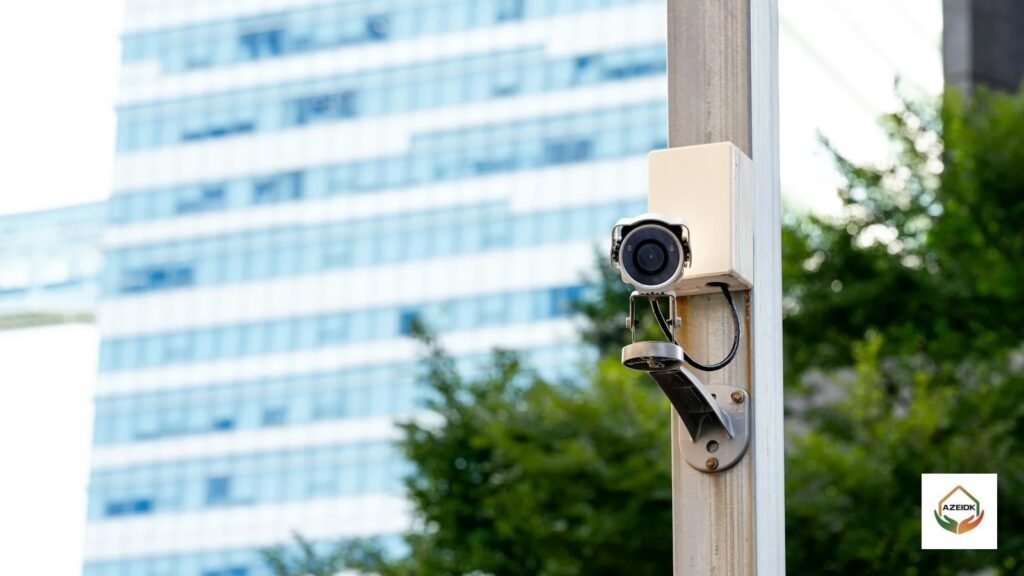
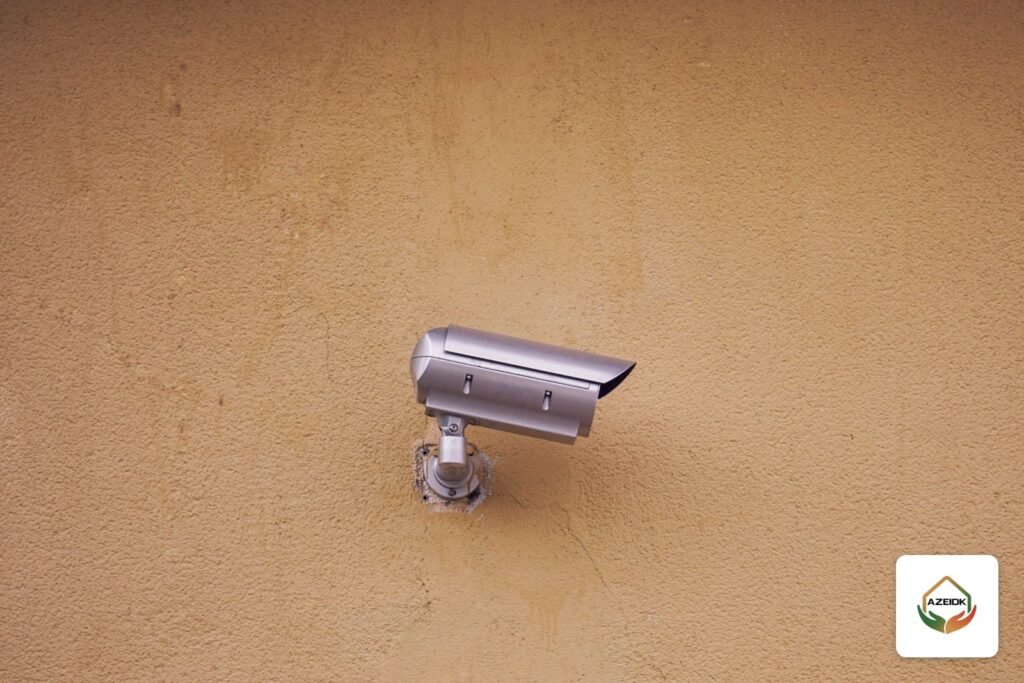
Dummy cameras are sold in shapes that copy real ones: a bullet camera for outside walls, a dome for ceilings, and sometimes a motorised head that sweeps left and right. Most run on batteries that power a blinking red LED; some have a small solar panel or a short cable that connects to nothing.
What matters is what is missing: no sensor, no recorder, no memory, no mobile app and no motion alert. It is a sign shaped like a camera.
Do dummy CCTV cameras actually deter thieves?
The honest answer is a little, and only in narrow conditions. Someone walking past a shop and thinking about a quick theft may back off if something that looks like a camera faces the door. That effect depends entirely on the person believing the camera is real, and it disappears the moment they doubt it.
A person planning to rob a shop or warehouse usually looks the place over first, knows what common cameras look like and notices details a customer would not. Ajax Systems, an alarm system manufacturer, notes on its blog that savvy criminals often recognise fake cameras, which removes their deterrent value.
A real camera deters too, and when deterrence fails it records what happened. A dummy camera loses that second half completely.
How do you spot a fake security camera?
- No cable: a real camera needs a network or coaxial cable, or at least a nearby power supply if it uses Wi-Fi. A camera on a bare wall with no connection is an immediate giveaway.
- Blinking red LED: real cameras do not need a flashing light to work; on dummies it is almost a signature.
- Night vision: at night many real cameras show faint red infrared (IR) LEDs around the lens, often visible through a phone camera. Dummies have none.
- Build quality: light plastic, a flat lens with no depth, and no manufacturer name or model number.
- Position: a camera aimed at a corner where there is nothing useful to see.
- No recorder or monitor: a shop with real cameras usually has a screen at the till or a recorder in a secured place.
What do you lose when an incident happens?
- No evidence: no clip to hand over when the authorities request it, no face, no number plate.
- No alert: no phone notification when there is movement after closing time, so you find out the next morning.
- No way to settle disputes: an argument at the till, a slip-and-fall claim or a stock shortage are all settled quickly by clear footage.
- False sense of security: the owner feels covered and postpones a better lock or a burglar alarm.
Why dummy cameras fail the Security Surveillance Cameras Law requirements
The Security Surveillance Cameras Law was approved by Royal Decree No. M/34 dated 7/3/1444 AH, and its Executive Regulation was published in Umm Al-Qura, the official gazette. Its requirements apply to the entities it covers, and the approval decision directs the Ministry of Interior and the relevant bodies to set a time plan fixing when each covered category must comply. Our article on the Security Surveillance Cameras Law in Saudi Arabia covers scope and obligations in detail; here are only the points that rule out a dummy camera:
- Coverage: Article 2 of the Executive Regulation requires covered entities to install security cameras covering listed locations, including facility entrances within identity-recognition range. A dummy camera covers nothing because it sees nothing.
- Storage: Article 3 requires all storage media to be dedicated to the surveillance system only. A dummy has no storage at all.
- Continuous operation: Article 3 also requires immediate reporting to the directorate, through the electronic platform, of any fault that stops the devices, and fixing it as soon as possible. The regulation assumes working devices whose failures get reported.
- Connection to operations rooms: Article 5 requires covered entities to connect their systems to operations rooms according to the site’s sensitivity classification. A dummy has nothing to connect.
- Keeping recordings: Article 6 covers keeping recordings until the investigation ends or for the period in the requirements document, whichever is longer.
- Licensing: under Article 4 the directorate issues a certificate confirming the installation requirements are met, and licensing authorities may not issue or renew a licence without it.
So if your facility falls in a covered category, a dummy camera does not count towards the required coverage and brings you no closer to the certificate. Retention periods and technical specifications are set in the requirements document issued with the regulation. Even the warning signs at entrances and exits must follow the two forms shown in that document (Article 8), so a “CCTV in operation” sign above a camera that records nothing is no substitute.
Dummy camera vs real alternatives
| Item | Dummy camera | Wi-Fi camera with memory card | Camera system with recorder |
|---|---|---|---|
| Records video | No | Yes, on a microSD card in the camera | Yes, on a hard disk or internal storage in the DVR/NVR |
| Mobile viewing | No | Yes, through the manufacturer’s app | Yes, through the app or PC software |
| Motion alerts | No | Yes, depending on model | Yes, depending on model and settings |
| Evidence after an incident | No | Yes, unless the camera is stolen with its card | Yes, and the recorder can be kept in a secured place |
| Typical use | Never on its own | Home or small office, one or two cameras | Shop or facility, four cameras or more |
| Facilities covered by the law | Does not comply | Design checked against the requirements document | Design checked against the requirements document |
The smallest real alternative: what do you actually need?
Home or small office: one Wi-Fi camera with a memory card
If you were considering a dummy camera for a front door or a small office, the simplest real option is a single Wi-Fi camera that records to a memory card and streams to your phone. Models available from AZEIDK include:
- EZVIZ C3TN: outdoor camera, IP67 housing, 1080p, IR night vision up to 30 m, microSD up to 256 GB, 2.4 GHz Wi-Fi.
- EZVIZ C6TC: indoor pan-tilt camera, 1080p, 340° pan and 90° tilt, microSD up to 128 GB, two-way talk and motion tracking.
Footage is stored inside the camera, so if the camera is stolen the recording goes with it. Mount it high and out of reach. For more on this brand see EZVIZ cameras for shops and homes, and if you want something discreet, see mini CCTV cameras.
Retail shop: a camera kit with a recorder
In a shop a separate recorder is the better choice, because footage stays on a device you can lock away from intruders. Recorders available include:
- Hikvision DS-E04HQHI-B DVR: four analogue channels (HDTVI, AHD, HDCVI, CVBS) plus one IP channel, with 512 GB built-in eSSD storage (480 GB usable).
- Hikvision DS-7608NXI-K1(B) NVR: eight IP channels; the DS-7608NXI-K1/8P (B) version adds eight PoE ports that power cameras over the network cable, with one HDD bay up to 10 TB and AcuSense to cut false alerts.
Channel count and storage capacity set how many days you can actually keep, which depends on resolution, camera count and recording mode. See our guides to CCTV camera kits, choosing an NVR or DVR and CCTV for retail shops.
A facility covered by the law
Here selection starts from the requirements, not from a kit: the locations the regulation sets for your activity, the viewing range needed at entrances, the retention period in the requirements document, and securing the equipment and logging access to it. The system is designed on that basis, then models, channels and storage are chosen.
Common mistakes
- Relying on a dummy alone: in a shop with stock and cash it is a losing bet. If you use one at all, use it next to real cameras in a home or a building outside the law’s scope, in a secondary corner.
- Assuming you are not covered: check your activity category and its compliance timetable first, since the licence may depend on the compliance certificate.
- Buying a real camera that records nothing: a Wi-Fi camera with no memory card or cloud storage is live view only, which makes it a dummy after an incident.
- Never checking the footage: a camera that stopped recording weeks ago is no better than a dummy. Check recordings, date and time regularly.
FAQ
Are dummy CCTV cameras worth it for a shop?
Their value is limited to deterring a casual passer-by. They do not record, alert or provide evidence, and anyone familiar with real cameras can spot them.
How can I tell if a camera is fake?
Look for a cable and power supply, watch for a blinking red LED, and check the lens at night through a phone camera. No recorder or monitor on site is another sign.
Is a dummy camera enough to get a shop licence?
Not if the activity is covered by the Security Surveillance Cameras Law. The Executive Regulation refers to cameras covering set locations and recordings that are kept, and the licence is tied to the directorate’s compliance certificate.
What is the cheapest real alternative?
For a home or small office, usually one Wi-Fi camera with a memory card, such as the EZVIZ C6TC indoors or C3TN outdoors. A shop is better served by a camera kit with a separate recorder.
Where does a real camera store its footage?
Wi-Fi cameras store it on a microSD card inside the camera; larger systems store it on a hard disk or internal storage in a DVR or NVR, which can be kept in a secured place.
Is a solar-powered dummy camera any better?
The panel only powers the LED or the motor; it still records nothing. If the site has no mains power, there are real battery, solar and 4G cameras.
Conclusion
A dummy camera buys appearance, not protection. It may delay a casual opportunist, but it does not record, does not alert, does not survive a trained eye and meets none of the Security Surveillance Cameras Law requirements for covered facilities. A real alternative can start with one camera and a memory card and grow with the site and its requirements.
Were you about to buy a dummy camera for your shop or home? Tell us the type of site, the number of entrances and what you need to see, and we will propose the simplest real EZVIZ or Hikvision system for it, supplied and installed. Contact the AZEIDK team
Related guides
- How to Use a Fire Hose Reel Step by Step: Valve, Hose, Nozzle and When Not To
- How to Confirm an Authorized Fire Equipment Distributor in Saudi Arabia
- Magnetic Door Holder and Fire Alarm Release: Keeping Fire Doors Open the Right Way
- SLA in a Fire System Maintenance Contract: Response Times, Planned Visits and Penalties