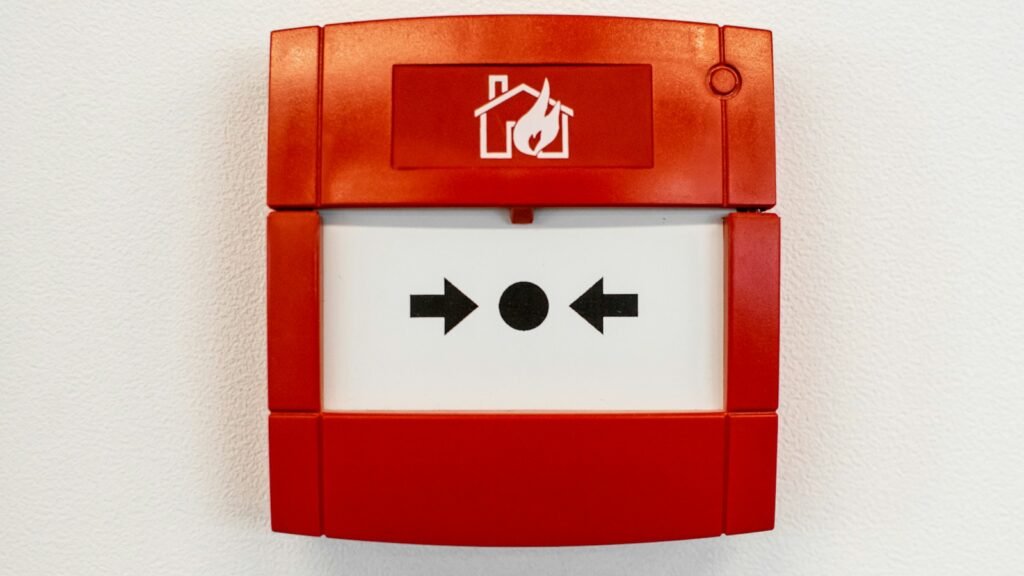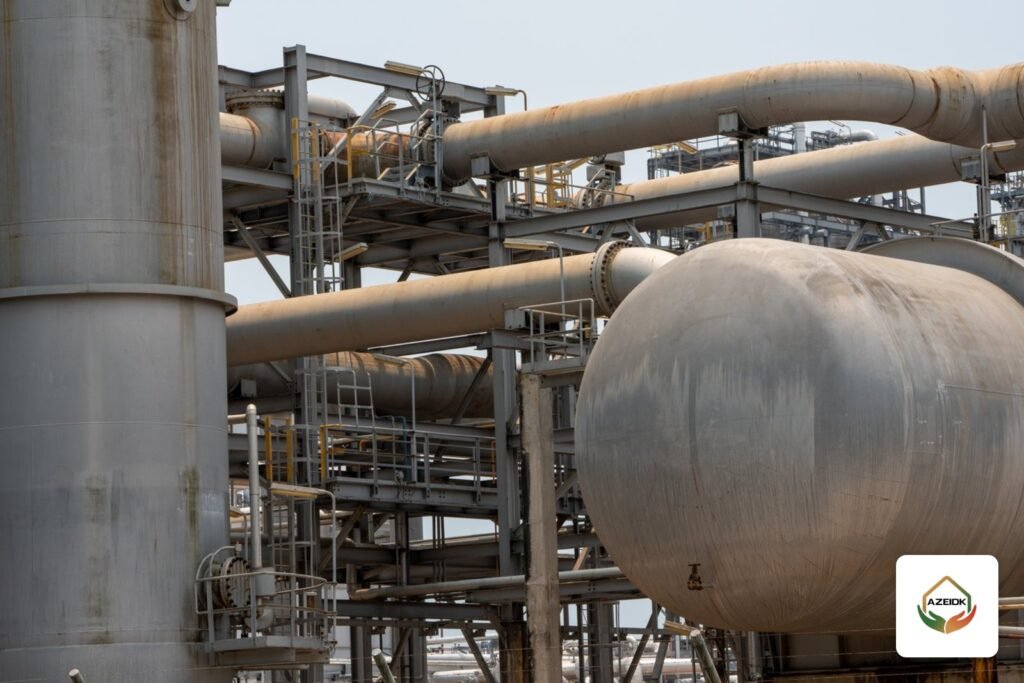
An explosion proof smoke detector is a fire detector designed and certified so that it cannot become an ignition source in an explosive atmosphere. It is required in hazardous areas classified as Zone 1 or Zone 2, where flammable gases or vapours may be present. The words “explosion proof” on the box are not enough: what matters is that the Ex marking on the detector matches the zone, the gas group and the temperature class of the area. This article explains when you need these detectors and how to read the marking, as part of AZEIDK fire alarm systems.
Key takeaways
- Hazardous area classification (Zone 0, 1 or 2 for gas; 20, 21 or 22 for dust) comes first, and the detector is selected to match it.
- A marking such as Ex db IIC T6 Gb tells you the protection method, gas group, maximum surface temperature and equipment protection level.
- Fire detectors usually use one of two methods: flameproof enclosure (Ex d) or intrinsic safety (Ex i), which needs barriers or isolators in the safe area.
- ATEX is the European framework and IECEx the international scheme; the project specification decides which certificates are accepted.
- In open process areas such as refineries and fuel stations, flame detectors are often used instead of smoke detectors, depending on the hazard study.
In this article
- What does “explosion proof” mean for a fire detector?
- Hazardous area classification: Zone 1 and Zone 2
- How to read the Ex marking on a detector
- Smoke, heat or flame detector in a hazardous area?
- Ex d or Ex i: which one?
- ATEX and IECEx: what to include in the submittal
- What drives explosion proof smoke detector price?
- Common mistakes with explosion proof detectors
- How AZEIDK helps in industrial facilities
- Frequently asked questions
- Conclusion
What does “explosion proof” mean for a fire detector?
The common market term, explosion proof smoke detector, does not mean the detector survives an external explosion. It means the detector will not ignite the atmosphere around it. Fire detectors usually achieve this in one of two ways:
- Flameproof enclosure (Ex d): a strong metal enclosure that withstands an internal explosion and stops flame escaping through its joints. The standard is IEC 60079-1.
- Intrinsic safety (Ex i): the electrical energy reaching the detector is limited below the level that could ignite the gas, through a barrier or galvanic isolator installed in the safe area. The standard is IEC 60079-11.
For combustible dust there is protection by enclosure (Ex t) under IEC 60079-31, which keeps dust out and limits external surface temperature.
Hazardous area classification: Zone 1 and Zone 2
Areas are classified by how likely an explosive atmosphere is and how long it lasts, under IEC 60079-10-1 for gases and IEC 60079-10-2 for dust. The classification is normally prepared by the facility’s process or safety engineer in a hazardous area classification drawing. It is not the detector supplier’s decision.
| Zone | Description | Required equipment protection level (EPL) |
|---|---|---|
| Zone 0 | Explosive gas atmosphere present continuously or for long periods | Ga |
| Zone 1 | Explosive gas atmosphere likely to occur occasionally in normal operation | Ga or Gb |
| Zone 2 | Explosive gas atmosphere not likely in normal operation, and if it occurs, only briefly | Ga, Gb or Gc |
| Zone 20 / 21 / 22 | The same three levels for combustible dust | Da / Db / Dc |
Projects designed to US practice use the Class and Division system (Class I Division 1 and Division 2) in NFPA 70. If your specification uses that system, ask for detectors approved for it, not only for zones.
How to read the Ex marking on a detector
Take a real example from the AZEIDK site: the SFP-IR3-EXD explosion-proof triple infrared flame detector from Select Fire Plus. Its product page and datasheet list ATEX and IECEx approvals and two markings: Ex db IIC T6 Gb and Ex tb IIIC T80°C Db.
| Part | Meaning | What to check |
|---|---|---|
| Ex | Equipment for explosive atmospheres | A valid certificate carrying the same marking |
| db | Flameproof enclosure, protection level b | Cable glands certified for the same protection type |
| IIC | The most demanding gas group, including hydrogen and acetylene; also covers IIB and IIA | The gas group on the area classification drawing |
| T6 | Maximum surface temperature 85°C | That it is below the autoignition temperature of the gas present |
| Gb | Protection level suitable for Zone 1 and Zone 2 | The zone where the detector will be installed |
| tb IIIC T80°C Db | Dust protection by enclosure, group IIIC conductive dust, 80°C maximum surface temperature, level Db for Zones 21 and 22 | Whether combustible dust is present |
The simple rule: the detector’s gas group must equal or exceed the area’s group, its temperature class must stay below the gas ignition temperature, and its EPL must suit the zone.
Smoke, heat or flame detector in a hazardous area?
The logic is the same as in ordinary buildings: what will show first in a fire? The industrial environment often changes the answer.
| Type | When it fits | Notes |
|---|---|---|
| Ex smoke detector | Enclosed rooms inside a classified area, such as control rooms or closed stores | Affected by dust, humidity and air movement |
| Ex heat detector | Areas with heavy dust or steam | Slower response than a smoke detector |
| Ex flame detector | Hydrocarbon and fuel fires in open or high spaces | Needs a clear line of sight to the hazard |
In open areas smoke disperses before reaching a detector, which is why industrial designs lean towards flame detection. The SFP-IR3-EXD datasheet, for example, lists a detection range of up to 60 metres for a 0.3 × 0.3 m n-Heptane fire and a 110 degree horizontal field of view. The final decision comes from the hazard study and the approved detector layout.
Ex d or Ex i: which one?
| Item | Ex d (flameproof) | Ex i (intrinsic safety) |
|---|---|---|
| Protection idea | Contain any explosion inside the enclosure | Prevent enough energy for ignition |
| Wiring | Certified cable glands or conduit for the enclosure | Barrier or isolator in the safe area, with matched circuit parameters |
| Maintenance | Enclosure is not opened live except under site procedures | Allows wider live work, under site procedures |
| Size and weight | Heavier and larger | Lighter, but a barrier is added in the panel |
| Fire alarm panel interface | Through modules or detector outputs per the datasheet | Needs compatibility between barrier, detector and panel |
ATEX and IECEx: what to include in the submittal
ATEX is the European framework for equipment used in explosive atmospheres, under Directive 2014/34/EU. IECEx is an international certification system run by the International Electrotechnical Commission (IEC) on the IEC 60079 standards, and its official website lets you search certificates and check that they are current. In the Kingdom, the project specification and owner requirements decide which certificates are accepted, and some major industrial owners have their own specifications.
With the submittal, include:
- The detector datasheet showing the full Ex marking.
- A valid ATEX or IECEx certificate for the same model, or Class and Division approval if the specification is US based.
- The installation manual, especially cable gland and entry requirements.
- The wiring diagram to the fire alarm panel, and barriers where Ex i is used.
Our technical selection of systems and equipment service checks these documents against the area classification drawing before submission.
What drives explosion proof smoke detector price?
Price varies widely and depends on:
- Protection method: Ex d or Ex i, plus the cost of barriers or isolators for Ex i.
- Detector type: smoke, heat or multi-spectrum flame.
- Certification scope: ATEX only, ATEX and IECEx, or Class and Division approval.
- Enclosure material: aluminium, or stainless steel for coastal and chemical environments.
- Accessories: certified cable glands, mounting brackets and weather covers.
- Quantities, lead time, and site installation and testing.
Compare offers on the full specification rather than the detector price alone. See how to compare fire system quotations.
Common mistakes with explosion proof detectors
- Buying a detector labelled “explosion proof” without matching gas group and temperature class to the area.
- Using ordinary cable glands on an Ex d detector, which defeats the protection.
- Installing an Ex i detector without the barrier or isolator named in its certificate.
- Modifying, drilling or painting the enclosure against the manufacturer’s manual.
- Relying on a smoke detector in an open area where smoke disperses before it arrives.
How AZEIDK helps in industrial facilities
In factories and industrial facilities, AZEIDK starts from the process and hazard assessment, then selects suitable detection, alarm and suppression, with engineering design, supply, installation and testing. Products listed on our site include the SFP-IR3-EXD explosion-proof flame detector and intelligent IR3 flame detectors; confirm the Ex marking and certificate of any model before installing it in a classified area. The final model for each location is set after reviewing the area classification drawing.
Frequently asked questions
What is the difference between ATEX and IECEx?
ATEX is a European framework for equipment in explosive atmospheres; IECEx is an international certification system based on the IEC 60079 standards. Many detectors carry both.
Can a Zone 1 detector be installed in Zone 2?
Yes. Gb equipment suits both Zone 1 and Zone 2. The reverse does not hold: Gc equipment must not be installed in Zone 1.
What does T6 mean on a detector?
The maximum surface temperature is 85°C, the lowest temperature class, so it suits the widest range of gases.
Does putting a standard smoke detector in an extra housing make it explosion proof?
No. Protection comes from the design and certificate of that model, and any uncertified modification voids it.
Is a flame detector better than a smoke detector in hazardous areas?
Often yes in open areas and fuel fires, because smoke disperses. In enclosed rooms a smoke detector may suit better. The hazard study decides.
Who classifies the hazardous area?
The facility’s process or safety engineer, through the area classification drawing. The detector is then chosen to match it.
Conclusion
Choose an explosion proof smoke detector by its marking, not its name. Start from the area classification drawing, match gas group, temperature class and EPL, ask for a valid certificate for the exact model, and get cable glands and barriers right at installation.
Have a classified area in a plant or fuel station? AZEIDK reviews the classification drawing, proposes suitable detectors and prepares the approval file. Talk to the AZEIDK team
Related guides
- Smart Buildings: How Low Current Systems Integrate in One Building
- Deluge Sprinkler System: How the Deluge Valve, Detection and Open Nozzles Work
- Dahua Camera Specifications: WizMind, WizSense, Lite and Full-color, 2/4/5 MP, HDCVI or IP, and Drawbacks
- Door Access Control System Cost in Saudi Arabia: Reader, Lock, Exit Button, Controller and Software