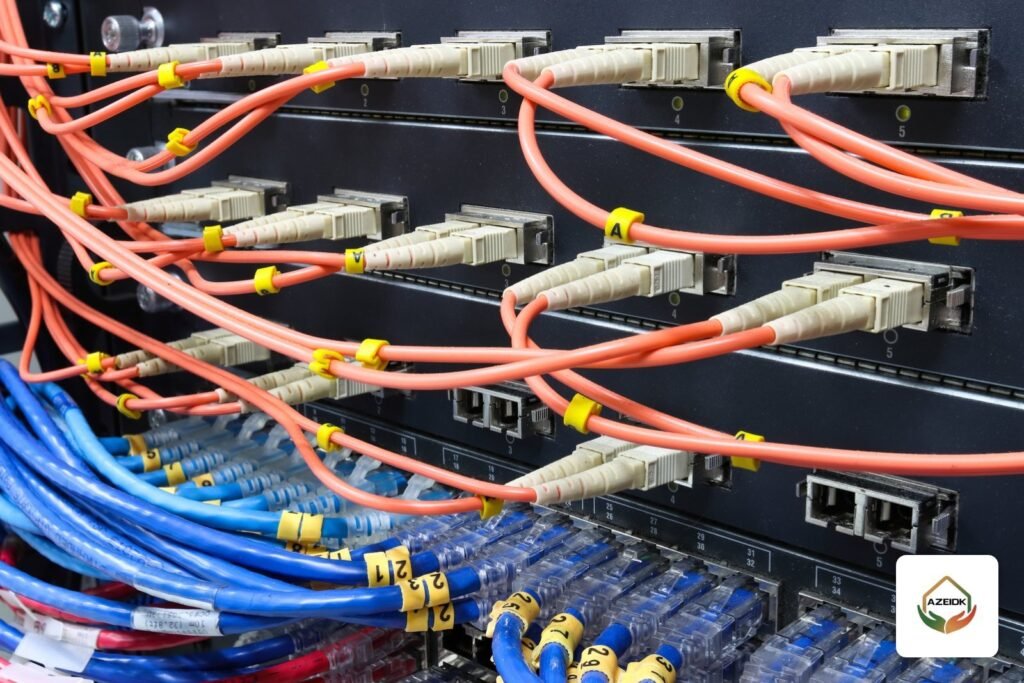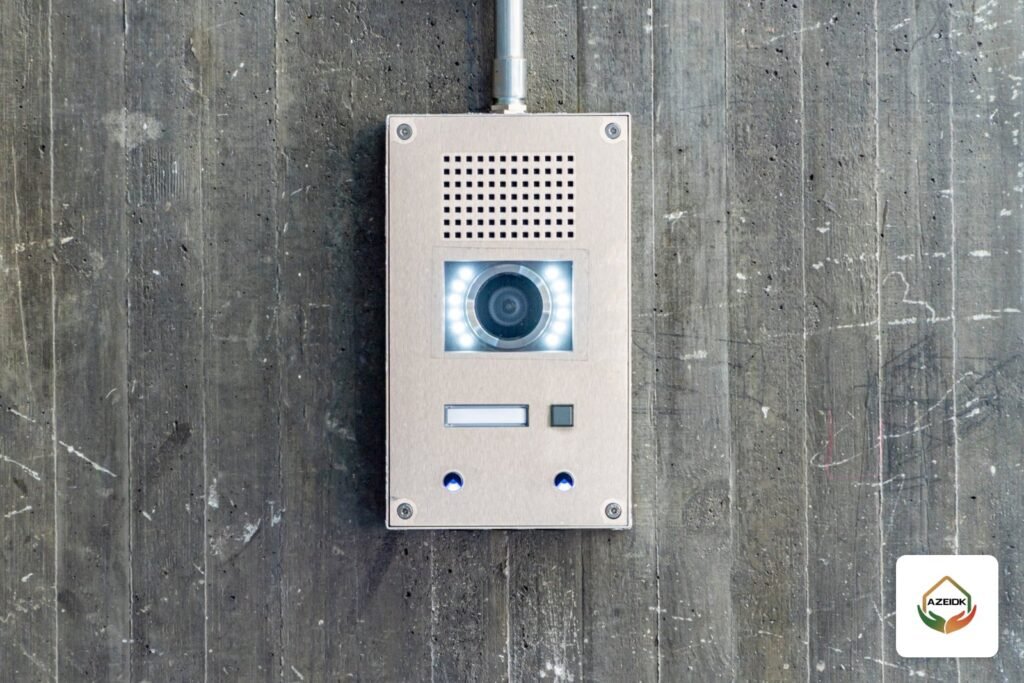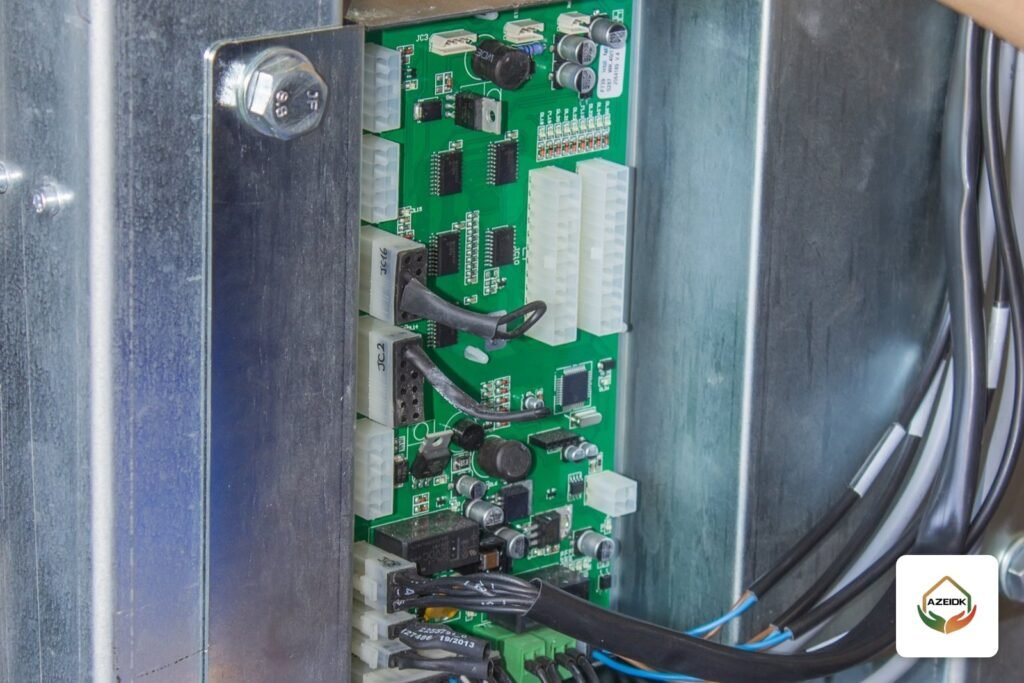
Fulfillment center fire protection has to be designed around storage height and container type, not just floor area, because e-commerce warehouses combine high racking, conveyors, plastic totes and large shift workforces. The base is a sprinkler system suited to high-piled storage plus a fire alarm that covers conveyors and mezzanines, then CCTV at pick, pack and dispatch points and turnstiles to manage staff entry. The fire package is contracted separately from the CCTV and access control package.
Key takeaways
- Storage height and packaging (carton or plastic) drive sprinkler design more than building area does.
- FM Global notes that plastic containers burn more severely than cardboard or wooden ones, and that open-top containers can hold sprinkler water away from lower tiers.
- Wide conveyors and mezzanines block water from ceiling sprinklers and must be addressed in the design.
- Warehouse CCTV at pick, pack and dispatch stations supports loss prevention and customer complaint handling.
- Staff turnstiles control shift changes, provided they never block evacuation during a fire.
In this article
- Why is an e-commerce warehouse different from a traditional one?
- Fulfillment center fire protection: sprinklers for high racking
- Conveyor openings and fire alarm in fulfillment centers
- Warehouse CCTV at sorting and packing points
- Staff turnstiles and shift access
- Contracts and licensing: who does what?
- Frequently asked questions
- Conclusion
Why is an e-commerce warehouse different from a traditional one?
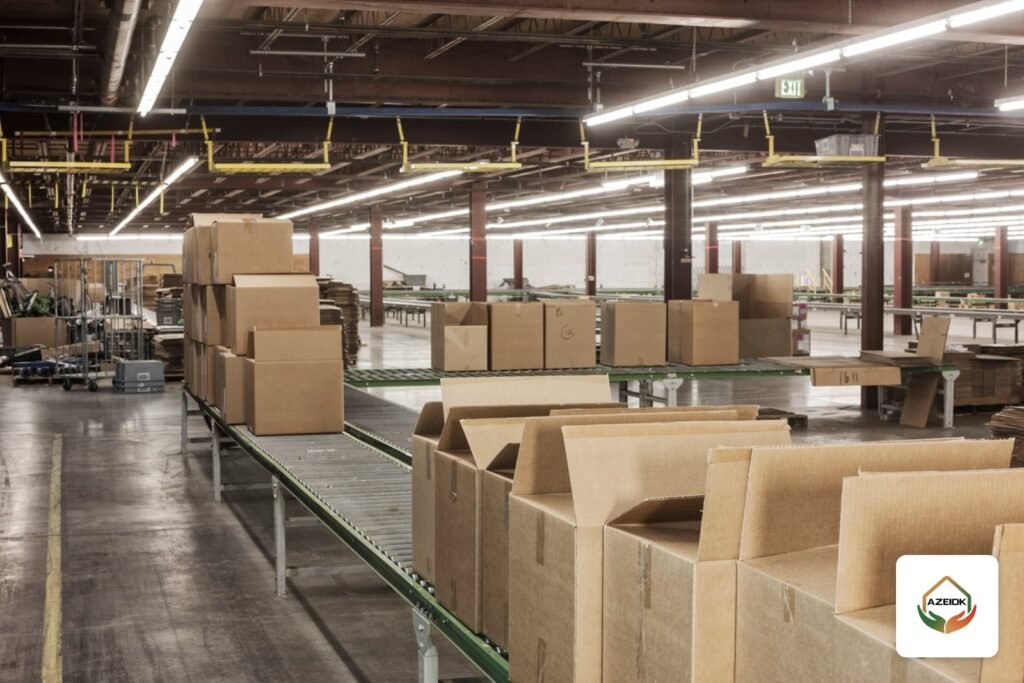
A traditional warehouse receives full pallets and ships them out as they are. A fulfillment center in a modern logistics hub breaks stock down into single items, stores them in plastic totes on dense shelving, then moves them on conveyors to pick and pack stations. That changes the risk in three ways:
- Higher fire load: plastic, cardboard and packing materials are spread across the whole floor, not only the storage zone.
- More obstructions: conveyors, mezzanines and workstations sit between the ceiling sprinkler and the fire.
- More people: sometimes hundreds of workers per shift, so escape routes and audible alarm become priorities.
AZEIDK’s general scope for this sector is on the warehouses and logistics page. Here we focus on what is specific to e-commerce operations.
Fulfillment center fire protection: sprinklers for high racking
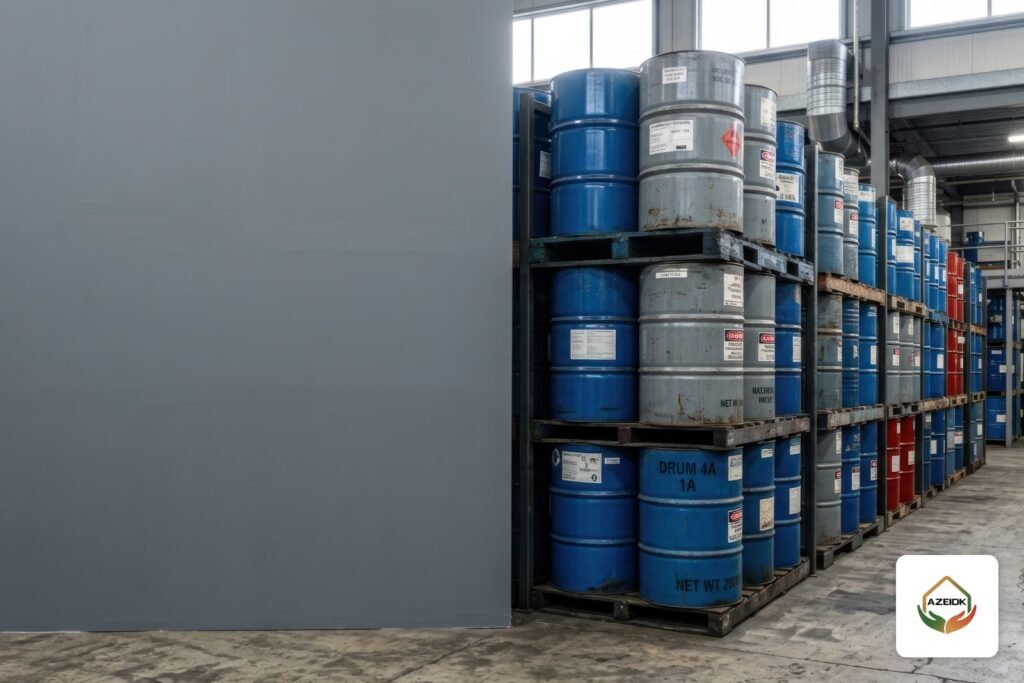
The designer’s first question: what is the real storage height, and what is the packaging? The answer decides between ceiling-only sprinklers or ceiling sprinklers plus in-rack sprinklers. ESFR ceiling sprinklers are a common option for high storage, but not for every case. They have limits on ceiling height, commodity and obstructions below the sprinkler, set by the manufacturer’s datasheet and the design standard, such as NFPA 13.
For automated storage and retrieval systems (ASRS) using plastic containers, FM Global points out that open-top containers can trap water and that narrow aisles and dense storage help fire jump between racks. In those cases it recommends in-rack sprinklers close to the fire, while ceiling sprinklers are still required.
| Area | What drives protection | Design notes |
|---|---|---|
| High pallet racking | Storage height, ceiling height, commodity | Ceiling sprinklers for high-piled storage, in-rack sprinklers where needed |
| Small-item shelving and plastic totes | Container type (open or closed), storage density | Often in-rack sprinklers under the adopted standard |
| Wide conveyors | Conveyor width and height above floor | Sprinklers below conveyors that block ceiling sprinklers |
| Mezzanines | Solid or open grating floor | Sprinklers below the mezzanine, exits from the upper level |
| Packing area and carton stock | Amount of packing material kept at stations | Limit stock at stations, keep the rest in a protected store |
Any later change in storage height or container type needs a design review. A system designed for cartons at a given height may not be enough for plastic at the same height. AZEIDK provides fire fighting systems with design, supply and installation, using TYCO and Victaulic sprinklers selected from the datasheet to suit the design.
Conveyor openings and fire alarm in fulfillment centers
Conveyors often pass through walls or floors that separate fire areas. Each opening is a weak point if left untreated, because fire and smoke travel with it. How each opening is treated is set by the designer and the consultant under the code, and it should be settled early during drawings and specifications review, because changes after the conveyor is installed are expensive.
Fire alarm needs three things in this type of building:
- Detection suited to high ceilings: point detectors on very high ceilings can respond late. The designer picks the type for the height and air movement.
- Conveyor shutdown on alarm: the fire alarm system is linked to the conveyor control panel to stop it in the affected zone, per the cause and effect matrix.
- Audible alarm above operating noise: conveyors and machines are loud, so sounder layout must allow for it. Voice evacuation can help in large centers.
Warehouse CCTV at sorting and packing points
In e-commerce, the usual complaint is “the order arrived short” or “the parcel was empty”. A camera over the packing station settles these cases quickly, because it shows what went into the box before it was sealed. So we lay out warehouse CCTV along the order path:
- Receiving: cameras on unloading doors and the inspection area.
- Aisles and racks: cameras along main aisles, keeping in mind that high racks block the view.
- Pick and pack stations: a camera over each station or group of stations, with enough resolution to see items in the box.
- Sorting and dispatch: cameras on the sort area, truck exit doors and the courier handover zone.
- High-value cage: full coverage plus access control.
The executive regulation of the security cameras law lists stores and warehouses among the covered places, and recordings are kept until any investigation ends or for the period in the requirements document, whichever is longer. See facility obligations under the cameras law. AZEIDK’s security and surveillance systems include Hikvision and Dahua cameras and recorders, and storage can be sized with the CCTV storage calculator.
Staff turnstiles and shift access
At shift change a large number of workers enter and leave in a short time. Turnstiles control that flow, log who entered and when, and can link to time attendance. AZEIDK supplies gates and barriers from Hikvision, Dahua and ZKTeco, and networked controllers such as ZKTeco InBio and C3 to link warehouse doors.
When planning we check:
- The number of lanes needed to avoid long queues at shift change.
- Gate type: waist-height or full-height, depending on the security level.
- Credential: card, face or fingerprint.
- Automatic release on fire alarm, or alternative emergency exits beside the gates, because a turnstile must never block evacuation.
For types and comparisons see the access gates and turnstiles guide.
Contracts and licensing: who does what?
| Item | Responsible party |
|---|---|
| Salamah technical report | Approved engineering consultancy office |
| Safety equipment installation certificate | The installing contractor; AZEIDK issues it for systems it installed |
| Fire, safety and alarm maintenance | Separate maintenance contract for fire systems |
| CCTV, gates and access control maintenance | Separate low current and CCTV maintenance contract |
Licensing steps are in the Salamah certificate guide, and Civil Defense approval support covers the documents for the systems we install.
Frequently asked questions
Are ESFR sprinklers enough for every e-commerce warehouse?
Not always. ESFR sprinklers have limits on ceiling height, commodity and obstructions. Plastic tote storage or automated storage may need in-rack sprinklers.
Do conveyors need their own sprinklers?
Wide conveyors that block ceiling sprinklers usually need sprinklers below them. The designer decides based on width and height.
What happens to conveyors on fire alarm?
The fire alarm is linked to the conveyor control panel to stop it in the affected zone, per the approved cause and effect matrix.
Where should warehouse CCTV go in a fulfillment center?
At receiving, along main aisles, over pick and pack stations, in the sort and dispatch area, and in the high-value cage.
Do staff turnstiles block evacuation?
They must not. They are programmed to release on fire alarm, or alternative emergency exits are placed beside them as designed.
Can fire and CCTV maintenance be in one contract?
No. Fire, safety and alarm maintenance is one contract. CCTV, access control and low current maintenance is a separate contract.
Conclusion
Fulfillment center fire protection starts from storage height and container type, then deals with conveyors, mezzanines and openings between fire areas. The security layer follows: cameras that track the order path from receiving to dispatch, and turnstiles that manage shifts without blocking evacuation. Review the design whenever the storage method changes, and keep the fire contract separate from the security contract.
Planning a fulfillment center or a logistics warehouse expansion? AZEIDK reviews drawings and storage heights, and quotes fire systems and CCTV with turnstiles as separate packages. Talk to the AZEIDK team
Related guides
- Flame Detectors (UV / IR / IR3) in Industrial Facilities
- Fire Extinguisher in Arabic: A Reverse Glossary of Fire Protection Terms for Procurement in Saudi Arabia
- How to Design a Fire Alarm System: Inputs, Detector Layout, Loops, Batteries and Civil Defense Drawings
- Legrand UPS for Network and CCTV Rooms: KEOR SPE 2200VA and the Linkeo 42U Floor Cabinet