A sports club in Egypt is more than a pitch. It has covered halls, a gym, a swimming pool with its plant rooms, restaurants and cafés, event halls, equipment stores and electrical rooms feeding the floodlights. Each part carries a different risk, so fire safety in sports clubs and gyms needs a plan that covers the site area by area.
This article covers covered halls, restaurants, electrical rooms, stores and standalone gyms, and what they need in fire detection and alarm systems, extinguishers and kitchen protection, within the solutions AZEIDK Egypt supplies.
Key takeaways
- A club is a group of buildings with different risks: high halls, kitchens, electrical rooms, stores and plant rooms.
- High covered halls suit beam detectors, and commercial kitchens need a fixed hood suppression system.
- Electrical rooms and floodlight boards need CO2 extinguishers, and small rooms can be protected with automatic units.
- Stores of mats, equipment and chairs put a large fire load in a small room.
- The binding reference is the Egyptian fire code (2026 edition) together with Civil Protection requirements.
In this article
- A club is a group of buildings, not one
- Fire safety in sports clubs: covered halls
- Restaurants and cafés inside the club
- Electrical rooms, stores and the gym
- Extinguishers for each area of the club
- Network, exits and maintenance
- The Egyptian framework
- Match days and large events
- Common mistakes in clubs and gyms
- Frequently asked questions
- Conclusion
A club is a group of buildings, not one
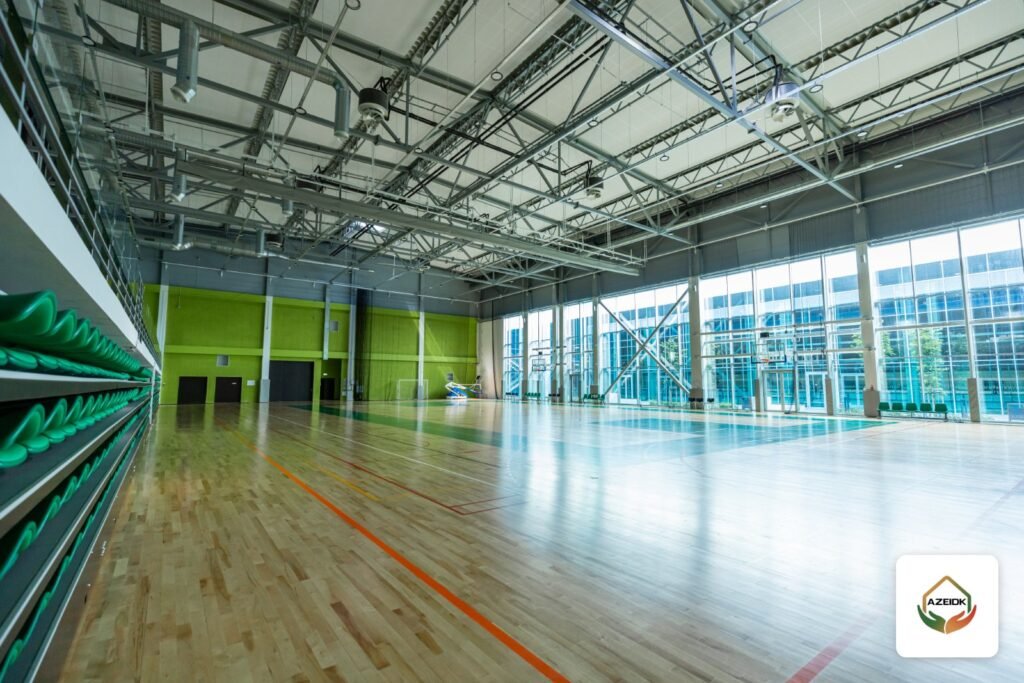
A large club may have, on the same site, a sports hall with a high metal roof, a social building with a restaurant and a wedding hall, a gym on an upper floor, a swimming pool with a pump and filter room, and stores under the stands. A standalone gym in a residential building or a mall is a different case: one crowded space full of electrical machines, rubber flooring, changing rooms and often only one or two exits.
So the review starts with a list of every building and room and its use. Then detection and extinguishers are chosen for each, instead of one solution repeated everywhere.
Fire safety in sports clubs: covered halls
A covered hall is a large space with a high roof and stands that can fill up during matches. Point detectors in a high roof are hard to maintain and may respond late, so a beam detector such as the TANDA TX7130, designed for large, high spaces, is often used, as explained in our article on the TANDA TX7130 beam detector. Keep balls, nets and banners out of the beam path, and fix the unit to a structure that does not vibrate.
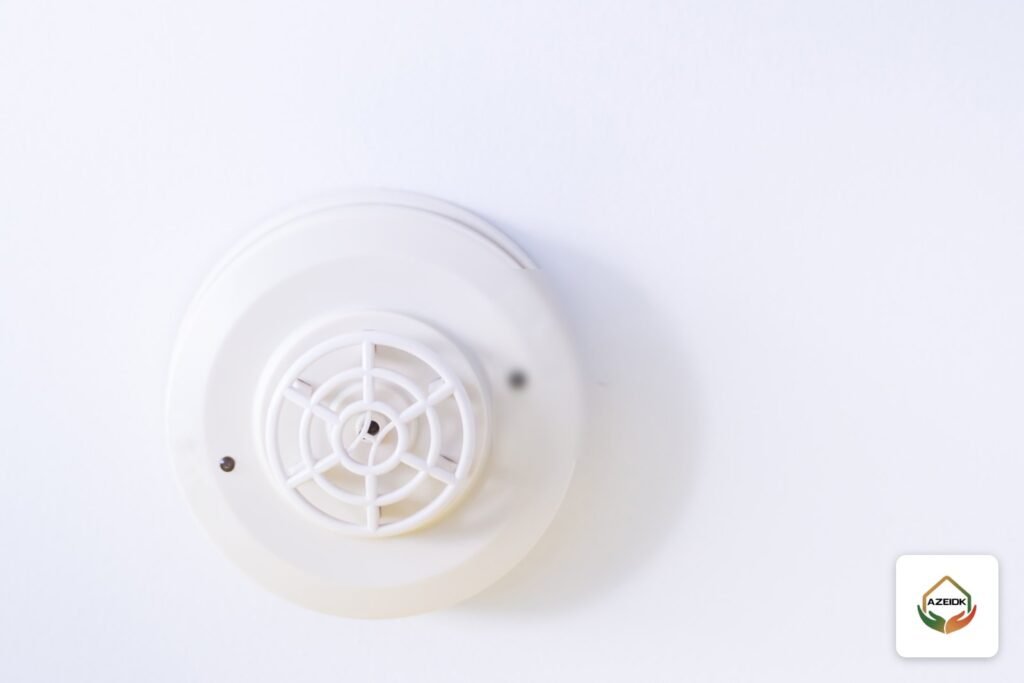
Under the stands there are usually stores and electrical rooms, closed spaces where a fire can start unseen, so cover them with smoke detectors. Choose sounders in the hall that can be heard over the crowd, with visible beacons.
Restaurants and cafés inside the club
A club restaurant that cooks daily for large numbers needs what any commercial restaurant needs: a fixed hood suppression system covering the cooking appliances, with gas shut-off on discharge. The HoodSafer system operates automatically on heat or manually by pull station, with a gas shut-off valve, and is approved by the General Directorate of Civil Protection. Our article on choosing a restaurant kitchen suppression system explains how to select it by appliance.
NFPA 10 lists cooking areas among extra hazard examples and dining areas among ordinary hazard examples, so the dining room and the kitchen are calculated differently.
Electrical rooms, stores and the gym
- Electrical rooms and floodlight boards: they carry large lighting loads. Cover them with a smoke detector, keep a CO2 extinguisher at the door, and consider an automatic PYRAMID extinguisher inside the board or a small closed room.
- Stores: gymnastics and judo mats, plastic chairs, equipment and sometimes event decorations. A large fire load in a small room needs a smoke detector, a larger dry powder extinguisher and an arrangement that leaves a clear walkway.
- Gym: treadmills and electric bikes on extension leads, and rubber flooring. Connect machines to fixed outlets of suitable rating, and do not run extension leads between machines.
- Pool plant rooms: pumps and electrical boards, and sometimes water treatment chemicals. Store chemicals in their own separate place as the supplier instructs, never next to electrical boards or combustible materials.
A standalone gym on an upper floor of a building or mall needs a specific review of its exit. If it has a single stair, keep that stair clear of weights and broken machines, and make sure the building alarm covers the gym and can be heard over the loud music inside. Sauna and steam rooms, where present, should have their heaters run and maintained to the manufacturer’s instructions.
Extinguishers for each area of the club
| Area | Suggested extinguisher or protection |
|---|---|
| Covered hall, stands and corridors | 6 kg ABC dry powder from PYRAMID near exits |
| Gym | 6 kg ABC dry powder, plus CO2 near the electrical machines |
| Restaurant kitchen | HoodSafer hood system, and an extinguisher suited to cooking oils as designed |
| Restaurant and café seating | 6 kg ABC dry powder |
| Electrical rooms and floodlight boards | CO2, plus automatic PYRAMID units in closed rooms and boards |
| Stores under the stands | 9 or 12 kg ABC dry powder |
| Pool plant room | CO2 for boards and pumps |
PYRAMID dry powder and CO2 extinguishers conform to the relevant Egyptian standard for each type and are approved by the Egyptian Organization for Standardization and Quality (EOS).
Network, exits and maintenance
In large clubs the firefighting network covers buildings and halls with hose cabinets such as the Falcon Gold FG-1001S, with a fire department (Siamese) connection where fire engines can reach it, according to the approved design. Hose cabinets must stay visible, never padlocked or hidden behind sponsor banners.
On match and event days, exit doors from halls and stands must open from the inside, even when entry is controlled by tickets or membership cards. Because a club runs all year, agree a maintenance contract covering the alarm, extinguishers, kitchen system and network, as explained in fire system maintenance contracts.
The Egyptian framework
The binding reference is the Egyptian Code for the Design and Implementation of Fire Protection for Buildings, 2026 edition (Ministerial Decree No. 355 of 2026), with drawings and inspections approved by the General Directorate of Civil Protection (Ministry of Interior). Egyptian Building Law No. 119 of 2008 requires the permit applicant to apply fire protection requirements according to the code. NFPA is a technical reference used by designers.
Match days and large events
On normal days members spread across the club. At matches, tournaments and parties, large numbers gather in one hall, sometimes with extra lighting, speakers and temporary food stalls. Before these days the safety officer should check:
- Exit doors from the hall and stands open from the inside, and gangways between the stands are clear.
- The alarm panel shows no faults and the sounders work in the hall being used.
- Extinguishers are in place near exits and temporary food stalls.
- Stalls using gas or fryers are away from exits and have a suitable extinguisher.
- Temporary lighting and sound cables are fixed and protected.
- The access road for ambulances and firefighters to the hall is not blocked by parked cars.
Agree in advance who announces the evacuation over the microphone if the alarm sounds, so the crowd does not hesitate or think the sound is part of the event.
Common mistakes in clubs and gyms
- Point detectors in a high hall roof that are never maintained.
- A club restaurant kitchen with no fixed hood suppression.
- Mats and chairs stored in the electrical room under the stands.
- Gym machines on extension leads across the floor.
- Hose cabinets padlocked or behind banners.
- Hall exit doors locked on match days.
Frequently asked questions
Which detector suits a covered sports hall?
Usually a beam detector such as the TANDA TX7130 for large, high spaces, with the beam path kept clear of nets and banners.
Does the club restaurant need kitchen suppression?
A commercial kitchen that cooks daily needs a fixed hood system such as HoodSafer with gas shut-off, according to the approved design.
Which extinguisher suits a gym?
6 kg ABC dry powder for the space, plus CO2 near the electrical machines.
How are floodlight boards protected?
With a smoke detector in the room, a CO2 extinguisher at the door, and optionally an automatic PYRAMID unit inside the board or small room.
Where should pool chemicals be stored?
In their own separate place as the supplier instructs, away from electrical boards and combustible materials.
Does a small gym need an alarm?
That is set by the Egyptian code and the building design. The building that houses the gym may already have an alarm system, which must cover the gym area.
Conclusion
Fire safety in sports clubs and gyms starts with seeing the club as a set of spaces: high halls with beam detectors, kitchens with a fixed hood system, electrical rooms with CO2 and automatic units, tidy stores, a gym without trailing extension leads, a network and exits that are ready on busy days, and a maintenance contract that covers all of it.
Reviewing safety at a sports club or fitting out a new gym? Send us the plans of the buildings, halls and kitchens, and we will propose detection, extinguishers and kitchen protection for each part. Talk to the AZEIDK Egypt team
Related guides
- 1500 GPM Fire Pump from 3PUMP at 10 bar: Large Projects and Pump Rooms
- Cafe Fire Safety in Egypt: Shisha Corners, Coffee Machines and Extinguishers
- Museum Fire Protection in Egypt: Archives and Clean Agent Instead of Water
- High-Rise Office Fire Protection in Egypt: Pressure Zones, Pumps, Valves and Alarm