Security and safety in a facility are related but different jobs. Security protects people and property against deliberate acts such as theft, intrusion and vandalism. Safety protects lives and the building against unintended hazards, fire first of all. Each has its own systems, its own regulator and its own maintenance contract, and mixing them up leads to gaps in design or delays in licensing.
This article explains the concept as a facility owner or facility manager in Saudi Arabia meets it: what falls under each field, which systems serve it, who regulates it and why maintenance is split into two contracts. For delivery, AZEIDK GROUP provides security and surveillance systems (CCTV, access control, intrusion alarm) and, as a separate scope, fire alarm systems and fire fighting systems.
Key points
- Security deals with deliberate threats: intrusion, theft, assault and tampering with assets.
- Safety deals with unintended hazards: fire, smoke and blocked escape routes during evacuation.
- Fire safety systems in Saudi Arabia follow the Saudi Fire Protection Code SBC 801, overseen by Civil Defense through the Salamah platform.
- CCTV is governed by the Law of Use of Security Surveillance Cameras, issued by Royal Decree M/34, and its Executive Regulation.
- Fire and safety systems are maintained under one contract; CCTV and low current under a separate one.
In this article
- What does security and safety mean for a facility?
- Security vs safety: a direct comparison
- Security and safety systems: what serves each field
- Who regulates each field in Saudi Arabia?
- Where security and safety meet in a building
- Why security and safety maintenance are separate
- Setting up security and safety in a new facility
- Frequently asked questions
What does security and safety mean for a facility?
In everyday speech the two words travel together, but an engineer separates them with one question: is the risk caused by someone who intends harm, or by an accident nobody intends? An unauthorised person entering a warehouse at night is a security issue. A short circuit igniting inside a distribution board is a safety issue.
That difference drives everything after it. A security system tries to prevent, detect and record entry. A safety system tries to detect fire early, suppress or contain it and get people out. This is why the same door may be locked for security reasons and must release immediately for safety reasons when the alarm sounds, the interface that needs the most coordination on a project.
Security vs safety: a direct comparison
| Item | Security | Safety |
|---|---|---|
| Type of risk | Deliberate: theft, intrusion, vandalism, assault | Unintended: fire, smoke, explosion, failed evacuation |
| Protects first | Property, assets, information and people from attack | Lives first, then the building and its contents |
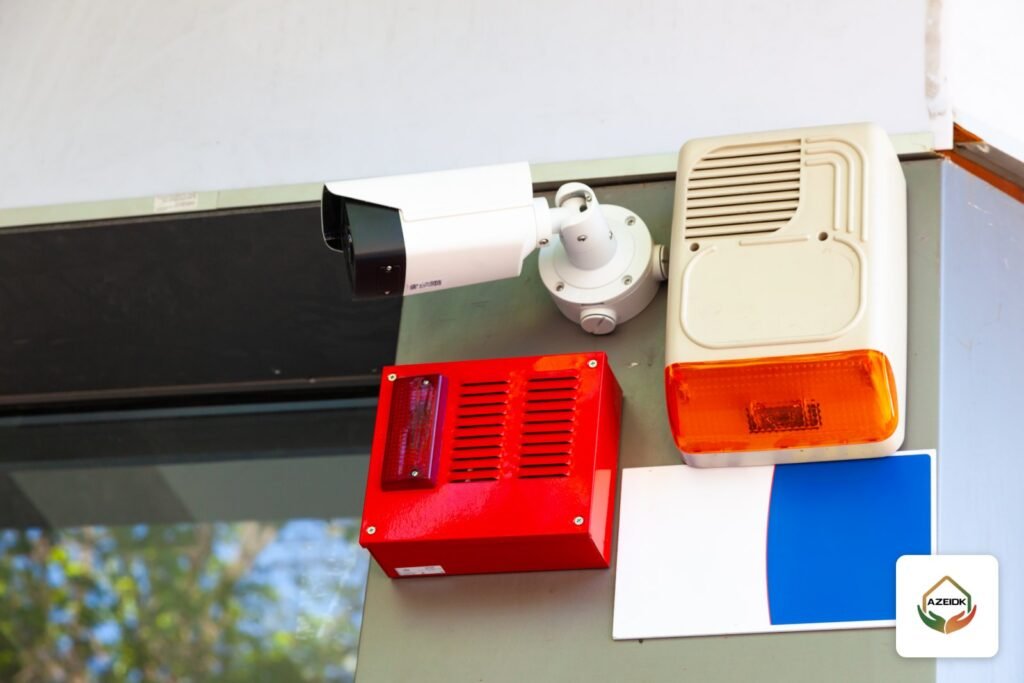
| Core systems | CCTV, access control, intrusion alarm, gates and barriers, intercom | Fire alarm, sprinklers and fire fighting networks, extinguishers and hose cabinets, emergency lighting |
| Saudi regulation | Law of Use of Security Surveillance Cameras and its Executive Regulation | Saudi Fire Protection Code SBC 801 |
| Authority | Ministry of Interior; Public Security issues the camera compliance certificate | General Directorate of Civil Defense via Salamah |
| Common technical reference | NFPA 731 for premises security systems | NFPA 72 for fire alarm, NFPA 101 for life safety |
| Maintenance | Low current and CCTV contract | Fire and safety systems contract |
NFPA standards are technical references adopted by the designer or called up in project specifications; they are not automatically binding on their own. The legal requirement comes from the Saudi code and the regulations of the competent authorities.
Security and safety systems: what serves each field
Security systems
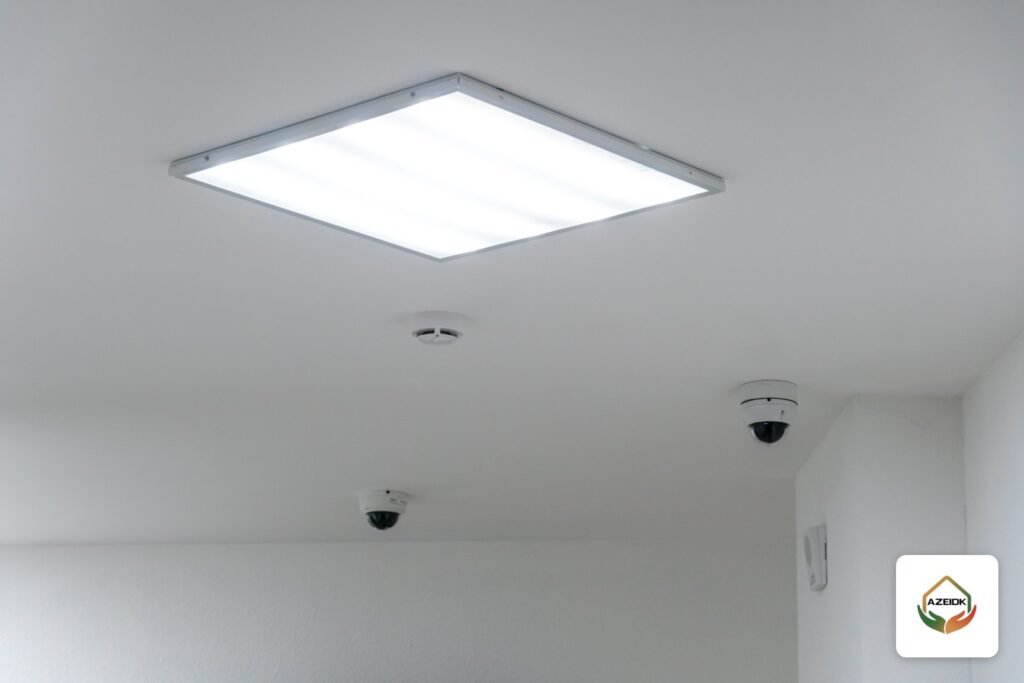
- CCTV with NVR or DVR recording, including Hikvision and Dahua models in CCTV cameras and recorders.
- Access control: fingerprint, face or card reader with lock and controller, such as ZKTeco, Hikvision and Dahua devices.
- Intrusion (burglar) alarm: motion and door contacts with a control panel, including Ajax wireless systems.
- Gates, parking barriers and intercom to control people and vehicles at entrances.
Safety systems
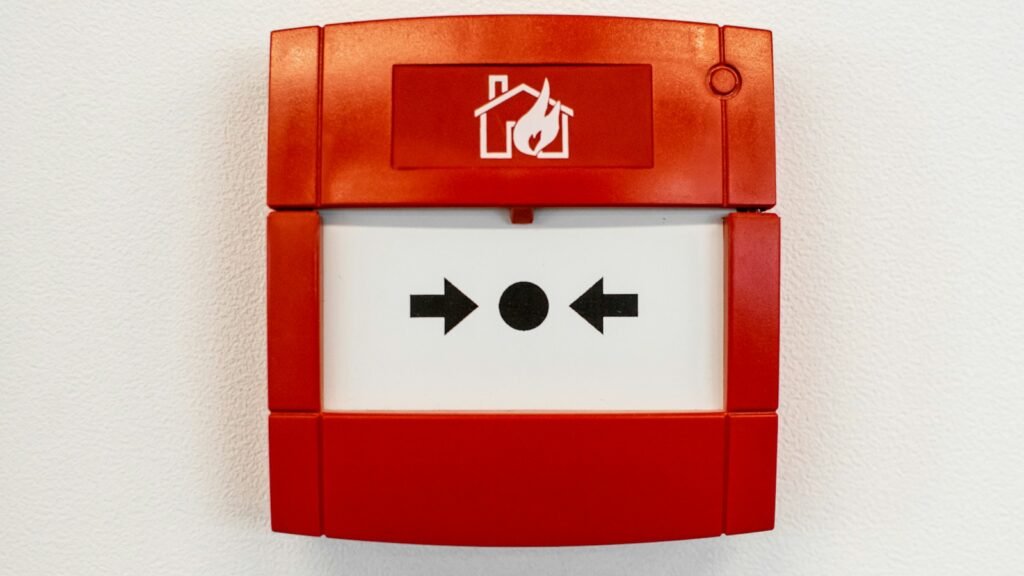
- Fire alarm: smoke and heat detectors, manual call points and a conventional or addressable panel, including Context Plus addressable panels.
- Fire fighting: piping, sprinklers, fire hose cabinets and fire pumps.
- Portable extinguishers, including Falcon Gold models in the extinguishers range; AZEIDK also supplies SFFECO products.
- Emergency lighting, exit signs and fire doors that keep the escape route usable.
For a detailed equipment list by shop type, see safety and security tools for facilities and shops, and for day-to-day behaviour at work see workplace safety rules.
Who regulates each field in Saudi Arabia?
Fire safety: SBC 801 and Civil Defense
The Saudi Fire Protection Code SBC 801 sets the minimum requirements to protect life and property from fire, and the 2024 edition of the Saudi Building Code has been mandatory since 30 June 2025. The General Directorate of Civil Defense follows up and monitors fire prevention and protection requirements, and facilities are licensed and renewed through the Salamah platform. More in our SBC 801 guide.
For the licence file, AZEIDK handles the technical report through an approved engineering consultancy office and issues the safety equipment installation certificate itself, as part of Civil Defense approval support.
Security: the Security Surveillance Cameras Law
The Law of Use of Security Surveillance Cameras was issued by Royal Decree M/34 in 1444H, and its Executive Regulation was published in Umm Al-Qura on 9 June 2023. The law lists the covered facility categories, including government bodies, shopping malls, hotels, banks, fuel stations, health and education facilities and food outlets. It bans cameras in places such as toilets, changing rooms and medical examination rooms, and requires recordings to be kept for the period set in the requirements document. The regulation states that the General Directorate of Public Security issues the certificate confirming camera installation requirements are met. Full detail in the Saudi Security Surveillance Cameras Law.
In practice, a Salamah licence does not cover cameras, and camera compliance does not replace the Civil Defense licence. A facility covered by both needs both files.
Where security and safety meet in a building
- Door release on fire alarm: magnetic locks on escape routes are linked to the fire alarm panel so they release on alarm.
- Gates and barriers must not block people leaving during evacuation.
- Control room: CCTV monitors and the fire alarm panel may sit in one room under a trained operator, while each system still runs independently.
- Cameras during an incident help follow the evacuation and locate the fire, but they are not a substitute for listed fire detectors.
These points are settled during shop drawings and coordination, before ceilings and doors are finished.
Why security and safety maintenance are separate
AZEIDK delivers maintenance under two separate contracts. The first covers fire, safety and alarm systems: panel, detectors, fire fighting networks, pumps and extinguishers. The second covers low current and CCTV, together with access control and intercom. The reason is practical: different technicians, different checklists and different records. Fire system maintenance visit reports are what prove the systems are ready at a Civil Defense inspection, while cameras are checked against the camera law requirements document. See preventive maintenance contracts for the first and low current systems for the second.
AZEIDK holds ISO 9001, ISO 14001 and ISO 45001 certificates whose scope covers design, supply, installation and maintenance of fire fighting, fire alarm, CCTV and access control, and low current systems.
Setting up security and safety in a new facility
- Define the activity and area: this sets the Civil Defense requirements and whether the camera law applies.
- Start with safety: alarm, extinguishers and exits are among the first things a Civil Defense inspection checks, and delays here delay licensing and opening.
- Design security around real risks: entrances, cash points, stores and server rooms, respecting prohibited locations.
- Coordinate the interfaces: locks on escape routes, gates and the control room.
- Put both maintenance contracts in place from handover, with a visit log for each system.
If you are comparing contractors, our guide to safety and security systems companies in Saudi Arabia covers what to ask and how to verify approvals.
Frequently asked questions
What is the definition of security and safety?
Security protects people and property from deliberate acts such as theft and intrusion; safety protects lives and the building from unintended hazards such as fire.
What is the difference between security and safety?
The type of risk: security deals with people who intend harm, safety with accidents. Each has its own systems, regulator and maintenance contract.
Which fields does security and safety cover in a facility?
Security: CCTV, access control, intrusion alarm and gates. Safety: fire alarm, fire fighting, extinguishers, emergency lighting and exits.
Are CCTV cameras a Civil Defense requirement?
Cameras fall under the Security Surveillance Cameras Law with the Ministry of Interior; Civil Defense requirements cover fire and safety systems under SBC 801.
Can CCTV and fire systems be maintained under one contract?
At AZEIDK they are two contracts: one for fire, safety and alarm systems, and one for low current, CCTV and access control.
Fitting out a new facility or reviewing existing systems? Send us the activity, area and layout, and AZEIDK GROUP will prepare one proposal for security systems and a separate one for fire safety systems. Contact AZEIDK GROUP