Does a fire alarm system work during a power outage? Yes, if it was designed and maintained properly. The panel switches to its fire alarm battery backup automatically, and NFPA 72 requires those batteries to carry 24 hours of standby followed by 5 minutes of alarm (15 minutes for emergency voice systems). A diesel fire pump runs without mains power, and emergency lighting must last at least 90 minutes under NFPA 101. An electric fire pump and the jockey pump, however, stop unless they have an alternate power source. This article explains what happens to each system the moment the power drops and what owners should check before they need it, with links to AZEIDK fire alarm systems.
Key takeaways
- A fire alarm panel has two supplies: building power (primary) and batteries (secondary). Changeover is automatic.
- NFPA 72 sets battery duration at 24 hours standby plus 5 minutes alarm, and 15 minutes at full load for emergency voice systems.
- The diesel fire pump protects the network during an outage, provided the fuel tank is full, the starting batteries are healthy and the controller is in Auto.
- Emergency lights are designed for at least 90 minutes and, under NFPA 101, are tested monthly for 30 seconds and annually for 90 minutes.
- Most outage failures come from an old battery or a trouble signal nobody followed up, not from a design error.
In this article
- What happens to each system when the power goes out?
- Does a fire alarm system work during a power outage? How fire alarm battery backup works
- Will the fire pump run if the power goes out?
- Is emergency lighting enough for evacuation?
- Why do fire systems fail during power outages?
- Owner’s checklist before you need the systems
- Frequently asked questions
- Conclusion
What happens to each system when the power goes out?
Fire systems in a building do not share a single power source, so there is no single answer to “will it work in an outage?”. The table sums it up:
| System | Power during the outage | Reference duration | What to check |
|---|---|---|---|
| Fire alarm panel, detectors and sounders | Panel batteries (secondary supply) | 24 h standby then 5 min alarm per NFPA 72 | Battery manufacture date and trouble signals on the panel |
| Emergency voice evacuation system | System batteries | 15 min alarm at full load per NFPA 72 | Battery calculation for the actual speaker load |
| Diesel fire pump | Diesel engine and starting batteries | Set by the fuel tank capacity in the design | Fuel level, batteries and controller mode |
| Electric fire pump | Stops unless an alternate source exists (a generator, for example) | Depends on the alternate source | Whether the alternate source actually feeds the pump |
| Jockey pump | Normally stops | No alternate source required by NFPA 20 | Start pressure settings between it and the main pump |
| Emergency lighting and exit signs | Internal battery in each unit or a central supply | At least 90 min per NFPA 101 | Monthly 30 s test and annual 90 min test |
The values come from NFPA documents that designers adopt as technical references. The binding code in the Kingdom is the Saudi Building Code, including SBC 801 (Saudi Fire Protection Code), which decides where these systems are required. The Civil Defense approved drawings set the reference and edition for each project.
Does a fire alarm system work during a power outage? How fire alarm battery backup works
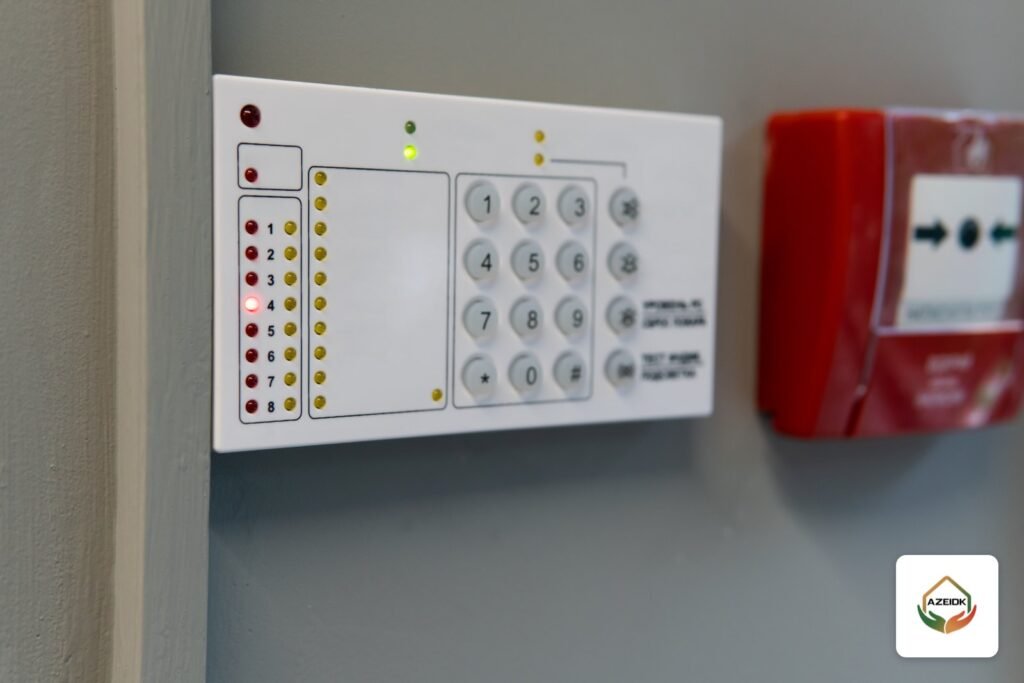
In normal operation the panel runs on building power and keeps its batteries charged. When the supply fails, it moves to the batteries with no action from anyone, shows an AC power fail trouble signal and sounds its internal buzzer. That signal does not mean the system has stopped. It means the system is now on battery and needs attention.
During this time the detectors keep monitoring. If one detects smoke, the sounders and strobes operate as normal. The only difference is that run time is now limited by battery capacity.
How long does a fire alarm panel run on battery?
As summarised by the U.S. Fire Administration (USFA), NFPA 72 requires the secondary supply to run the system in standby for at least 24 hours and then in alarm for at least 5 minutes. Emergency voice systems need 15 minutes at maximum connected load. Where a generator serves as the secondary supply, NFPA 72 still requires batteries for at least 4 hours.
Buying any battery does not deliver these durations. Capacity is calculated from the standby and alarm current of every device on the system, plus a safety margin. The method and a worked example are in our article on fire alarm battery calculation.
When should fire alarm panel batteries be replaced?
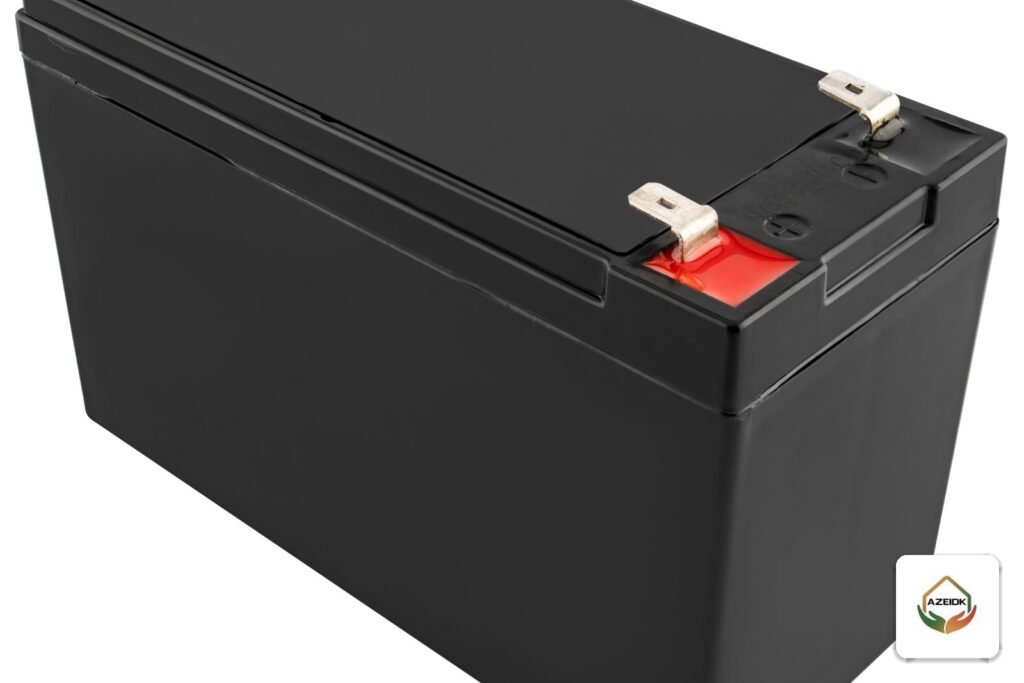
Panels usually use sealed lead-acid (VRLA) batteries. Older NFPA 72 editions required replacement within 5 years of the manufacture date. Since the 2013 edition, replacement follows the alarm equipment manufacturer’s recommendations, or happens when voltage or current falls below the manufacturer’s limits. Batteries carry a month and year marking, and the manufacture date, not the installation date, is what counts.
In practice, if the panel shows a battery fault, or years have passed since installation without a discharge test, do not wait for the next outage to find out. See also fire alarm panel faults and how to deal with them.
Will the fire pump run if the power goes out?
That depends on the pump. An electric fire pump stops when the power fails. NFPA 20 therefore requires an alternate power source where the normal supply is not reliable or the building is high-rise, unless an approved arrangement such as a standby diesel pump is used. If the alternate source is a generator, it must be able to run the pump motor together with the other loads it carries.
The diesel fire pump is the most common answer, because its engine does not depend on electricity. It needs three things ready at all times:
- Fuel: a tank filled to the capacity set in the design. A half-empty tank means a shorter run than calculated.
- Starting batteries: the diesel controller uses two battery sets. If both are weak, the engine will not crank.
- Controller mode: it must be in Auto so the pump starts by itself when network pressure drops.
The jockey pump is a small electric pump that maintains network pressure, and NFPA 20 (2025 edition) does not require an alternate source for it. It stops in an outage. If pressure then falls to the main pump start setting, the diesel pump starts. That is why pressure settings must be right, as explained in jockey pump sizing and pressure settings.
For the requirements, read our NFPA 20 fire pump guide. For routine testing (weekly diesel runs and the annual flow test), see the NFPA 25 guide. If the pump has a running problem, start with fire pump faults and troubleshooting.
Is emergency lighting enough for evacuation?
Emergency lights and exit signs run on an internal battery in each unit, or on a central supply in some projects. Under NFPA 101, emergency lighting must last at least 90 minutes after power fails, the same duration the International Building Code (IBC) gives for egress lighting.
Ninety minutes is enough to evacuate a building if the units actually work. The problem is that internal batteries weaken quietly, because a unit looks fine while mains power is on. NFPA 101 therefore requires a monthly test of at least 30 seconds and an annual 90-minute test, with written records.
Illumination levels and sign spacing are covered in emergency lighting and exit signs in Saudi Arabia, and available models are in the emergency and exit lighting range.
Why do fire systems fail during power outages?
In most cases the design is sound and the problem is operation and maintenance. These causes come up again and again:
- Fire alarm batteries past their service life, with a battery fault showing for weeks.
- Replacement batteries of lower capacity than calculated, or wired incorrectly.
- Devices added to the system (sounders or detectors) without recalculating the batteries.
- The diesel fuel tank not full, or weak starting batteries.
- The pump controller left in manual or off after maintenance.
- Emergency lights never tested since installation, so they last only a few minutes.
Owner’s checklist before you need the systems
| Item | How to confirm |
|---|---|
| Fire alarm panel | No standing trouble signal, and battery manufacture dates known and recorded |
| Battery calculation | Included in the handover file and updated after any system addition |
| Diesel fire pump | Controller in Auto, fuel at the required level, weekly run logged |
| Electric fire pump | Whether it has an alternate source, and where it comes from |
| Emergency lighting | Monthly and annual test records available |
These checks are part of preventive and periodic maintenance contracts for fire systems, covering fire fighting networks and alarm systems.
Frequently asked questions
Does a fire alarm system work during a power outage?
Yes. It switches to batteries automatically. NFPA 72 requires 24 hours of standby then 5 minutes of alarm, provided the batteries are sized correctly and in good condition.
How long does a fire alarm panel battery backup last?
The NFPA 72 reference is 24 hours standby then 5 minutes alarm, and 15 minutes alarm for emergency voice systems. Actual run time depends on the calculation and battery condition.
Will the fire pump run during a power cut?
A diesel pump will, because it does not need mains power. An electric pump stops unless it has an alternate source, such as a generator included in the design.
When should I replace the fire alarm panel battery?
Follow the manufacturer’s recommendations, or replace when voltage or current falls below its limits. Count battery age from the manufacture date printed on it.
Is emergency lighting enough for evacuation?
It is designed for at least 90 minutes under NFPA 101. It is enough if units are tested monthly and annually, because a weak battery only shows up in an outage.
Why does the fire alarm panel beep after a power cut?
It is a trouble signal telling you the panel is on battery. Silence the buzzer and wait for power to return. If the signal stays after power is back, have the charger and batteries checked.
Can a generator replace the fire alarm panel batteries?
No. Even with a generator feeding the system, NFPA 72 requires batteries for at least 4 hours.
Conclusion
Fire systems are designed to work through a power outage, each in its own way: the alarm panel on its batteries, the diesel pump on its engine, and emergency lighting on internal batteries. The weak link is always the battery or the fuel that nobody checked. Check them now, record the results, and do not let the next outage be the first test.
Want to be sure your fire systems are ready for an outage? The AZEIDK team reviews battery calculations, fire pumps and emergency lighting as part of periodic maintenance. Talk to the AZEIDK team
Related guides
- SFFECO Fire Hose Cabinet SF 300 and Automatic Hose Reel: When to Choose Them
- Hikvision DS-3WAP623E-SI Outdoor Access Point: Wi-Fi 6 for Yards, Car Parks and Compounds
- CCTV and Access Control Brands in the Saudi Market
- Civil Defense Salamah Platform: E-Services for Facilities, from Registration and Licence Issue to Renewal, Amendment and Transfer