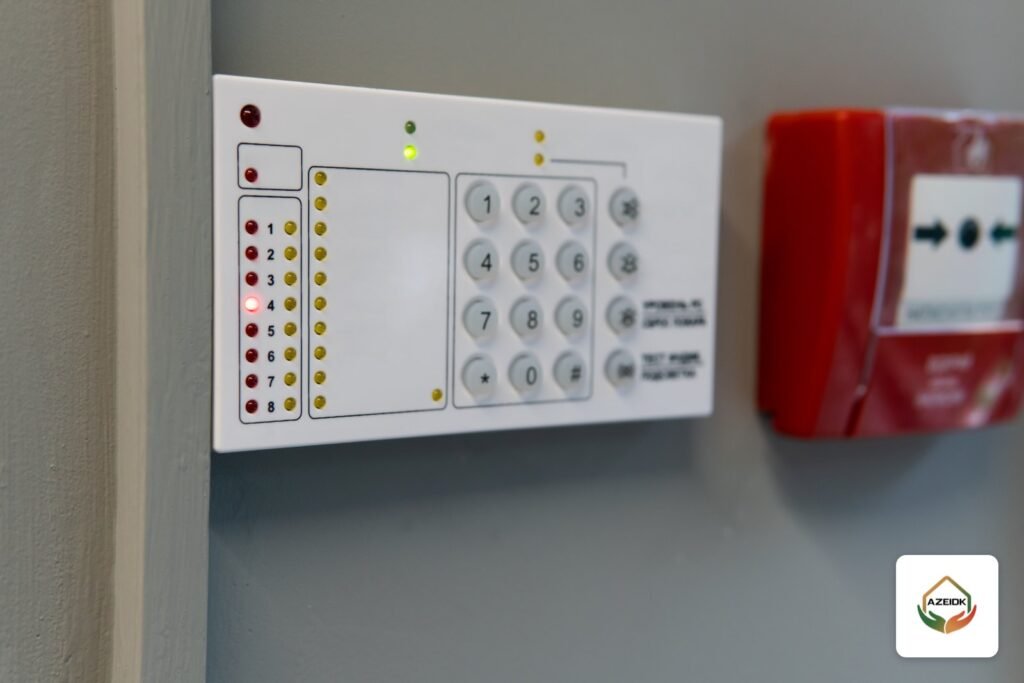
On-demand fire alarm maintenance means calling a qualified technician when a specific fault appears, such as a trouble signal on the fire alarm panel, repeated false alarms or a fire pump that will not start. The technician finds the cause, repairs it and tests the system before leaving. This visit fixes the problem in front of you. It does not replace a scheduled preventive maintenance programme, which finds faults before they show up. This article explains when you need an emergency call-out, what corrective maintenance actually covers, and when an annual contract is the better choice for a facility in Saudi Arabia.
Key takeaways
- On-demand (corrective) maintenance starts with a fault report and ends with a repair, a functional test and a written report.
- An annual contract (preventive and periodic maintenance) is built on scheduled inspection and testing visits based on references such as NFPA 72 for fire alarm systems and NFPA 25 for water-based systems.
- Any trouble signal on the panel, repeated false alarms, a drop in network pressure or a leak in the sprinkler network is reason enough to call a technician straight away.
- While a system is impaired, treat the building as less protected: inform the people responsible and put interim measures in place until the system is back in service.
- Corrective maintenance supports an annual contract. It does not replace it.
In this article
- What is on-demand fire alarm maintenance?
- When should you call a fire alarm technician urgently?
- What does corrective maintenance for fire systems include?
- On-demand maintenance or an annual contract? A practical comparison
- What to do while a fire system is impaired
- How to choose an emergency maintenance technician or company
- Frequently asked questions
- Conclusion
What is on-demand fire alarm maintenance?
In the Saudi market, people ask for a “fire alarm maintenance technician” or “emergency maintenance” when a facility owner or facility manager notices a problem. In engineering terms this is corrective maintenance: work done to bring a system or device back to operating condition after a fault has appeared.
The key difference from preventive maintenance is timing. Preventive work is scheduled in advance and aims to catch deterioration before it becomes a failure. Corrective work responds to a failure that has already happened. That is why AZEIDK’s corrective maintenance and technical support service fixes the fault and recommends how to remove recurring causes, without taking the place of a preventive maintenance programme.
When should you call a fire alarm technician urgently?
Some symptoms should not wait for the next scheduled visit. If you see any of these, call a qualified technician as soon as possible:
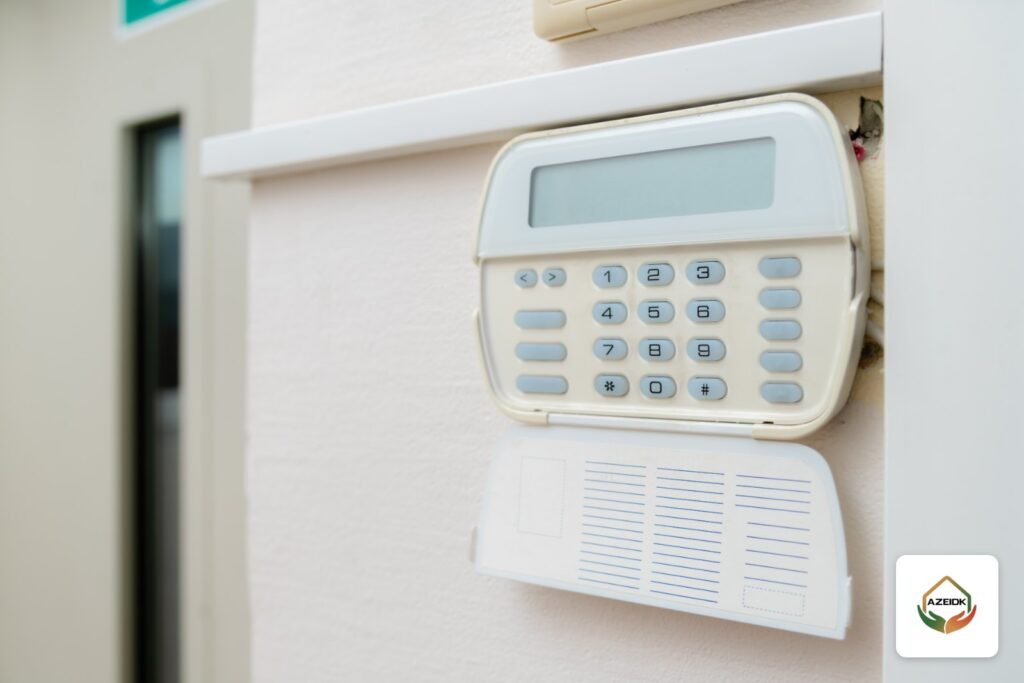
- A trouble or supervisory signal on the fire alarm panel. It may point to an open circuit, a missing device, or a problem with the power supply or standby batteries. Our article on fire alarm panel faults and repair explains the most common messages.
- Repeated false alarms. Alarms with no fire teach occupants to ignore the real one. Common causes are covered in causes of fire alarm false alarms.
- A silent or dead panel, or a display that does not respond.
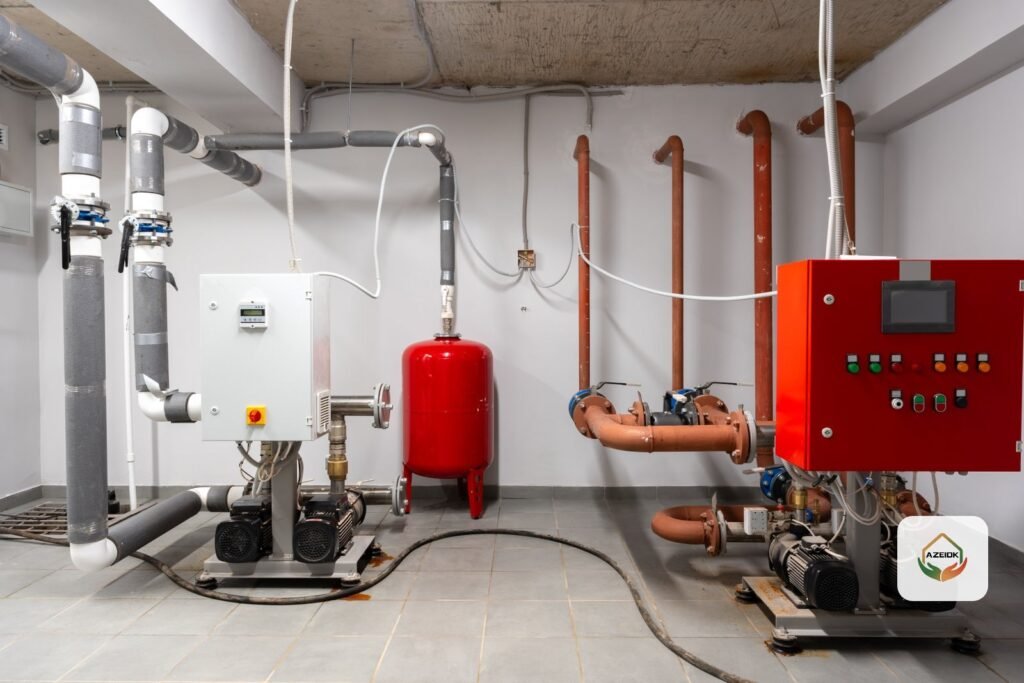
- A fire pump that does not start automatically, or starts and stops repeatedly, or network pressure that drops for no clear reason. See fire pump faults and troubleshooting.
- A leak in the sprinkler network, or a valve that will not fully close or open.
- After any real activation (a fire or a sprinkler discharge), to reset the panel and replace affected devices.
- After fit-out or alteration work that affected detectors or wiring, such as gypsum ceilings, painting or moved partitions.
What does corrective maintenance for fire systems include?
A proper technician visit is more than silencing the panel. The correct scope, as set out on AZEIDK’s corrective maintenance service page, follows these steps:
- Receive the report and set the priority: what message the panel shows, when it started, and whether the system is partly working or fully down.
- Review the panel event log and fault reports to locate the fault instead of checking devices at random.
- Inspect the affected devices and connections: detectors, manual call points, notification appliances, and wiring and control circuits.
- Assess fire pump faults and network components within the agreed contract scope.
- Repair or replace damaged parts once the owner approves the procedure and materials.
- Test the system after the repair, confirm the panel is back to normal, and hand over a written report of the work done.
- Recommend fixes for recurring causes so the same fault does not return a few weeks later.
Replacement parts must be compatible with the installed panel and system. On addressable systems in particular, a replacement detector of an incompatible model may not be recognised by the panel at all.
On-demand maintenance or an annual contract? A practical comparison
| Item | On-demand (corrective) | Annual contract (preventive and periodic) |
|---|---|---|
| Starts when | A fault appears and is reported | On a visit schedule agreed in advance |
| Goal | Return the system to service after a fault | Catch deterioration and prevent faults |
| Technical reference | Manufacturer instructions, the panel log and what the repair requires | Inspection and testing schedules in NFPA 72 and NFPA 25, plus manufacturer instructions |
| Records | A report on the fault and the repair | A continuous record of every visit that supports the facility’s safety file |
| Cost planning | Unplanned cost with each fault | Known cost within the contract scope; major repairs per its terms |
| Suits | A sudden fault, or a facility with a contract that needs extra support | Any occupied facility that wants a system ready at all times |
The practical rule: if your facility relies only on call-outs, you do not know the condition of the system between faults. A dirty detector or a weak battery does not always give a clear warning before the day it is needed. That is why we recommend preventive and periodic maintenance contracts as the base, with corrective maintenance as a support layer on top.
What to do while a fire system is impaired
When the fire alarm or suppression system is out of service, the building runs with less protection than it was designed for. NFPA 25 has a dedicated chapter on managing impairments of water-based systems, built on a simple idea: the people responsible must know about the impairment, and interim measures must be taken until the system is restored. In practice:
- Tell facility management and security that the system, or part of it, is out of service, and identify the affected areas.
- Do not switch off the panel or disable whole zones to silence an annoying signal without recording it and informing the person in charge.
- If the impairment lasts, assign someone to patrol unprotected areas and stop hot work there.
- Have ready for the technician a photo of the panel message, system drawings if available, and the latest maintenance report.
- Record the impairment and the date the system returned to service in the facility’s fire safety log book.
If the impairment affects the facility’s licensing requirements or an upcoming Civil Defense inspection, check the facility’s position with the authority. AZEIDK’s Civil Defense approval support service can help.
How to choose an emergency maintenance technician or company
- Experience with your panel: ask whether the team knows the brand and model installed, and has the programming tools and access to the panel.
- A written report: ask for a report that states the cause, the parts replaced and the test result after the repair.
- Approval before work: do not accept part replacements without a clear statement of the item, its specification and the reason.
- Link to preventive maintenance: a team that knows your system’s history from scheduled visits finds the cause faster.
- Clear scope: fire systems maintenance (fire alarm, fire fighting and related items) is a separate contract from networks and low current maintenance, so state exactly what you need.
For sprinkler systems and fire pumps, our NFPA 25 inspection, testing and maintenance guide shows what should be checked periodically and what counts as a fault that needs action.
Frequently asked questions
Can I rely on on-demand fire alarm maintenance without an annual contract?
You can, but it is not advisable. On-demand work fixes a fault that has appeared and does not reveal devices that have deteriorated silently. References such as NFPA 72 are built on periodic inspection and testing, and an annual contract is the organised way to do that.
What is the difference between emergency and corrective maintenance?
Emergency describes how fast you respond to an urgent fault. Corrective describes the type of work: repairing an existing fault. Most emergency visits are corrective maintenance carried out with higher priority.
The panel keeps beeping with a fault. Should I switch it off?
No. You can silence the panel buzzer as the manufacturer’s instructions allow, but the signal itself must stay displayed until a qualified technician diagnoses it. Switching the panel off leaves the building with no detection.
How long does a fire alarm technician visit take?
It depends on the fault, the size of the system and the availability of parts. Some faults are fixed in the same visit; others need circuit tracing or compatible parts to be supplied. The report after the visit should state what was done and what remains.
Does corrective maintenance cover fire pumps and the sprinkler network?
Yes at AZEIDK, within the agreed contract scope: assessment of fire pump faults and network components such as valves and leaks, alongside fire alarm panels, detectors, call points and control circuits.
What should I prepare before the technician arrives?
A photo of the panel message, a note of when the fault started, system drawings if available, the latest maintenance report, and a person from the facility to accompany the technician and give access to plant rooms.
Does on-demand maintenance cover CCTV and networks?
Fire systems maintenance and networks or low current maintenance are usually separate contracts. This article covers fire systems. If the fault is in another system, say so when you contact us so the right team handles it.
Conclusion
On-demand fire alarm maintenance is the right answer to a fault that has just appeared: a trouble signal, repeated false alarms, a pump that will not run or a leak in the network. It treats the symptom and does not tell you the condition of the rest of the system. A facility that wants a system ready every day needs a preventive maintenance contract, and uses corrective maintenance for support when needed. In every case, ask for a written report and a test after the repair.
Have a fire system fault right now? The AZEIDK team receives the report, sets the priority and sends a technician to inspect and repair the system and hand over a report of the work done. Talk to the AZEIDK team
Related guides
- Smart Buildings: How Low Current Systems Integrate in One Building
- Turnstile Gates: Tripod, Flap, Swing or Full Height for Offices, Gyms and Factories
- Security Control Room Setup: Video Wall, Operator Workstations, VMS and Operator Staffing
- Approved Equal for Fire Equipment: How to Prepare a Substitution Request the Consultant Will Accept