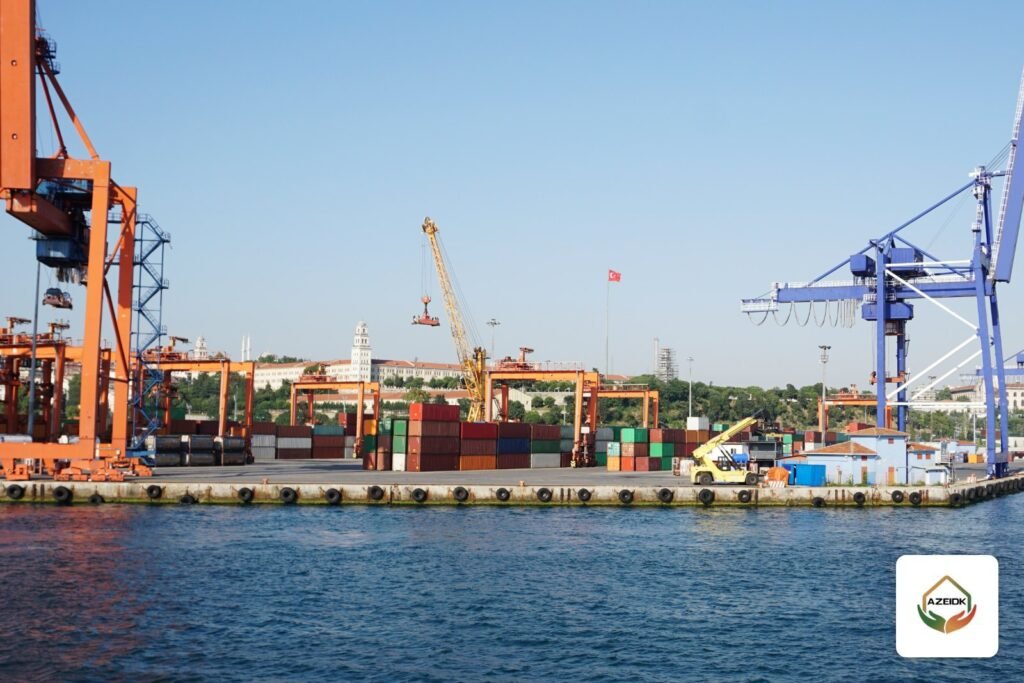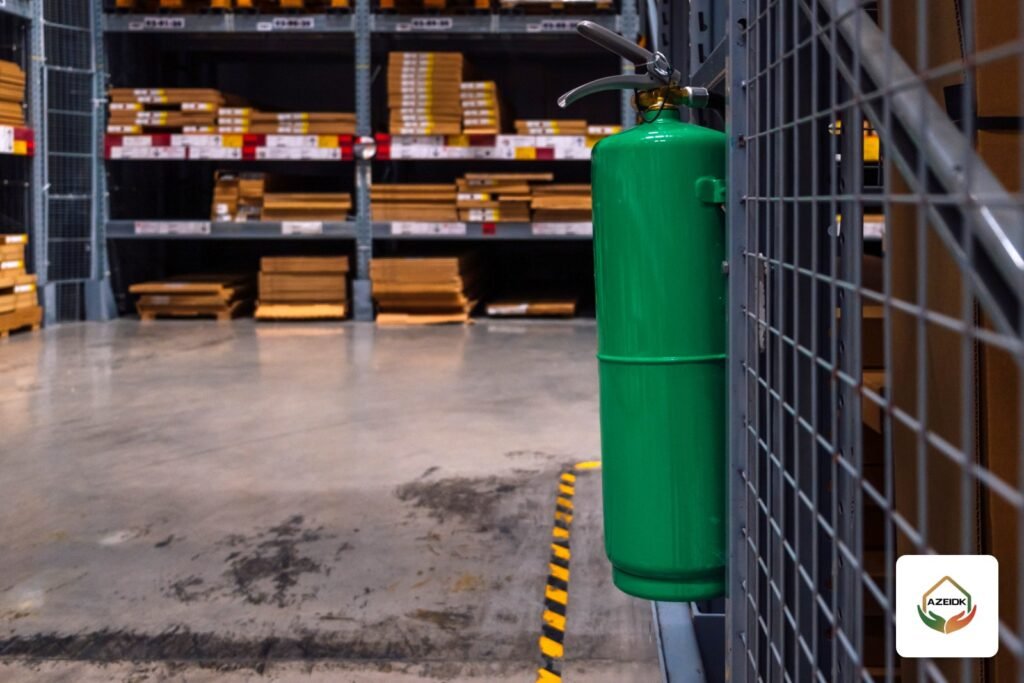
The SABER platform is the online system that connects every party before a fire extinguisher, pump or hose reaches the Saudi market. The supplier registers the product, a conformity assessment body reviews its file, the importer requests a certificate for each shipment, and customs checks it at clearance. Buyers often hear “it has SABER” without knowing which certificate is meant.
This article explains how the system works, not the application steps: who holds the account, how the two certificates differ, and what falls on the supplier versus the buyer. If you are buying equipment for a project, AZEIDK’s technical supply service checks, for each item, the approvals the product carries and the SASO/SABER requirements, and provides the official datasheets for the consultant.
Key takeaways
- The short answer: SABER is a SASO platform. The supplier registers the product and obtains a certificate of conformity for the model; the importer then requests a shipment certificate for each shipment before shipping.
- The Product Certificate of Conformity (PCoC) covers the model and is reviewed by a SASO-accepted conformity assessment body. The Shipment Certificate of Conformity (SCoC) covers one shipment only.
- The technical regulation for fire control materials and equipment requires a certificate under conformity assessment Type 3. A supplier self-declaration is not enough.
- Fire alarm systems are excluded from this regulation. Security and network devices may fall under other regulations depending on their HS code.
- The buyer does not apply, but must make sure what is installed is registered and conforming.
In this article
- The SABER platform: what it is and who runs it
- Who does what on SABER
- Two SABER certificates: product conformity and shipment
- How fire equipment moves through SABER, from registration to clearance
- SABER for fire equipment: what the regulation covers and excludes
- The buyer’s and contractor’s role: what to ask the supplier
- Common mistakes with SABER
- Frequently asked questions
- Conclusion
The SABER platform: what it is and who runs it
SABER is the online platform of SALEEM, the Saudi product safety programme, run by the Saudi Standards, Metrology and Quality Organization (SASO). Every product covered by a Saudi technical regulation must prove conformity before it is placed on the market, and SABER is where that is recorded.
The platform does not test products. It holds product data and certificates in one record and connects suppliers with SASO-accepted conformity assessment bodies. SASO announced in October 2020 that SABER is linked with the FASAH customs platform, so the shipment certificate is checked automatically while the customs declaration is prepared. A shipment without it is held at the port.
Who does what on SABER
Who does what for fire equipment:
| Party | Role on SABER | Responsibility |
|---|---|---|
| SASO | Issues technical regulations, runs the platform and accepts conformity assessment bodies | Surveillance at ports and in the market; updating product lists and HS codes |
| Supplier (local manufacturer, agent or importer) | Opens the company account, registers the product and requests the product certificate | Technical file, declaration of conformity and risk assessment; keeping documents for at least ten years after the product is placed on the market |
| Conformity assessment body | Reviews the request and technical file, visits the factory where required and records the certificate | Correct assessment against the regulation and its referenced standards |
| Importer | Requests the shipment certificate for each shipment with invoice data, quantities and country of shipment | Every shipment is tied to products with a valid certificate |
| Customs (FASAH) | Verifies the shipment certificate at clearance | Stopping non-compliant shipments |
| Buyer (contractor, owner or consultant) | Usually no role on the platform | Requesting certificate details and matching them to the model actually supplied |
The fire regulation defines the “supplier” as the manufacturer in the Kingdom, the agent when the manufacturer is abroad, or the importer when there is no agent, plus any supply-chain party whose activity may affect the product. A contractor who imports a product that has no local agent is treated as the supplier and carries the supplier’s obligations.
Two SABER certificates: product conformity and shipment
“SABER certificate” usually means the product certificate, but an imported shipment also needs a shipment certificate. Neither replaces the other. Based on SASO’s two service pages:
| Item | Product certificate (PCoC) | Shipment certificate (SCoC) |
|---|---|---|
| Covers | A product and specific model numbers | One shipment imported from outside the Kingdom |
| Requested by | Local factories and importers | Importers |
| Reviewed by | A conformity assessment body the supplier selects from those SASO accepts | Data reviewed before issue; a valid product certificate is checked |
| Time on the service page | 5–6 working days | 1–2 working days |
| Fees | No amount on the service page; paid to the conformity assessment body | SAR 350 per the service page |
| Validity | Shows an issue date and an expiry date | 90 days after SASO’s September 2026 decision (previously 60 days) |
The 5–6 working days excludes preparing the technical file or any factory assessment. For what each certificate proves compared with UL, FM, LPCB and local content certificates, see our guide to fire and security project certificates in Saudi Arabia.
How fire equipment moves through SABER, from registration to clearance
The path for every regulated product:
- Company account: the supplier registers the company on the platform and activates the account.
- Product registration: the product is added by HS code or name, and the applicable technical regulation appears.
- Product certificate: model numbers and the technical file are attached and a conformity assessment body is selected. The fire regulation requires conformity assessment Type 3 under ISO/IEC 17067, and the supplier must run a certified product safety management system that the assessment body checks through periodic audit visits.
- Shipment certificate: for imported products, the importer requests it for each shipment before shipping.
- Customs clearance: the certificate is verified electronically through the FASAH link.
A local manufacturer stops at step three, because the shipment certificate applies only to imports. Detailed steps are in our guide to the SABER certificate of conformity for fire equipment.
The HS code sets the route
SASO states that the HS codes shown on SABER are the updated, approved version. Do not rely on an old list or another supplier’s code; a wrong code can put a product under the wrong regulation.
SABER for fire equipment: what the regulation covers and excludes
SASO’s guidance for the fire regulation lists examples of covered products: portable extinguishers, fire pumps, CO2 cylinders for extinguishers, fixed suppression systems, extinguishing agents, hoses, hydrant outlets and couplings, fittings and elbows, and fire hose cabinets. The list is indicative.
The guidance excludes fire alarm systems, industrial process equipment inside industrial facilities, temporary laboratory research use and exhibits not for sale. The regulation text also excludes alarm and firefighting systems as systems, since the Saudi Fire Protection Code governs their design and installation.
What about security and network devices?
CCTV cameras, switches and Wi-Fi access points may fall under other regulations, such as the one for communications and IT devices, depending on their HS code. See our article on SABER certificates for network and telecom devices.
The Saudi Quality Mark
The regulation states that equipment holding the Saudi Quality Mark or an equivalent mark is deemed to meet the safety requirements. Per the guidance, the equivalent certificate data is entered and verified in SABER and the certificate is issued directly. The mark shortens the route; it does not remove SABER registration.
The buyer’s and contractor’s role: what to ask the supplier
A non-conforming item becomes the buyer’s problem at receiving or inspection. Before the purchase order, ask for:
- Product certificate number, the conformity assessment body’s name and the certificate expiry date.
- Model numbers on the certificate, matched exactly to the model in the quotation, the datasheet and the product nameplate.
- The technical regulation named on the certificate, to confirm the product was registered under the right one.
- The shipment certificate when the supplier imports for your project.
- Approvals the specification requires, such as UL or FM. SABER does not replace them or show the model suits the design.
Keep copies in the material submittal. Civil Defense licensing of the facility is a separate track; see our Salamah certificate guide.
SASO circulars can add labelling duties, such as the supplier name and CR number on the product, effective 1 October 2026 for products under specific regulations listed in the circular. Check whether your product’s regulation is on that list before receiving.
Common mistakes with SABER
- Accepting a certificate for a similar model: the certificate covers specific model numbers. An extinguisher of another size or a pump of another model must be listed on it.
- Mixing up the two certificates: a valid product certificate says nothing about the arriving shipment.
- Modifying the product after certification: the regulation states that modifying the product during the certificate’s validity annuls the certificate and requires a new application.
- Requesting SABER for alarm systems under the fire regulation: alarm systems are excluded from it; the HS code shows what applies to them.
- Late shipment certificate: it must be recorded before shipping.
Frequently asked questions
What is the SABER platform?
An online platform run by SASO to register products and issue product certificates and shipment certificates under SALEEM, the Saudi product safety programme. It is linked with the FASAH customs platform.
PCoC vs SCoC: what is the difference?
The PCoC covers the model and is issued after review by a conformity assessment body. The SCoC covers one imported shipment and is issued only for products with a valid PCoC.
What is the SABER certificate validity?
The certificate shows an issue date and an expiry date, and that date is the reference. SASO’s general regulation for conformity certificates sets one year unless the technical regulation sets another period.
How much does a SABER certificate cost?
The shipment certificate fee is SAR 350 per SASO’s service page. The product certificate cost is set by the conformity assessment body and shown in its quotation.
How long does a SABER certificate take?
SASO states 5–6 working days for the product certificate and 1–2 working days for the shipment certificate. This excludes preparing the technical file or any factory assessment.
Are fire alarm systems covered by the fire equipment regulation?
No. The regulation excludes fire alarm systems; their devices may fall under other regulations depending on their HS code on SABER. Extinguishers, pumps, hoses and hose cabinets are covered.
Do locally manufactured products need SABER?
Yes, if a technical regulation covers them. A local manufacturer registers the product and obtains a product certificate, but needs no shipment certificate, which applies to imports.
Is a shipment certificate needed for every shipment?
Yes. A shipment certificate is recorded for each shipment before shipping, covers that shipment only, and is valid for 90 days following SASO’s September 2026 decision.
Conclusion
SABER is one system with different roles: the supplier proves the model conforms, the importer ties each shipment to that certificate, and customs checks it at clearance. The buyer matches the certificate number, model and expiry date to what arrives on site. AZEIDK holds the Saudi Local Content certificate and ISO 9001, ISO 14001 and ISO 45001 certificates, but these cover the company. Each product’s conformity is shown by its own SABER certificate and manufacturer approvals.
Reviewing fire equipment supply offers for your project? Send us the item list and required models, and we will review the datasheets, approvals and SABER requirements for each item with you before you buy. Talk to the AZEIDK team
Related guides
- Upgrading an Old Fire Alarm System: When to Replace Conventional with Addressable and How to Define the Scope
- Factory and Warehouse Networks: Industrial Wi-Fi, Fiber Between Buildings and Network Rooms
- Fire Alarm Commissioning and Acceptance Testing Before Handover
- Forgot CCTV Password? Recover a Hikvision or Dahua Recorder the Official Way