Fire protection systems in Saudi Arabia are complementary families: detection and alarm, water-based suppression, special suppression, passive protection such as fire-rated doors, smoke control, emergency lighting and exit signs, and portable extinguishers. The Saudi Fire Protection Code (SBC 801) and Civil Defense set the mix for each building, and the systems are linked to act together in a fire.
Key takeaways
- No single system is enough: active systems operate in a fire; passive protection works without activation.
- The 2024 edition of the Saudi Building Code, including SBC 801, has been mandatory since 30 June 2025.
- Civil Defense issues and renews safety licenses through the Salamah platform, on a path set by the activity’s risk.
- Extinguishing equipment, fire pumps and agents need a certificate of conformity under the Saudi Standards, Metrology and Quality Organization (SASO) technical regulation.
- The Saudi code and Civil Defense set the applicable NFPA edition; a new edition is not mandatory automatically.
What fire protection systems include
Active fire protection operates in a fire: it detects, warns, suppresses and controls smoke. Passive fire protection, such as fire-resistance-rated walls and doors, is part of the structure and needs no activation. The seven families:
| Family | Role | Examples | Common standard |
|---|---|---|---|
| Detection and alarm | Detect early, warn occupants, trigger other systems | Detectors, call points, panel, voice evacuation | NFPA 72 or EN 54 series |
| Water-based suppression | Control fire; supply water for Civil Defense crews | Sprinklers, fire pumps, standpipes, hose cabinets | NFPA 13, 14, 20 |
| Special suppression | Protect spaces where water is unsuitable | Clean agent, carbon dioxide, foam, water mist, kitchen systems | NFPA 2001, 12, 11, 750, 17A |
| Passive protection | Contain fire and smoke in a compartment | Rated walls and doors, firestopping | NFPA 80 for doors |
| Smoke control | Keep escape routes clear of smoke | Stair pressurization, smoke exhaust, dampers | NFPA 92 |
| Emergency lighting and exits | Keep escape routes visible and exits marked | Emergency luminaires, exit signs | SBC 201 or NFPA 101, as specified |
| Portable extinguishers | Tackle a small fire at its start | Water, dry chemical, carbon dioxide, foam, wet chemical | NFPA 10 |
The system families in brief
Detection and alarm
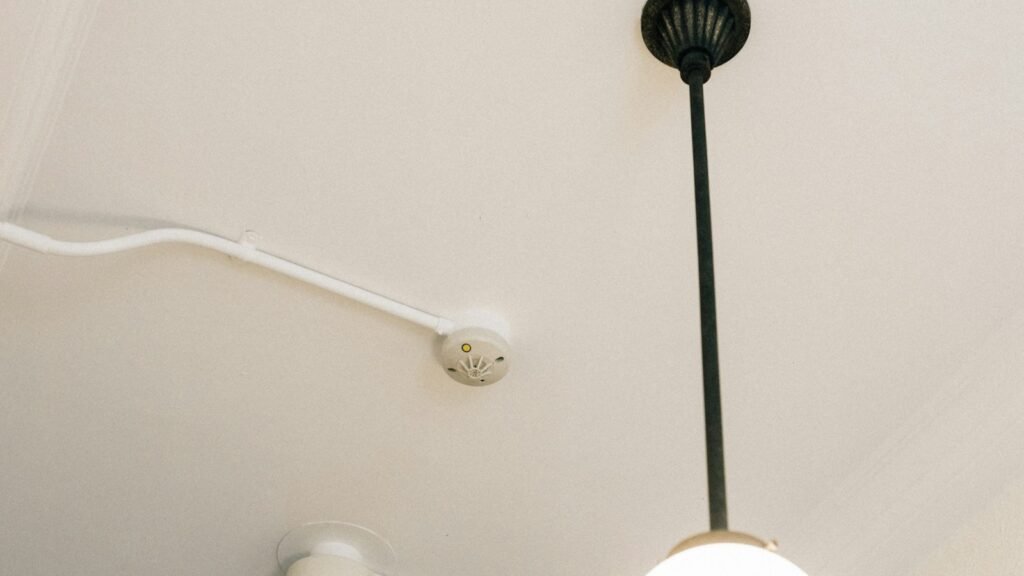
Detectors sense smoke, heat or flame, manual call points let anyone raise the alarm, and the fire alarm control panel sounds the alarm and commands other systems. On addressable systems, devices sit on loops, so the panel knows each detector’s location. The space and expected fire decide the detector type; see our fire detector selection guide.
Water-based suppression
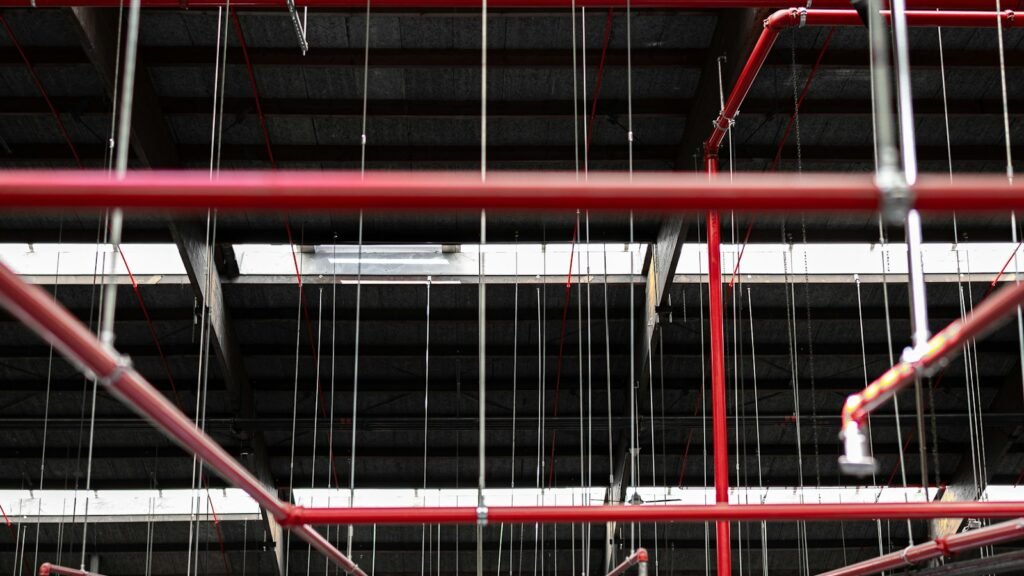
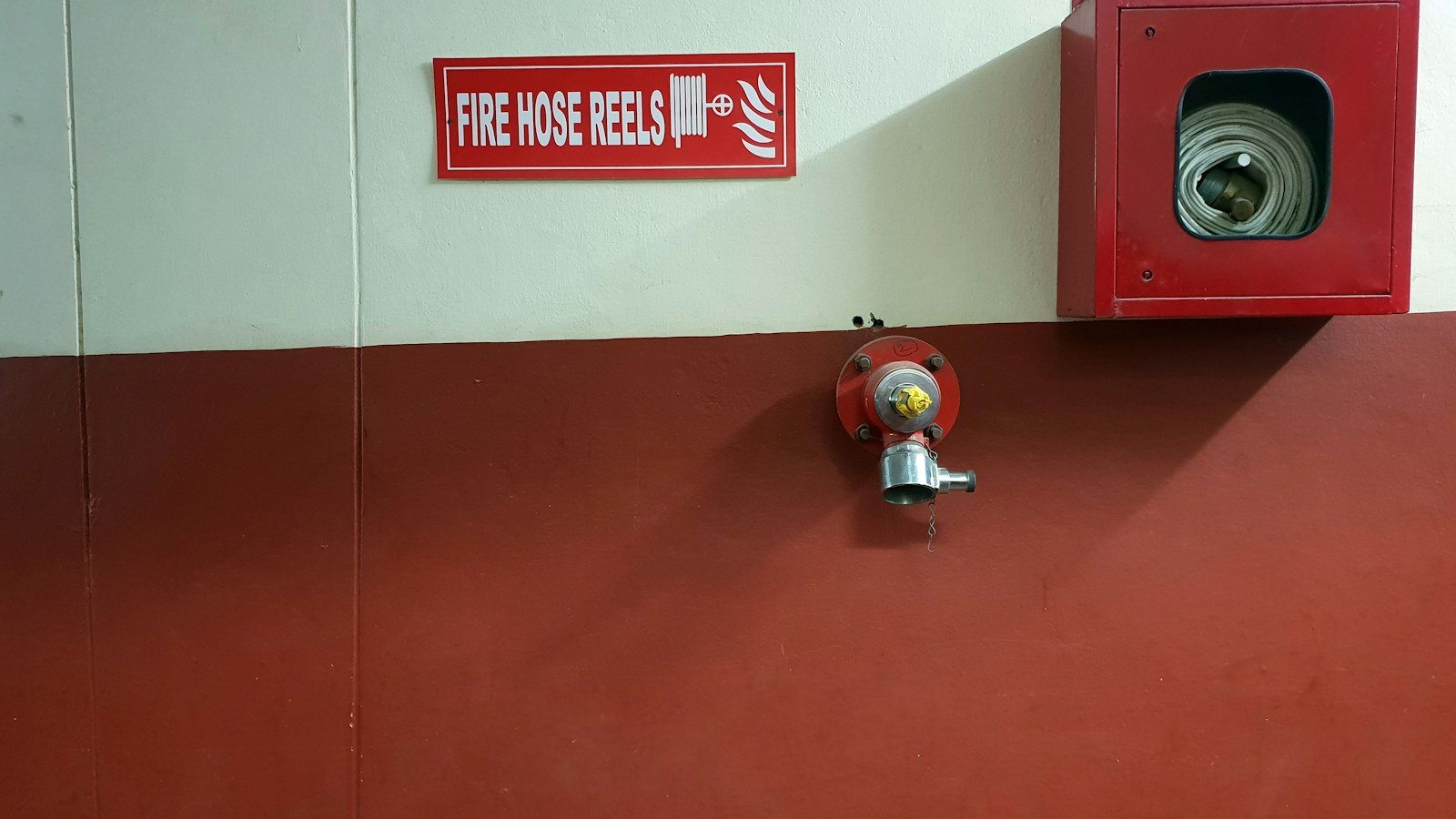
Automatic sprinklers each open on heat above the fire, in wet, dry and pre-action systems; deluge systems use open nozzles. Fire pumps and tanks feed them, with standpipes, fire hose cabinets and the fire department connection (FDC) for fire trucks. Control valves are normally supervised so a closed valve is noticed. Compare types in our wet, dry, pre-action and deluge guide.
Special suppression
Used where water would damage contents or not extinguish efficiently: clean agent for server and archive rooms, carbon dioxide only in normally unoccupied spaces, foam for flammable liquids, water mist where the system has passed fire tests for the application, and wet chemical for kitchen hoods. Gas systems depend on room integrity; see our clean agent comparison.
Passive protection
Rated walls and floors form compartments, fire-rated doors protect their openings, and firestopping seals penetrations. A door’s rating depends on the whole tested assembly of leaf, frame, hinges, lock and closer, so site modifications and wedging doors open defeat it. See our fire-rated doors guide.
Smoke control
Smoke control keeps smoke out of escape routes by pressure differences, as in stair pressurization, or exhausts it from atriums, corridors and parking areas. The fire alarm starts fans and moves dampers, and acceptance tests must prove performance. See our smoke control and stair pressurization guide.
Emergency lighting and exit signs
Emergency lighting switches on when normal lighting fails, and signs mark the exits. Duration and illumination come from the adopted code, and batteries need periodic tests with records; see our emergency and exit lighting guide.
Portable extinguishers
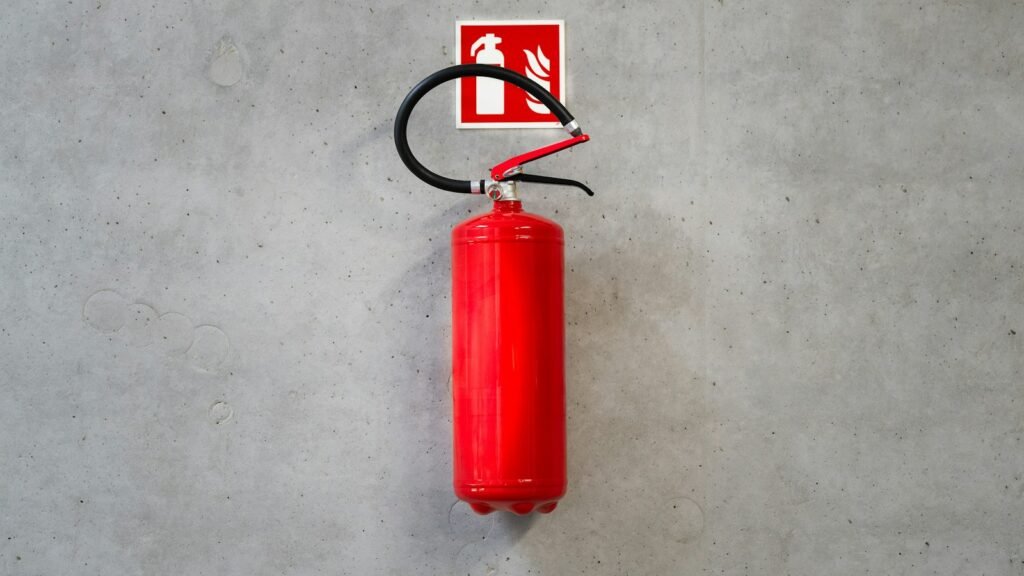
Extinguishers tackle small fires if they suit the fire class and staff can use them: multipurpose dry chemical in offices, carbon dioxide near electrical equipment, wet chemical in kitchens. Our fire extinguisher guide for facility managers covers selection, placement, checks and training.
How the systems work together in a fire
When a detector senses smoke, the fire alarm panel sounds the alarm and executes predefined commands: stopping air handling units, starting pressurization and smoke exhaust fans, recalling elevators, and releasing access-controlled escape doors where the lock arrangement requires it. If a sprinkler opens, a waterflow switch signals the panel, and the fire pump normally starts as pressure drops.
The cause and effect matrix ties each event to each response and the system responsible. NFPA 72 requires emergency control interfaces to be listed devices. Good practice: critical commands come from the fire alarm system, the building management system (BMS) only monitors, and links are tested end to end at commissioning.
| Event | Typical response | Settled in design |
|---|---|---|
| Detector or call point operates | Alarm or voice evacuation messages | Total or phased evacuation, alarm zones |
| Alarm in an air-conditioned zone | Air handling units stop; dampers move | Coordination with air conditioning |
| Alarm with pressurized stairs | Pressurization fans start | Pressure and door-opening force at acceptance |
| Sprinkler waterflow | Panel signal; pump starts as pressure drops | Supervised valves and flow switches |
| Confirmed fire in a clean agent room | Pre-discharge alarm, release, ventilation shutdown | Evacuation delay, room integrity |
| Alarm with access control | Escape door locks release per the approved arrangement | An arrangement the code and Civil Defense accept |
The Saudi regulatory path
The Saudi Fire Protection Code (SBC 801)
The Saudi Building Code Center publishes SBC 801, which sets minimum requirements for protection against fire and explosion hazards, including emergency and evacuation plans and fire suppression systems. The 2024 edition has been mandatory since 30 June 2025, after a 180-day transition from early January 2025 during which the 2018 edition applied; see our SBC 801 guide.
Civil Defense and the Salamah platform
Safety licenses are issued and renewed through Civil Defense’s Salamah platform. Per its fact sheet, low- and medium-risk activities are licensed directly after a safety tools invoice or technical report; high-risk activities need a safety company contract and maintenance contracts, then inspection. In August 2026 the Insurance Authority announced that third-party liability insurance will become a license requirement for activities subject to mandatory insurance; see our Salamah platform news.
Product conformity through SABER
The SASO Technical Regulation for Fire Control Materials and Equipment covers extinguishing equipment, fire pumps, extinguishing agents and their parts, which need a certificate of conformity from an approved body, handled through SABER, before being placed on the market. The regulation text excludes fire alarm and firefighting systems, which follow the Saudi fire protection code, so confirm each product’s status before import. A certificate covers the product, not the installed system.
Step-by-step: planning the fire protection package
- Define the occupancy, hazard and contents of each area.
- Agree the code, standard editions and Civil Defense requirements with the consultant.
- Select detection and suppression per area, including special suppression.
- Coordinate compartments, doors and firestopping with the architect.
- Write the cause and effect matrix before procurement.
- Check each model’s certificate of conformity and required listing.
- Test each system, then the links end to end, and hand over as-built drawings and records.
- Start inspection and maintenance at handover, with records ready for license renewal.
Common mistakes on projects
- Selecting systems separately, with no cause and effect matrix.
- Relying on sprinklers and neglecting compartments and firestopping.
- Mixing values from two editions or two standards in one design.
- Equipment without a certificate of conformity or the specified listing.
- Fire doors wedged open; control valves left closed after maintenance.
- Clean agent in an unsealed room, or extinguishers that do not suit the fire class.
Inspection, maintenance and what drives cost
Each family has its own inspection, testing and maintenance standard: NFPA 72 for fire alarm, NFPA 25 for water-based systems and NFPA 10 for extinguishers, plus smoke control, emergency lighting and fire door tests, at the intervals of your adopted edition. Good practice: name one owner’s representative and align the program with license renewal.
Cost depends on building size, occupancy and hazard, the number of systems, pumps and tanks, special suppression, integration, required listings and maintenance scope. It falls when these are settled in design, not found at inspection.
How AZEIDK helps
AZEIDK has worked in the Saudi market for more than 16 years, with over 300 technical and administrative staff, more than 17 branches and service regions, and more than 10,000 projects and facilities supported. Our engineering design and calculations service analyzes occupancy and safety system requirements, sets design criteria and applicable codes, and prepares calculations, drawings, specifications and equipment schedules.
Our Civil Defense approval support team reviews requirements and documents, coordinates drawings and technical reports and follows up on comments, without guaranteeing any approval outcome. AZEIDK also supplies, installs and maintains fire alarm and suppression systems. Our product directory includes Context Plus fire alarm systems, Jack Pump fire pumps, Falcon Gold fire cabinets, extinguishers and fire-rated doors, and American Fire Control (AFC) gas suppression.
FAQ
What are the main types of fire protection systems in buildings?
Seven families: detection and alarm; water-based suppression such as sprinklers and pumps; special suppression such as clean agent and kitchen systems; passive protection such as rated walls and doors; smoke control; emergency lighting and exit signs; and portable extinguishers. Occupancy, hazard and the adopted code decide which a building needs.
Are sprinklers alone enough to protect a building?
Usually not. Sprinklers control fire with water, but they do not warn occupants early, keep stairs clear of smoke or protect spaces where water causes damage. They are combined with detection, compartmentation, emergency lighting and extinguishers, as the Saudi code and Civil Defense require.
Which code governs fire protection systems in Saudi Arabia?
The Saudi Fire Protection Code (SBC 801), part of the Saudi Building Code, whose 2024 edition has been mandatory since 30 June 2025, with Civil Defense requirements. Specifications usually cite NFPA standards for design, installation and maintenance, and the code and Civil Defense set the applicable edition.
What does the Salamah platform do?
Salamah is Civil Defense’s online portal for issuing and renewing safety licenses. Per its fact sheet, low- and medium-risk activities are licensed after a safety tools invoice or technical report; high-risk activities need a safety company contract and maintenance contracts, then inspection. Maintenance records are part of renewal readiness.
Must fire equipment be UL listed or FM approved?
A certificate of conformity under the SASO technical regulation is required to market covered equipment. UL listing or FM approval is needed where the specification or applicable standard requires it, typically for pumps, sprinklers and control valves. Check the exact model on the certificate, not just the brand.
Planning a new project or reviewing an existing facility? Send your drawings and activity type, and the AZEIDK team will help define the required systems and approval path. Contact the AZEIDK team