


First UL 2684-Listed Thermal Cameras for Fire Detection: What It Means for Saudi Projects
- News
- 6 min read
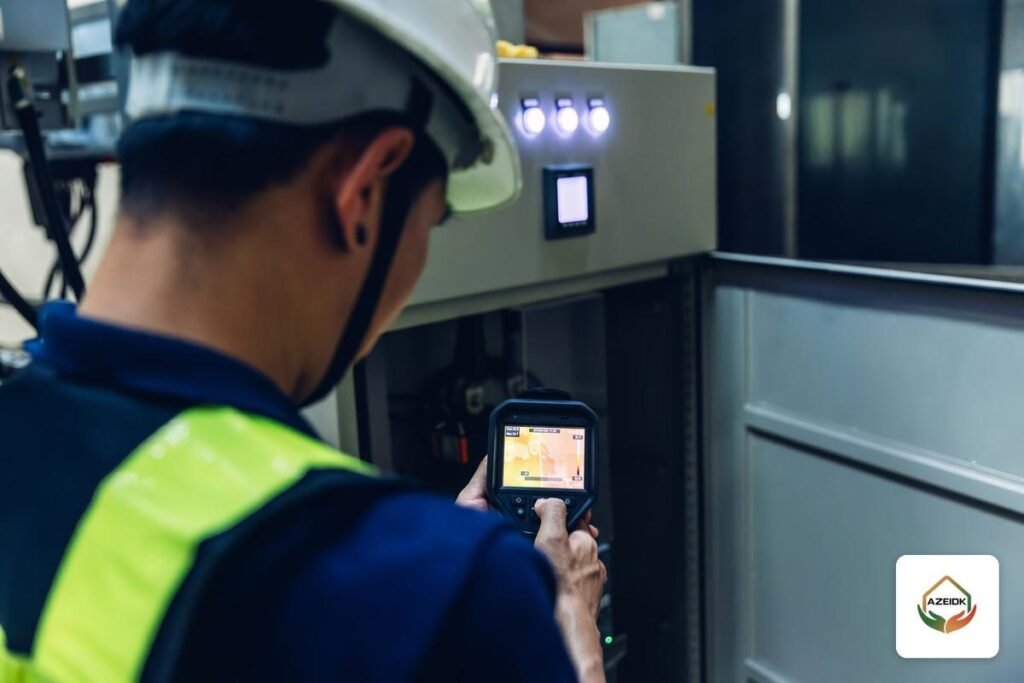
On 22 September 2026, Teledyne FLIR announced through Business Wire that its FLIR A40, A50 and A70 Axx-Series thermal cameras are the first models to achieve UL 2684 listing. For anyone working on thermal image fire detection, this is the first time a thermal camera carries a listing as a fire detector that can be included in a fire alarm system designed to NFPA 72.
Fire Middle East and TradeArabia later covered the news for the Gulf and made one point clear: the listing does not replace local Civil Defense approval or the requirements of the authority on each project. That is the part that matters most to owners and consultants in Saudi Arabia.
Key takeaways
- According to the primary release, the FLIR A40, A50 and A70 are the first thermal cameras listed to UL 2684 for early fire detection.
- ANSI/CAN/UL 2684 is a joint US and Canadian standard for video and thermal image detectors used in fire alarm systems.
- The 2025 edition of NFPA 72 added the thermal image fire detector as a new detector type.
- Named applications: data centers, warehouses and distribution centers, manufacturing, energy infrastructure and battery energy storage.
- The listing does not replace Civil Defense approval or project-specific authority requirements.
What exactly did Teledyne FLIR announce?
The release was issued from Wilsonville, Oregon. The company says the Axx-Series cameras pick up abnormal heat signatures before smoke or flame develops, and continuously watch equipment, assets and large areas for a developing thermal anomaly. When predefined alarm conditions are met, the camera can trigger a fire alarm event through a compatible fire alarm control panel.
FLIR adds that one camera can cover several assets or a large area, which it presents as a simpler system design. Mattias Walan, General Manager of Advanced and Integrated Solutions at Teledyne FLIR, called the listing a major milestone for the fire protection industry. The release gives no pricing or delivery dates.
In the regional coverage, TradeArabia and Fire Middle East explain that the cameras combine thermal and visible imaging and run their analytics on board. Monitoring works inside regions the designer defines in the field of view, using an absolute temperature threshold, a temperature difference or a rate of rise. TradeArabia describes the technology as a complement to conventional detection, not a replacement, and it needs a direct line of sight to the monitored asset.
Thermal image fire detection in UL 2684 and NFPA 72
According to TradeArabia and Fire Middle East, ANSI/CAN/UL 2684 covers video and thermal image detectors used in fire alarm systems, with fire tests, environmental and electrical performance and durability requirements. TradeArabia adds that the testing was done by an independent accredited laboratory.
NFPA 72, the National Fire Alarm and Signaling Code, introduced the thermal image fire detector as a new detector type in its 2025 edition. As Electrical Contractor magazine explains in its review of the edition, it is defined as an initiating device that senses overheated combustible material by imaging in the long-wave infrared range. The regional sources state that the code requires these systems to be listed for fire detection, which is where the UL 2684 listing comes in.
| Item | What the sources say |
|---|---|
| Models | FLIR A40, A50 and A70 (Axx-Series), per the primary release |
| Standard | ANSI/CAN/UL 2684 for video and thermal image detectors |
| Design reference | NFPA 72, 2025 edition |
| Alarm logic | Temperature threshold, temperature difference, rate of rise within defined regions |
| Integration | Through compatible fire alarm control panels |
| Local approval | Listing does not replace Civil Defense approval |
What does this mean for the Saudi market?
The applications named in the coverage are common in the Kingdom: data centers, warehouses and logistics hubs, factories, petrochemical plants, solar plants and battery energy storage systems. In these facilities many failures start as slow heating, such as busbar joints under load in a data center, or DC connectors, combiner boxes and inverters on a solar site, as TradeArabia notes.
A listing alone does not make a camera acceptable on a Saudi project. Design falls under the Saudi Fire Protection Code SBC 801 and the approval of the General Directorate of Civil Defense, while NFPA 72 is a technical reference the designer adopts, not an automatic legal requirement. Any use of a thermal camera as a fire detector therefore has to be defined on the drawings: is it the primary detector for that area, or an extra early-warning layer on top of the smoke and heat detectors the code requires? The consultant settles that with the authority before procurement, not after.
AZEIDK Expert Take
If a thermal camera is proposed as a fire detector on your project, start with three questions. First, is the exact model listed to UL 2684, not just the product family? Ask for the listing and the datasheet under the model name. Second, is the project’s approved fire alarm panel listed as compatible with this detector, and how do alarm and fault signals show on it? Third, have the consultant and Civil Defense accepted the camera as part of the fire alarm system, or will it stay as an auxiliary monitoring system? Thermal detection needs line of sight, so do not drop code-required detectors on the strength of it without written approval. See the scope of AZEIDK fire alarm systems and our technical selection of systems and equipment service to match detectors to the hazard before the submittal goes in. For specific scenarios, read our data center fire protection guide and fire protection for warehouses and logistics facilities.
Sources
- FLIR Axx-Series Cameras Become the First UL 2684-Listed Thermal Imagers for Early Fire Detection, Teledyne FLIR via Business Wire, 22 September 2026
- Teledyne FLIR’s A40 and A70 first to get UL 2684 listing, TradeArabia, 1 October 2026
- Teledyne FLIR secures UL listing for thermal fire detection, Fire Middle East, 6 October 2026
- The Winds of Code Change: Significant Updates to NFPA 72 2025, Electrical Contractor, 13 March 2025
For a site survey or quotation, see CCTV supply and installation.
Related guides
- AZEIDK General Contracting Registered as a Service Provider in the Saudi Aramco Supplier Management System
- Saudi Building Code 2024 Is Mandatory: What It Means for Facilities
- Recalled Central Sprinkler Heads: New CPSC and Tyco Warning and Why Older Buildings Should Check
- Giga-Project Fire Safety: Shifting Priorities Under Vision 2030

