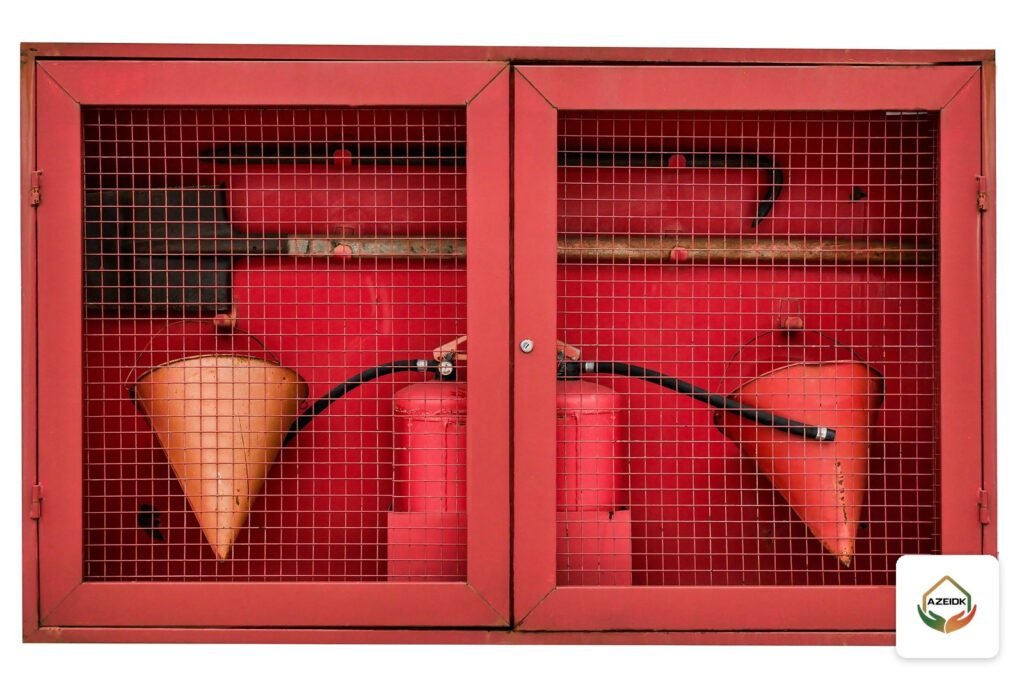
NFPA standards do not become binding in Saudi Arabia just because NFPA publishes them. They carry weight when the Saudi Fire Code (SBC 801) refers to them, when the project drawings reviewed by Civil Defense adopt them, or when the contract specification names them. That is why every Civil Defense approval file starts with three questions: which standard, which edition, and through which route it became a requirement.
This page is a short map of seven standards that come up again and again on Saudi projects: NFPA 10, 13, 20, 25, 72, 101 and 2001. AZEIDK has detailed guides for most of them. Here they sit side by side: what each one covers, who uses it, and when it is asked for.
Key takeaways
- The binding framework for fire protection in buildings is the Saudi Building Code, including SBC 801. Its 2024 edition has been mandatory since 30 June 2025.
- NFPA standards are technical references. They become requirements through a code reference, or through the approved drawings and specification of the project.
- The edition that applies is the one named by the code or the project documents, not automatically the latest NFPA edition.
- NFPA does not test or approve products. Listings and approvals come from bodies such as UL and FM, and Saudi product conformity runs through the SABER platform.
- The seven standards on this map cover extinguishers, sprinklers, fire pumps, maintenance, fire alarm, life safety and clean agent suppression.
In this article
- When are NFPA standards binding in Saudi Arabia?
- How does SBC 801 refer to NFPA standards?
- Map of the NFPA standards most used on Saudi projects
- What each standard covers and who needs it
- Which standard do you need at each project stage?
- Common mistakes with NFPA standards
- How this map supports a Civil Defense approval file
- FAQ
- Conclusion
When are NFPA standards binding in Saudi Arabia?
The National Fire Protection Association is a US non-governmental body that publishes consensus standards. Those standards have no legal force anywhere until an authority adopts them. In Saudi Arabia, the obligation comes through three routes:
- Code reference: the Saudi Building Code is the regulatory framework for buildings, and SBC 801 is its fire code. Where SBC 801 refers to an NFPA standard for a given system, that standard becomes part of the requirement, within the scope of the reference.
- Civil Defense review: fire system drawings are reviewed against SBC 801 and the conditions of the General Directorate of Civil Defense. The standards stated on the approved drawings are what installation and handover are checked against.
- Contract documents: many consultant specifications name an NFPA standard with a specific edition. That makes it a contractual obligation for the contractor and supplier, even on points the code does not detail.
Outside these routes, an NFPA standard remains a reference for good engineering practice. For the code itself see our practical guide to SBC 801, and for requirements by occupancy see Saudi Civil Defense requirements for buildings and facilities.
How does SBC 801 refer to NFPA standards?
According to a comparative study published in ASRJETS, the 2018 edition of SBC 801 was based on the 2015 International Fire Code (IFC). Following the IFC approach, SBC 801 sets out when and where a system is required, then refers to referenced standards for design and installation detail. The study names NFPA standards among them for fire alarm (NFPA 72), standpipes (NFPA 14) and water mains and tanks (NFPA 24 and NFPA 22). The clauses that refer to the other standards should be checked in the official code text.
The practical issue is the edition. The edition of a referenced standard that the code intends may differ from the latest one NFPA has issued. Check the list of referenced standards in the code edition that applies to your project, then check the specification. If the two differ, the consultant and the authority decide, and the decision should be recorded in writing before design starts.
The code decides whether a system is needed: are sprinklers or a fire alarm required for this use and this area? The NFPA standard answers how: spacing, densities, calculations and test methods.
Map of the NFPA standards most used on Saudi projects
The editions below are the latest issued at the time of writing (November 2026), based on NFPA documents and standards store listings. They are not necessarily the editions the code refers to.
| Standard | What it covers | Typical users | Latest edition |
|---|---|---|---|
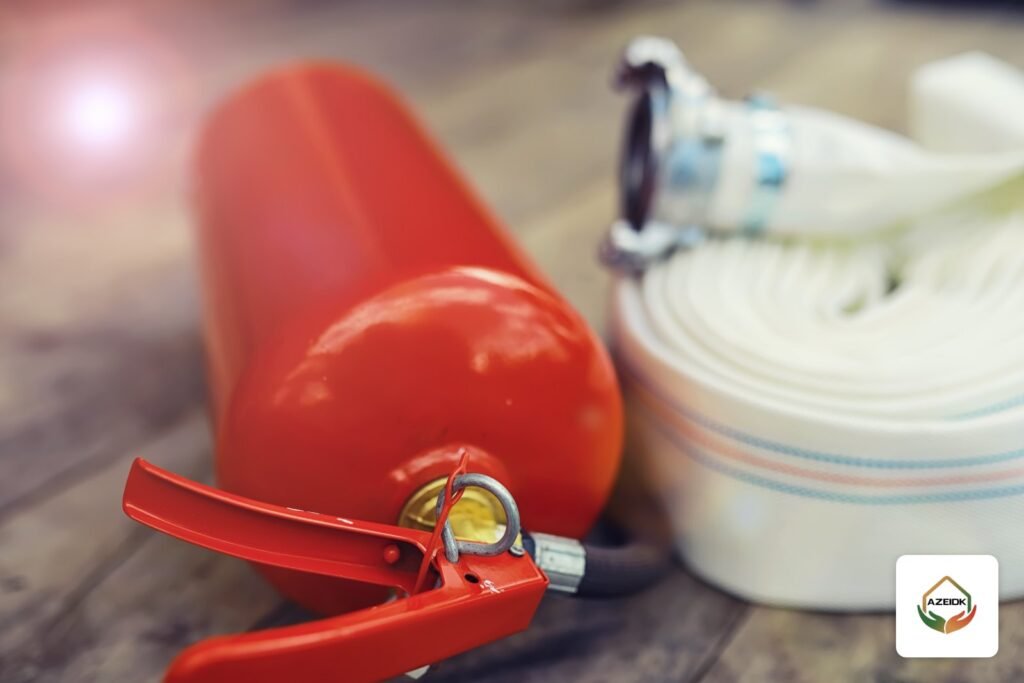
| NFPA 10 | Selection, placement, inspection, maintenance and testing of portable fire extinguishers | Designer, facility safety officer, maintenance contractor | 2026 |
| NFPA 13 | Design and installation of sprinkler systems, from hazard classification to hydraulic calculation | Designer, consultant, installing contractor | 2025 |
| NFPA 20 | Selection and installation of stationary fire pumps: electric, diesel, jockey and controllers | Designer, supplier, pump room contractor | 2025 |
| NFPA 25 | Inspection, testing and maintenance of water-based systems after handover: sprinklers, standpipes, pumps, tanks | Owner, facility management, maintenance contractor | 2026 |
| NFPA 72 | Fire detection, alarm and emergency communications: design, installation and testing | Low-current designer, alarm contractor, maintenance company | 2025 |
| NFPA 101 | Life Safety Code: means of egress and occupancy requirements | Architect, life safety consultant, where the specification calls for it | 2024, with the 2027 edition in final issuance |
| NFPA 2001 | Clean agent fire extinguishing systems (halocarbon and inert gas) | Special hazards designer, supplier, installer | 2025 |
What each standard covers and who needs it
NFPA 10: portable extinguishers
Sets the extinguisher type by fire class, travel distance, monthly inspection, annual maintenance and hydrostatic testing. Almost every facility owner needs it, because extinguishers appear in every licensing file.
NFPA 13: sprinklers
The design and installation standard for automatic sprinkler systems: hazard classification, density, design area, spacing and acceptance testing. It does not cover routine maintenance after handover; that is NFPA 25. See the NFPA 13 guide.
NFPA 20: fire pumps
Covers pump selection and installation, controllers, power supplies and the field acceptance test. Relevant to the designer, the pump supplier and the pump room contractor.
NFPA 25: inspection, testing and maintenance
The standard that stays with the building after handover. It sets inspection and test frequencies for sprinklers, standpipes, pumps, water tanks and valves. Owners and maintenance contractors use it, and its results show up in maintenance records. See our NFPA 25 guide to inspecting and maintaining water-based systems.
NFPA 72: fire alarm
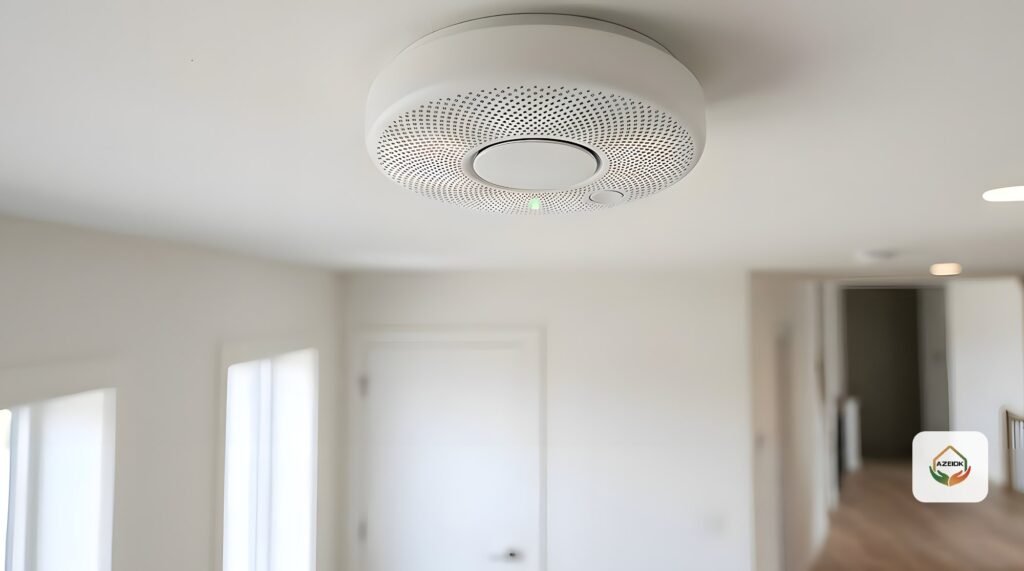
The National Fire Alarm and Signaling Code: detectors and spacing, control panels, notification appliances, emergency communications and periodic test tables. Used by alarm designers, installers and maintenance companies. See the NFPA 72 guide.
NFPA 101: life safety
Covers exits, means of egress and the requirements of each occupancy. In Saudi Arabia, egress requirements come mainly from the Saudi Building Code, and NFPA 101 is used where the project specification or the owner calls for it. The latest published edition is 2024; the 2027 edition is in its final stage, with the NFPA Standards Council hearing appeals on its revisions in August 2026.
NFPA 2001: clean agents
Covers clean agent systems for server rooms, electrical panels and archives: design concentration, personnel safety and room integrity testing.
Which standard do you need at each project stage?
| Stage | Standards most involved | What is asked for in practice |
|---|---|---|
| Design and Civil Defense drawings | NFPA 13, 20, 72, 2001 and 10 | Hydraulic calculations, detector and extinguisher layouts, clean agent quantity |
| Supply and submittal | The standard the specification uses for listing | Datasheet and listing for the exact model, and a SABER certificate of conformity for products under the regulation |
| Installation, testing and handover | NFPA 13, 20, 72 and 2001 | Hydrostatic test, pump acceptance test, alarm device testing, room integrity test |
| Operation, maintenance and licence renewal | NFPA 25, 72 and 10 | Periodic inspection schedules and signed maintenance records |
At supply stage, a reference to NFPA in a catalogue does not prove a product is approved. The notices published with NFPA documents state that NFPA does not list, certify, test or inspect products. For listing checks, see how to verify UL, FM and LPCB listings.
Common mistakes with NFPA standards
- Designing to the latest NFPA edition while the code or specification refers to another, without the consultant’s written agreement.
- Relying on the NFPA standard alone and missing SBC 801 and Civil Defense conditions that decide whether the system is required in the first place.
- Using NFPA 13 for the maintenance programme, when inspection and test frequencies for water-based systems are in NFPA 25.
- Presenting a product as “NFPA compliant” without a listing for that exact model from a recognised testing body.
- Assuming a UL listing or FM approval replaces the Saudi certificate of conformity for products covered by the SASO technical regulation.
- Carrying NFPA 101 solutions into an egress plan without checking that the Saudi Building Code accepts them for that use.
How this map supports a Civil Defense approval file
Civil Defense comments on fire systems often trace back to an unstated standard, or to editions that do not match between drawings, calculations and submittals. AZEIDK’s Civil Defense approval support service reviews a facility against SBC 801 and Directorate conditions, and delivers a requirements list, a gap report, an organised file of drawings and reports and a prioritised remediation plan, then follows inspection comments until a decision. The licensing decision rests with the authority and cannot be guaranteed in advance.
On new projects, standards and editions are best fixed at the engineering design and calculations stage, because correcting an edition after the drawings are approved costs more.
FAQ
Are NFPA standards mandatory in Saudi Arabia?
Not by themselves. They become requirements when SBC 801 refers to them, when the project drawings approved by Civil Defense adopt them, or when the contract specification names them.
Which NFPA edition should my project use?
The edition referred to by the code edition that applies to the project, or the one set in the approved specification. Any departure needs written agreement from the consultant and the authority.
What is the difference between SBC 801 and NFPA standards?
SBC 801 is Saudi regulation that decides when and where a protection system is required. NFPA standards explain how the system is designed, installed and tested, and apply within the code reference or the specification.
Does NFPA approve products like UL and FM do?
No. NFPA only publishes standards; it does not test or approve equipment. Listings come from bodies such as UL and FM Approvals, and Saudi conformity certificates go through SABER for products under the regulation.
Which standard covers sprinkler and fire pump maintenance?
NFPA 25 is the technical standard for inspecting, testing and maintaining water-based systems, applied with manufacturer instructions and Civil Defense requirements. NFPA 13 and NFPA 20 cover design and installation.
Can I read NFPA standards for free?
Yes. NFPA offers free read-only online access to its standards after registration. Full downloadable and printable copies are purchased.
Conclusion
In Saudi Arabia, NFPA standards are detailed tools that work under the Saudi Building Code and Civil Defense conditions. First establish where the obligation comes from, then the edition, then the right standard for each stage: 13, 20, 72 and 2001 for design and installation, 10 for extinguishers, 25 for maintenance, and 101 where the specification calls for it. That order removes many review comments before they are written.
Preparing an approval file or answering Civil Defense comments? Send us your drawings and specification, and we will review the referenced standards and editions and flag the gaps before submission. Contact the AZEIDK team
Related guides
- Video Intercom Systems for Buildings and Compounds
- Integrated Fire and Life Safety Systems Testing Before Handover: Elevators, HVAC, Smoke Control and Doors Under NFPA 4
- Fire Alarm System Installation in Saudi Arabia: Stages, Cabling and Pre-Approval Checks
- Fire Alarm Commissioning and Acceptance Testing Before Handover