


Saudi Commercial Data Center Requirements: Civil Defense Approval and SBC Compliance Now Licensing Conditions
- News
- 5 min read
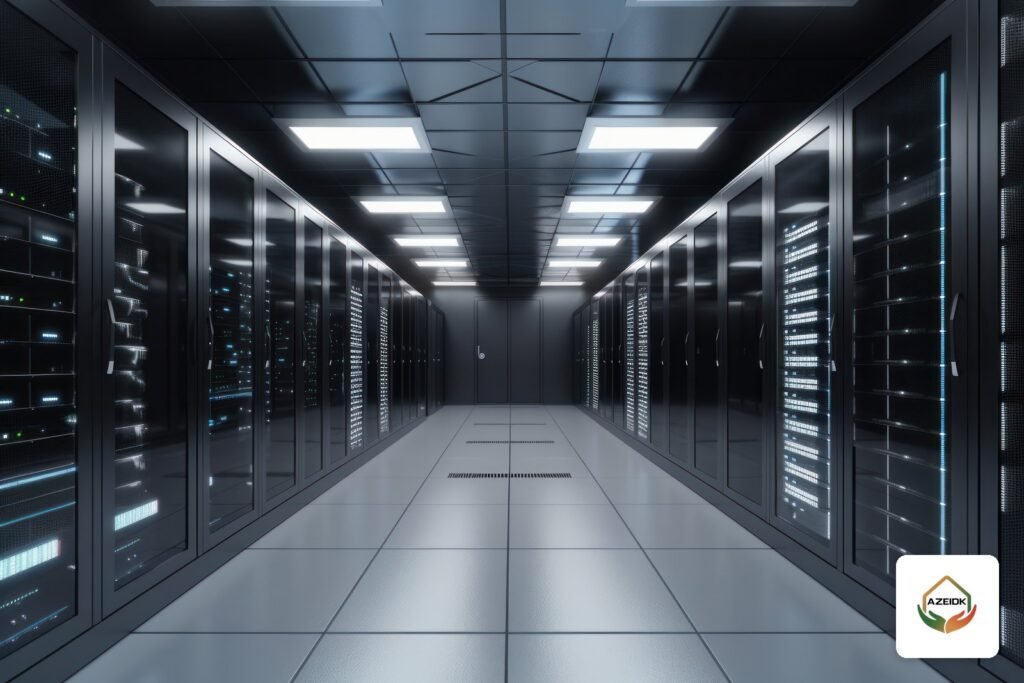
On 4 September 2026 the Ministry of Municipalities and Housing announced that it had approved data center requirements for standalone commercial data centers, inside and outside urban areas, as reported by Okaz the same day. Civil Defense approval is now a condition before the municipal licence is issued, and the facility must comply with the Saudi Building Code, including the fire code SBC 801. That moves decisions on special fire suppression systems, fire alarm and surveillance to the start of the project, not the end.
Key takeaways
- The requirements cover standalone commercial data center sites inside and outside urban areas, and took effect on publication.
- Licensing needs Civil Defense approval before issue, a valid commercial registration covering the activity, and approval from the supervising authority, the Communications, Space and Technology Commission (CST).
- Design and supervision go through accredited engineering offices, with full Saudi Building Code compliance and SBC 801 for fire prevention and protection.
- The text names fire protection, cooling, electrical power and backup systems among the standards to be met.
- Security cameras must follow the Security Surveillance Cameras Law and its implementing regulation, with periodic maintenance and the unified electronic code displayed.
What do the commercial data center requirements cover?
The document, titled Municipal Requirements for Commercial Data Centers and published on the ministry’s website, defines a commercial data center as one built or operated to provide data center services to others. Its scope is limited to standalone sites. Sites must be easy for operations and maintenance teams to reach, with electricity, telecommunications and road access in place.
For licensing, the applicant needs a valid commercial registration that includes the activity, approval from the supervising authority, and Civil Defense approval before the licence is issued. Licensing follows the municipal licensing system.
For design and construction, the document requires compliance with the Saudi Building Code across structural, electrical, mechanical, plumbing and energy conservation requirements. Its reference list names SBC 201, the structural code series, SBC 401, SBC 501, SBC 601, SBC 701 and SBC 801. The fire prevention clause itself is one line: refer to all requirements of the Saudi Fire Code (SBC 801).
The service areas listed for a data center include fire suppression systems, cooling halls and cooling equipment, and a generator and transformer area, with a note that the generator area should not sit close to residential neighbours. In the mezzanine definition, the floor area may increase to half of the floor below where an approved automatic suppression system and audible alarm are provided.
The remaining clauses cover facades, lighting, accessibility for people with disabilities under SBC 201, waste management, periodic and preventive maintenance of the structure and equipment including air conditioning, and display of the unified electronic code issued by the Saudi Business Center on the facility facade.
What does it mean for the Saudi market?
The document does not specify a suppression agent or a detector type. It points to SBC 801 and ties the municipal licence to Civil Defense approval. In practice, a developer cannot leave fire protection design until after the application, because the drawings have to clear Civil Defense first.
Developers and investors in this sector now deal with three clearly defined bodies: the municipality for the licence, Civil Defense for safety approval, and CST as the supervising authority. The consultant has to submit a complete fire package covering suppression, alarm, and generator and transformer rooms, coordinated with the cooling and backup power design.
The camera clause is not optional either. The reference to the Security Surveillance Cameras Law means camera positions and recording retention carry legal obligations that should be built into the design. We covered those obligations in our article on the Security Surveillance Cameras Law.
AZEIDK Expert Take
Before applying for the licence, check three things. First, the suppression choice for each room by hazard, whether clean agent, condensed aerosol or sprinklers, shown on drawings from an accredited engineering office and consistent with SBC 801, with the reference standard the designer adopts, such as NFPA 2001 for clean agents. Second, the interface between the fire alarm system, the suppression release and the HVAC shutdown as set out in the approved design, plus a room integrity test before handover. Third, design the security and surveillance systems to the cameras law from day one. For how code requirements and Civil Defense requirements relate, see SBC 801, SBC 201 and Civil Defense requirements, and for the technical detail our data center fire protection guide. The AZEIDK team can help prepare the approval file under our Civil Defense approval support service. Contact: the AZEIDK team.
Sources
- Municipal Requirements for Commercial Data Centers (in Arabic), Ministry of Municipalities and Housing, 1447H / 2026
- Municipalities approves requirements for commercial data centers (in Arabic), Okaz, 4 September 2026
- Saudi ministry sets unified regulations for commercial data centers, Ajel, 4 September 2026
- Saudi Arabia Approves New Requirements for Commercial Data Centers, MENA Startup Digest, 6 September 2026

