A CO2 fire suppression system (fixed carbon dioxide system) discharges gas from high-pressure cylinders through pipework and nozzles, lowering the oxygen level around the fire and extinguishing it without leaving residue. It suits machinery spaces, flammable liquid stores and unoccupied industrial equipment, but the extinguishing concentration is lethal, so NFPA 12 life-safety measures are essential.
In Saudi Arabia, AZEIDK supplies the SFFECO carbon dioxide (CO2) system, a UL Listed high-pressure system designed to ANSI/NFPA 12. This guide covers discharge methods, life-safety requirements, system components, the comparison with FM-200, and maintenance.
Key takeaways
- The minimum total flooding design concentration for CO2 is 34%, which the U.S. EPA describes as lethal.
- Total flooding fills a closed enclosure with gas; local application aims it directly at a specific piece of equipment or hazard surface.
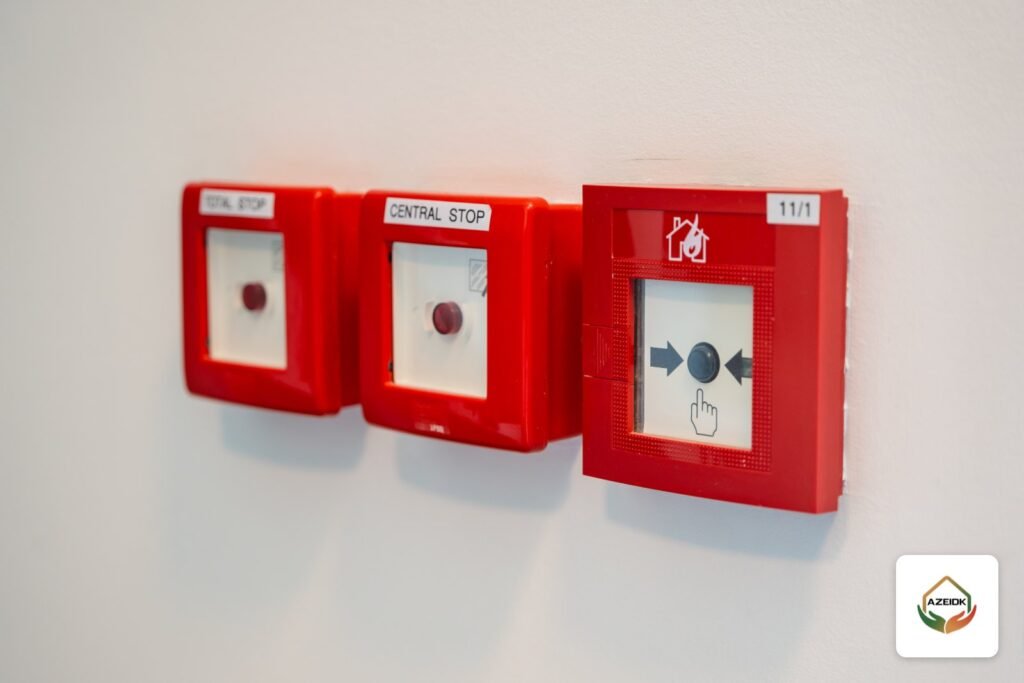
- According to Orr Protection’s summary of NFPA 12, the standard calls for a supervised lockout valve, a pneumatic pre-discharge alarm with time delay, warning signs and provisions that keep people out of hazardous atmospheres.
- The SFFECO system operates at 58 bar (850 psi) at 21 °C, with 2–100 kg cylinders and pneumatic, mechanical or electrical actuation.
In this article
- What is a CO2 fire suppression system and how does it work?
- SFFECO CO2 system components from the datasheet
- Total flooding or local application?
- Life-safety requirements for CO2 systems under NFPA 12
- Where does a carbon dioxide system fit?
- When should you choose CO2 over FM-200?
- Design and approval on Saudi projects
- CO2 system maintenance: cylinder weighing and lockout
- Frequently asked questions
- Conclusion
What is a CO2 fire suppression system and how does it work?
Carbon dioxide is electrically non-conductive and is stored as a liquid under pressure in steel cylinders. On discharge it expands into the protected space and reduces oxygen to a level that will not sustain combustion. The EPA’s report on CO2 risks notes that it leaves no residue, so no clean-up is needed, and that it can be used around energized electrical equipment.
The trade-off is concentration. The same report gives 34% as the minimum total flooding design concentration, with some fuels needing more: 36% for propane and 72% for carbon disulfide. CO2 is not effective on active metals, metal hydrides or materials that contain their own oxygen supply, such as cellulose nitrate.
A fixed system should not be confused with a portable CO2 extinguisher. An extinguisher is used by hand on a small, early-stage fire; a fixed system protects a whole room or machine with a calculated agent quantity, released automatically or manually.
SFFECO CO2 system components from the datasheet
The AZEIDK product page lists: high-pressure CO2, alloy steel cylinders, electrically operated master valves and pressure-operated slave valves, 58 bar (850 psi) at 21 °C, an operating range of −18 °C to 54.4 °C, pneumatic, mechanical and electrical actuation, and design for total flooding or local application.
The datasheet attached to the product page (the system’s UL listing record under the manufacturer’s name) gives nominal cylinder capacities of 2, 4.5, 6.6, 9, 22.5, 45, 53, 66, 80 and 100 kg, and the following discharge and actuation components:
| Group | Listed components | Function |
|---|---|---|
| Cylinder valves | Solenoid master valve, differential master valve, slave valve | Open the first cylinder, then the rest of the bank by gas pressure |
| Connection and manifolding | Flexible discharge hoses, interconnecting hose, check valves, battery frames with manifold for 2–6 cylinders or double-row frames for 10 and 12 cylinders | Combine cylinders on one manifold and prevent back-flow into an empty cylinder |
| Distribution and isolation | Direction valves and lockout valves, 1, 1¼, 1½ and 2 in | Route agent from one bank to the selected zone; block discharge while people are present or during maintenance |
| Actuation and warning | Canister, manual actuator, pressure-operated siren, time delay unit, pressure switch | Release the system, sound a pneumatic alarm and delay discharge for evacuation, signal discharge to the control panel |
| Protection and maintenance | Safety release valve, bleeder valve, mechanical weight loss unit | Protect pipework from over-pressure and monitor agent loss from cylinders |
Cylinder count, pipe sizes and nozzles come from a project-specific hydraulic calculation, reviewed in the technical submittal. It is good practice to confirm the listing is current in UL Product iQ when preparing the submittal.
Total flooding or local application?
NFPA 12 classifies fixed CO2 systems by discharge method. In total flooding, agent is discharged into a closed enclosure until the design concentration is reached throughout the volume and held long enough. In local application, each nozzle discharges directly onto its own portion of the hazard, such as a flammable liquid surface or exposed equipment, without needing a tight room.
| Item | Total flooding | Local application |
|---|---|---|
| Space | Closed room or enclosure with limited openings | Equipment or hazard surface in an open or partly enclosed area |
| Design basis | Enclosure volume, required design concentration and hold time | Surface area or an assumed volume around the equipment |
| Enclosure tightness | Essential; openings closed and ventilation shut down before discharge | Less critical, but air currents affect performance |
| Deep-seated fires | Possible with higher concentration and longer hold time | Not suitable |
| Examples | Enclosed machinery rooms, flammable liquid stores, unoccupied electrical rooms | Printing presses, paint booths, exposed industrial equipment |
AXA XL’s engineering guideline adds that a partial enclosure for local application needs a wall at least 0.6 m above the hazard, and that CO2 is inappropriate outdoors unless the hazard is shielded and air-movement losses are included in the design.
Life-safety requirements for CO2 systems under NFPA 12
This is the fundamental difference between CO2 and clean agents: the concentration that puts out a fire can make a person unconscious within a minute. The EPA’s 2000 report reviewed CO2 incidents up to July 1998 and found 62 incidents with 119 deaths and 152 injuries. Most were accidental discharges during maintenance on or around the system, and the report cautions that its data may be incomplete.
How does CO2 concentration affect people?
| Concentration | Effect (EPA) |
|---|---|
| 3% | Mild headache, sweating and breathlessness at rest after about an hour |
| 4–5% | Headache, dizziness, raised blood pressure and uncomfortable breathing within a few minutes |
| 7–10% | Unconsciousness or near-unconsciousness within a few minutes |
| 10–15% | Dizziness, drowsiness, severe muscle twitching and unconsciousness within one to several minutes |
| 17–30% | Unconsciousness, convulsions, coma or death within about one minute |
What does NFPA 12 require to protect people?
The points below are summarised from Orr Protection’s bulletin on the 2008 edition of NFPA 12 and from AXA XL’s engineering guideline. Designers must check the edition adopted for the project (currently 2025) and the requirements of the authority having jurisdiction.
- Normally occupied spaces: NFPA 12 does not permit new total flooding systems in normally occupied enclosures except under limited exceptions; AXA XL notes this prohibition dates from the 2005 edition.
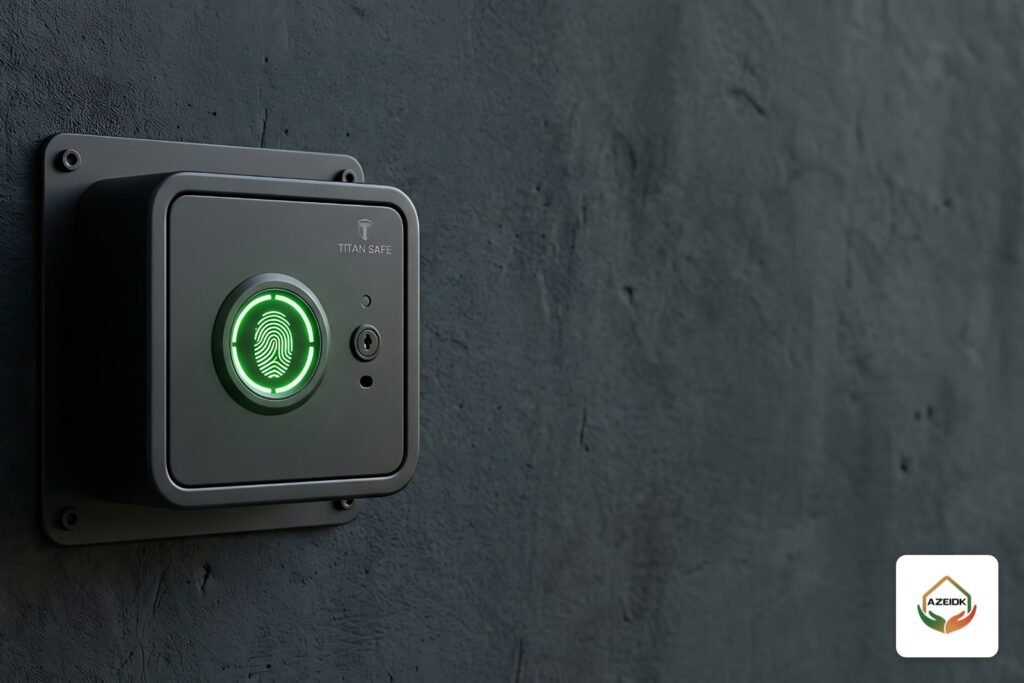
- Lockout valve: required where CO2 could reach people, and supervised by the control panel. A service disconnect switch is not an acceptable substitute.
- Pneumatic pre-discharge alarm and time delay: a gas-powered siren and a delay long enough to evacuate from the point furthest from an exit. AXA XL notes that 20–30 seconds is adequate in many cases; the standard ties it to actual evacuation time.
- Odorizer: NFPA 12 lists adding a distinctive odour among the means of keeping people out of hazardous atmospheres, and its annex recommends oil of wintergreen unless there is a reason to use another odorizer.
- Warning signs: inside the protected space, at each entrance and in adjacent areas where gas could migrate. CO2 is heavier than air and collects in low areas and pits.
- Procedures: lock out the system or evacuate before any maintenance or test, and assign a fire watch for the whole lockout period.
The clean agent comparison explains how agent choice follows room type and occupancy.
Where does a carbon dioxide system fit?
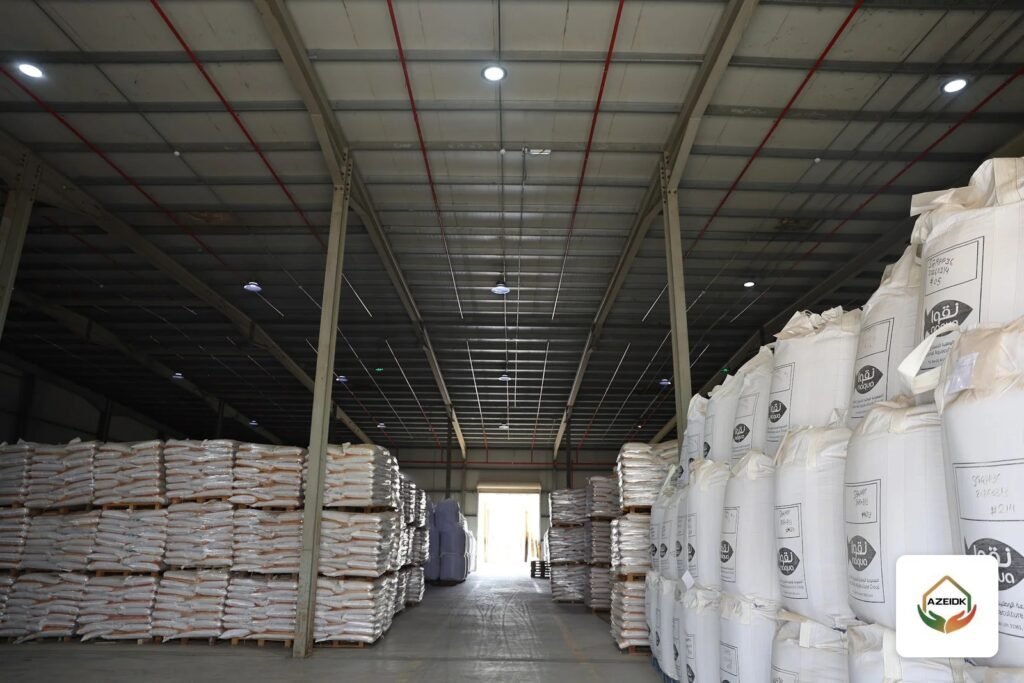
AZEIDK’s product pages list applications for the SFFECO system including engine and machinery rooms, electrical and electronics production areas, printing presses and paint booths, flammable material stores and unmanned industrial equipment. The EPA report adds electrical rooms, motor control centres and switchgear, and steel and aluminium plants.
The common thread is a hazard that needs fast extinguishing without water or residue, in a space that is normally unoccupied. For wider industrial and electrical-room protection, see special fire suppression systems.
When should you choose CO2 over FM-200?
FM-200 (HFC-227ea) is a clean agent designed to NFPA 2001 at relatively low concentrations that allow occupancy within approved safety limits, which is why it is common in server, archive and control rooms. CO2 needs at least 34%, so it is not chosen where people are normally present.
| Criterion | CO2 system | FM-200 system |
|---|---|---|
| Reference standard | NFPA 12 | NFPA 2001 |
| Occupancy | Normally unoccupied spaces, with lockout, alarm and delay | Suitable for normally occupied spaces within approved concentration limits |
| Discharge method | Total flooding or local application | Mainly total flooding |
| Partly open hazards | Possible with local application | Needs a tight enclosure |
| Typical applications | Machinery rooms, flammable liquid stores, printing presses, paint booths | Server, telecom, control and archive rooms |
Rule of thumb: if the space is normally occupied or entry is hard to control, a clean agent is the better fit. If the hazard is exposed equipment or an unoccupied industrial space needing high concentration, CO2 may be the right choice. AZEIDK also supplies clean agent systems, including American Fire Control FM-200 and the SFFECO 1230 system; see special fire suppression brands in Saudi Arabia.
Design and approval on Saudi projects
The binding reference in the Kingdom is the Saudi Fire Code SBC 801, part of the Saudi Building Code, with drawings approved by the General Directorate of Civil Defense. Designers adopt NFPA 12, currently the 2025 edition, as the technical reference for CO2 details. A submittal typically includes the datasheet, the system’s UL listing, hydraulic calculations, piping and nozzle layout, control and alarm sequence, and lockout valve and sign locations.
In total flooding, success depends on enclosure tightness, as explained in room integrity testing for gas suppression systems.
CO2 system maintenance: cylinder weighing and lockout
- Weigh the cylinders: agent loss from a high-pressure cylinder does not show on a pressure gauge, because pressure follows temperature while liquid remains. Cylinders are weighed periodically to the inspection schedule in the adopted edition of NFPA 12 and the manufacturer’s instructions, and the SFFECO component list includes a mechanical weight loss unit.
- Lock out before work: close the lockout valve or evacuate the space before any maintenance or test; according to the EPA, most recorded incidents happened during maintenance.
- Check actuation and alarms: pneumatic siren, time delay, pressure switch and panel supervision of the lockout valve.
- Review the enclosure: seal new openings and check that signs are legible.
The structure mirrors an FM-200 maintenance programme, with a higher safety priority.
Frequently asked questions
Is a CO2 fire suppression system dangerous to people?
Yes. The design concentration is at least 34%, and above 17% a person can lose consciousness within a minute. It is installed in normally unoccupied spaces with a lockout valve, pneumatic alarm and time delay.
What is the difference between a fixed CO2 system and a CO2 extinguisher?
An extinguisher is a hand-held unit for a small, early fire. A fixed system protects a whole room or machine with a calculated agent quantity and operates automatically or manually.
Is CO2 suitable for server rooms?
Server rooms are entered regularly by technicians, so a clean agent such as FM-200 is usually preferred. The designer makes the final choice based on the room.
What is the difference between total flooding and local application?
Total flooding fills a closed room to the design concentration. Local application discharges directly onto a piece of equipment or hazard surface without a tight room.
What is the operating pressure of the SFFECO CO2 system?
58 bar (850 psi) at 21 °C, with an operating range of −18 °C to 54.4 °C and 2–100 kg cylinders, per the product page and datasheet.
Conclusion
A CO2 system is an effective answer for unoccupied industrial hazards and local protection of exposed equipment, leaving no residue and conducting no electricity. But the extinguishing concentration is lethal, so the system is only as good as its supervised lockout, pneumatic alarm, time delay, signs and training. Choosing between CO2 and FM-200 starts with one question: will people be in the space?
Considering CO2 for a machinery room or flammable liquid store? Send us the enclosure dimensions, hazard type and occupancy, and we will help you choose the protection method and prepare the datasheet and submittal for the SFFECO system. Contact the AZEIDK team