EN 54 (also written EN54) is the European series of product standards for fire detection and fire alarm systems, prepared by the European Committee for Standardization (CEN) through its technical committee CEN/TC 72. Each product part sets requirements, test methods and performance criteria for one type of component, such as control panels, detectors, manual call points and sounders. EN 54 proves how a device performs, not where it goes. On Saudi projects, the specification normally names the approval route, and the installed system must meet the Saudi Fire Protection Code (SBC 801) and Civil Defense requirements.
Key takeaways
- EN 54 parts are product standards. System design comes from the design standard the project adopts, such as National Fire Protection Association (NFPA) 72 or BS 5839-1, together with SBC 801.
- Approval belongs to the exact model and the part that matches it: a panel to EN 54-2, a power supply to EN 54-4, a point smoke detector to EN 54-7.
- In the European Union (EU), product parts such as EN 54-2 and EN 54-7 are linked to the Construction Products Regulation (CPR), so the manufacturer issues a declaration of performance (DoP) and affixes CE marking, backed by a notified body certificate.
- CE marking on each device does not prove the devices work together; compatibility is assessed under EN 54-13 or shown on the panel manufacturer’s compatibility list.
- An EN 54 certificate does not replace SABER registration or Civil Defense acceptance of the installed system.
What is EN 54?
CEN publishes EN 54 as a numbered series titled “Fire detection and fire alarm systems”. EN 54-1 (2021 edition) defines the terms used across the series, gives the principles behind each part and describes the functions of system components. It covers these systems in buildings and civil engineering works; smoke alarm devices fall under EN 14604.
The other parts are product standards, such as EN 54-7 for point smoke detectors. How many detectors a room needs, and where, comes from design documents: CEN/TS 54-14, a CEN technical specification with guidelines from planning to maintenance; national codes of practice such as BS 5839-1 in the UK, which recommends rather than requires; or NFPA 72 on projects that follow US practice. Our fire detector selection guide follows the same split.
The main EN 54 parts and what they cover
The table lists the main parts, with titles as in the Fire Industry Association (FIA) list of the BS EN 54 series.
| Part | What it covers |
|---|---|
| EN 54-1 | Introduction: terms, principles and component functions |
| EN 54-2 | Control and indicating equipment (the fire alarm control panel) |
| EN 54-4 | Power supply equipment |
| EN 54-3 | Fire alarm devices: sounders |
| EN 54-23 | Fire alarm devices: visual alarm devices |
| EN 54-5 | Heat detectors: point detectors |
| EN 54-7 | Smoke detectors: point detectors using scattered light, transmitted light or ionization |
| EN 54-10 | Flame detectors: point detectors |
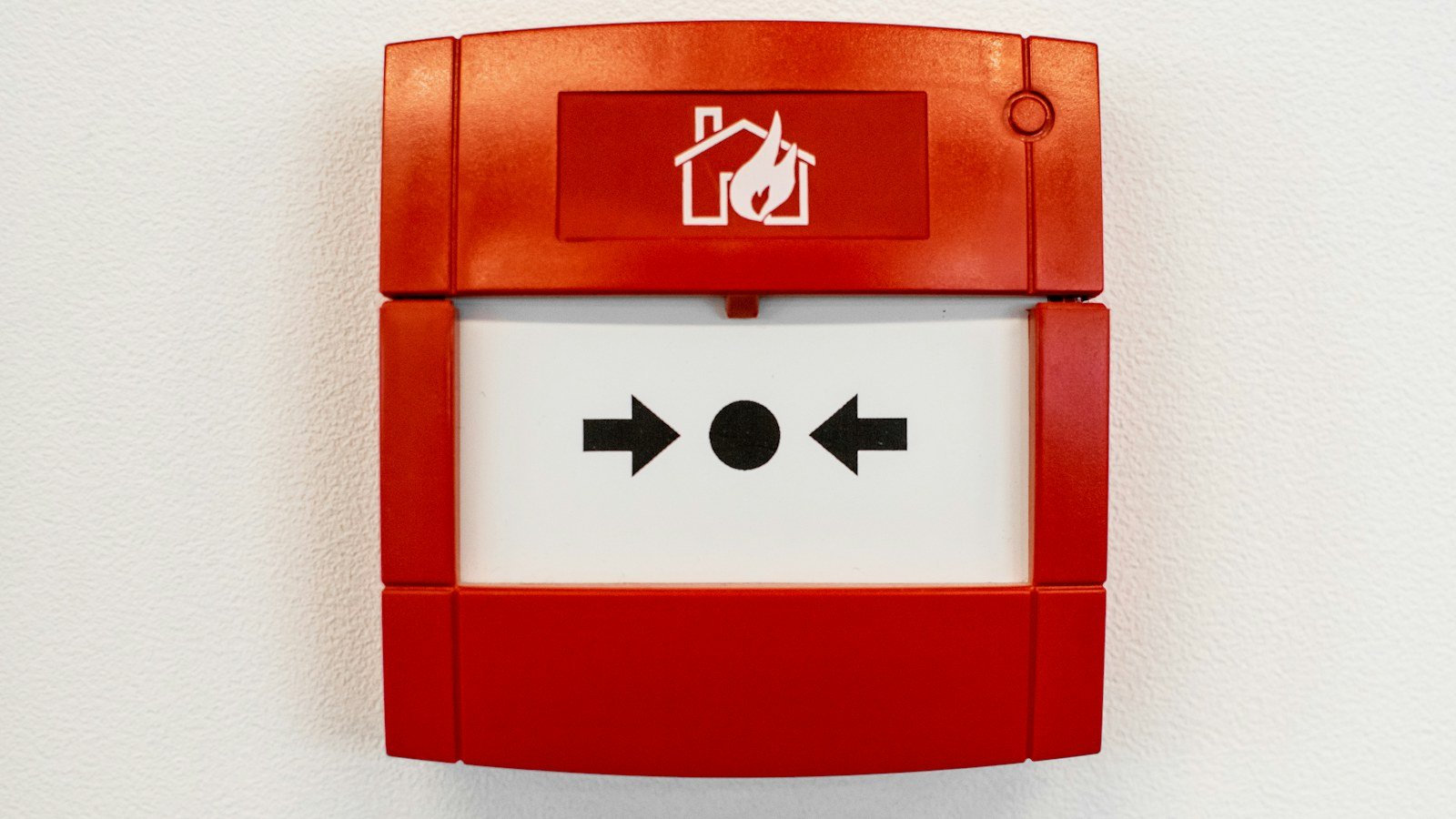
| EN 54-11 | Manual call points |
| EN 54-12 | Smoke detectors: line detectors using an optical light beam |
| EN 54-13 | Compatibility and connectability assessment of system components |
| EN 54-16 and EN 54-24 | Voice alarm control and indicating equipment; voice alarm loudspeakers |
| EN 54-17 and EN 54-18 | Short-circuit isolators; input/output devices |
| EN 54-20 | Aspirating smoke detectors |
| EN 54-21 | Alarm transmission and fault warning routing equipment |
| EN 54-22 | Resettable line-type heat detectors |
| EN 54-25 | Components using radio links |
| EN 54-26, 29, 30 and 31 | Carbon monoxide and multi-sensor point detectors |
Editions matter: a published manufacturer’s declaration for a combined heat and smoke detector cites EN 54-5:2017+A1:2018 and EN 54-7:2018, while some lists still show older dates. Check any certificate to a withdrawn edition before accepting it.
EN 54, the Construction Products Regulation and CE marking
In the EU, the European Commission’s summary list of harmonized standards under the CPR, Regulation (EU) No 305/2011, includes EN 54-2 and EN 54-7:2018 among other parts, but not EN 54-13, 22, 26, 29, 30 or 31. For a product covered by a harmonized standard, the manufacturer draws up a DoP when placing it on the market, and only a product with a DoP may carry CE marking.
The detector declaration above states System 1 of assessment and verification of constancy of performance (AVCP). Under System 1, a notified product certification body type-tests the product, inspects and monitors factory production control, and issues a certificate of constancy of performance.
Two limits matter. As EN 54-13 is not cited, CE marks on individual devices do not show that a panel and its devices work together. And the new CPR, Regulation (EU) 2024/3110, entered into force on 7 January 2025; the Commission says both regulations will coexist, products covered by standards cited under the 2011 regulation stay under it in principle, and the 2011 regulation is due to be repealed in 2039.
How to read a declaration of performance
A DoP follows the model in Annex III of the CPR, as amended by Delegated Regulation (EU) No 574/2014. Check each item against the submittal:
- Unique identification code of the product-type: it should match the model on the label, datasheet and quotation, not just the product family.
- Intended use: fire detection and fire alarm systems for buildings.
- Manufacturer and any authorized representative: as shown on the notified body certificate.
- System of AVCP: System 1 in the detector declaration above, which involves a notified body certificate.
- Harmonized standard and notified body: the EN 54 part and edition, and the notified body number; ask for its certificate.
- Declared performance: a result for each essential characteristic, such as “Pass” or a class like A2S for a heat detector; “NPD” (no performance determined) means that characteristic is not covered.
- Signature: the signatory for the manufacturer, with place and date of issue.
Then confirm the certificate with the notified body, check the datasheet claims nothing beyond the declared performance, and file all three together.
EN 54 and UL listing on Saudi projects
In our experience, Saudi project specifications usually name one approval route for fire alarm equipment: EN 54 certification or UL listing to standards such as UL 864 for control units and UL 268 for smoke detectors. Either route proves the product only; the installed system must meet the Saudi Fire Protection Code, whose fire protection requirements the General Directorate of Civil Defense monitors and enforces.
| Item | EN 54 route | UL route |
|---|---|---|
| Product standards | EN 54 parts, published by CEN | UL standards such as UL 864 and UL 268 |
| Certifier | Notified product certification body (System 1) | UL Solutions |
| Evidence to request | DoP, CE marking and certificate of constancy of performance | Listing of the exact model in UL Product iQ |
| Ongoing control | Surveillance of factory production control | Follow-up inspections at the factory |
| Compatibility | EN 54-13 assessment or panel compatibility list | Panel manufacturer’s compatibility list |
Do not mix routes in one system unless the panel manufacturer confirms compatibility in writing, as our fire alarm control panel guide and UL Listed vs FM Approved guide explain.
Market conformity is a separate track. The Saudi Standards, Metrology and Quality Organization (SASO) requires products sold in the Kingdom to be registered on SABER. Its fire control technical regulation excludes fire alarm and firefighting systems, applying the Saudi Fire Protection Code to them; its definition of “product” mentions alarm and detection equipment, but only items within the regulation’s scope. Confirm the SABER route for each model with the supplier or a conformity assessment body before import, as our SABER update explains.
Common mistakes with EN 54 submittals
- Accepting a brand or series certificate instead of the exact model’s declaration and certificate.
- Reading a detector’s EN 54-7 certificate as approval of the panel; each component needs its own part.
- Overlooking “NPD” entries, or accepting a certificate to a withdrawn edition without checking.
- Treating CE marking or an EN 54 certificate as SABER conformity or Civil Defense acceptance.
How AZEIDK helps
Our fire alarm system solutions cover addressable and conventional systems, from panels and detectors to programming, system testing and zone verification. AZEIDK also provides site surveys, engineering design and calculations, Civil Defense approval support and annual maintenance contracts, backed by 16+ years in the Saudi market and 17+ branches and service regions.
Our technical selection of systems and equipment service reviews datasheets and catalogs and verifies that proposed equipment complies with the project requirements and approved specifications. We supply the Context Plus fire alarm range with a compliance review for each project; its brand page notes that component approval is considered against EN 54 and that a listing covers the specific model. For voice alarm parts, see our voice evacuation guide.
FAQ
Is EN 54 mandatory in Saudi Arabia?
We found no Saudi regulation that names EN 54 as mandatory. The project specification sets the approval route, such as EN 54 certification or UL listing, and the installed system must meet SBC 801 and Civil Defense requirements. SABER registration with SASO is a separate obligation, so confirm both before procurement.
What is the difference between EN 54-2 and EN 54-4?
EN 54-2 covers control and indicating equipment, the fire alarm control panel that receives device signals, indicates fire and fault conditions and controls outputs. EN 54-4 covers power supply equipment; standby battery duration comes from the design standard and the specification. If the power supply is built into the panel, check that its declaration covers both parts.
Does CE marking mean a fire alarm device is approved for my project?
No. CE marking shows that the manufacturer has drawn up a declaration of performance under the EU Construction Products Regulation, backed for EN 54 detectors by a notified body certificate. It does not prove panel compatibility, compliance with your design standard or acceptance in Saudi Arabia; check those separately against the compatibility list, the specification and Civil Defense requirements.
What does NPD mean on a declaration of performance?
NPD stands for no performance determined: the manufacturer has not declared a result for that essential characteristic, so the declaration gives no evidence about it. If the specification or design depends on it, ask the manufacturer for test evidence or choose a model that declares it. A CE mark does not fill the gap.
Can EN 54 detectors be connected to a UL-listed fire alarm panel?
Only when the panel manufacturer confirms compatibility in writing, for example in its compatibility list. A CE mark or UL listing on a single device does not cover a mixed system, and the specification may not allow mixing at all. Settle the route in the specification before ordering, and keep the manufacturer’s confirmation in the submittal.
Which EN 54 parts cover voice alarm systems?
EN 54-16 covers voice alarm control and indicating equipment, and EN 54-24 covers voice alarm loudspeakers. Like the other parts, they test products, not system design, so speech intelligibility and loudspeaker layout come from the design standard the project adopts. Also confirm compatibility between the voice alarm panel and the fire alarm panel.
Need EN 54 submittals checked for your project? Send us the datasheets, declarations of performance and certificates, and our engineers will review them against your project specification. Contact the AZEIDK team