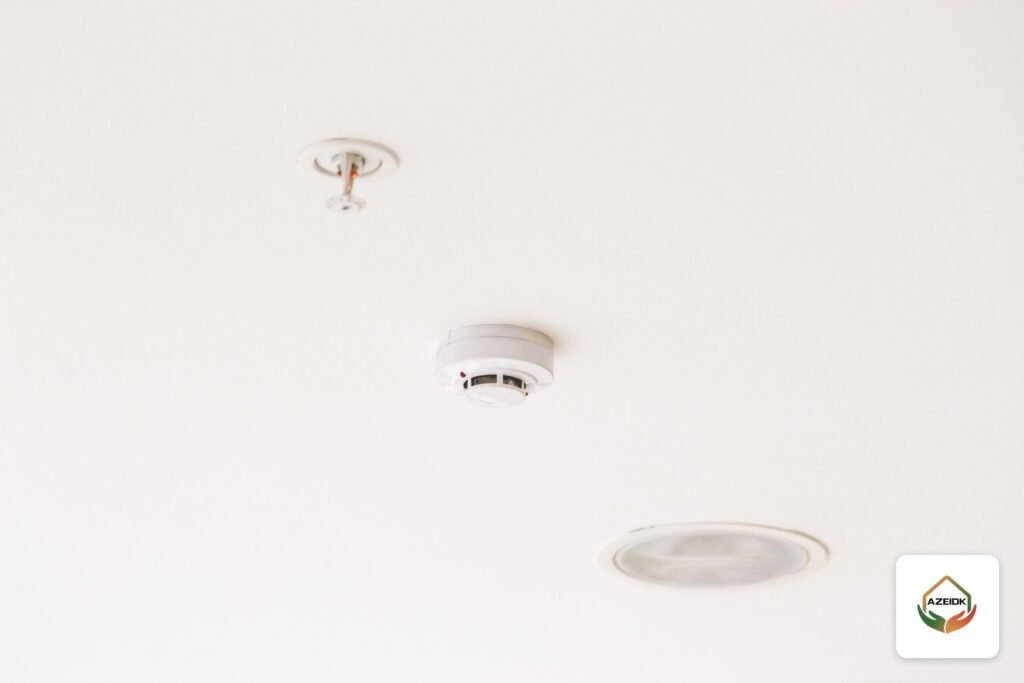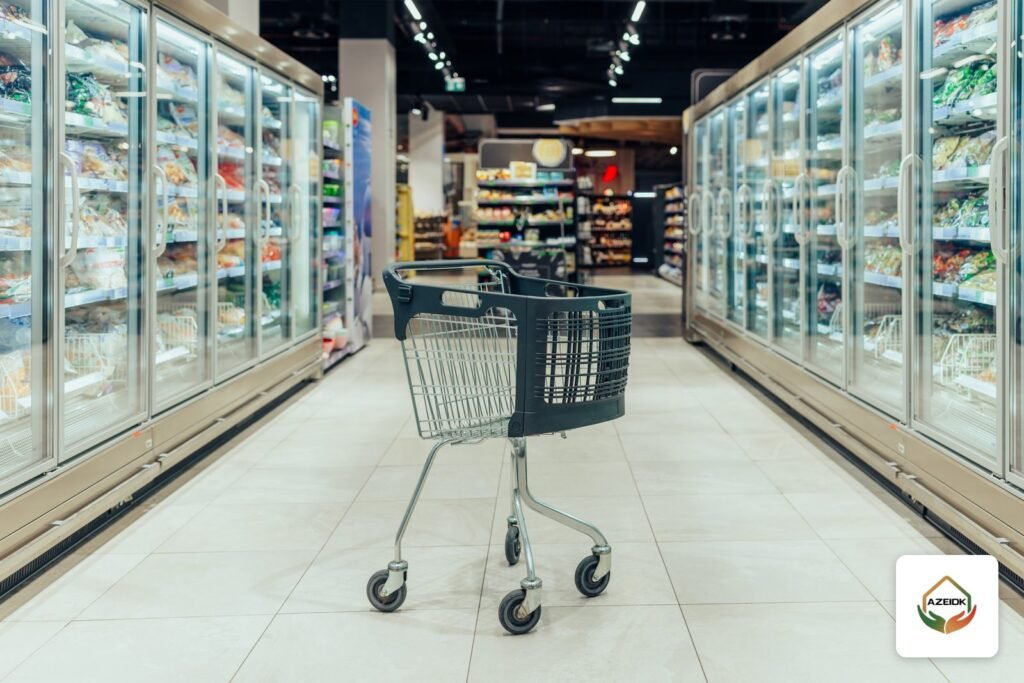
A large supermarket or hypermarket puts several fire risks under one roof: a wide sales floor with a high ceiling, a back store full of cardboard and plastic, cold rooms, a bakery or food corner, and a car park, with hundreds of shoppers inside at peak hours. That is why supermarket fire protection cannot be a single equipment list. It has to be planned zone by zone.
Below we cover detectors for each area, extinguishers between the shelves, the fire network and hydrants, and evacuation while the store is open, with links to what we supply under fire detection and alarm systems in Egypt. It covers the single, stand-alone big-box store, not multi-tenant malls.
Key takeaways
- The binding reference is the Egyptian fire protection code, 2026 edition (Ministerial Decree No. 355 of 2026); Civil Protection reviews drawings and inspects before opening.
- High sales floors suit beam detectors with a clear path and stable mounting.
- The TANDA TX7130 covers paths from 8 to 100 m and operates from -10 to 55 °C, so it does not go inside freezer rooms colder than that.
- Extinguisher layout follows travel distance between the shelves, not a fixed number per square metre.
- Evacuation during opening hours needs an alarm louder than the store and exits free of stock.
In this article
- What makes supermarket fire protection different?
- The high-ceiling sales floor: beam detectors
- A fire alarm panel for the store: what you actually need
- Zone by zone: the right detector and extinguisher
- The back store and the cold rooms
- The in-store bakery and food corner
- Extinguishers between the shelves: layout by travel distance
- The fire network, hydrants and the car park
- Evacuation during opening hours
- Common mistakes in large stores
- Frequently asked questions
- Conclusion
What makes supermarket fire protection different?
A big store combines three difficulties: a large amount of combustible goods on the shelves and in the store room, a high ceiling that delays smoke reaching ceiling detectors, and many visitors who do not know the building or its exits.
Egyptian Building Law No. 119 of 2008 obliges the permit applicant to apply the Egyptian fire code. The code in force is the 2026 edition, whose third part covers electrical requirements, detection and alarm. The General Directorate of Civil Protection (Ministry of Interior) reviews the drawings and inspects before occupancy. NFPA standards are design references, not a replacement for the Egyptian code.
When news of a store fire spreads, the owner’s question is simple: will my system detect early, and can shoppers get out in minutes?
The high-ceiling sales floor: beam detectors
Under a high metal roof, smoke can cool and settle in a layer below the ceiling without reaching it (stratification). Maintaining many spot detectors above the shelves also needs lifts and closed aisles. So designers often use a projected beam smoke detector here. It sends a light beam to a reflector on the opposite wall and measures the signal drop as smoke crosses it.
TANDA TX7130
The official TANDA datasheet lists an operating range of 8 to 100 m split into four spans, three sensitivity levels (2.6, 3.8 and 5.8 dB), an operating temperature of -10 to 55 °C, and conformity to EN 54-12:2015 with LPCB approval. It is a conventional reflective detector with fire and fault relay outputs, so it connects to a conventional zone or, in an addressable system, through an input module. Full details are on the TANDA page at AZEIDK Egypt.
What a beam detector needs to work in a store
- A clear path at all times: the EC&M explanation of beam detectors (based on the 2007 edition of the code) says the beam path must be kept clear of opaque obstacles, and that a sudden blockage gives a trouble signal, not an alarm. For design, follow the installation instructions in the datasheet and the current NFPA 72 edition (2025). Hanging signs and banners change often, so the marketing team must know the beam lines.
- A stable mounting surface: the same explanation says the transmitter and reflector go on stable surfaces that do not move, because movement of the support causes false alarms or faults.
- Allow for stratification: under high ceilings more than one level of detection may be needed.
Beam spacing and detector count are covered in detail in our beam detector spacing article.
A fire alarm panel for the store: what you actually need
A large store needs an alarm panel that shows exactly where a signal came from. Context Plus offers ZFP addressable panels and CFP and FP conventional panels (CFP panels with 2 to 8 zones), together with Series 65A smoke and heat detectors, the 55000-268 intelligent reflective beam detector, manual call points (MCPs), sounders and beacons, and input/output modules. Each model’s approval is in its datasheet on the Context Plus page.
Through input/output modules the system can stop background music on alarm, release exit doors with electric locks, send a signal to the ventilation system, and receive the water flow signal from the alarm valve.
Zone by zone: the right detector and extinguisher
| Area | Type of risk | Usual detection | Extinguishers and firefighting |
|---|---|---|---|
| Sales floor (high ceiling) | Cardboard and plastic on shelves, hanging signs | Beam detectors such as TANDA TX7130 | ABC powder between aisles, hose reels |
| Back store | High stacking, cardboard, battery charging | Beam or point detectors depending on height | Dry powder, plus wheeled powder for large areas |
| Cold and freezer rooms | Sandwich panel insulation, low temperature | Devices rated for the temperature, or detection outside | Extinguishers at the entrance, outside the room |
| Bakery and food corner | Ovens, frying oil, steam | Heat detectors instead of smoke near ovens | Hood suppression system, extinguisher per datasheet rating |
| Electrical and panel room | Electrical fires | Point smoke detectors | CO2 extinguishers |
| Checkout area | Electrical equipment, crowding | Depends on ceiling height | CO2 near equipment, dry powder near exits |
| Car park | Fuel and vehicles | Heat detectors in enclosed parking | Dry powder, and external fire hydrants |
The table is a guide; the designer makes the final selection under the Egyptian code.
The back store and the cold rooms
The back store is where a fire can start unseen: empty cartons, stacked pallets, and battery chargers running at night. The rule: charge batteries away from cardboard, keep aisles open, and keep detection working after closing time. Sprinkler design for high-piled storage is a separate subject, covered in our warehouse article.
For cold and freezer rooms, the operating temperature limit comes first. The TX7130 range starts at -10 °C, so it is not installed inside a freezer room colder than that. We cover this case in detail in our cold store fire protection article.
The in-store bakery and food corner
Many hypermarkets have a bakery, and some a food corner with fryers. Steam and heat cause false alarms if smoke detectors sit near the ovens, so a suitable heat detector is usually the better choice at that point. Oil fires on fryers are not handled by an extinguisher alone. They need a suppression system for the hood and exhaust duct that shuts off the gas automatically when it operates. The HoodSafer kitchen system is one example. Check the fire class rating of any extinguisher here in its datasheet.
Extinguishers between the shelves: layout by travel distance
Extinguishers hung only on the outer walls end up far from the middle of a long-aisle store. The right measure is walking distance. As an example, the US OSHA regulation (29 CFR 1910.157) sets a maximum travel distance of 75 ft (about 23 m) to an extinguisher for Class A hazards and 50 ft (about 15 m) for Class B hazards, measured along the aisles. The NFPA 10 travel distance tables should be checked in the current edition (2026). In Egypt, the binding reference for number and locations is the Egyptian code and what Civil Protection approves.
AZEIDK Egypt supplies PYRAMID extinguishers: dry powder 1 to 12 kg (EN3, ES 8442/2021), wheeled powder 25 and 50 kg, CO2 2 to 30 kg, AFFF foam 6 and 9 L, and automatic powder (6, 12 kg) and CO2 (3, 6, 10 kg) units for small panel rooms. The portable extinguishers are approved by the Egyptian Organization for Standardization and Quality (EOS).
- Mount it on a column at an aisle end or crossing, visible from both directions.
- Never behind promotional displays or pallets.
- Add a clear sign above it, because tall shelving hides it.
The fire network, hydrants and the car park
The fire network in a big store usually includes hose reel cabinets on the sales floor and in the back store, an alarm valve station, external hydrants around the building that serve fire engines in the car park, and the fire department connection (Siamese) on the facade. American Fire Control products we supply in Egypt include the A-3000 and AG-3000 OS&Y gate valves, the ACV-300 wet alarm check valve and the FW-9000 wet barrel fire hydrant. Details are on the American Fire Control page.
Car parks are planned for maximum capacity, so hydrants and the Siamese connection often end up blocked by cars or trolleys. Mark hydrant areas and fire engine access as no parking.
Evacuation during opening hours
An open store means hundreds of visitors, children, trolleys and checkout queues. Detection alone is not enough.
- Alarm louder than the store: NFPA 72 (2025 edition) requires public mode evacuation signals to be heard in all occupied areas. According to EC&M’s explanation of this edition, the usual minimum is 15 dB above ambient, and where the system reduces ambient noise on alarm, the signal is 15 dB above the reduced average or 5 dB above the maximum level lasting 60 seconds, whichever is greater. Measure store noise when the floor is full.
- Stop music and announcements: link the alarm panel to the sound system so it mutes on alarm. Voice messages must also be intelligible under NFPA 72.
- Exits free of stock: a frequent problem is emergency doors with pallets or cartons behind them. Check the exits every day before opening.
- Staff roles: who goes to the panel, who guides shoppers, who opens checkout gates, and who meets Civil Protection.
Common mistakes in large stores
- Hanging seasonal banners across a beam path, so the detector keeps reporting a fault and is then disconnected.
- Putting smoke detectors above bakery ovens, then disabling the whole zone after false alarms.
- Extinguishers on the perimeter walls only, leaving the middle of the floor outside travel distance.
Frequently asked questions
Is a beam detector enough for the whole sales floor?
It covers the open floor. Electrical rooms, the bakery and cold rooms need detectors suited to them.
Which extinguisher suits a supermarket best?
ABC dry powder on the sales floor and in the store room, with CO2 near electrical panels and checkouts. Travel distance and Civil Protection set the number.
Do I need an addressable or a conventional panel?
Addressable panels identify the exact device, which helps in a large store. Conventional panels show only the zone and may suit smaller stores.
Can a beam detector go inside a cold room?
Only if the room stays within the TX7130 range of -10 to 55 °C. Colder freezer rooms need a device designed for them, or detection outside.
Who approves a store’s fire system in Egypt?
The General Directorate of Civil Protection reviews the drawings and inspects the systems before operation, under the 2026 Egyptian fire protection code.
Conclusion
Supermarket fire protection starts with zones: beam detectors for the high sales floor, after-hours detection in the back store, temperature limits in cold rooms, heat detectors and a hood system in the bakery, and visible hydrants in the car park. Then come extinguishers placed by travel distance and an evacuation plan that works when the store is full.
Fitting out a large store or rearranging the sales floor? Send us the layout, ceiling height and the locations of the store room and cold rooms, and we will propose a detector and extinguisher layout with the datasheet for each product. Talk to the AZEIDK Egypt team
Related guides
- Genuine vs Counterfeit Fire Extinguishers: Label, Pressure, Weight, Certificates
- Context Plus Addressable Sounders and Beacons: 91, 96 and 103 dB, Loop Current and EN 54-23
- Fire Extinguisher Prices in Egypt: What Sets the Price and How to Get a Quote
- HoodSafer Kitchen Suppression Installation: Steps and Acceptance