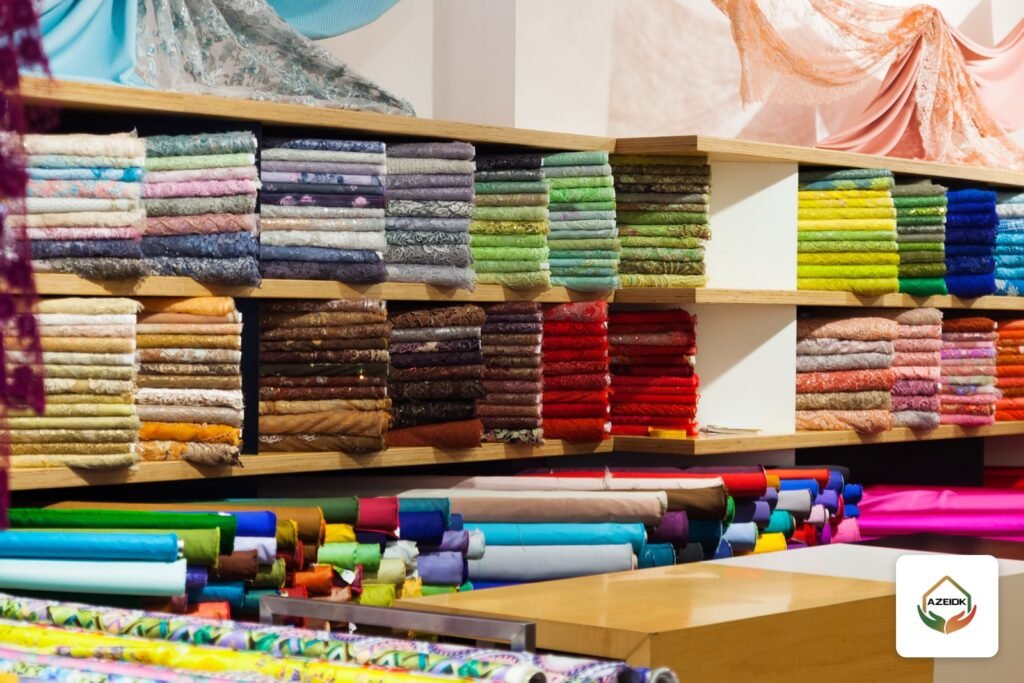
A clothing or fabric shop in Downtown Cairo, Ataba or Mouski is a small space holding a large amount of fast-burning material: rolls of fabric, hanging garments, cartons and plastic bags, and often a storage mezzanine above the shop itself. Clothing store fire safety starts from that fact: fire spreads quickly here, and the time to put it out while it is small is short.
This is an operational guide for shop owners and managers: which extinguishers to choose and where to put them, when you need an alarm, and how to handle the upper store and the electrics. The extinguishers mentioned are part of the fire extinguisher solutions supplied by AZEIDK Egypt.
Key takeaways
- NFPA 10 classes mercantile shops and allied storage as ordinary hazard: extinguishers rated at least 2-A, with travel distance no more than 22.9 m.
- The PYRAMID ABC dry powder extinguisher is the main choice for the sales floor and store, because fabric and cardboard are Class A fires.
- Put a CO2 extinguisher next to the electrical panel and the cash desk; electrics are a leading ignition source in older shops.
- The upper store or mezzanine needs its own extinguisher and smoke detector; do not rely on the ground-floor unit.
- Shop licensing includes an inspection with a Civil Protection representative, and safety violations can lead to administrative closure.
In this article
- Why clothing and fabric shops carry a higher risk
- Clothing store fire safety: which extinguisher, and where?
- A worked example for a Downtown shop
- Does a clothing shop need a fire alarm?
- Electrics and storage: the real source of risk
- What staff should do in the first minute
- Licensing and Civil Protection
- Common mistakes in clothing shops
- Frequently asked questions
- Conclusion
Why clothing and fabric shops carry a higher risk
Cotton and synthetic fabrics and garments on rails give fire a large surface to spread over, and cartons and packing bags add to the load. In old commercial districts shops sit side by side in old buildings, and many have added lighting, air conditioning and electrical loads on wiring that was never designed for them. Then there is the upper store or mezzanine, usually packed with stock up to the ceiling and reached by a narrow stair.
Together, these factors make the first minutes decisive. The right extinguisher in the right place, and a staff member who knows how to use it, can settle the matter before the fire reaches all the stock or the shops next door.
Clothing store fire safety: which extinguisher, and where?
The NFPA 10 annex lists mercantile shops and allied storage as an example of ordinary hazard. For ordinary hazard the standard calls for extinguishers rated at least 2-A, no more than 139 m² (1,500 ft²) per unit of A, and a maximum travel distance of 22.9 m (75 ft) to the nearest unit. These are reference figures; in Egypt, the Egyptian code and Civil Protection requirements are binding.
| Location in the shop | Expected fire type | Suitable extinguisher | Note |
|---|---|---|---|
| Sales floor and garment rails | Class A: fabric and cardboard | ABC dry powder | Near the entrance, visible and not covered by stock |
| Cash desk and electrical panel | Electrical | CO2 | Leaves no residue on devices or the panel |
| Upper store or mezzanine | Class A with a heavy load | Larger ABC dry powder | At the top of the stair, not at the far end |
| Fitting rooms and back corridors | Class A | ABC dry powder | Per travel distance |
| Small closed electrical cabinet | Electrical | automatic CO2 | Operates by itself when temperature rises |
PYRAMID dry powder extinguishers come in 1, 3, 6, 9 and 12 kg. They conform to EN3 and the Egyptian standard ES 8442/2021 and carry the Egyptian quality mark. CO2 units come in 2, 3, 6, 10, 20 and 30 kg. Choose the size that gives the required rating as printed on the extinguisher label and datasheet, not by size alone.
A worked example for a Downtown shop
A clothing shop has a 120 m² sales floor and a 60 m² storage mezzanine above it. Using the NFPA 10 ordinary hazard figures, the sales floor needs a total rating of at least one A unit per 139 m², so a single 2-A extinguisher covers the area on paper. But the calculation alone is not enough:
- One ABC powder extinguisher near the entrance, the route staff and customers will take.
- One CO2 extinguisher next to the cash desk and electrical panel.
- A separate ABC powder extinguisher at the top of the mezzanine stair, because reaching a fire in the upper store from the shop floor is slow and difficult.
That gives three extinguishers instead of one, a sensible layout for a shop with two levels and an obvious electrical source. For larger areas see how many fire extinguishers a space needs.
Does a clothing shop need a fire alarm?
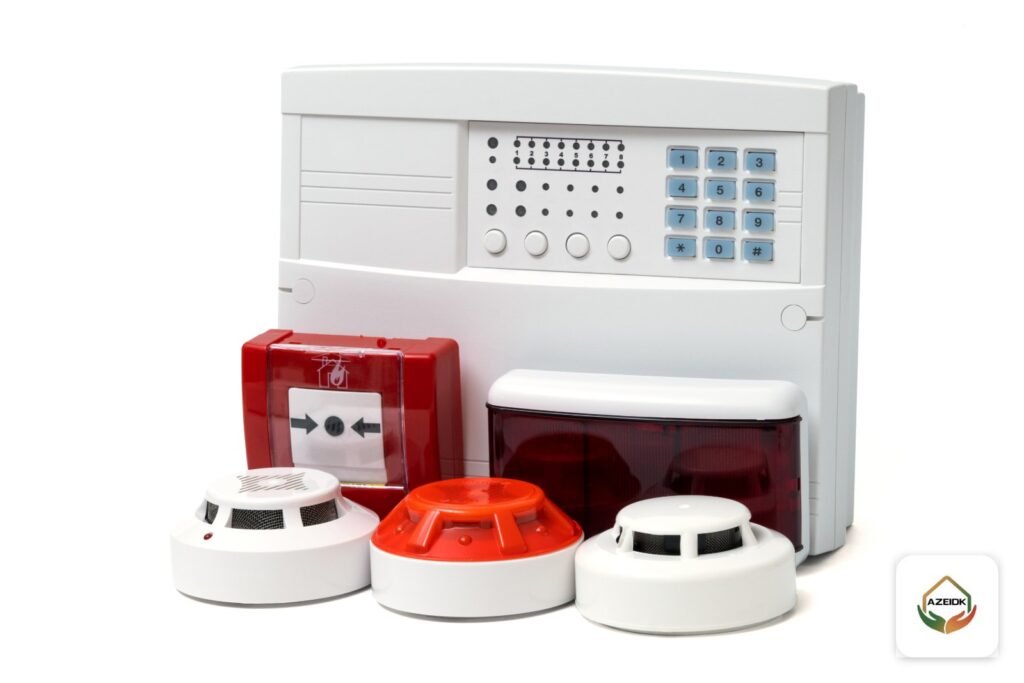
A small shop with staff present throughout opening hours may spot a fire by eye. The problem is the hours when the shop is closed at night, and the upper store nobody visits except to fetch stock. A small conventional system helps here, such as a Context Plus CFP conventional panel with Series 65A optical smoke detectors: one detector in the upper store, one on the sales floor, and a sounder audible in the street or arcade to alert neighbours and guards.
In larger multi-floor shops, or shops inside malls, the alarm is usually part of the building system; see mall fire protection in Egypt.
Electrics and storage: the real source of risk
- Do not stack stock up to the ceiling; leave space so smoke can reach the detector and the source of a fire can be seen.
- Do not store goods on the stair, in front of the electrical panel or behind the exit door.
- Switch off unneeded lighting and equipment at closing, and do not leave overloaded extension strips.
- Keep hot spotlights away from hanging garments and fabric.
- Get rid of empty cartons daily instead of piling them in the store.
What staff should do in the first minute
The best extinguisher is useless if staff do not know what to do. Agree a few simple steps with the shop team and post them by the cash desk:
- Warn everyone and get customers out of the shop first.
- Switch off power at the panel if it is safe to reach.
- Use the nearest extinguisher only if the fire is small and you have a clear way out behind you.
- If the fire does not go out quickly, leave, close the door behind you and call Civil Protection.
Make sure every staff member knows where each extinguisher is, and that the keys to the back door and the store are kept in a known place.
Licensing and Civil Protection
Public shops in Egypt are regulated by Law No. 154 of 2019. A guide from the Ministry of Local Development and Environment, published by Masrawy in July 2026, explains that the pre-licence inspection includes a Civil Protection representative, and that breaching safety and civil protection requirements can lead to administrative closure after a period to correct the violation. For the equipment usually checked, see Civil Protection requirements for shops in Egypt.
Common mistakes in clothing shops
- One extinguisher behind the cash desk for the whole shop and store.
- An extinguisher hidden behind hanging clothes or standing on the floor behind stock.
- Buying an extinguisher without the quality mark or an inspection tag; see how to tell a genuine extinguisher from a fake.
- Leaving extinguishers for years without inspection or refilling.
- Blocking the back exit with stock during holiday and sale seasons.
Frequently asked questions
What is the best extinguisher for a clothing shop?
ABC dry powder for the sales floor and store, plus a CO2 extinguisher next to the electrical panel and cash desk.
How many extinguishers does a small clothing shop need?
On paper one may be enough for a small shop, but a mezzanine or store and an electrical panel make two or three the practical number.
Will dry powder ruin the clothes?
Powder leaves a deposit on nearby stock, but it puts out fabric fires effectively, and losing a few items costs far less than losing the shop.
Does the upper store need a smoke detector?
Yes, it is recommended, because nobody is usually there and a fire could spread before anyone notices.
At what height should an extinguisher be mounted?
Under NFPA 10, the top of an extinguisher weighing up to about 18 kg (40 lb) should be no more than 1.53 m above the floor, with at least 10 cm (4 in) clearance below.
Does Civil Protection check extinguishers during licensing?
The pre-licence inspection includes a Civil Protection representative, and fire equipment is among the items usually reviewed.
Conclusion
Clothing and fabric shop fire safety does not need complex systems, but it does need discipline: an ABC powder extinguisher by the entrance, a CO2 unit at the electrics, a separate extinguisher for the upper store, a smoke detector where nobody is present, and storage that never blocks exits or extinguishers. With genuine extinguishers that meet Egyptian standards and regular inspection, the shop is safer and easier to license.
Fitting out a new shop or reviewing the extinguishers in an existing one? Send us the shop and store areas and the number of levels, and we will set out the right extinguishers and their positions. Talk to the AZEIDK Egypt team
Related guides
- Fire Alarm Device Buyer’s Guide: Panel, Detectors, Sirens, System Type
- Fire System Commissioning and Acceptance: Tests Before Handover
- Fire Pump for Residential Towers in Egypt: Estimating Flow and Pressure and Choosing a 3PUMP Set
- Government Building Fire Protection in Egypt: Archives, Server Rooms and Public Halls