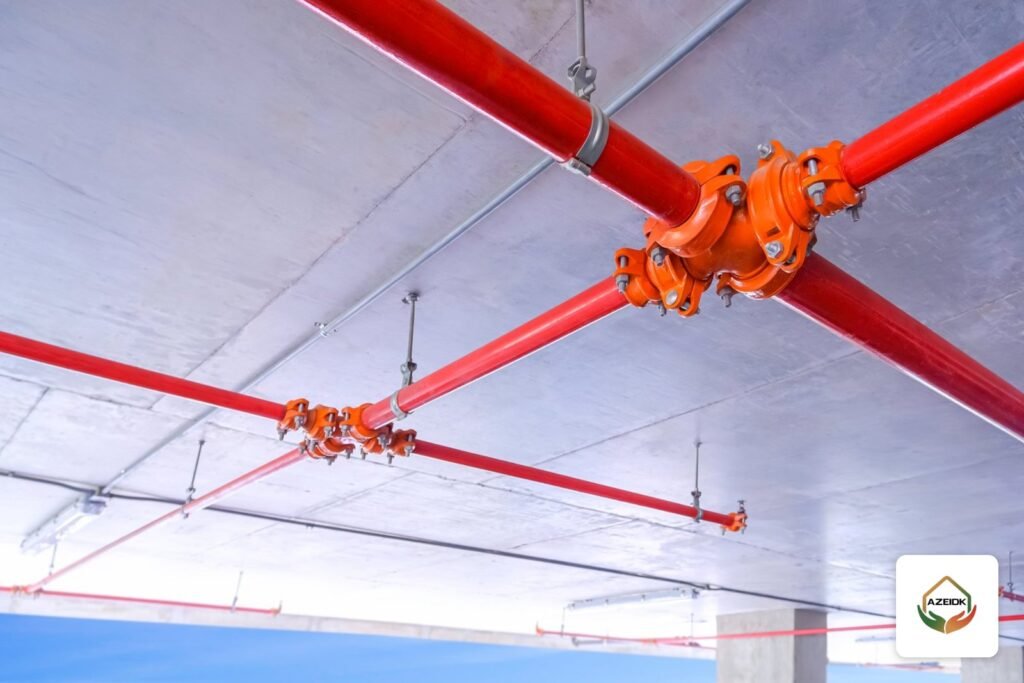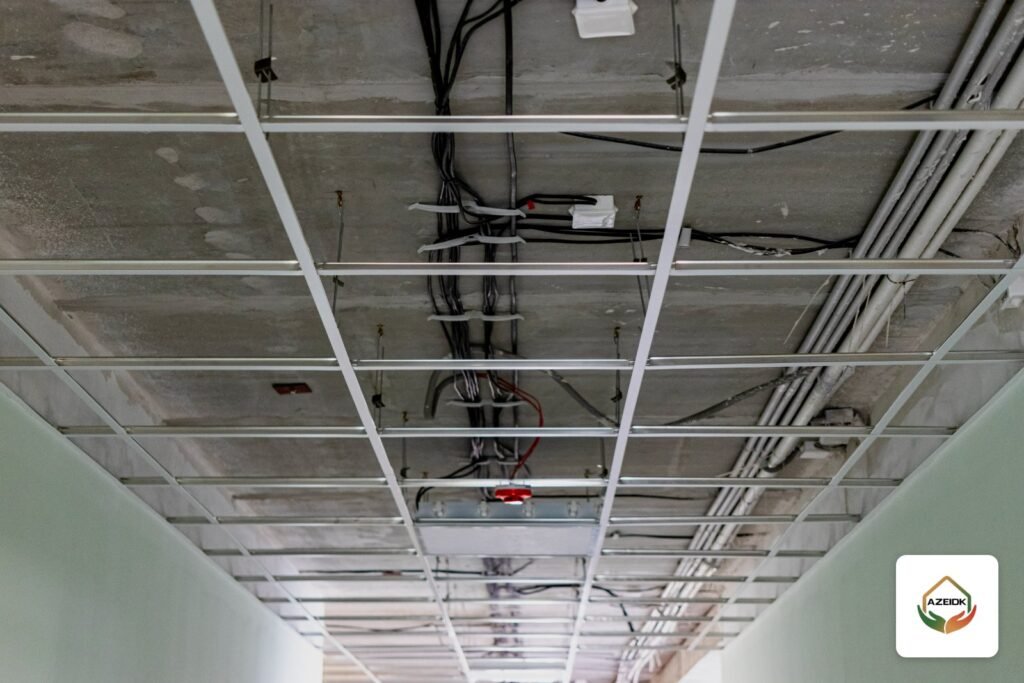
You need to relocate sprinkler heads during most mall shop fit-outs, because a new false ceiling, partition or tall shelving changes the distance between the sprinkler and the ceiling, the coverage area and the obstructions in front of the spray. Done properly, the change starts with a shop drawing approved by the mall’s consultant, is carried out by a qualified fire contractor under an isolation permit, and ends with testing the modified section and reconnecting and reprogramming the detectors before opening.
Key takeaways
- Any change to the ceiling level or interior layout calls for a review of sprinkler and detector positions, even if the number of heads stays the same.
- Tenants and decor contractors should not move sprinklers or detectors themselves: the network is shared with the mall, and closing a control valve isolates areas beyond your shop.
- The TYCO TFP151 data sheet says sprinklers must never be painted or altered, and any sprinkler damaged by dropping, striking or wrench slippage must be replaced.
- The LADBS NFPA 13-2025 plan check sheet requires the sprinkler deflector to be no more than 12 in below the ceiling, and sprinklers spaced less than 6 ft apart to be separated by baffles.
- Mall management usually requires approved drawings and a method statement before work starts, plus documented testing and handover before opening. Ask for the Fit-out Manual on day one.
In this article
- Why relocate sprinkler heads during a fit-out?
- I changed the false ceiling. Do I have to drop the sprinklers?
- Minor change or one that needs approved drawings?
- Can I move the smoke detector myself?
- Steps to modify fire systems in a mall shop
- What does mall management ask for before opening?
- Mistakes we see when relocating sprinklers during fit-out
- Frequently asked questions
- Conclusion
Why relocate sprinkler heads during a fit-out?
The sprinkler layout in a shell-and-core unit was designed for the space as the mall handed it over: a given ceiling height, an open floor and calculated spacing between heads. A fit-out changes those inputs in three ways:
- Ceiling level: once a false ceiling (gypsum board or tiles) goes in, the existing sprinklers sit above it and no longer protect the space below, so they are dropped to the new ceiling level with drops or flexible connections.
- Partitions: a fitting room, back-of-house store or cashier room wall cuts the coverage area and can leave a room with no sprinkler.
- Obstructions: new ductwork, pendant lighting, tall shelving and hanging signage can block the spray from reaching the floor.
So the right question is not “do I drop the sprinklers?” but “does the new layout still meet the approved design?”. That is what the shop drawing answers.
I changed the false ceiling. Do I have to drop the sprinklers?
In most cases, yes. The NFPA 13-2025 plan check correction sheet issued by the Los Angeles Department of Building and Safety (LADBS, effective 1 January 2026) requires the sprinkler deflector to be installed not more than 12 in below the ceiling, citing Section 10.2.7.1.1.1, and sprinklers spaced less than 6 ft on center to be separated by baffles under Section 10.2.6.4.2. These values apply to standard sprinklers and can differ for other types; the data sheet and the code edition adopted on your project govern.
When dropping sprinklers to a false ceiling, the designer checks a few practical points:
- The right sprinkler for the ceiling: exposed pendent, recessed, or concealed with a flush cover plate such as the TYCO Royal Flush II concealed sprinkler.
- Matching the new sprinkler to others in the same space in K-factor, temperature rating and response type, as the design requires.
- The void above the false ceiling: it may need its own sprinklers if it is a concealed space the code requires to be protected. The designer decides this.
- Fitting the escutcheon or cover plate after the ceiling is finished. The TFP151 data sheet notes that the absence of the escutcheon covering the ceiling clearance may delay sprinkler operation.
Minor change or one that needs approved drawings?
| Type of change | What it usually needs | Who decides |
|---|---|---|
| Dropping the same sprinklers to a new false ceiling without moving them | Short shop drawing, isolation permit, test of the modified section | Mall consultant |
| Moving head positions because of new walls or obstructions | Shop drawing and a review of spacing and coverage | Mall consultant and fire designer |
| Adding heads, changing their type, or changing the use of a space (such as an internal store) | Shop drawing; a hydraulic calculation review may be needed | Fire designer and consultant |
| Moving or adding a detector | Fire alarm drawing, panel programming update and cause and effect update | The mall’s approved fire alarm contractor |
Even a change that looks minor is recorded on a drawing, because the mall’s as-built drawings must reflect what is actually installed. That is the work of our shop drawings and coordination service: drawing the change, coordinating it with HVAC, lighting and the ceiling, and submitting it for approval before installation.
Can I move the smoke detector myself?
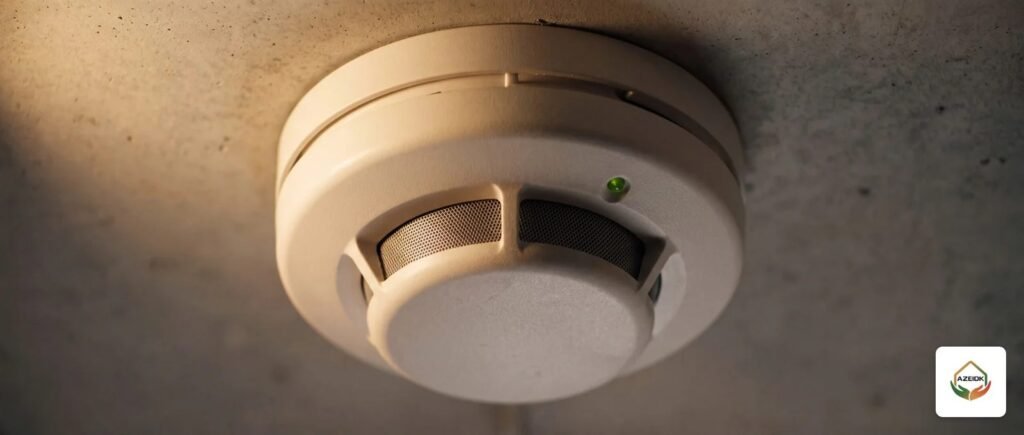
It is not advisable, and malls usually do not allow it. Mall detectors are typically connected to an addressable fire alarm system that identifies every device by its address and location. Move a detector without updating the programming and the panel will report the wrong location, or show a fault that confuses the control room. A detector may also trigger other actions, such as shutting down air handling units or starting smoke extract fans, which are set in the cause and effect matrix.
Recurring mistakes in shop fit-outs:
- Bagging detectors during dusty or painting work and leaving them covered after opening.
- Leaving a detector above the false ceiling instead of bringing it down to the occupied space.
- Installing a detector right next to an air supply diffuser, where the airflow pushes smoke away from it. NFPA 72 addresses the effect of air movement on detector location, and the designer sets the correct distance.
- A new store or fitting room with no detector because it was not on the original drawing.
To see how programming affects operation, read our fire alarm panel programming guide and the cause and effect matrix article.
Steps to modify fire systems in a mall shop
- Ask mall management for the Fit-out Manual: it lists the documents required, the contractors allowed to work on fire systems, working hours and the permit process.
- Site survey: record the existing sprinkler and detector positions, the original ceiling level and pipe routes.
- Shop drawing: draw the new positions over the decor, reflected ceiling and HVAC layouts and resolve clashes before work starts.
- Approval: submit the drawing with the data sheets for any new sprinklers and detectors to the mall’s consultant.
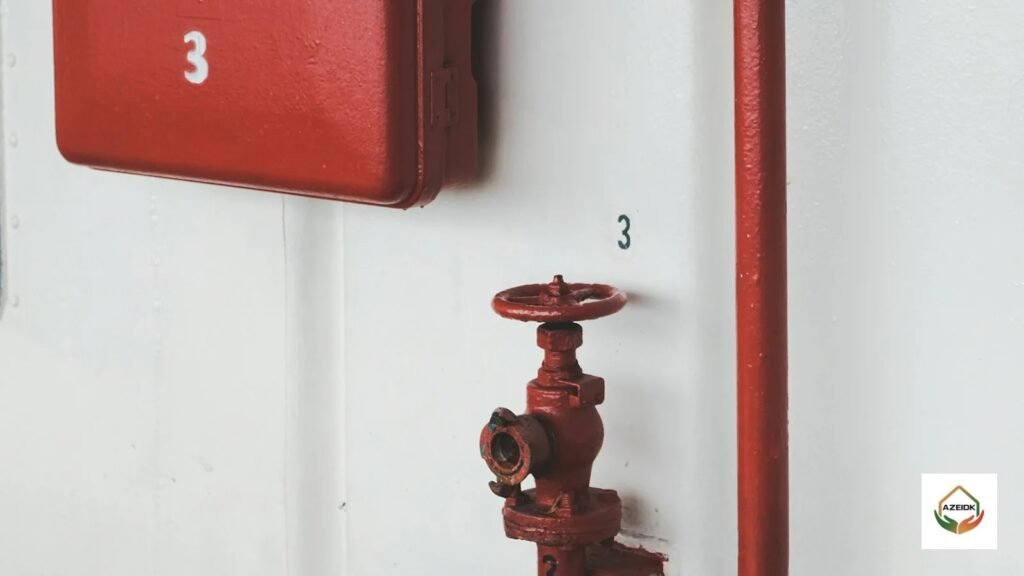
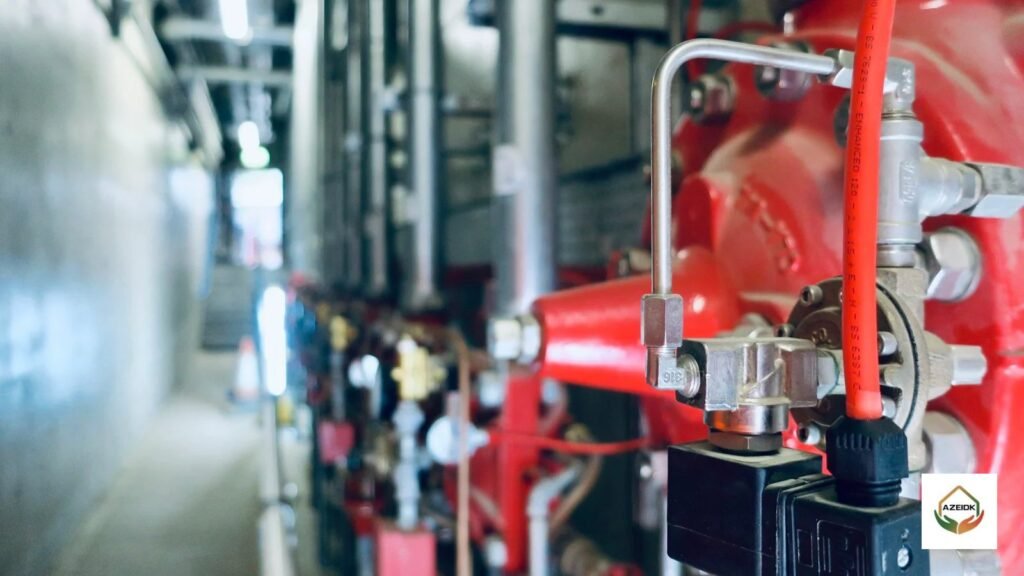
- Isolation permit: closing the control valve and draining the section is coordinated with mall management. The TFP151 data sheet says to obtain permission from the proper authorities to shut down the affected system before closing a main control valve, and to notify everyone who may be affected. NFPA 25 has a dedicated chapter on impairment procedures, covered in our NFPA 25 guide.
- Installation: fit new sprinklers with the wrench specified for them, with no painting or alteration.
- Testing: test the modified section to the requirements of the adopted NFPA 13 edition and the consultant, and function-test relocated detectors from the panel. Testing is explained in our hydrostatic pressure test article.
- Return to service and handover: reopen the valve and confirm its position, then hand over as-built drawings and the test report to mall management.
What does mall management ask for before opening?
Requirements vary from mall to mall, but most fit-out manuals revolve around the following documents, so ask about them early:
- Approved fire sprinkler and fire alarm drawings for the change.
- Data sheets for the sprinklers and detectors installed.
- A test report for the modified section of the network and detector tests from the mall panel.
- As-built drawings.
- Confirmation that detector and sprinkler covers have been removed and the area cleaned of construction debris.
After handover, the shop still needs its own Salamah safety license for its activity through the Civil Defense platform. For commercial building requirements in general, see our malls and commercial buildings page.
Mistakes we see when relocating sprinklers during fit-out
- Reusing an old sprinkler: removing and refitting a sprinkler exposes it to damage. The TFP151 data sheet requires replacing any sprinkler damaged by dropping, striking or wrench slippage, and the safer practice is to install new sprinklers.
- Painting the sprinkler with the ceiling: the data sheet prohibits painting, coating or otherwise altering a sprinkler after it leaves the factory, so protect it during painting and replace it if paint reaches it.
- Hanging decor from the pipes: the network is not a support for lights or signs, and the data sheet states sprinklers must not be used to hang any objects.
- Leaving the valve closed: when the work is done, reopen the valve and confirm the supervisory switch has returned to normal on the mall panel.
Frequently asked questions
I changed the false ceiling. Do I have to drop the sprinklers?
Usually yes, because the sprinklers stay above the new ceiling and do not protect the space below. The change is drawn on a shop drawing and approved by the mall’s consultant before installation.
Can I move the smoke detector myself?
No. The detector is part of the mall system with its own address and programming. Moving it needs an approved fire alarm contractor to update the programming and test the device from the panel.
What does mall management ask for before opening?
Usually approved drawings for the change, device data sheets, a test report and as-built drawings. The details are in each mall’s Fit-out Manual.
Do I need approved drawings for a minor change?
In most malls, yes, even just to drop sprinklers without moving them, because the mall’s final drawings must match the site.
Can I reuse the old sprinklers after removing them?
The safer practice is new sprinklers that match the design. Any sprinkler damaged by striking or wrench slippage must be replaced under the data sheet.
Who closes the fire valve during the work?
Mall management or its approved maintenance contractor, after a written permit and notice to those affected. It is reopened and checked once the work is finished.
Conclusion
Relocating fire sprinklers during a fit-out is not a finishing task to leave for the last day. Plan it with the ceiling design, get the mall’s Fit-out Manual early, have the shop drawing approved before any pipe is cut, and leave isolation and testing to a qualified fire contractor. That is how you open on schedule without comments from mall management or Civil Defense.
Fitting out a mall shop and need sprinklers and detectors modified? AZEIDK prepares the shop drawings and coordination for approval, then installs and tests the change through our installation service. Talk to the AZEIDK team
To request a fire alarm system for your facility, see AZEIDK fire alarm systems.
Related guides
- Diesel Fire Pump Engine Maintenance: Weekly Runs and Inspections
- Residential Compound Security Systems: Gates, Intercom, CCTV and Access Control in One Design
- Are Sprinklers Mandatory? Civil Defense Sprinkler Requirements Under Saudi Fire Code SBC 801
- Electric vs Diesel Fire Pumps: Comparison and Selection Criteria